


How to Verify a Leather Manufacturer Before Placing an Order

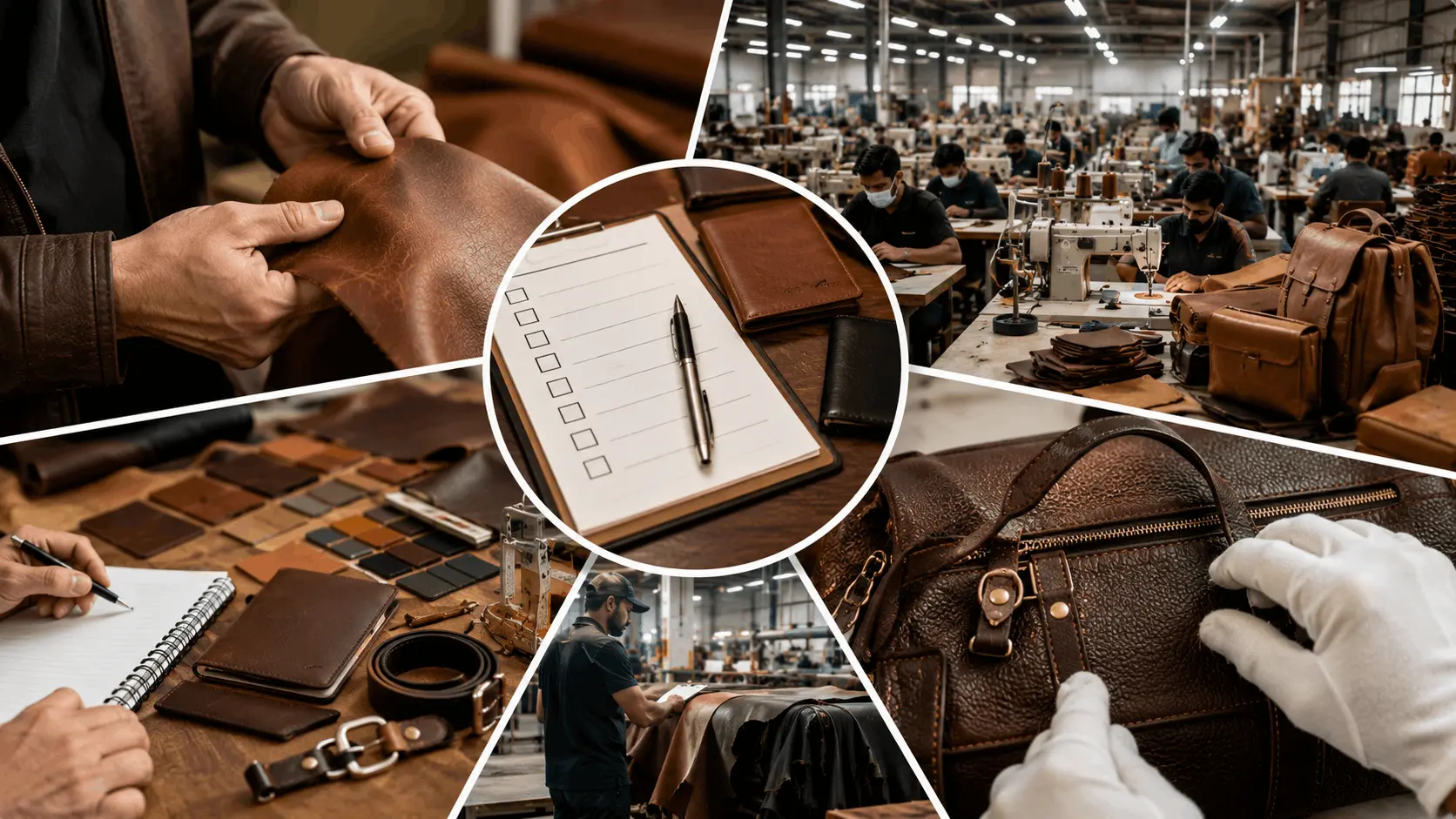
Choosing the right leather manufacturer is one of the most important decisions in the sourcing process. A reliable supplier can deliver consistent quality, meet production deadlines, and support long-term business growth. On the other hand, selecting the wrong manufacturer can lead to product defects, delayed shipments, unexpected costs, and dissatisfied customers.
Whether you’re sourcing leather jackets, bags, wallets, belts, or other leather goods, verifying a manufacturer before placing an order helps reduce risk and ensures you’re partnering with a supplier that can meet your requirements.
This guide explains the key steps buyers should follow to evaluate a leather manufacturer before committing to bulk production.
Why Verifying a Leather Manufacturer Matters
Supplier verification is more than a routine sourcing step. It helps buyers identify reliable manufacturers and avoid costly mistakes that can affect product quality and delivery.
A proper verification process helps you:
- Prevent quality issues before production begins.
- Reduce financial and operational risks.
- Avoid delays caused by unreliable suppliers.
- Ensure consistent product quality across future orders.
- Build long-term relationships with trusted manufacturing partners.
Taking the time to evaluate a supplier before placing an order is often far less expensive than dealing with production problems after manufacturing has started.
Step 1: Verify Business Registration
The first step is confirming that the manufacturer operates as a legitimate business.
Request official company documents and verify that the business is legally registered in its country. If the supplier exports internationally, ask whether they hold the necessary export licenses and have experience shipping to your target market.
You should also confirm the company’s physical business address and find out how long it has been operating. Manufacturers with an established history often have more stable production systems and stronger industry experience.
Verification Checklist
✔ Business registration certificate
✔ Tax registration (where applicable)
✔ Export license or export documentation
✔ Verified company address
✔ Years in business
Step 2: Evaluate Manufacturing Capabilities
Not every leather manufacturer has the same production capacity or specialization.
Before placing an order, determine whether the factory can produce your specific product while meeting your required quality standards and delivery schedule.
Review factors such as:
- Factory size
- Monthly production capacity
- Manufacturing equipment
- Skilled workforce
- Product specialization
For example, a manufacturer specializing in leather wallets may not be the best choice for producing motorcycle jackets or travel bags.
Confirming manufacturing capabilities early helps avoid production delays and quality issues later.
Step 3: Review Product Portfolio
A manufacturer’s previous work provides valuable insight into its capabilities.
Ask to see product catalogs, previous production samples, or recent projects similar to your own. This allows you to evaluate the quality and consistency of their workmanship.
When reviewing their portfolio, consider:
- Product categories they manufacture
- Leather types available
- Stitching quality
- Hardware options
- Edge finishing
- Customization capabilities
- Branding and private label experience
A diverse and well-executed product portfolio often indicates strong manufacturing expertise.
Step 4: Request Product Samples
Never place a bulk order without reviewing a production sample.
Samples allow you to verify whether the finished product meets your expectations before investing in full-scale manufacturing.
Inspect each sample carefully, paying attention to:
- Leather quality
- Stitching accuracy
- Hardware durability
- Surface finishing
- Product dimensions
- Packaging quality
If adjustments are needed, it’s far easier to make changes during the sampling stage than after production has begun.
Step 5: Assess Quality Control Standards
Consistent quality depends on a manufacturer’s quality control system.
Ask how quality inspections are performed throughout production and whether documented quality procedures are in place.
Key areas to evaluate include:
- Incoming leather inspection
- In-process quality checks
- Final product inspection
- Defect identification and correction
If available, request quality inspection reports or testing documentation for previous production runs. A structured quality control process helps reduce defects and ensures greater consistency across bulk orders.
Step 6: Check Certifications and Compliance
Depending on your target market, certain certifications and compliance requirements may be important.
Ask the manufacturer which standards they follow and whether they can provide supporting documentation.
Examples include:
- ISO quality management standards
- Leather Working Group (LWG) certification where applicable
- REACH compliance for European markets
- Social compliance certifications
- Environmental management practices
Not every manufacturer needs every certification. The appropriate requirements depend on your product category and the destination market.
Step 7: Evaluate Communication and Responsiveness
Clear communication is essential throughout the sourcing process.
Pay attention to how the manufacturer responds during your initial discussions. Delayed replies, incomplete answers, or unclear information can become larger problems during production.
Consider factors such as:
- Response time
- Product knowledge
- Technical understanding
- Transparency
- English communication skills
- Willingness to answer detailed questions
- Problem-solving approach
Reliable manufacturers communicate clearly and keep buyers informed throughout the production process.
Step 8: Understand MOQ, Pricing, and Lead Times
Before confirming an order, make sure both parties clearly understand the commercial terms.
Discuss:
- Minimum order quantity (MOQ)
- Sampling costs
- Unit pricing
- Production lead time
- Payment terms
- Shipping schedule
Comparing these details across multiple manufacturers helps buyers evaluate suppliers based on overall value rather than price alone.
Step 9: Verify Export Experience
Manufacturing quality is only one part of international sourcing. Export experience is equally important.
Suppliers with established export operations are generally more familiar with international documentation, shipping procedures, and customs requirements.
Ask about:
- Countries they currently export to
- Shipping methods
- Export documentation
- Incoterms offered
- Customs procedures
Experienced exporters are often better prepared to handle international logistics and reduce shipment delays.
Step 10: Conduct a Factory Audit (If Possible)
For large or long-term orders, a factory audit provides an additional level of confidence.
An audit allows buyers to verify that the manufacturer’s facilities, equipment, workforce, and production processes match the information provided during initial discussions.
Depending on your budget and location, you can choose from:
- On-site factory visits
- Third-party inspection services
- Virtual factory tours
- Production verification during manufacturing
Even a virtual inspection can provide valuable insight into a manufacturer’s operations before placing a significant order.
Red Flags to Watch For
Watch for these warning signs when evaluating a leather manufacturer:
- Prices that seem unrealistically low
- Poor or inconsistent communication
- Refusal to provide production samples
- No business registration or export documentation
- Inconsistent product quality
- No factory photos or production videos
- Unclear payment terms
- Unrealistic production timelines
- Limited knowledge of export procedures
- Reluctance to answer technical questions
One or two issues may not always indicate a problem, but multiple red flags should prompt additional verification before moving forward.
How Tannorium Helps Buyers Find Verified Leather Manufacturers
Finding a reliable leather manufacturer can be challenging, especially when sourcing from overseas. Buyers often need to compare multiple suppliers, review manufacturing capabilities, and evaluate production quality before making a decision.
Tannorium helps simplify this process by connecting buyers with leather manufacturers, OEM factories, and private label suppliers in one dedicated marketplace. Instead of searching across multiple sources, buyers can explore manufacturers based on their product specialization, manufacturing capabilities, and sourcing requirements.
While supplier verification remains the buyer’s responsibility, having access to organized manufacturer information makes it easier to identify potential partners and begin the evaluation process with greater confidence.
Conclusion
Choosing the right leather manufacturer is about more than finding the lowest price. A reliable supplier should consistently deliver quality products, communicate clearly, meet production timelines, and understand international buyer requirements.
Before placing a bulk order, take the time to verify business credentials, review manufacturing capabilities, inspect product samples, and evaluate quality control processes. These steps can significantly reduce sourcing risks and help avoid costly mistakes.
Strong supplier relationships are built on transparency, trust, and proper due diligence. By verifying manufacturers before discussing pricing or production, buyers are more likely to establish long-term partnerships that support consistent product quality and business growth.
Frequently Asked Questions
How do I verify a leather manufacturer?
Start by confirming the company’s business registration, evaluating its manufacturing capabilities, reviewing previous work, requesting product samples, checking quality control procedures, and verifying export experience before placing a bulk order.
What documents should I request from a leather supplier?
Request documents such as the business registration certificate, export license (if applicable), product specifications, quality certifications, and any relevant testing or compliance reports for your target market.
Should I always request product samples?
Yes. Product samples allow you to evaluate leather quality, stitching, hardware, finishing, and overall craftsmanship before approving mass production.
How can I check if a leather factory is genuine?
Verify the company’s legal registration, request factory photos or videos, review customer references, check export history, and conduct a factory audit or third-party inspection whenever possible.
What certifications should leather manufacturers have?
The required certifications depend on your market and product category. Common examples include ISO standards, Leather Working Group (LWG) certification, REACH compliance, and relevant social or environmental certifications.
What is a factory audit?
A factory audit is an evaluation of a manufacturer’s facilities, production processes, quality control systems, workforce, and operational standards. It helps buyers confirm that the supplier can meet their production and quality requirements.
How do I verify a supplier before placing a bulk order?
Review business credentials, inspect product samples, evaluate production capacity, confirm lead times, discuss payment terms, and verify the supplier’s experience with international exports before committing to a large order.
What are the biggest red flags when sourcing leather products?
Common warning signs include unrealistically low prices, poor communication, refusal to provide samples, inconsistent product quality, unclear payment terms, missing business documentation, and limited transparency about manufacturing facilities.
Can I verify a leather manufacturer without visiting the factory?
Yes. Buyers can request virtual factory tours, third-party inspection reports, detailed production videos, product samples, and business documentation to evaluate a manufacturer remotely. However, an on-site audit provides the highest level of verification for large or long-term orders.