



Chrome Tanned vs Vegetable Tanned Leather: Which Is Better for Your Product?

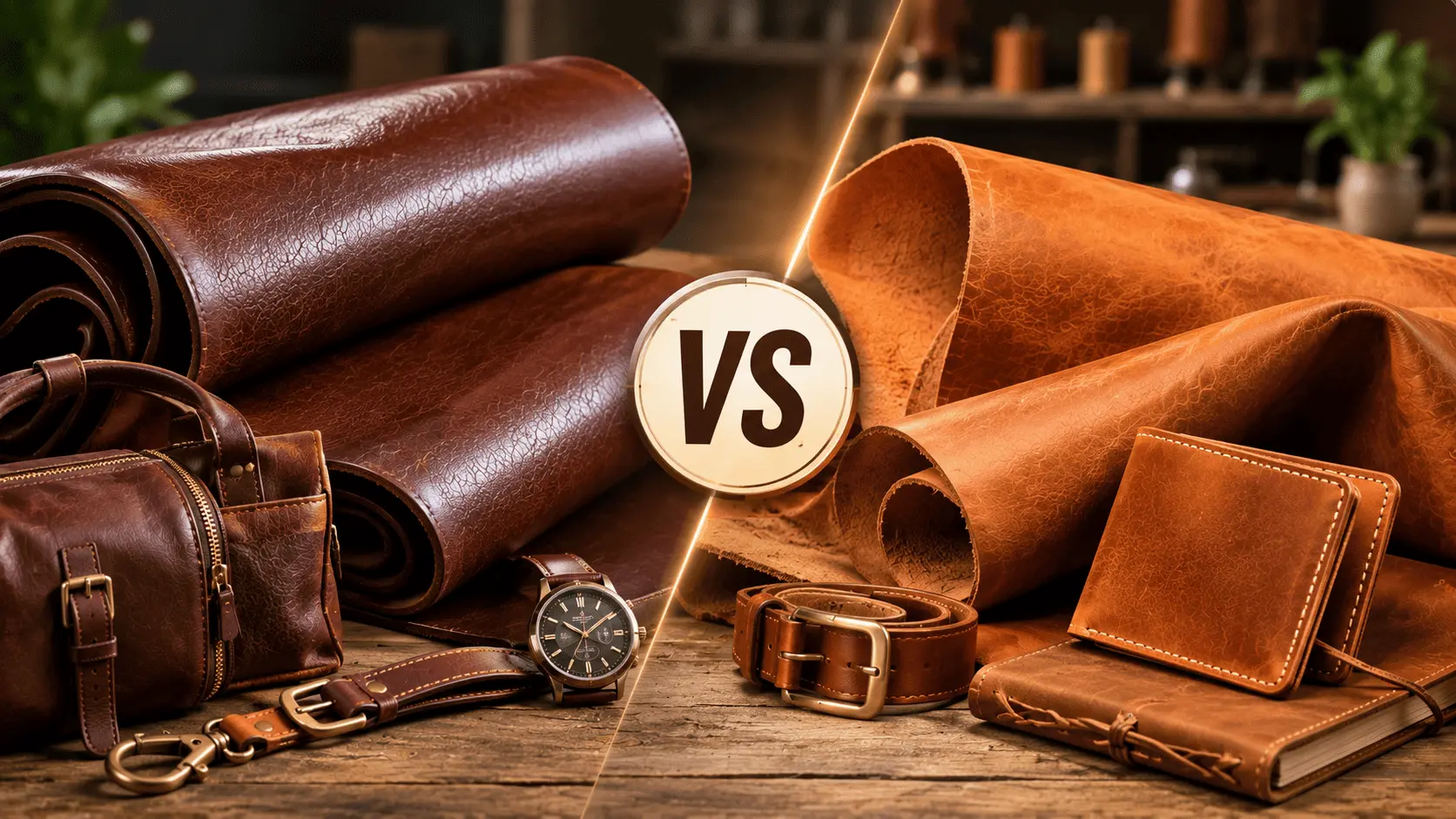
Leather tanning is one of the most important steps in leather manufacturing. It transforms raw animal hides into durable, flexible, and long-lasting leather that can be used for products such as jackets, bags, wallets, belts, footwear, and furniture.
Among the various tanning methods available, chrome tanning and vegetable tanning are the two most widely used. While both produce genuine leather, they differ significantly in appearance, texture, durability, production time, maintenance, and cost.
Choosing the right tanning method isn’t about finding a universally better option. Instead, it depends on the product you’re manufacturing, your target market, and your performance requirements.
In this guide, we’ll compare chrome tanned and vegetable tanned leather to help buyers, brands, and manufacturers select the most suitable material for their products.
What Is Chrome Tanned Leather?
Chrome tanned leather is leather that has been treated using chromium salts during the tanning process. Today, it is the most commonly used tanning method worldwide because it produces soft, flexible, and durable leather in a relatively short time.
Unlike traditional tanning methods, chrome tanning can be completed within a day, making it ideal for large-scale commercial manufacturing.
The finished leather has a smooth feel, excellent color consistency, and good resistance to moisture, making it suitable for products that require comfort and flexibility.
Key Characteristics
- Soft and flexible texture
- Lightweight feel
- Excellent color consistency
- Fast production process
- High resistance to shrinking
- Good water resistance
- Available in a wide range of colors
Advantages
Soft and Comfortable
Chrome tanned leather is naturally softer than vegetable tanned leather, making it comfortable for products worn daily.
Faster Production
The tanning process takes significantly less time, allowing manufacturers to produce large quantities efficiently.
Excellent Color Options
Chrome tanning accepts dyes easily, making it possible to produce leather in a wide variety of colors and finishes.
Good Moisture Resistance
Chrome tanned leather generally performs better in humid conditions and is less likely to become stiff after exposure to moisture.
Ideal for Mass Production
Because of its consistency and production efficiency, chrome tanned leather is widely used in OEM and private label manufacturing.
Limitations
Although chrome tanned leather offers many advantages, it also has some drawbacks.
- Develops less patina over time
- Less natural appearance compared to vegetable tanned leather
- Uses chemical tanning agents that require responsible environmental management
- May not appeal to buyers seeking a traditional handcrafted aesthetic
Common Applications
Chrome tanned leather is commonly used for:
- Leather jackets
- Fashion handbags
- Sneakers
- Leather shoes
- Upholstery
- Travel bags
- Gloves
- Fashion accessories
Its combination of softness, flexibility, and durability makes it one of the most versatile leather materials available.
What Is Vegetable Tanned Leather?
Vegetable tanned leather is produced using natural tannins extracted from tree bark, leaves, roots, and other plant materials. This traditional tanning method has been used for centuries and remains popular for premium leather goods.
Unlike chrome tanning, vegetable tanning is a slower process that can take several weeks. The additional time allows the leather to develop a firm structure and a distinctive natural appearance.
Vegetable tanned leather is valued for its ability to age beautifully, developing a rich patina that makes each product unique over time.
Key Characteristics
- Natural appearance
- Firm structure
- Rich earthy colors
- Develops a unique patina
- Ages beautifully
- Traditional manufacturing process
- Made using plant-based tannins
Advantages
Natural Look
Vegetable tanned leather retains a more authentic appearance with warm, rich tones that highlight the natural grain.
Beautiful Patina
One of its most distinctive qualities is the ability to develop a deep patina through regular use and exposure to light.
Strong Structure
Its firm construction makes it suitable for products that need to maintain their shape over time.
Traditional Craftsmanship
Many artisan manufacturers prefer vegetable tanning because it supports handcrafted leather goods with a premium finish.
Plastic-Free Aging
Instead of relying on heavy surface coatings, vegetable tanned leather develops character naturally as it ages.
Limitations
Vegetable tanned leather also has some limitations.
- Longer production time
- Higher manufacturing cost
- Stiffer feel when new
- More sensitive to water and moisture
- Limited color options compared to chrome tanned leather
Common Applications
Vegetable tanned leather is frequently used for:
- Leather belts
- Premium wallets
- Watch straps
- Saddlery
- Knife sheaths
- Luxury briefcases
- Handmade leather goods
It is particularly popular among brands that emphasize craftsmanship and natural materials.
Chrome Tanned vs Vegetable Tanned Leather: Side-by-Side Comparison
| Feature | Chrome Tanned Leather | Vegetable Tanned Leather |
| Tanning Method | Chromium salts | Natural plant tannins |
| Processing Time | Usually less than 24 hours | Several weeks |
| Appearance | Smooth and consistent | Natural and rich |
| Texture | Soft and flexible | Firm and structured |
| Durability | Excellent | Excellent |
| Water Resistance | Better moisture resistance | More sensitive to water |
| Patina | Limited | Develops rich natural patina |
| Color Options | Wide variety of colors | Mostly natural earth tones |
| Environmental Impact | Depends on responsible chemical management | Uses plant-based tannins |
| Cost | Generally lower | Generally higher |
| Best Applications | Jackets, handbags, shoes, upholstery | Wallets, belts, saddlery, watch straps |
Key Differences Between Chrome Tanned and Vegetable Tanned Leather
Although both are genuine leather, their characteristics differ in several important ways.
Tanning Process
Chrome tanning uses chromium salts to stabilize the leather quickly, making it suitable for high-volume manufacturing.
Vegetable tanning uses natural tannins extracted from plants. The slower process creates leather with a firmer structure and a more traditional appearance.
Appearance
Chrome tanned leather has a smooth, refined finish and is available in many colors.
Vegetable tanned leather has a warmer, more natural appearance that highlights the leather’s original character.
Feel and Flexibility
Chrome tanned leather feels soft and flexible immediately after production, making it ideal for garments and accessories.
Vegetable tanned leather starts out firmer but gradually becomes softer with regular use.
Durability
Both tanning methods produce durable leather when manufactured correctly.
Chrome tanned leather performs well in products requiring flexibility and frequent movement, while vegetable tanned leather excels in products that benefit from a strong, rigid structure.
Water Resistance
Chrome tanned leather generally offers better resistance to moisture and humidity.
Vegetable tanned leather absorbs water more easily and may require additional care to maintain its appearance.
Aging and Patina
This is one of the biggest differences.
Chrome tanned leather maintains a relatively consistent appearance over time.
Vegetable tanned leather develops a rich patina that many leather enthusiasts consider one of its most desirable characteristics.
Color Availability
Chrome tanning allows manufacturers to produce leather in a wide range of vibrant and consistent colors.
Vegetable tanned leather is typically available in natural shades such as tan, brown, and chestnut, although it can also be dyed after tanning.
Environmental Impact
Vegetable tanning relies on natural tannins derived from plants, while chrome tanning uses chromium salts and requires proper waste management during production.
Responsible tanneries can produce high-quality leather using either method by following established environmental and safety standards.
Cost
Chrome tanned leather is generally more affordable because of its faster production process and manufacturing efficiency.
Vegetable tanned leather typically costs more due to longer production times, higher labor requirements, and traditional processing methods.
Which Leather Is Better?
There isn’t a single answer because both chrome tanned and vegetable tanned leather have their own strengths. The better choice depends on the type of product you’re manufacturing, your target customers, and the performance you expect from the finished product.
Choose Chrome Tanned Leather If You Need:
- A soft and flexible material
- Consistent colors across large production runs
- Faster manufacturing
- Better moisture resistance
- Fashion-focused products
- Cost-effective mass production
Chrome tanned leather is the preferred choice for products that require comfort, flexibility, and modern finishes.
Choose Vegetable Tanned Leather If You Need:
- A natural appearance
- Premium handcrafted products
- Leather that develops a rich patina
- A firm structure
- Traditional craftsmanship
- Long-lasting character
Vegetable tanned leather is often selected for premium leather goods where natural aging is considered part of the product’s appeal.
Which Tanning Method Should You Choose?
The best tanning method varies depending on the product.
| Product | Recommended Tanning Method | Reason |
| Leather Jackets | Chrome Tanned | Soft, lightweight, and comfortable to wear |
| Handbags | Chrome Tanned | Flexible with a wide range of color options |
| Wallets | Vegetable Tanned | Develops a beautiful patina with daily use |
| Belts | Vegetable Tanned | Firm structure and excellent shape retention |
| Shoes | Chrome Tanned | Comfortable and flexible for everyday wear |
| Boots | Chrome or Vegetable Tanned | Depends on intended use and design |
| Watch Straps | Vegetable Tanned | Natural aging enhances appearance |
| Travel Bags | Chrome Tanned | Better flexibility and moisture resistance |
| Saddlery | Vegetable Tanned | Strong structure and long-term durability |
| Leather Accessories | Depends on product positioning | Choose based on design, budget, and target market |
Rather than choosing one tanning method for every product, manufacturers select the option that best matches the product’s function and customer expectations.
Buying Considerations for OEM and Private Label Brands
For OEM and private label buyers, selecting the tanning method is only one part of the sourcing process. Consider these factors before placing an order.
Product Positioning
Luxury brands often prefer vegetable tanned leather for its natural appearance and premium image.
Fashion and lifestyle brands commonly choose chrome tanned leather because it offers greater design flexibility and production efficiency.
Target Customers
Understand what your customers value most.
If they prioritize comfort, soft texture, and vibrant colors, chrome tanned leather is usually the better option.
If they appreciate craftsmanship, durability, and natural aging, vegetable tanned leather may be a better fit.
Production Timeline
Chrome tanning is significantly faster than vegetable tanning.
If you have tight production deadlines or seasonal launches, chrome tanned leather can help reduce lead times.
MOQ and Manufacturing Efficiency
Chrome tanned leather is widely available and commonly used in large-scale manufacturing, making it suitable for bulk production.
Vegetable tanned leather may have longer lead times and slightly higher production costs depending on the tannery.
Sample Approval
Always request production samples before approving bulk manufacturing.
Evaluate:
- Leather texture
- Color consistency
- Thickness
- Flexibility
- Finish quality
- Stitching (for finished products)
Sample approval helps reduce quality issues during mass production.
Common Myths About Chrome Tanned and Vegetable Tanned Leather
Myth 1: Chrome Tanned Leather Is Low Quality
False.
Chrome tanning is simply a manufacturing method. Many premium leather brands use chrome tanned leather because it offers softness, flexibility, and excellent durability.
Myth 2: Vegetable Tanned Leather Is Always Better
Not necessarily.
Vegetable tanned leather is ideal for some products, but chrome tanned leather performs better in many fashion and everyday applications.
The best choice depends on the intended use.
Myth 3: Chrome Tanned Leather Isn’t Genuine Leather
Incorrect.
Both chrome tanned and vegetable tanned leather are genuine leather. The difference lies only in how the hides are tanned.
Myth 4: Vegetable Tanned Leather Doesn’t Need Care
False.
Like all natural leather, vegetable tanned leather benefits from proper cleaning, conditioning, and storage to maintain its appearance and durability.
Conclusion
Chrome tanned and vegetable tanned leather are both widely used in the leather industry, and neither is universally better than the other.
Chrome tanned leather is valued for its softness, flexibility, faster production, and wide range of colors, making it an excellent choice for fashion products, footwear, bags, and apparel.
Vegetable tanned leather stands out for its natural appearance, firm structure, and ability to develop a unique patina over time, making it popular for premium wallets, belts, saddlery, and handcrafted leather goods.
When choosing between the two, focus on your product requirements, target customers, budget, and manufacturing goals rather than assuming one tanning method is superior in every situation.
Frequently Asked Questions
What is chrome tanned leather?
Chrome tanned leather is leather processed using chromium salts. It is known for its softness, flexibility, durability, and fast production time.
What is vegetable tanned leather?
Vegetable tanned leather is made using natural tannins extracted from plants. It has a firm structure and develops a rich patina as it ages.
Which leather lasts longer?
Both can last for many years when properly manufactured and maintained. Vegetable tanned leather often develops more character over time, while chrome tanned leather retains its flexibility.
Which leather is more environmentally friendly?
Vegetable tanning uses plant-based tannins, while chrome tanning relies on chromium salts that require responsible waste management. The environmental impact largely depends on the tannery’s manufacturing practices.
Is chrome tanned leather waterproof?
No. Chrome tanned leather offers better moisture resistance than vegetable tanned leather but is not completely waterproof.
Does vegetable tanned leather develop a patina?
Yes. One of its most valued characteristics is the rich patina that develops naturally with regular use and exposure to light.
Which leather is better for bags?
Chrome tanned leather is commonly preferred for handbags and travel bags because it is softer, lighter, and available in a wider range of colors.
Which leather is better for wallets?
Vegetable tanned leather is often chosen for premium wallets because it ages beautifully and develops a unique patina.
Which tanning method do luxury brands use?
Many luxury brands use both methods. The choice depends on the product design, desired appearance, and intended use.
Is vegetable tanned leather more expensive?
Generally, yes. The longer tanning process and traditional manufacturing methods usually result in higher production costs.
Can chrome tanned leather develop a patina?
Yes, but the patina is usually less noticeable than the rich aging seen in vegetable tanned leather.