



Genuine Leather vs Real Leather: Is There Any Difference?

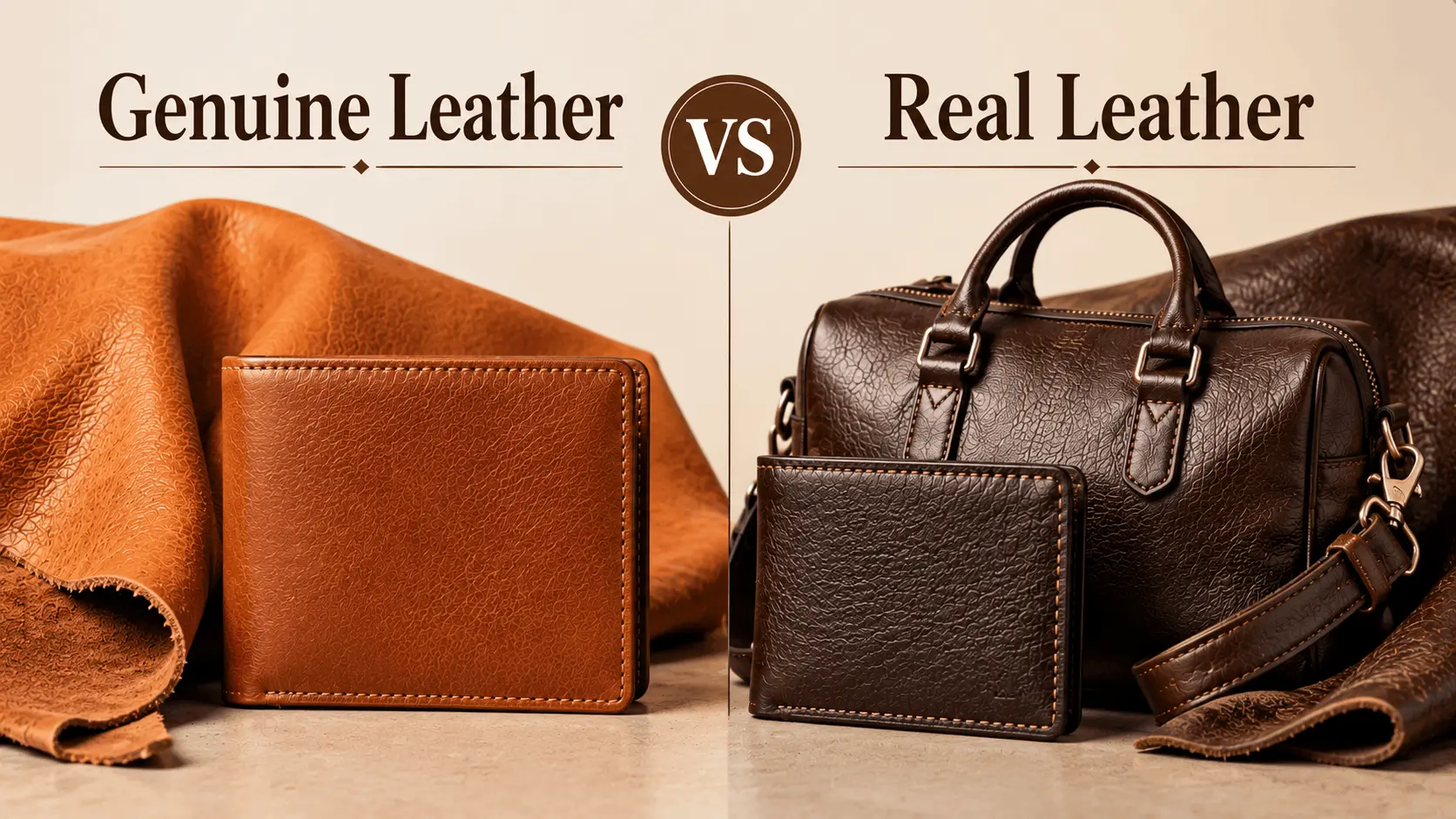
If you’ve ever shopped for leather products, you’ve likely seen the terms genuine leather and real leather used interchangeably. Some sellers claim genuine leather is a premium material, while others suggest it’s lower quality than real leather. This often leaves buyers wondering if there’s actually a difference between the two.
The short answer is yes and no.
Both terms refer to leather made from animal hide, but they don’t always communicate the same information about quality. Understanding what these labels mean can help you make better buying and sourcing decisions, whether you’re purchasing a leather wallet or sourcing products from a manufacturer.
In this guide, we’ll explain the difference between genuine leather and real leather, why these terms are confusing, and what buyers should focus on instead of marketing labels.
What Is Real Leather?
Real leather is a broad term used to indicate that a product is made from actual animal hide rather than synthetic materials such as PU leather or faux leather.
The term itself doesn’t describe the quality, durability, or grade of the leather. It simply tells buyers that the material is natural leather.
Products labeled as real leather can be made from different types of leather, including:
- Full grain leather
- Top grain leather
- Genuine leather
- Split leather
Because the term is so broad, it doesn’t provide enough information for buyers to judge the material’s quality.
Common products marketed as real leather include:
- Jackets
- Bags
- Wallets
- Belts
- Shoes
- Furniture
What Is Genuine Leather?
Genuine leather is also made from real animal hide. Despite common misconceptions, it is not fake leather or synthetic leather.
However, the term “genuine leather” usually refers to leather that has been processed more extensively than full grain or top grain leather. Manufacturers may sand the surface, apply protective coatings, or emboss it to create a consistent appearance.
This makes genuine leather suitable for many everyday products while keeping production costs lower than premium leather grades.
Typical products made from genuine leather include:
Although genuine leather is real leather, its overall quality depends on factors such as the hide selection, tanning process, finishing, and manufacturing standards.
Genuine Leather vs Real Leather: Quick Comparison
| Feature | Genuine Leather | Real Leather |
| Meaning | A specific term used for real leather products | A broad term for natural animal leather |
| Material | Real animal hide | Real animal hide |
| Quality | Varies depending on manufacturing | Can range from basic to premium |
| Durability | Moderate to good | Depends on the leather type |
| Price | Usually affordable | Varies widely |
| Common Products | Wallets, belts, shoes, bags | All types of leather products |
Is Genuine Leather the Same as Real Leather?
In simple terms, yes.
Genuine leather is real leather because it comes from animal hide.
However, real leather is a much broader category. It includes every type of natural leather, from premium full grain leather to more processed leather materials.
Think of it like this:
- Every genuine leather product is made from real leather.
- Not every real leather product is marketed as genuine leather.
This is where many buyers become confused.
When manufacturers use the label “real leather,” they’re simply indicating authenticity. When they use “genuine leather,” they’re usually referring to a particular category of leather rather than its overall quality.
Why Do People Get Confused?
Several factors contribute to the confusion surrounding these terms.
Marketing Language
Many brands use “genuine leather” because it sounds premium, even though it doesn’t necessarily indicate the highest quality.
Different Seller Terminology
Some retailers use “real leather” as a marketing phrase, while others use “genuine leather” for similar products.
Lack of Industry Standards
There is no universal international standard that defines how these labels must be used in product marketing.
Online Product Listings
Many online listings focus on attractive marketing terms instead of providing detailed material specifications, making it difficult for buyers to compare products accurately.
Does Genuine Leather Mean High Quality?
Not necessarily.
The word “genuine” confirms that the material is real leather, but it does not guarantee premium quality.
Leather quality depends on several manufacturing factors, including:
- Hide quality
- Grain layer
- Tanning process
- Surface finishing
- Construction quality
- Factory quality control
This is why buyers should never judge leather products based only on the words printed on the label.
For a better understanding of how leather is classified, read our guide on Understanding Leather Grades.
What Actually Determines Leather Quality?
Instead of focusing only on labels like genuine or real leather, buyers should evaluate the material itself.
Hide Quality
Better hides have fewer scars, insect bites, and surface defects, resulting in stronger and more attractive leather.
Tanning Process
The tanning process affects flexibility, durability, softness, and appearance. Proper tanning significantly improves leather performance.
Grain Layer
Leather that retains more of its natural grain generally offers better strength and durability.
Surface Finishing
Different finishes influence scratch resistance, stain resistance, and overall appearance.
Manufacturing Quality
Even high-quality leather can produce poor products if stitching, hardware, edge finishing, and construction are not done properly.
If you’re looking for a broader overview of leather materials and manufacturing, explore our leather complete guide.
Genuine Leather vs Real Leather: Which Should You Choose?
There isn’t a single answer because the right choice depends on your requirements.
For Budget Buyers
Genuine leather offers good value and is suitable for many everyday products.
For Fashion Products
Both genuine leather and premium leather can work depending on the desired appearance and price point.
For Premium Products
Manufacturers often prefer higher-quality leather types when producing luxury goods with long service lives.
For Long-Term Durability
Products made from premium leather generally perform better over many years of regular use.
For OEM and Private Label Manufacturing
Instead of requesting “genuine leather” or “real leather,” buyers should specify the exact leather type, thickness, finish, and quality requirements before production begins.
Common Myths About Genuine Leather and Real Leather
Myth 1: Genuine Leather Is Fake Leather
False. Genuine leather is made from real animal hide.
Myth 2: Real Leather Is Always Premium
No. Real leather simply means the material is natural leather. Its quality depends on how it is manufactured.
Myth 3: Genuine Leather Doesn’t Last
High-quality genuine leather products can provide many years of reliable use when properly maintained.
Myth 4: All Leather Labels Follow International Standards
There is no single global standard that defines marketing terms such as genuine leather or real leather.
Buying Tips
Before purchasing or sourcing leather products, keep these tips in mind:
- Don’t rely only on marketing labels.
- Ask suppliers about the exact leather type.
- Request material specifications.
- Review leather samples before production.
- Check stitching, hardware, and construction quality.
- Verify the manufacturer’s quality control process.
These steps provide a much better indication of product quality than the label alone.
If you’d like to learn how premium leather types compare, read our detailed guide on Full Grain vs Top Grain.
Conclusion
Genuine leather and real leather are not competing materials. Genuine leather is simply one category within the broader group of real leather products.
Rather than focusing on marketing terminology, buyers should evaluate leather based on its quality, manufacturing process, and intended application. Factors such as hide selection, tanning, finishing, and craftsmanship have a much greater impact on product performance than the label itself.
Whether you’re sourcing products for a private label brand or purchasing leather goods for personal use, understanding these differences helps you make more informed decisions.
To explore the different leather categories in greater detail, read our Types of Leather guide, where we explain the characteristics, advantages, and common applications of each leather type.