




Leather has been valued for centuries because of its durability, timeless appearance, and versatility. From jackets and shoes to bags and furniture, it remains one of the most trusted materials across industries. But if you’ve ever wondered what leather is, how it’s made, or what makes one type better than another, you’re in the right place.
This beginner-friendly guide explains the basics of leather, including how it’s produced, the different leather types, common leather grades, and practical tips for choosing quality leather products.
What Is Leather?
Leather is a natural material made from the processed hides or skins of animals, most commonly cows, goats, sheep, and buffalo. Through a process called tanning, raw hides are transformed into a durable, flexible material that resists decay and lasts for many years.
Unlike synthetic alternatives, real leather develops a unique character over time. Its natural grain, texture, and ability to age gracefully make it a popular choice for clothing, accessories, furniture, and automotive interiors.
How Is Leather Made?
The leather-making process combines traditional craftsmanship with modern technology.
Step 1: Collecting the Hide
Leather production begins with animal hides, usually sourced as a byproduct of the meat industry. Cowhide is the most widely used because of its strength and availability.
Step 2: Cleaning and Preserving
The hides are cleaned to remove dirt, hair, and excess tissue. They are then preserved to prevent decomposition before processing.
Step 3: Tanning
Tanning converts raw hides into usable leather. The two most common methods are:
- Vegetable tanning: Uses natural plant extracts and creates firm, rich-looking leather.
- Chrome tanning: Uses chromium salts for a softer, more flexible finish and faster production.
Step 4: Dyeing
The leather is dyed to achieve different colors while maintaining its natural appearance.
Step 5: Finishing
Finally, the leather may be polished, embossed, waxed, or coated to improve its appearance, durability, and resistance to wear.
Where Does Leather Come From?
Leather is produced from several types of animal hides, each offering different characteristics.
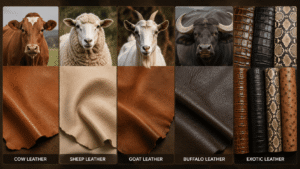
Cow Leather
The most common leather known for its durability, versatility, and long lifespan.
Sheep Leather
Soft, lightweight, and comfortable, making it popular for fashion garments and gloves.
Goat Leather
Naturally flexible with a distinctive grain, often used for wallets, bags, and premium accessories.
Buffalo Leather
Thicker and stronger than cow leather, making it ideal for heavy-duty products.
Exotic Leather
Materials like crocodile, ostrich, and snake leather are primarily used in luxury goods because of their unique textures and limited availability.
Different Types of Leather
Understanding different leather types helps you choose the right product.
Full Grain Leather
The highest-quality leather that retains the natural grain. It is exceptionally durable and develops a beautiful patina over time.
Best for: Premium jackets, belts, bags, and boots.
Top Grain Leather
The surface is lightly sanded to remove imperfections, creating a smoother appearance while maintaining good durability.
Best for: Luxury furniture, handbags, and footwear.
Genuine Leather
Despite the name, genuine leather is a lower grade than full grain or top grain leather. It is made from the remaining layers after the top portion is removed.
Best for: Everyday accessories at an affordable price.
Split Leather
Made from the lower layers of the hide, split leather is softer but less durable.
Best for: Suede products and casual footwear.
Bonded Leather
Manufactured by combining leftover leather fibers with adhesives. It offers the appearance of leather at a lower cost but has a shorter lifespan.
Best for: Budget-friendly furniture and decorative items.
Related Articles: Full Grain vs Top Grain Leather
Leather Type Comparison
| Leather Type | Durability | Appearance | Cost | Best For |
| Full Grain | Excellent | Natural | High | Premium products |
| Top Grain | Very Good | Smooth | High | Bags, shoes, furniture |
| Genuine | Good | Uniform | Medium | Wallets, belts |
| Split | Moderate | Soft | Medium | Suede products |
| Bonded | Low | Artificial | Low | Budget furniture |
Leather Grades Explained
Leather grades indicate the quality of the hide after processing.
- Full Grain: Highest quality with the strongest fibers.
- Top Grain: Slightly refined while maintaining excellent durability.
- Corrected Grain: Sanded and embossed to remove imperfections.
- Split Leather: Produced from lower hide layers.
- Bonded Leather: Made from recycled leather fibers and adhesives.
Higher grades generally offer better durability, appearance, and longevity.
Common Leather Finishes
Different finishes give leather its final look and feel.
Aniline Leather
Dyed with transparent dyes that preserve the natural grain.
Semi-Aniline Leather
Adds a light protective coating while maintaining a natural appearance.
Pigmented Leather
Finished with a protective color coating for improved stain and scratch resistance.
Nubuck Leather
The outer surface is lightly sanded to create a soft, velvety texture.
Suede Leather
Made from the inner layer of the hide, offering a soft and comfortable finish.
Natural Leather vs Synthetic Leather
| Feature | Real Leather | Synthetic Leather |
| Material | Animal hide | Plastic-based materials |
| Durability | High | Moderate |
| Feel | Natural | Artificial |
| Breathability | Excellent | Limited |
| Lifespan | 10 to 30+ years | 2 to 10 years |
| Maintenance | Requires care | Easy to clean |
Common Uses of Leather
Leather is used in many industries because of its strength and premium appearance.
Common applications include:
- Jackets
- Shoes
- Bags
- Wallets
- Belts
- Gloves
- Furniture
- Car interiors
- Watch straps
- Leather aprons
- Saddlery
How to Identify Quality Leather
Before buying leather products, look for these signs:
- A natural grain pattern rather than a perfectly uniform surface.
- A rich leather smell instead of a chemical odor.
- Soft yet firm texture with flexibility.
- Strong, neat stitching.
- Cleanly finished edges.
- Products from reputable manufacturers.
These details often indicate better craftsmanship and higher-quality leather.
Pros and Cons of Leather
Advantages
- Durable and long-lasting
- Timeless appearance
- Comfortable and breathable
- Develops character over time
- Can often be repaired and restored
Disadvantages
- Usually more expensive than synthetic materials
- Requires regular maintenance
- Sensitive to excessive moisture
- Can develop scratches if not cared for properly
How to Care for Leather
Proper care helps leather maintain its appearance for years.
- Wipe away dust with a soft cloth.
- Use a leather conditioner every few months.
- Store leather products in a cool, dry place.
- Avoid prolonged exposure to direct sunlight and moisture.
- Clean spills promptly to prevent stains.
Frequently Asked Questions
What is leather made from?
Leather is made from animal hides or skins that have been treated through the tanning process.
Is genuine leather real leather?
Yes. Genuine leather is real leather, but it is a lower grade than full grain and top grain leather.
Which leather is the highest quality?
Full grain leather is widely considered the highest-quality leather because it retains the natural surface and offers excellent durability.
Is leather waterproof?
No. Most leather is water-resistant to some extent but not completely waterproof unless specially treated.
How long does leather last?
With proper care, quality leather products can last for decades.
Which animal produces the best leather?
Cowhide is the most commonly used because it offers an excellent balance of durability, quality, and versatility.
Is leather eco-friendly?
Leather is a natural material and is often produced as a byproduct of the meat industry. Its environmental impact depends on the tanning process and manufacturing practices.
Can leather be repaired?
Yes. Many leather products can be repaired, conditioned, and restored, extending their lifespan.
Final Thoughts
Understanding what leather is makes it easier to choose products that suit your needs and budget. Whether you’re buying a jacket, bag, belt, or furniture, knowing the different leather types, leather grades, and finishes helps you make a more informed decision.
With proper care, genuine leather remains one of the most durable and timeless materials available, offering both lasting performance and a classic look that improves with age.