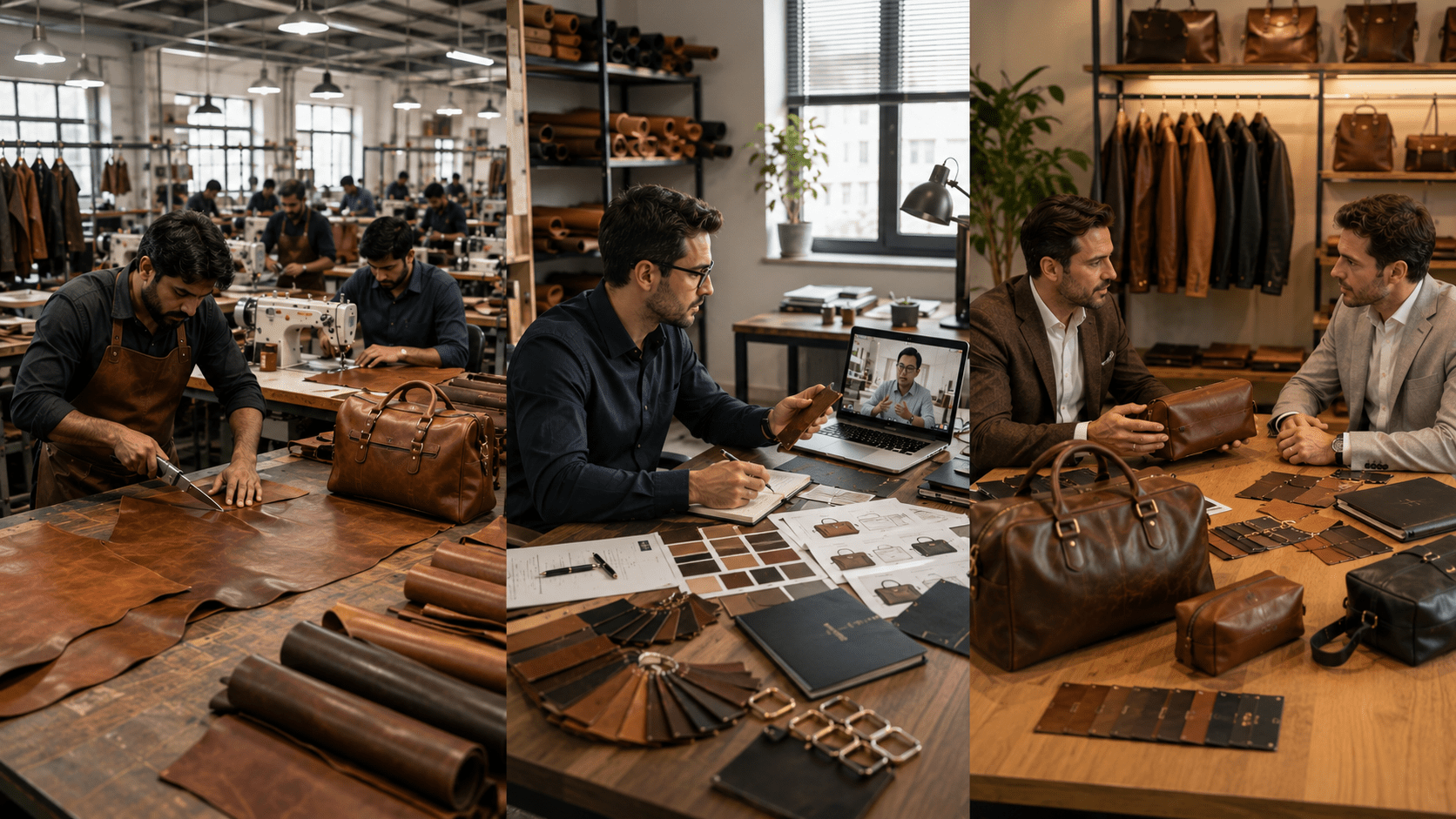
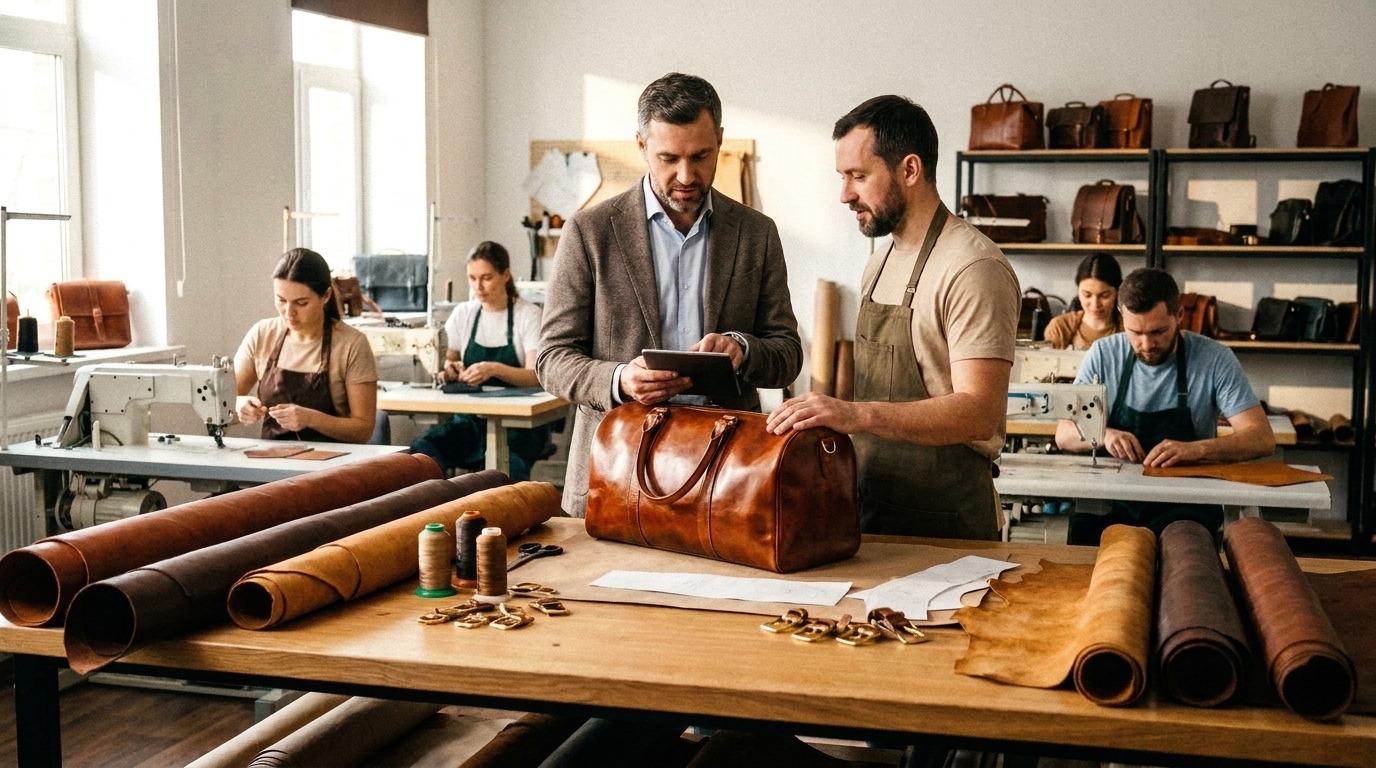
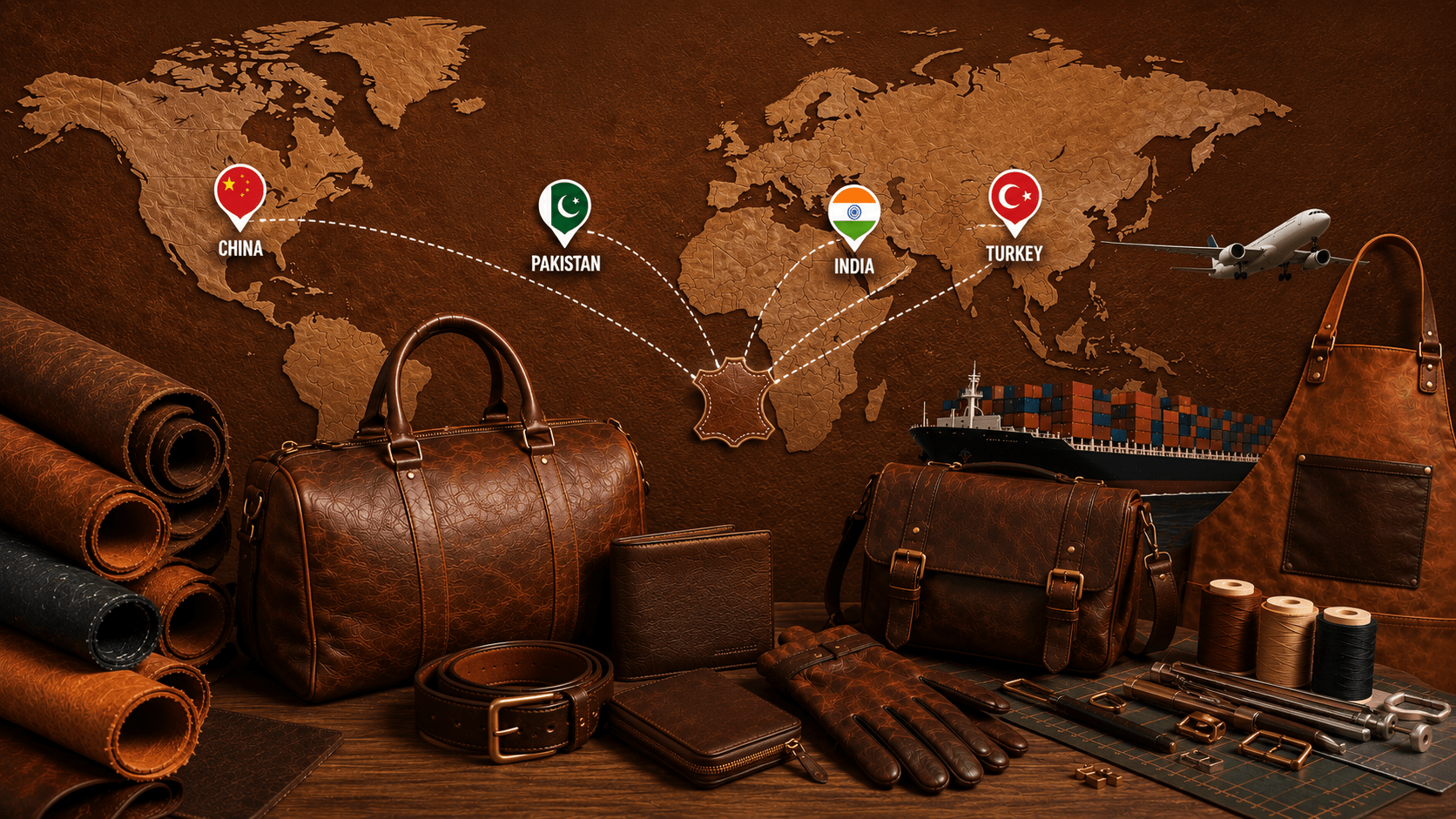
Private label leather bags allow you to sell professionally manufactured leather bags under your own brand without operating a factory. A manufacturer handles production while you control elements such as branding, leather selection, colors, packaging, and, depending on the arrangement, product specifications.
For new and established brands, private labeling can shorten the path from product idea to market. The key is knowing what can be customized, how manufacturing works, and what to confirm before placing a bulk order.
What Are Private Label Leather Bags?
Private label leather bags are produced by a third-party manufacturer and sold under your brand name.
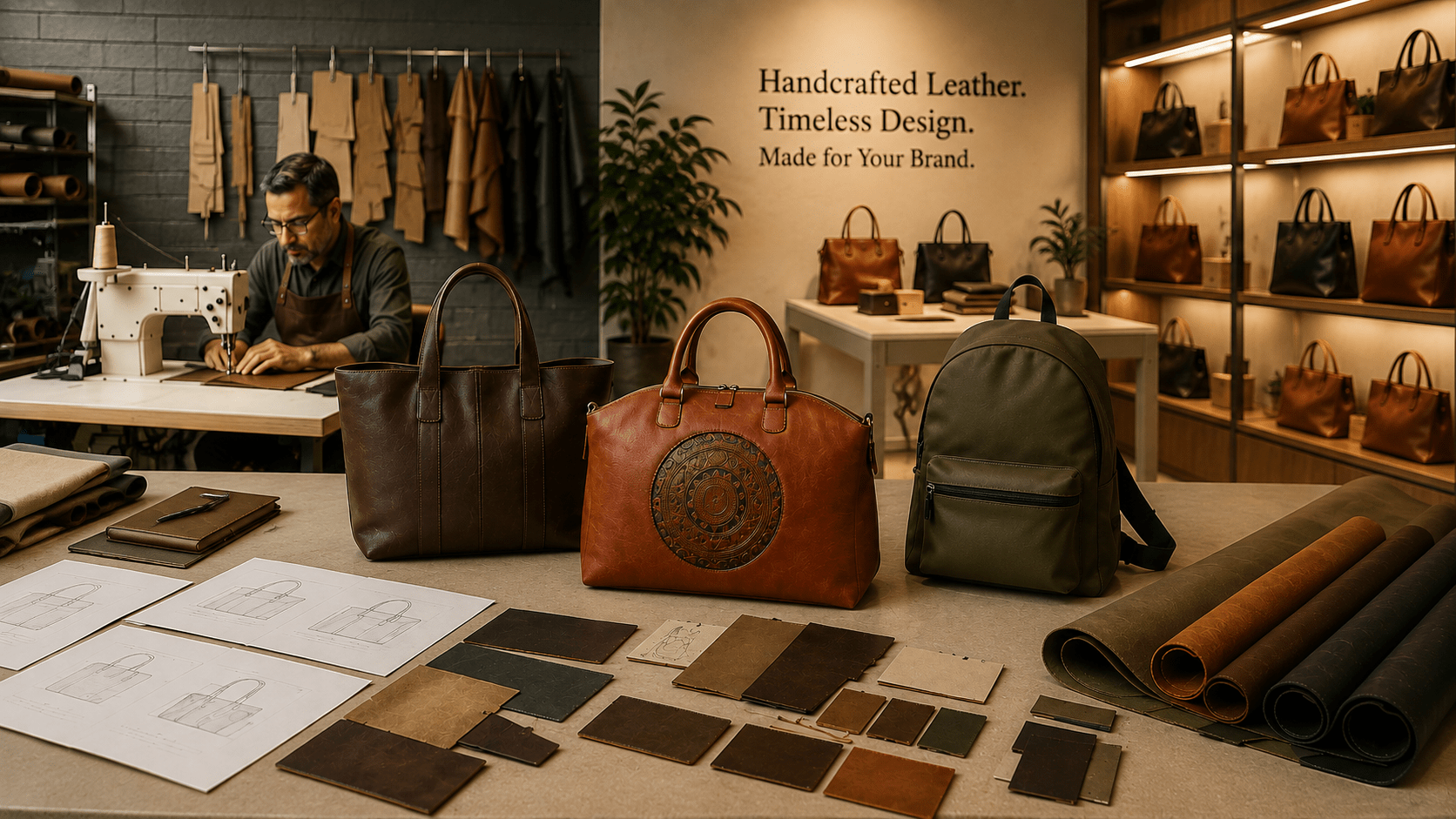
Depending on the manufacturer, you may start with an existing bag design and customize elements such as:
- Leather and color
- Logo
- Hardware
- Lining
- Labels
- Packaging
- Selected design details
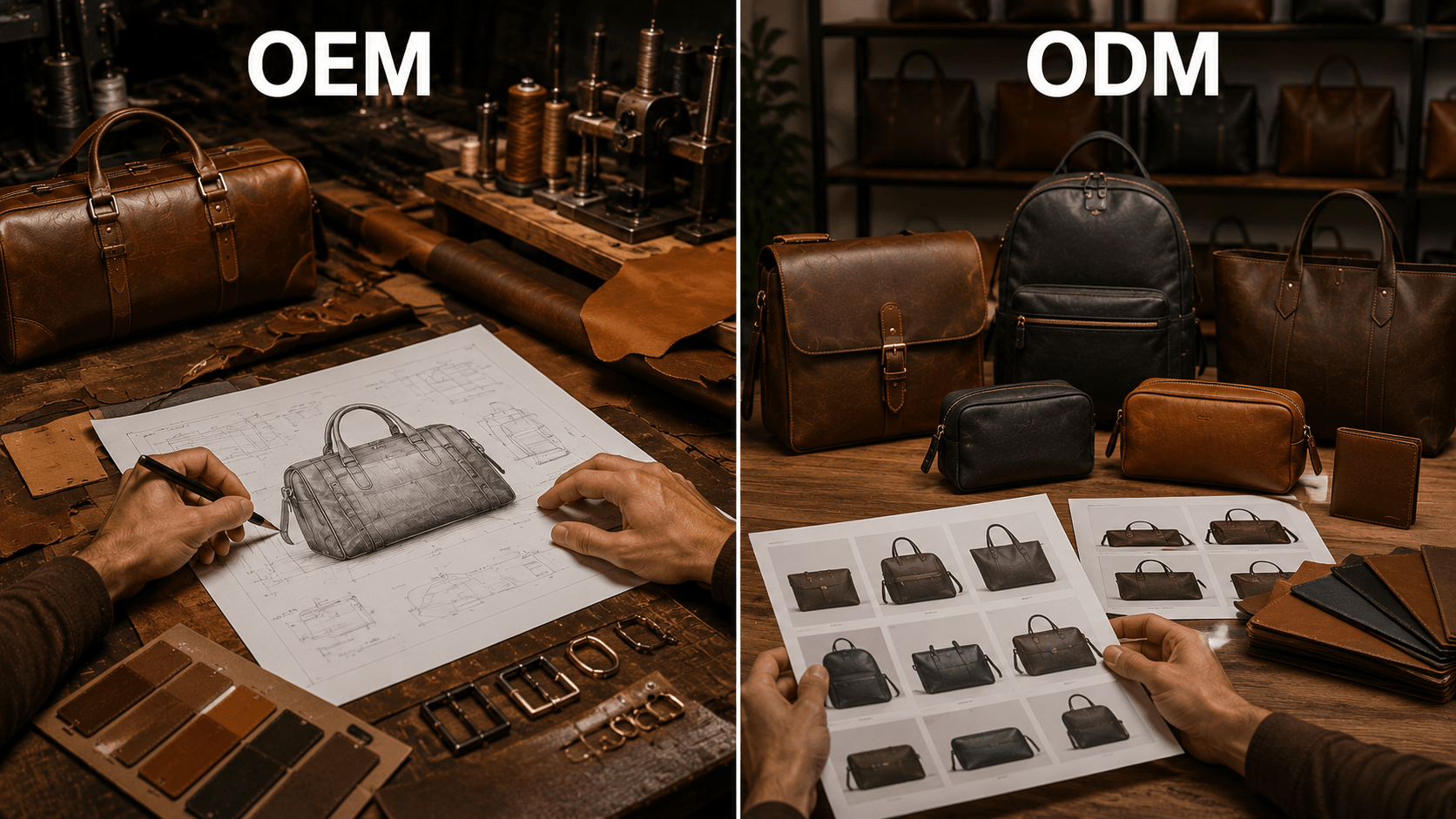
This differs from fully custom OEM production, where a product may be developed specifically around your original specifications. The difference between OEM and private label leather manufacturing becomes particularly important when deciding how unique you want your products to be.
What Types of Leather Bags Can You Private Label?
Private labeling isn’t limited to handbags. Manufacturers may produce:
- Duffle and weekender bags
- Backpacks
- Laptop bags
- Briefcases
- Messenger bags
- Tote bags
- Handbags
- Crossbody bags
- Shoulder bags
- Toiletry bags
- Pouches and clutches
Rather than launching many styles at once, new brands can start with a focused range and expand after identifying which products customers actually buy.
What Can You Customize?
Customization varies between manufacturers, but there are four main areas.
Leather
You may be able to specify full-grain, top-grain, suede, or other leather options along with color, finish, thickness, and animal hide.
Clear leather grades and quality standards for your products help ensure different manufacturers are quoting comparable materials.
Construction
Depending on the private-label program, changes may include dimensions, pockets, compartments, straps, handles, and lining.
Hardware
Zippers, buckles, clasps, rivets, and metal finishes can influence both appearance and manufacturing cost.
Branding
Common options include:
- Embossed or debossed logos
- Metal logo plates
- Woven labels
- Hang tags
- Branded dust bags
- Custom retail packaging
How Does Private Label Leather Bag Manufacturing Work?
The process is generally straightforward:
- Choose the bag
Select an existing design or define the product you need.
- Prepare specifications
Confirm dimensions, leather, color, lining, hardware, branding, and quantity.
- Request a quotation
Send the same specifications to potential manufacturers for a meaningful price comparison.
- Develop a sample
The manufacturer produces a sample for evaluation.
- Review and revise
Check materials, dimensions, construction, hardware, logo placement, and finishing.
- Approve bulk production
Once the sample is approved, production can begin.
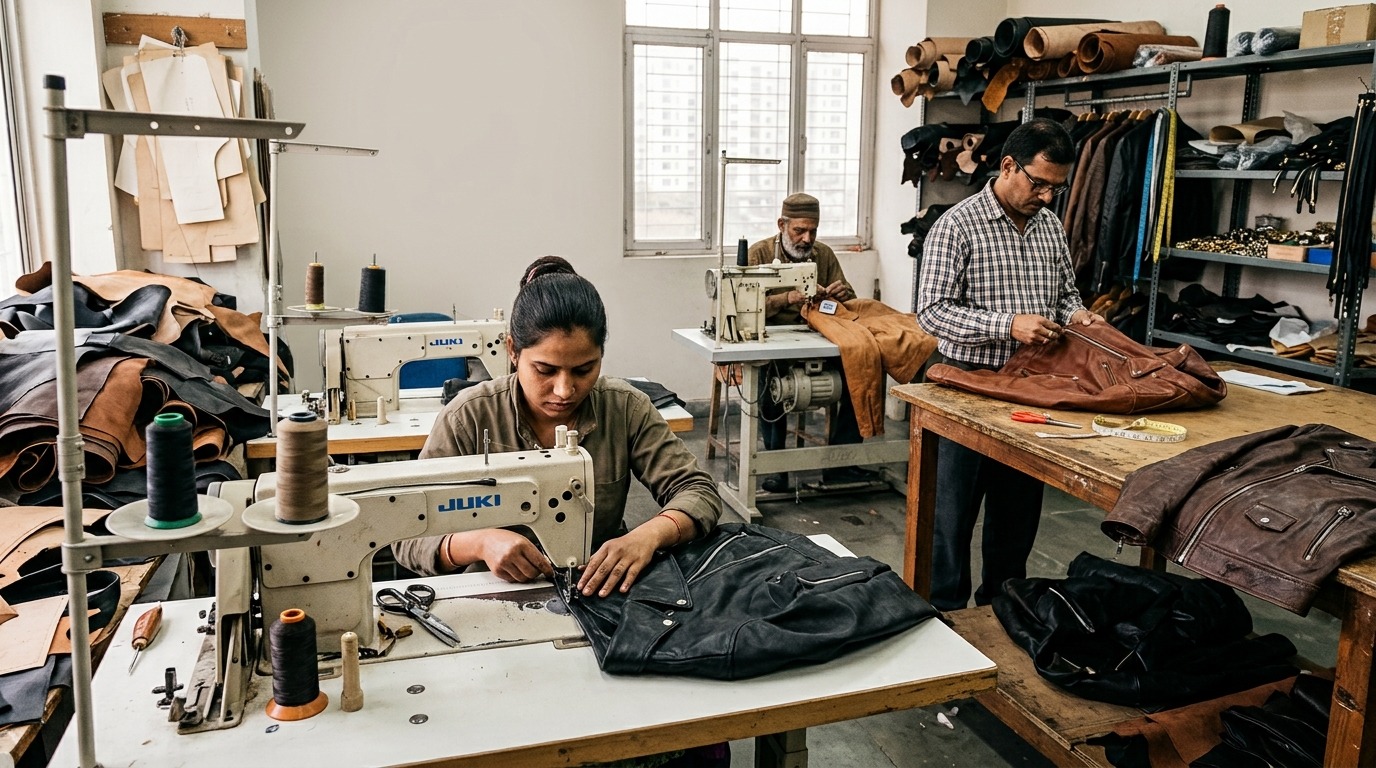
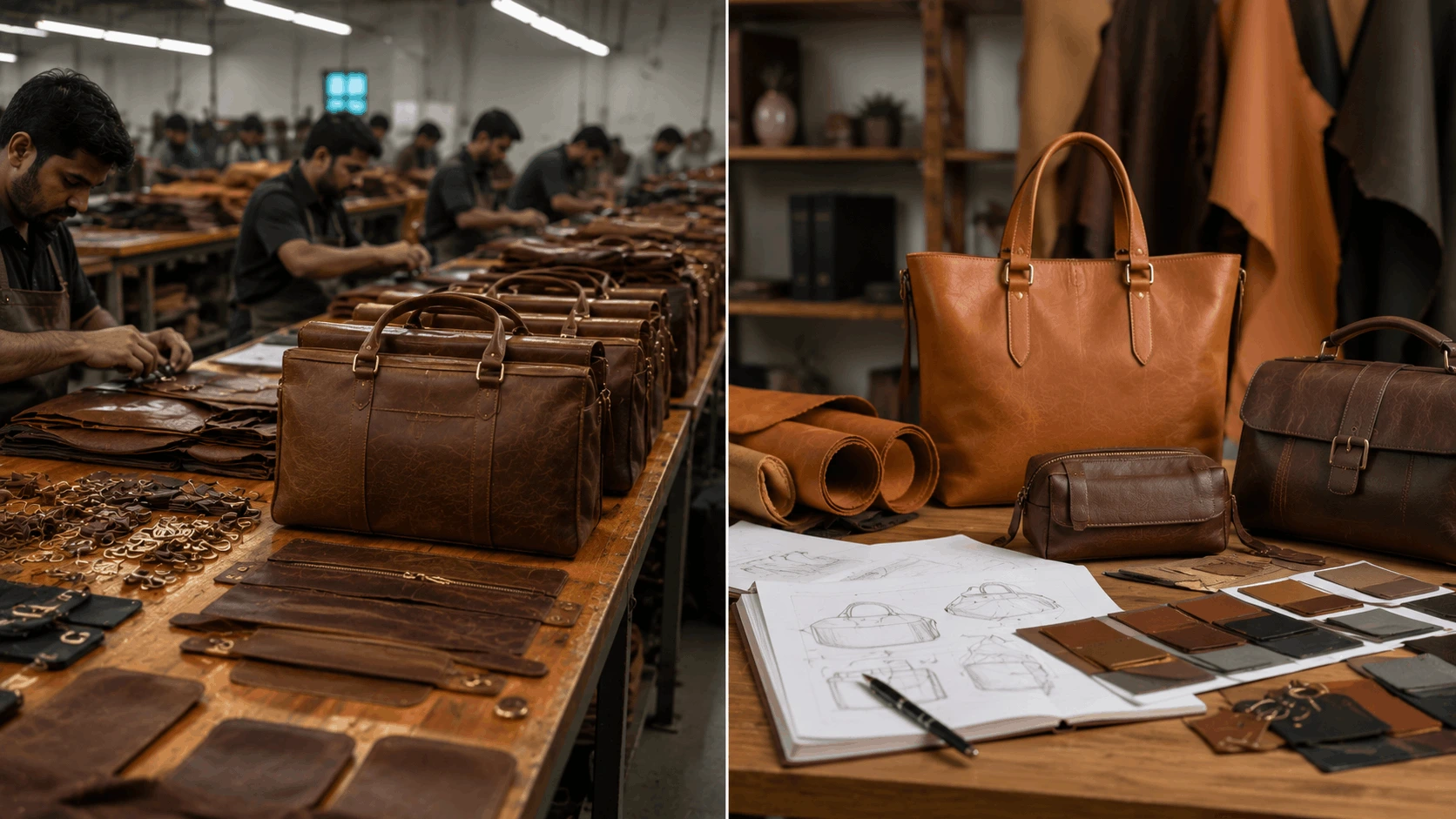
Knowing how leather bags are manufactured from cutting through final assembly can also help you evaluate samples and factory capabilities more accurately.
What Should You Include in Your Product Specification?
Don’t ask manufacturers simply for a price on “500 leather bags.”
Provide:
- Bag dimensions
- Reference images or drawings
- Leather type and thickness
- Color
- Lining
- Pockets and compartments
- Hardware
- Stitching requirements
- Logo placement
- Packaging
- Quantity
The more precise your specification, the easier it becomes to compare quotations fairly.
What Is the MOQ for Private Label Leather Bags?
There is no universal minimum order quantity.
MOQ can depend on:
- Manufacturer
- Bag design
- Leather availability
- Custom colors
- Hardware
- Branding
- Packaging
- Number of styles
Also ask whether the quoted MOQ applies per order, per design, or per color. This distinction can significantly affect the inventory required to launch a collection.
How Much Do Private Label Leather Bags Cost?
There is no reliable universal price because two similar-looking bags can have very different specifications.
The basic cost structure is:
Leather + Hardware + Lining + Labor + Branding + Packaging + Quantity = Manufacturing Cost
Sampling, development, QC, freight, duties, and other expenses may sit outside the quoted unit price. Calculating the broader cost of manufacturing leather products before ordering gives you a more realistic startup budget.
How Do You Find the Right Manufacturer?
Look for manufacturers with experience producing the type of bag you want rather than choosing solely by the lowest quotation.
Compare:
- Bag specialization
- Leather capabilities
- MOQ
- Customization
- Sampling
- Quality control
- Production capacity
- Communication
- Export experience
Brands sourcing internationally can also compare leather-industry businesses through a dedicated leather marketplace such as Tannorium, particularly when they want to identify production partners within specific leather product categories.
Always Approve a Sample Before Production
Your sample should establish the quality standard for bulk production.
Check the:
- Leather
- Dimensions
- Stitching
- Hardware
- Lining
- Logo
- Structure
- Finishing
Document any changes and approve the final version before manufacturing begins.
Private Label vs OEM Leather Bags
| Private Label |
OEM |
| Often starts with an existing design |
Can start with an original design |
| Less product development |
More product development |
| Limited to moderate customization |
Extensive customization |
| Suitable for faster launches |
Suitable for differentiated products |
Neither option is automatically better. Private labels can suit brands prioritizing speed and simplicity, while OEM makes more sense when product uniqueness is central to the brand.
Final Thoughts
Private label leather bags give brands a practical way to enter the leather goods market without owning manufacturing facilities.
Start with a focused product range, define your specifications clearly, compare manufacturers on equivalent requirements, and approve samples before committing to bulk production. The manufacturer handles production, but your brand remains responsible for deciding what level of quality reaches the customer.
FAQs
Can I put my own logo on leather bags?
Yes. Depending on the manufacturer, branding can include embossing, debossing, metal logos, labels, hang tags, and custom packaging.
What is the MOQ for private label leather bags?
MOQ varies by manufacturer, design, materials, customization, and quantity per color or style. Confirm the exact MOQ structure before ordering.
Is private label the same as OEM?
Not necessarily. Private labeling often starts with an existing product that is branded or modified, while OEM can involve developing products around the brand’s own specifications.
Should I order a sample first?
Yes. Approving a sample allows you to confirm materials, construction, dimensions, branding, and finishing before bulk production.