Choosing the right manufacturing model is one of the most important decisions when launching or expanding a leather brand. Whether you’re selling leather bags, jackets, wallets, belts, gloves, or accessories, your production approach directly affects product quality, branding, costs, and long-term growth.
Two of the most common options are OEM (Original Equipment Manufacturer) and private label leather manufacturing. While both allow businesses to outsource production, they differ significantly in terms of customization, investment, and product development.
Understanding these differences can help you avoid costly mistakes, shorten your product launch timeline, and choose a manufacturing partner that aligns with your business goals. In this guide, we’ll explain how OEM and private label leather manufacturing work, compare their key differences, and help you determine which option is best for your brand.
What Is OEM Leather Manufacturing?
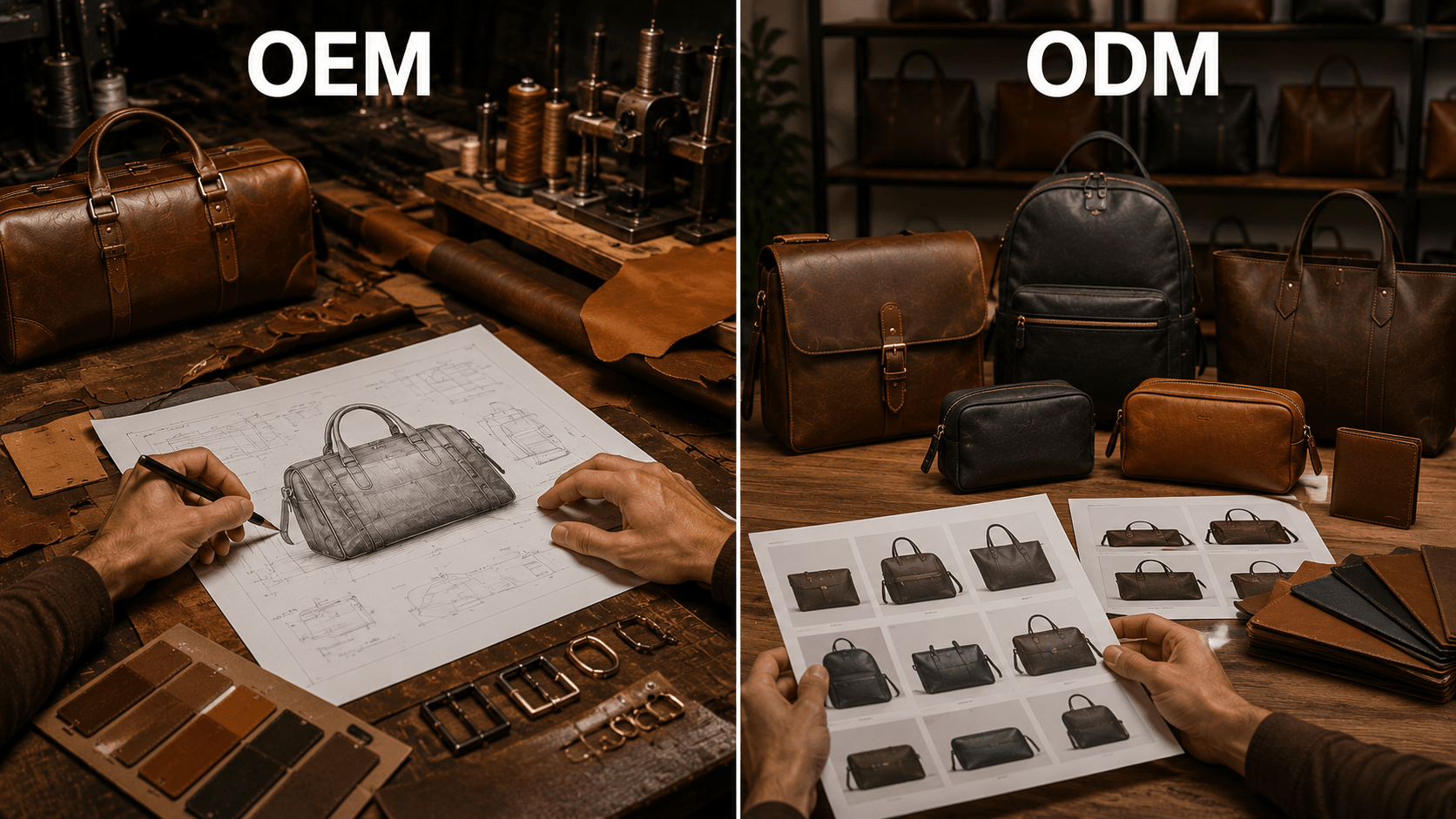
OEM (Original Equipment Manufacturer) leather manufacturing is a production model where a manufacturer creates leather products based entirely on your specifications. Instead of selecting an existing design, you develop a unique product concept, and the manufacturer brings it to life.
With OEM manufacturing, you have greater control over nearly every aspect of the product, including:
- Product design and dimensions
- Leather type and grade
- Colors and finishes
- Hardware and accessories
- Stitching style
- Branding elements and packaging
This level of customization makes OEM manufacturing ideal for businesses that want to build a distinctive product line rather than selling products that already exist in the market.
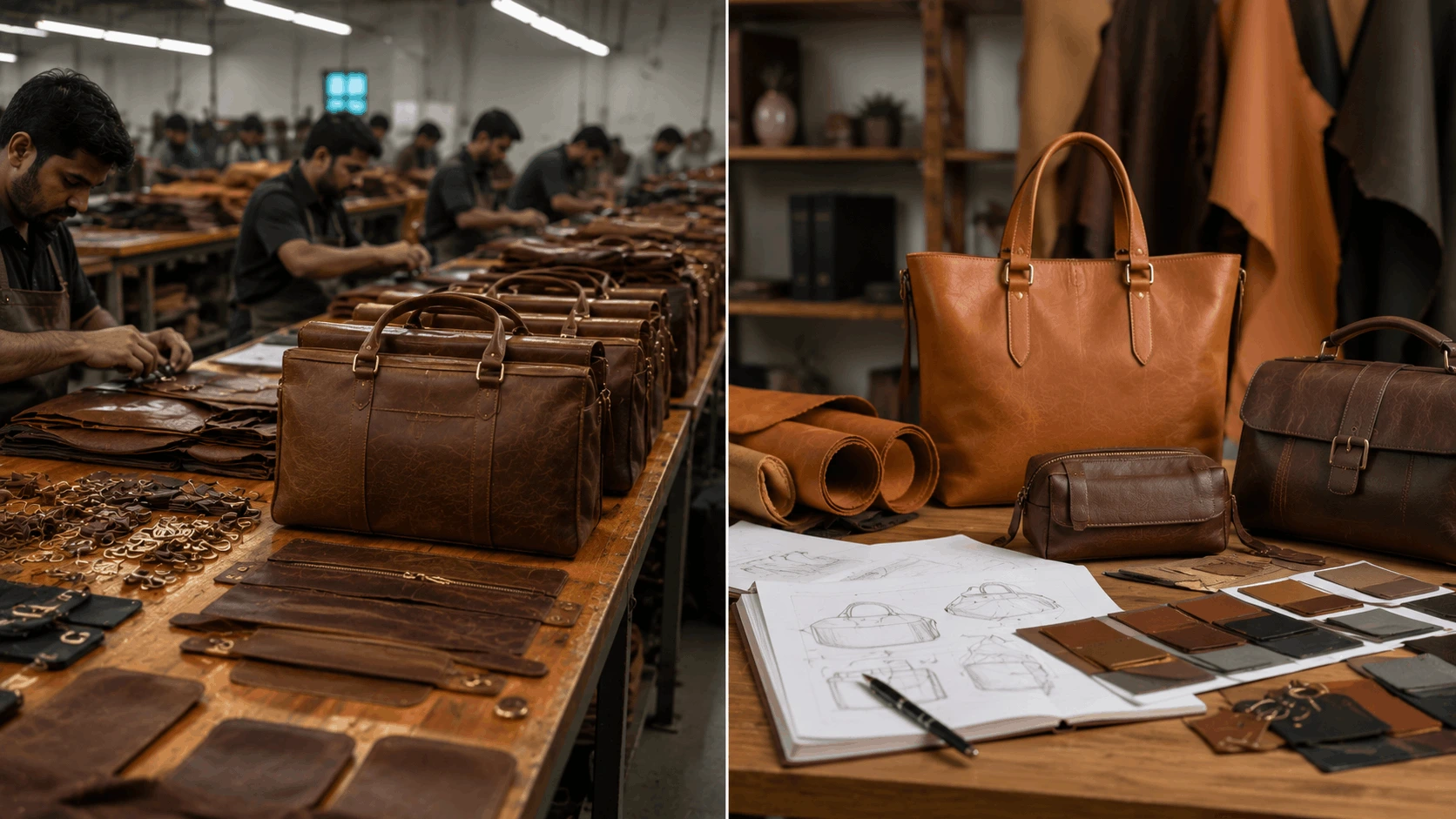
The OEM process typically begins with sharing design files, sketches, or product requirements. The manufacturer develops prototypes for approval before moving into mass production. Depending on the complexity of the product, several revisions may be required before the final design is ready.
OEM leather manufacturing is best suited for:
- Established leather brands
- Businesses launching original product collections
- Companies seeking long-term product differentiation
- Brands focused on premium quality and unique craftsmanship
Although OEM generally requires a higher initial investment and longer development time, it offers greater flexibility and stronger brand identity in the long run.
What Is Private Label Leather Manufacturing?
Private label leather manufacturing allows businesses to sell leather products under their own brand without developing entirely new designs. Instead, manufacturers provide ready-made or existing product styles that can be customized with your branding.
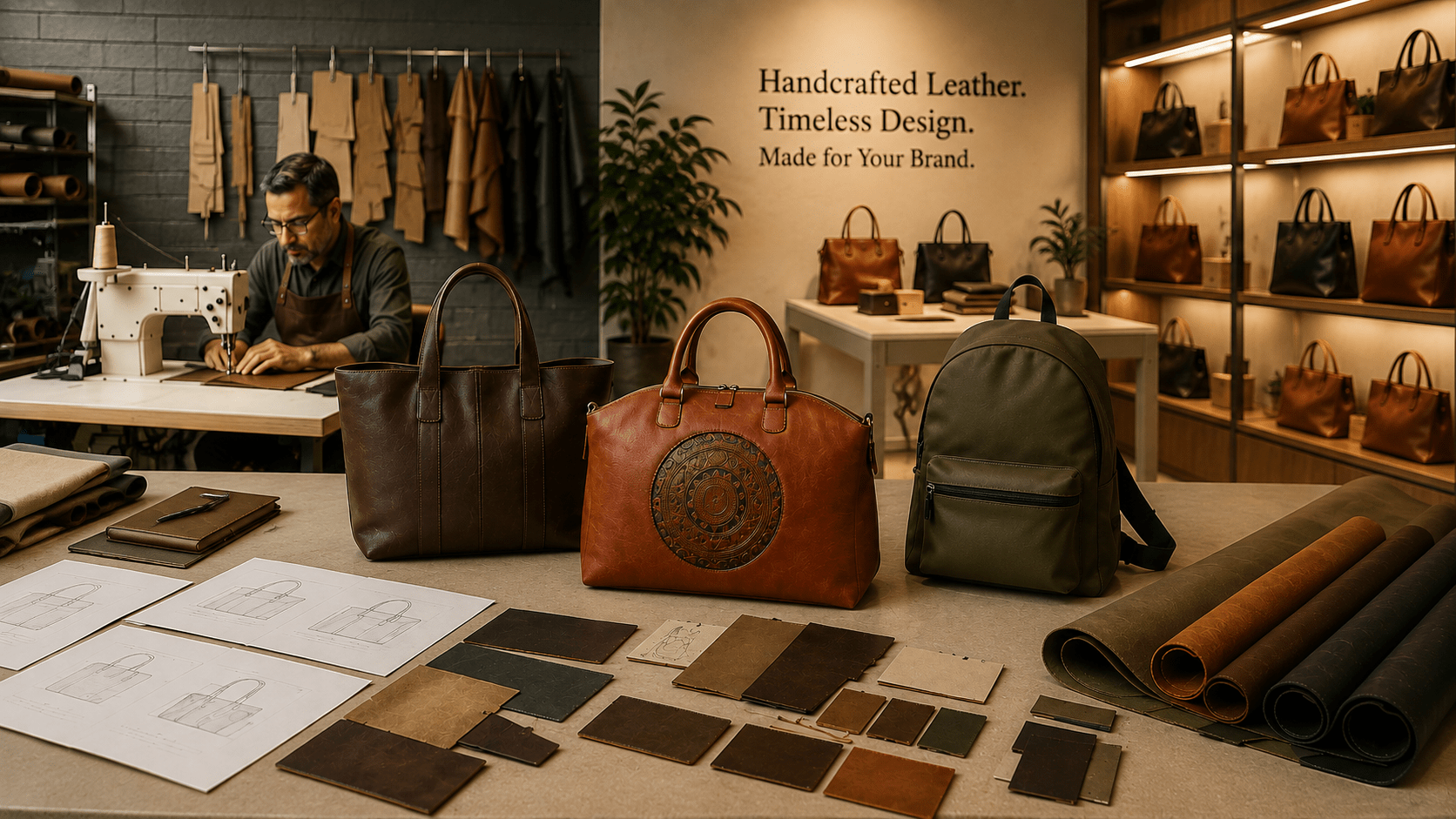
Rather than creating products from scratch, businesses typically choose from a manufacturer’s existing catalog and personalize elements such as:
- Logo embossing or printing
- Labels and tags
- Packaging
- Color options (where available)
- Minor hardware or material variations
Because the product designs are already developed, private label manufacturing significantly reduces product development time and costs.
This model is especially popular among startups, online retailers, and businesses looking to enter the leather market quickly without investing heavily in research, design, and prototyping.
Private label leather manufacturing is often the right choice for:
- Startup brands
- Ecommerce businesses
- Retail stores
- Small wholesalers
- Businesses testing new product categories
While private label products may offer fewer customization options than OEM manufacturing, they provide a faster and more cost-effective path to launching a branded leather product line.
OEM vs Private Label Leather Manufacturing: Key Differences
Although both manufacturing models help businesses outsource production, they serve different business objectives. Here’s a quick comparison:
| Feature |
OEM |
Private Label |
| Product Design |
Fully custom designs |
Existing manufacturer designs |
| Customization |
Extensive customization |
Limited customization |
| Branding |
Complete brand control |
Brand logo and packaging customization |
| Development Cost |
Higher |
Lower |
| Time to Market |
Longer |
Faster |
| Minimum Order Quantity (MOQ) |
Usually higher |
Often lower |
| Investment |
Higher upfront investment |
Lower initial investment |
| Best For |
Established brands and custom products |
Startups and fast product launches |
The right choice depends on your budget, branding strategy, timeline, and the level of product uniqueness you want to achieve.
Advantages of OEM Leather Manufacturing
OEM leather manufacturing offers several advantages for brands that want complete control over their products and long-term market differentiation.
Complete Product Customization
OEM allows you to customize every detail, from leather selection and thickness to stitching, hardware, lining, and finishing techniques. This creates products tailored specifically to your brand vision.
Stronger Brand Identity
Exclusive designs help establish a recognizable brand instead of competing with products that may already be sold by multiple businesses. Unique products also strengthen customer loyalty and improve brand positioning.
Greater Design Flexibility
Whether you’re creating premium leather jackets, handcrafted bags, custom wallets, or specialized leather accessories, OEM manufacturing gives you the flexibility to develop products that meet your exact specifications.
Better Product Differentiation
Custom-designed products are harder for competitors to replicate, giving your business a stronger competitive advantage. This differentiation becomes increasingly valuable as your brand grows in a competitive marketplace.
Long-Term Scalability
Once your product designs are finalized and production processes are established, OEM manufacturing provides a solid foundation for expanding your product range while maintaining consistent quality and brand standards.
By investing in custom manufacturing early, businesses can build a distinctive product portfolio that supports long-term growth and stronger customer recognition.
Advantages of Private Label Leather Manufacturing
Private label leather manufacturing is a practical option for businesses that want to launch branded products without investing in custom product development. Since manufacturers already have proven designs and production processes, brands can focus on marketing and sales instead of creating products from scratch.
Faster Product Launch
Because the product designs already exist, private label manufacturing significantly reduces development time. This allows businesses to introduce new products to the market much faster than with OEM manufacturing.
Lower Development Costs
Private label production eliminates many of the expenses associated with product design, prototyping, and testing. This makes it an affordable option for businesses with limited budgets.
Simpler Production Process
With fewer customization requirements, production is generally more straightforward. Manufacturers can begin production sooner, helping businesses maintain a steady inventory.
Easier Inventory Planning
Standardized products make forecasting and inventory management more predictable. Businesses can restock popular items without waiting for lengthy product development cycles.
Ideal for Startups
New brands can establish a presence in the market while keeping initial investment relatively low. As the business grows, they can later transition to OEM manufacturing for more exclusive product lines.
Which Option Is Right for Your Brand?
The best manufacturing model depends on your business goals, budget, and long-term strategy.
Startups
Private label manufacturing is often the better choice for startups. It requires less capital, offers quicker market entry, and reduces the risks associated with launching a new brand. Once demand grows, businesses can gradually introduce OEM products.
Ecommerce Brands
For online stores, both options can work well. Businesses looking to test product demand or expand quickly may benefit from private label manufacturing. Ecommerce brands aiming to build a premium identity with exclusive products should consider OEM manufacturing.
Retailers
Retail stores often benefit from private label manufacturing because it provides a wide product selection with lower inventory costs. However, retailers looking to offer exclusive collections can use OEM to create products unavailable from competitors.
Wholesalers
Wholesalers usually prioritize production efficiency and competitive pricing. Private label manufacturing is often the most practical solution, although OEM can be valuable for clients requesting custom products.
Established Brands
Established brands generally benefit more from OEM manufacturing. Exclusive product designs strengthen brand recognition, improve customer loyalty, and help differentiate products in competitive markets.
Questions to Ask Your Leather Manufacturer
Before selecting a manufacturing partner, ask questions that help you evaluate their capabilities and reliability.
- Do you offer both OEM and private label leather manufacturing services?
- What are your minimum order quantities (MOQs)?
- Can I customize leather types, hardware, colors, and finishes?
- What branding options do you provide, such as embossing, labels, and packaging?
- Do you provide product samples before mass production?
- What are your average production and delivery lead times?
Clear answers to these questions will help you choose a manufacturer that aligns with your business requirements.
Tips for Choosing the Right Leather Manufacturing Partner
Selecting the right manufacturer is just as important as choosing between OEM and private label production.
- Review the manufacturer’s experience with leather products similar to yours.
- Request product samples to evaluate leather quality, stitching, hardware, and craftsmanship.
- Verify production capacity to ensure the manufacturer can meet future demand.
- Assess communication and responsiveness throughout the quotation and sampling process.
- Confirm export experience if you plan to source products internationally.
- Ask about quality control procedures to ensure consistent production standards.
It’s also helpful to review customer feedback, certifications, and previous projects before making a long-term commitment.
Final Thoughts
Both OEM and private label leather manufacturing offer valuable opportunities for businesses, but neither option is universally better. The right choice depends on your budget, product goals, desired level of customization, and time-to-market requirements.
If you want complete control over product design and long-term brand differentiation, OEM manufacturing is the stronger option. If your priority is launching products quickly with lower upfront investment, private label manufacturing provides a faster and more cost-effective solution.
Whichever model you choose, partnering with an experienced leather manufacturer and maintaining clear communication throughout the production process will help ensure consistent quality and long-term business success.
FAQs
What is the difference between OEM and private label?
OEM manufacturing creates products based on your custom designs and specifications, while private label manufacturing uses existing product designs that are branded with your company’s logo and packaging.
Is OEM better than private label?
Not necessarily. OEM is better for businesses seeking unique products and complete customization, whereas private label is ideal for brands that want to launch products quickly with a lower investment.
Which option is more affordable?
Private label manufacturing is generally more affordable because it eliminates the costs associated with product design, prototyping, and extensive customization.
Can startups use OEM manufacturing?
Yes, but OEM usually requires a higher investment and longer development timeline. Many startups begin with private label manufacturing before moving to OEM as their business grows.
Can manufacturers offer both OEM and private label services?
Yes. Many experienced leather manufacturers provide both OEM and private label services, allowing businesses to choose the production model that best fits their current needs and future growth plans.