


Best Leather Manufacturers in the World (2026 List)

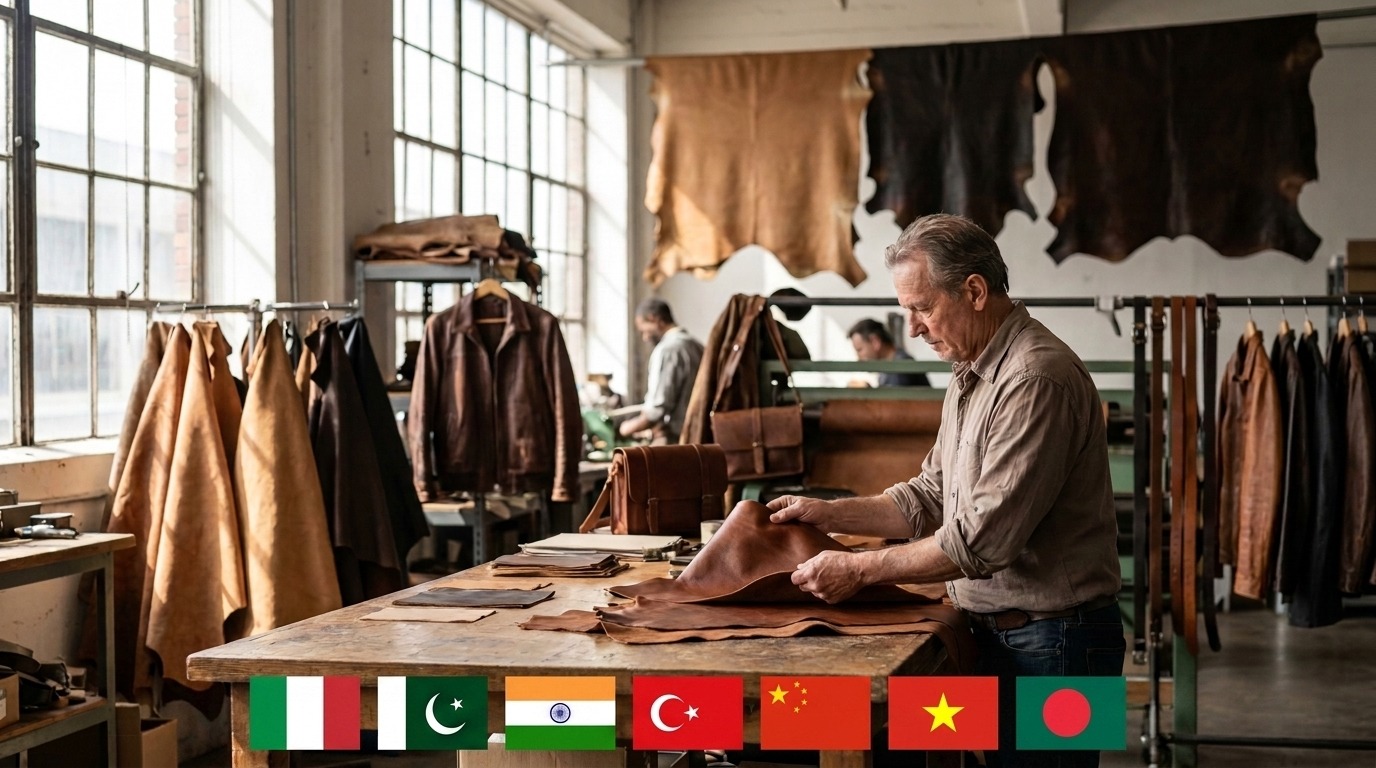
Finding the best leather manufacturers is one of the most important decisions for any business selling leather products. Whether you’re launching a new brand, expanding your product line, sourcing wholesale inventory, or looking for a reliable OEM partner, the manufacturer you choose directly affects product quality, production timelines, customer satisfaction, and long-term business growth.
Today, thousands of leather manufacturers operate across the world, producing everything from leather jackets and bags to gloves, belts, wallets, footwear, equestrian equipment, and industrial leather goods. However, not every factory offers the same level of craftsmanship, manufacturing capabilities, or quality standards. Choosing the right partner requires evaluating much more than price alone.
Before a manufacturer begins producing any leather product, the leather itself must go through a detailed production process involving hide preparation, tanning, finishing, and quality control. Understanding how leather is made helps buyers better evaluate the materials that manufacturers use and the quality they can expect from finished products.
This guide explains what separates the world’s best leather manufacturers, highlights the leading leather-producing countries, and provides practical advice for choosing the right manufacturing partner in 2026.
The Global Leather Manufacturing Industry in 2026
Leather manufacturing continues to be one of the world’s largest material-based industries, supplying products to fashion brands, luxury labels, outdoor companies, automotive manufacturers, furniture makers, equestrian businesses, sports equipment companies, and industrial sectors.
Modern leather manufacturing has evolved far beyond traditional craftsmanship. Many manufacturers now combine skilled artisans with advanced production equipment to achieve greater precision, consistency, and efficiency while maintaining high-quality standards.
Several trends are shaping the industry in 2026.
Increased Demand for Private Label Products
Many e-commerce businesses and retailers are introducing their own leather brands rather than selling generic products. As a result, manufacturers offering customization, branding, and flexible production have become increasingly valuable.
Growth of Global Sourcing
Businesses are no longer limited to local factories. Improvements in international logistics and digital communication allow companies to source leather products from manufacturers across multiple countries while comparing prices, capabilities, and production quality.
Greater Focus on Sustainability
Environmental responsibility has become an important consideration throughout the leather supply chain. Many manufacturers now work with responsible tanneries, improve waste management practices, and optimize production processes to reduce environmental impact while meeting customer expectations.
Technology Improving Manufacturing
Digital pattern making, automated cutting systems, advanced stitching equipment, and improved quality control procedures have increased production efficiency without replacing skilled craftsmanship. Manufacturers that successfully combine modern technology with experienced leatherworkers often produce more consistent results.
What Makes a Leather Manufacturer the Best?
There is no single manufacturer that is the best for every buyer. A factory specializing in luxury handbags may not be the right choice for tactical hunting gear, while a manufacturer producing thousands of leather gloves each day may not offer the customization needed for premium handcrafted products.
Instead of searching for the biggest factory, buyers should evaluate manufacturers using several important criteria.
Product Quality
Quality begins with material selection.
The best manufacturers carefully select leather based on the product being produced, considering factors such as durability, flexibility, grain quality, thickness, and finishing. High-quality materials combined with skilled craftsmanship result in products that perform better and last longer.
Manufacturing Experience
Experience often translates into greater production efficiency and better problem-solving.
Manufacturers that have specialized in leather production for many years usually have established workflows, trained workers, and refined quality control systems that help maintain consistent product standards.
Product Specialization
Many of the world’s leading manufacturers specialize in specific product categories rather than attempting to manufacture every type of leather product.
For example, some factories focus primarily on:
- Leather jackets
- Leather bags
- Leather gloves
- Leather footwear
- Leather belts
- Hunting gear
- Motorcycle apparel
- Leather aprons
- Equestrian equipment
Choosing a manufacturer with experience in your product category often produces better results than working with a general-purpose factory.
Custom Manufacturing Capabilities
Businesses planning to build their own brand should evaluate whether a manufacturer offers customization services.
Many manufacturers support:
- OEM manufacturing
- Private label production
- Custom logo embossing
- Personalized hardware
- Custom colors
- Custom packaging
- Product development
Understanding the differences between OEM manufacturing and private label production helps businesses choose the most suitable manufacturing model for their products.
Production Capacity
Production capacity should match your business requirements.
Some manufacturers are ideal for small production runs and startup brands, while others are equipped to handle large wholesale orders for international retailers.
Important considerations include:
- Minimum order quantities (MOQs)
- Monthly production capacity
- Scalability
- Production scheduling
- Delivery timelines
Quality Control
Reliable manufacturers inspect products throughout the production process rather than waiting until manufacturing is complete.
Strong quality control programs typically include inspections during:
- Material selection
- Cutting
- Stitching
- Hardware installation
- Finishing
- Final packaging
Consistent quality control reduces defects, minimizes returns, and helps maintain long-term customer satisfaction.
Communication and Customer Support
Clear communication becomes increasingly important when working with international manufacturers.
Professional manufacturers respond promptly, provide accurate quotations, communicate realistic production timelines, and keep buyers informed throughout production.
Effective communication also helps prevent misunderstandings regarding product specifications, materials, customization, and shipping requirements.
Export Experience
Manufacturers serving international customers should understand export documentation, international shipping procedures, customs requirements, and packaging standards.
Factories with established export experience often make the sourcing process significantly smoother for overseas buyers.
Best Leather Manufacturing Countries
Different countries have developed strengths in particular areas of leather manufacturing. Understanding these specializations helps buyers identify locations that best match their sourcing requirements.
Italy
Italy is widely recognized for producing premium leather goods known for exceptional craftsmanship, luxury materials, and high-end fashion.
Italian manufacturers often specialize in:
- Luxury handbags
- Designer leather jackets
- Premium footwear
- High-end accessories
Many luxury fashion brands continue to source products from Italian manufacturers because of their long history of leather craftsmanship and attention to detail.
Pakistan
Pakistan has become one of the world’s leading leather manufacturing hubs, supplying products to international brands across North America, Europe, the Middle East, and Australia.
The country has developed a strong reputation for manufacturing:
- Leather jackets
- Leather gloves
- Leather bags
- Leather aprons
- Tactical and hunting gear
- Leather sports goods
- Motorcycle apparel
- Industrial leather products
Businesses looking for competitive pricing combined with skilled craftsmanship often evaluate reliable leather manufacturers in Pakistan when sourcing leather products.
India
India has one of the world’s largest leather industries, supported by an extensive manufacturing workforce and strong export infrastructure.
Manufacturers commonly produce:
- Leather footwear
- Leather bags
- Fashion accessories
- Small leather goods
- Corporate leather products
Many Indian manufacturers offer both wholesale production and private label services for international buyers.
Turkey
Turkey has earned recognition for producing fashion-oriented leather products with relatively short lead times for European markets.
Manufacturers frequently specialize in:
- Leather garments
- Fashion jackets
- Handbags
- Footwear
Its geographic location also provides logistical advantages for many European buyers.
China
China remains one of the world’s largest manufacturing centers across numerous industries, including leather products.
Chinese manufacturers often provide:
- Large production capacity
- Competitive pricing
- Extensive customization
- Efficient supply chains
Many factories are capable of handling high-volume production for international brands.
Vietnam
Vietnam has become an increasingly attractive manufacturing destination due to its skilled workforce and expanding export capabilities.
The country is particularly active in:
- Leather footwear
- Sports equipment
- Fashion accessories
- Travel products
Bangladesh
Bangladesh continues to strengthen its leather manufacturing sector through growing investments in production facilities and export-focused manufacturing.
Manufacturers commonly produce:
- Leather goods
- Footwear
- Bags
- Fashion accessories
Competitive labor costs have helped the country become an important sourcing destination for international buyers.
Comparing Leading Leather Manufacturing Countries
| Country | Best Known For | Suitable For |
| Italy | Luxury leather goods | Premium brands |
| Pakistan | Jackets, gloves, aprons, hunting gear | OEM, wholesale, private label |
| India | Footwear, bags, accessories | Fashion brands |
| Turkey | Fashion leather garments | European sourcing |
| China | Large-scale manufacturing | High-volume production |
| Vietnam | Footwear and sports goods | Export manufacturing |
| Bangladesh | Leather goods and footwear | Cost-effective production |
How to Choose the Right Leather Manufacturer
Even after identifying the right country, selecting an individual manufacturer requires careful evaluation. A reliable supplier should align with your product requirements, quality expectations, production capacity, and long-term business goals.
Before requesting a quotation or placing an order, consider asking questions such as:
- Do they specialize in your product category?
- What leather grades and materials do they use?
- Can they produce custom designs or private label products?
- What are their minimum order quantities?
- Do they provide samples before mass production?
- What quality control procedures are followed?
- What certifications or compliance standards do they maintain?
- What are the expected production and shipping timelines?
- Can they support future growth as your business expands?
Evaluating these factors helps reduce sourcing risks and increases the likelihood of building a successful long-term manufacturing partnership.
Best Leather Manufacturers by Product Category
Not every leather manufacturer produces the same products. While some factories focus on fashion accessories, others specialize in industrial leather goods, outdoor equipment, or luxury apparel. Choosing a manufacturer with experience in your product category often leads to better craftsmanship, more efficient production, and higher product quality.
Below are some of the most common leather product categories and the types of manufacturers that specialize in each.
Leather Jacket Manufacturers
Leather jackets require precise pattern making, accurate panel cutting, reinforced stitching, durable zippers, premium linings, and consistent sizing. Even small production errors can affect the fit, comfort, and appearance of the finished garment.
Manufacturers specializing in leather jackets typically produce:
- Fashion jackets
- Bomber jackets
- Biker jackets
- Racer jackets
- Varsity jackets
- Aviator jackets
- Suede jackets
- Shearling jackets
Producing high-quality jackets involves dozens of manufacturing steps, from selecting suitable leather to final quality inspection. Understanding how leather jackets are manufactured provides buyers with valuable insight into the craftsmanship required for premium outerwear.
Leather Bag Manufacturers
Leather bags are among the most diverse leather products available today, serving fashion, travel, business, and everyday lifestyle needs.
Experienced bag manufacturers commonly produce:
- Tote bags
- Backpacks
- Messenger bags
- Duffel bags
- Crossbody bags
- Laptop bags
- Briefcases
- Travel bags
When selecting a bag manufacturer, buyers should evaluate stitching quality, reinforcement methods, hardware durability, lining materials, and edge finishing.
Leather Glove Manufacturers
Leather gloves require a different manufacturing process than most leather products because precision and comfort are essential.
Leading manufacturers often specialize in:
- Fashion gloves
- Driving gloves
- Motorcycle gloves
- Winter gloves
- Work gloves
- Tactical gloves
Factories with glove manufacturing experience typically invest in precise cutting techniques and detailed stitching to achieve consistent sizing and flexibility.
Leather Apron Manufacturers
Leather aprons are widely used by professionals who require durable protective workwear.
Common customers include:
- Chefs
- Blacksmiths
- Woodworkers
- Barbers
- Welders
- Leather craftsmen
- Grill enthusiasts
Manufacturers often provide custom options such as adjustable straps, tool pockets, reinforced stitching, personalized branding, and multiple leather thicknesses depending on the intended application.
Leather Gun Case Manufacturers
Gun cases require manufacturers with experience in both leather craftsmanship and protective product construction.
Manufacturers commonly produce:
- Rifle cases
- Shotgun cases
- Pistol cases
- Scoped rifle cases
- Soft gun cases
High-quality gun cases often include padded interiors, reinforced stitching, heavy-duty zippers, shoulder straps, and moisture-resistant materials.
Leather Knife Roll Manufacturers
Knife rolls are designed primarily for professional chefs, culinary schools, restaurants, and outdoor cooking enthusiasts.
Manufacturers generally offer:
- Chef knife rolls
- Culinary tool organizers
- Waxed canvas and leather combinations
- Personalized knife rolls
- Professional cooking gear
Important considerations include blade protection, secure closures, durable handles, and organized storage compartments.
Leather Belt Manufacturers
Although leather belts appear simple, consistent sizing and accurate finishing require experienced production.
Manufacturers frequently produce:
- Dress belts
- Casual belts
- Western belts
- Work belts
- Tactical belts
Many factories also offer custom buckle options, embossed branding, and personalized packaging.
Leather Wallet Manufacturers
Wallet manufacturers focus on precision because even minor stitching inconsistencies become noticeable on smaller leather goods.
Popular products include:
- Bifold wallets
- Trifold wallets
- Card holders
- Money clips
- Passport wallets
- Travel organizers
Many luxury brands work with specialized wallet manufacturers because of the detailed craftsmanship required.
Leather Backpack Manufacturers
Leather backpacks combine fashion with functionality.
Manufacturers often specialize in:
- Laptop backpacks
- Travel backpacks
- Everyday backpacks
- Business backpacks
- Hiking backpacks
Durability, ergonomic strap design, and reinforced carrying points are major quality indicators.
Leather Travel Product Manufacturers
Travel leather goods continue to grow in popularity among business travelers and frequent flyers.
Products commonly include:
- Duffel bags
- Garment bags
- Weekender bags
- Travel organizers
- Luggage accessories
Manufacturers serving this category often emphasize lightweight construction while maintaining durability.
Leather Sports Goods Manufacturers
Sports leather products require manufacturers familiar with performance materials and heavy-duty construction.
Examples include:
- Boxing equipment
- Training gear
- Sporting accessories
- Protective leather equipment
These products must withstand repeated use while maintaining structural integrity.
Leather Office & Corporate Product Manufacturers
Many businesses order custom leather products for corporate branding, executive gifts, and office accessories.
Manufacturers commonly produce:
- Portfolios
- Desk pads
- Conference folders
- Laptop sleeves
- Business organizers
- Corporate gift items
Private branding and premium packaging are often important services within this category.
Tactical & Hunting Leather Manufacturers
This category requires manufacturers with experience producing rugged outdoor products designed for demanding environments.
Products often include:
- Rifle slings
- Ammunition holders
- Cartridge belts
- Hunting bags
- Leather sheaths
- Outdoor utility gear
Durability, weather resistance, and reinforced construction are particularly important.
Equestrian Leather Manufacturers
Equestrian leather goods demand exceptional craftsmanship because they are designed for both rider comfort and animal safety.
Manufacturers commonly produce:
- Saddles
- Bridles
- Halters
- Reins
- Breastplates
- Horse tack
Premium leather and precise workmanship are essential in this industry.
Home & Living Leather Manufacturers
Leather is increasingly used in premium home décor and lifestyle products.
Manufacturers frequently produce:
- Cowhide rugs
- Leather pillows
- Firewood carriers
- Storage baskets
- Decorative accessories
- Furniture accents
These products emphasize aesthetics alongside durability.
Why Product Specialization Matters
One of the biggest mistakes buyers make is assuming that every leather manufacturer can produce every type of leather product with the same level of quality.
In reality, manufacturing expertise is often highly specialized.
A factory known for producing luxury handbags may not have the equipment or experience needed to manufacture tactical hunting gear. Likewise, a manufacturer specializing in industrial work aprons may not be the best choice for fashion accessories.
Specialized manufacturers typically offer several advantages:
- Better craftsmanship
- More efficient production
- Experienced workers
- Product-specific machinery
- Refined quality control
- Faster problem resolution
- Greater customization options
For businesses planning long-term partnerships, choosing a manufacturer that regularly produces the same type of product often leads to more consistent quality and smoother production.
Questions to Ask Before Contacting a Leather Manufacturer
After identifying manufacturers that specialize in your product category, it’s important to gather the information needed to compare suppliers objectively.
Consider asking questions such as:
- What products do you specialize in?
- What leather types do you recommend for this product?
- What are your minimum order quantities?
- Can you manufacture custom designs?
- Do you offer OEM or private label services?
- Can you provide product samples?
- What quality control procedures do you follow?
- What certifications do you hold?
- What is your average production lead time?
- Which countries do you currently export to?
- What packaging options are available?
- Which payment methods do you accept?
The answers to these questions often reveal far more about a manufacturer’s capabilities than pricing alone. Comparing suppliers based on quality, experience, communication, and specialization helps businesses make more informed sourcing decisions and build stronger long-term partnerships.
Where Can You Find the Best Leather Manufacturers?
Once you’ve identified the type of manufacturer your business needs, the next step is knowing where to find reliable suppliers. Today, buyers have several sourcing options, each offering different advantages depending on their order size, customization requirements, and purchasing goals.
Rather than relying on a single sourcing method, many successful businesses compare manufacturers across multiple channels before making a final decision.
Buying Directly from Manufacturer Websites
Many established leather manufacturers maintain their own websites where buyers can learn about their products, production capabilities, certifications, and customization services.
Buying directly from a manufacturer offers several advantages:
- Direct communication with the factory
- Faster quotation process
- Better understanding of manufacturing capabilities
- Opportunity to discuss custom requirements
- Long-term business relationships
However, comparing dozens of manufacturers individually can be time-consuming, especially when sourcing internationally.
Attending International Trade Shows
Trade fairs remain one of the most effective ways to meet leather manufacturers face-to-face.
Visitors can:
- Examine product quality firsthand
- Discuss manufacturing capabilities
- Compare multiple suppliers
- Build business relationships
- Evaluate craftsmanship before placing orders
While trade shows provide valuable networking opportunities, they require travel, planning, and additional costs, making them less practical for every buyer.
Searching Through Google
Google is often the first place businesses begin searching for manufacturers.
Searching by product type or country can uncover hundreds of potential suppliers.
Examples include:
- Leather jacket manufacturers
- Leather bag manufacturers
- Leather glove manufacturers
- Leather apron manufacturers
Although Google provides access to many suppliers, evaluating every website individually requires significant time and research.
General B2B Marketplaces
Many buyers also source leather products through large international B2B marketplaces.
These platforms typically offer:
- Thousands of suppliers
- Product comparisons
- RFQ systems
- Buyer reviews
- Export-focused manufacturers
Because these marketplaces serve virtually every industry, buyers often spend considerable time filtering unrelated suppliers before finding manufacturers that specialize in leather products.
Dedicated Leather Marketplaces
For businesses sourcing leather products specifically, a dedicated leather marketplace can simplify the process by bringing together manufacturers, suppliers, exporters, brands, and wholesalers that focus exclusively on leather.
Instead of searching through unrelated industries, buyers can compare leather businesses based on product categories, manufacturing capabilities, and sourcing requirements.
Industry-focused marketplaces are particularly useful for businesses looking for specialized manufacturers rather than general suppliers.
Why Verified Manufacturers Matter
Choosing a manufacturer based solely on price can increase sourcing risks.
Before placing an order, buyers should evaluate whether a supplier has demonstrated consistent manufacturing capabilities, quality standards, and export experience.
Working with verified manufacturers helps businesses compare suppliers that have established professional manufacturing operations.
Verification may include factors such as:
- Manufacturing capabilities
- Product categories
- Business information
- Export experience
- Factory profile
- Production capacity
Although buyers should always perform their own due diligence, verified supplier programs can simplify the initial screening process.
How B2B Sourcing Services Help Buyers
Finding the right manufacturer often involves much more than collecting quotations.
Many businesses use professional B2B sourcing services to reduce the time and complexity involved in supplier selection.
These services may assist with:
- Manufacturer matching
- Supplier shortlisting
- Product sourcing
- Request for quotations (RFQs)
- Communication support
- Sample coordination
- Production planning
- Supplier comparison
This approach is particularly valuable for startups, retailers, wholesalers, distributors, and brands entering international manufacturing for the first time.
Are You a Leather Manufacturer?
The global leather industry continues to expand as more brands look for reliable manufacturing partners.
For factories seeking international buyers, digital visibility has become increasingly important. Listing manufacturing capabilities, product categories, certifications, and export experience on industry-focused platforms helps manufacturers reach businesses actively searching for leather production partners.
Manufacturers looking to expand their international presence can also become a supplier on platforms dedicated to the leather industry, making it easier for qualified buyers to discover their products and services.
FAQs
Which country has the best leather manufacturers?
There is no single best country for every product. Italy is widely recognized for luxury leather goods, Pakistan for jackets, gloves, aprons, and hunting gear, India for footwear and accessories, while China, Vietnam, Turkey, and Bangladesh each have strengths in different manufacturing sectors.
How do I choose the best leather manufacturer?
Evaluate manufacturers based on product specialization, leather quality, production capacity, customization options, quality control, export experience, communication, and lead times rather than price alone.
Can leather manufacturers produce custom products?
Yes. Many manufacturers provide OEM and private label services, allowing businesses to customize product designs, leather types, hardware, colors, logos, packaging, and branding.
What is the difference between OEM and private label manufacturing?
OEM manufacturing produces products according to a buyer’s custom specifications, while private label manufacturing generally uses existing product designs with the buyer’s branding.
Can startups work directly with leather manufacturers?
Yes. Many manufacturers accept orders from startups, although minimum order quantities vary depending on the product, materials, and production requirements.
Where can I find verified leather manufacturers?
Verified suppliers can be found through industry trade shows, manufacturer websites, sourcing agencies, and specialized leather marketplaces that focus exclusively on the leather industry.
Related Posts
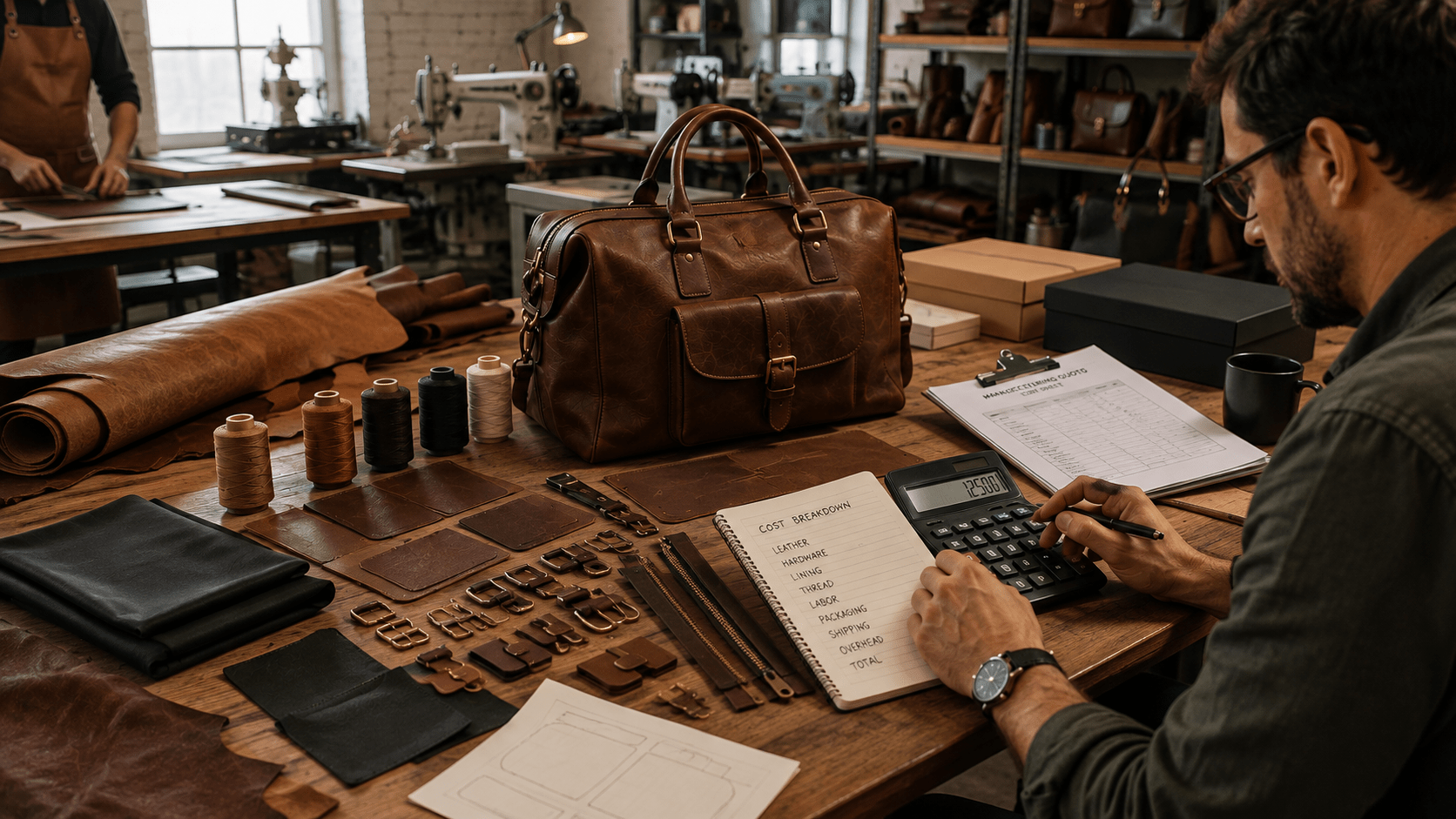
How Much Does It Cost to Manufacture Leather Products? Complete Cost Breakdown

Leather manufacturing cost can vary significantly even when two products look almost identical. A leather bag made from full-...
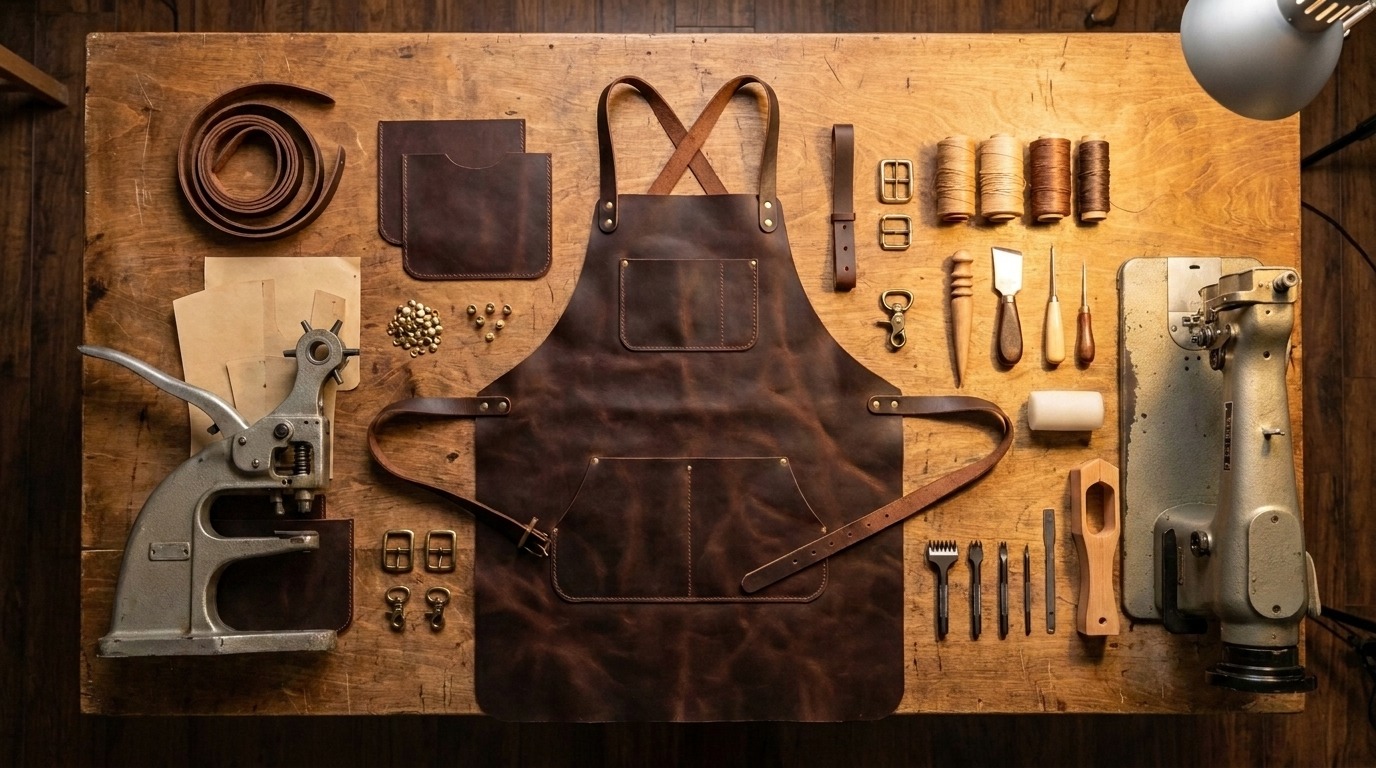
How Leather Aprons Are Made: The Complete Manufacturing Process
Leather aprons have been trusted by craftsmen, chefs, blacksmiths, barbers, woodworkers, welders, and artisans for generation...
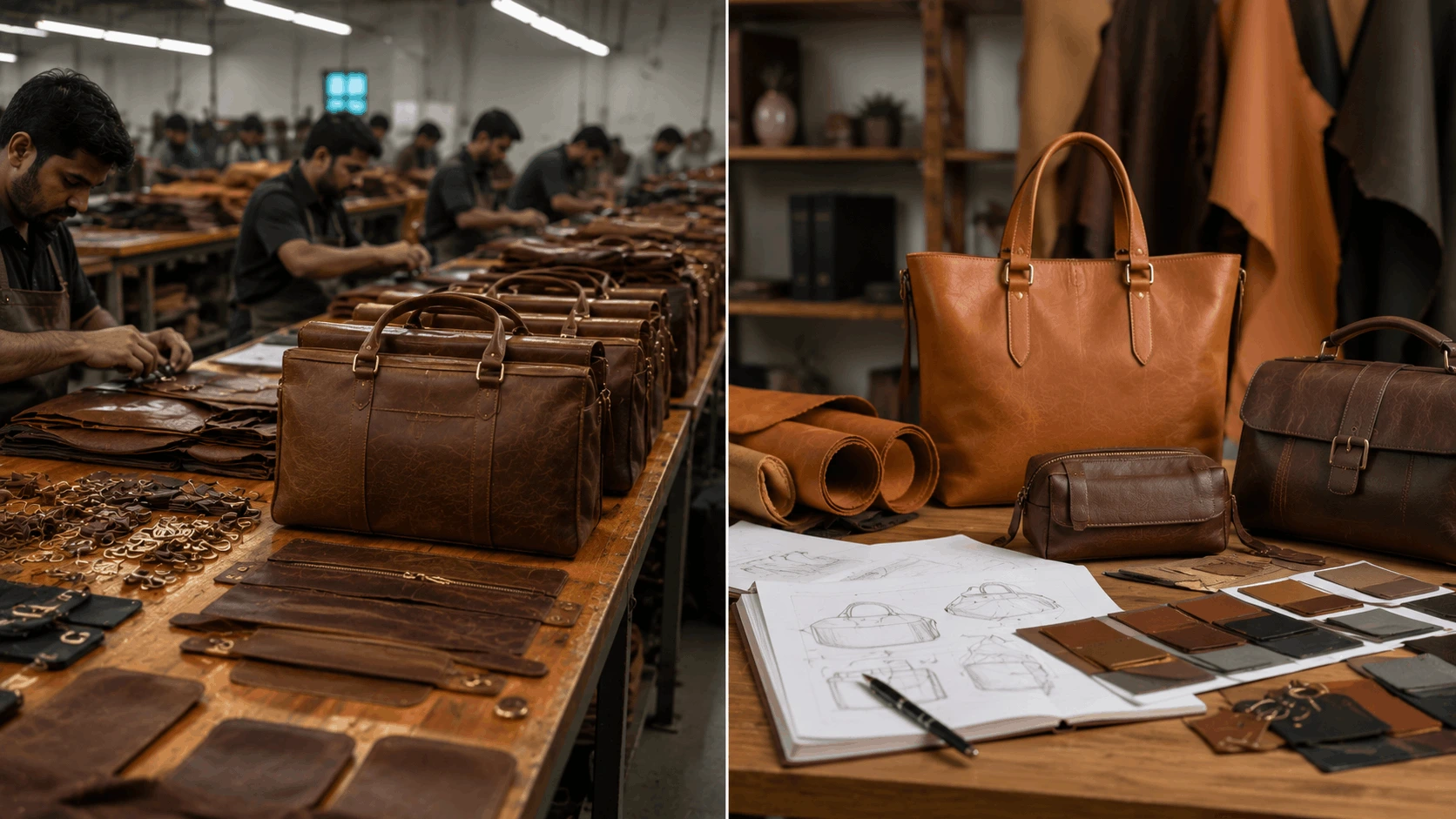
OEM vs Private Label Leather Manufacturing: Which Is Right for Your Brand?
Choosing the right manufacturing model is one of the most important decisions when launching or expanding a leather brand. Wh...