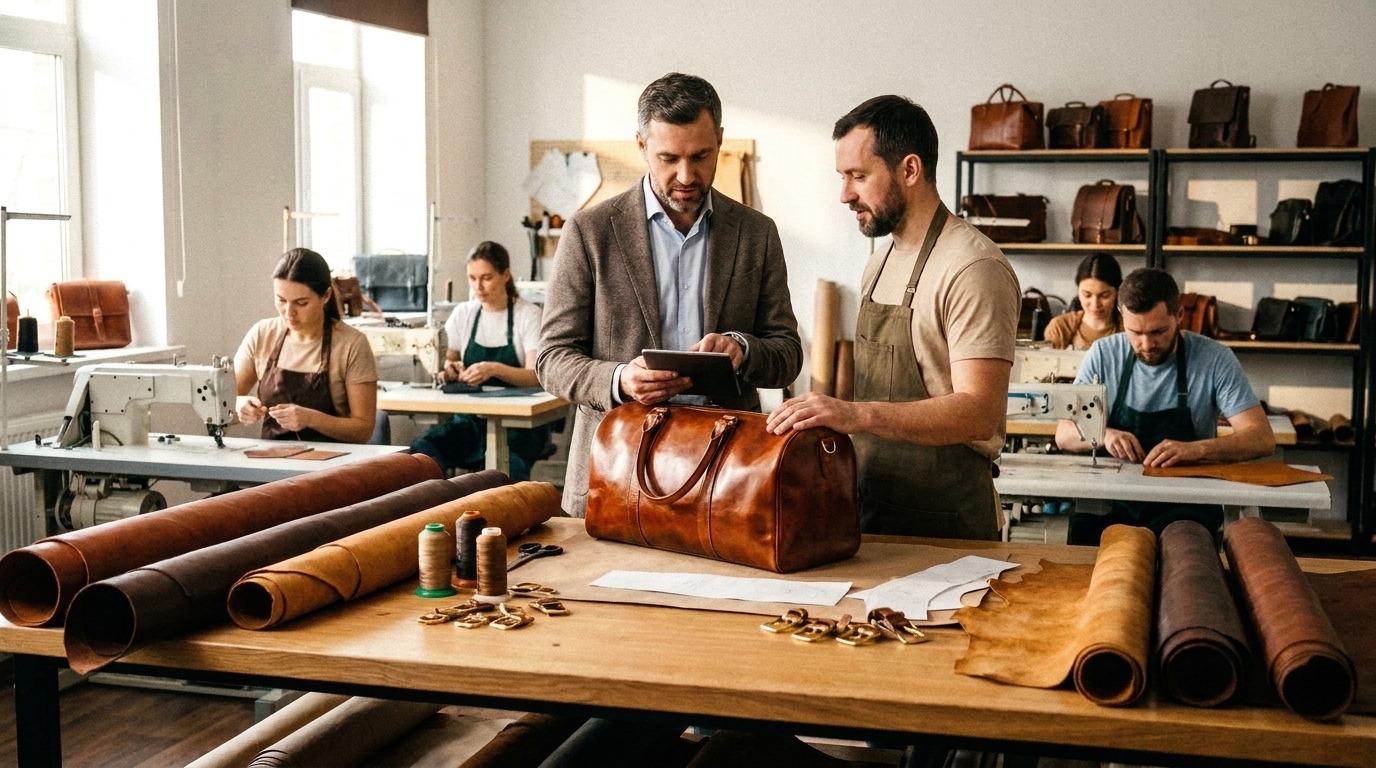
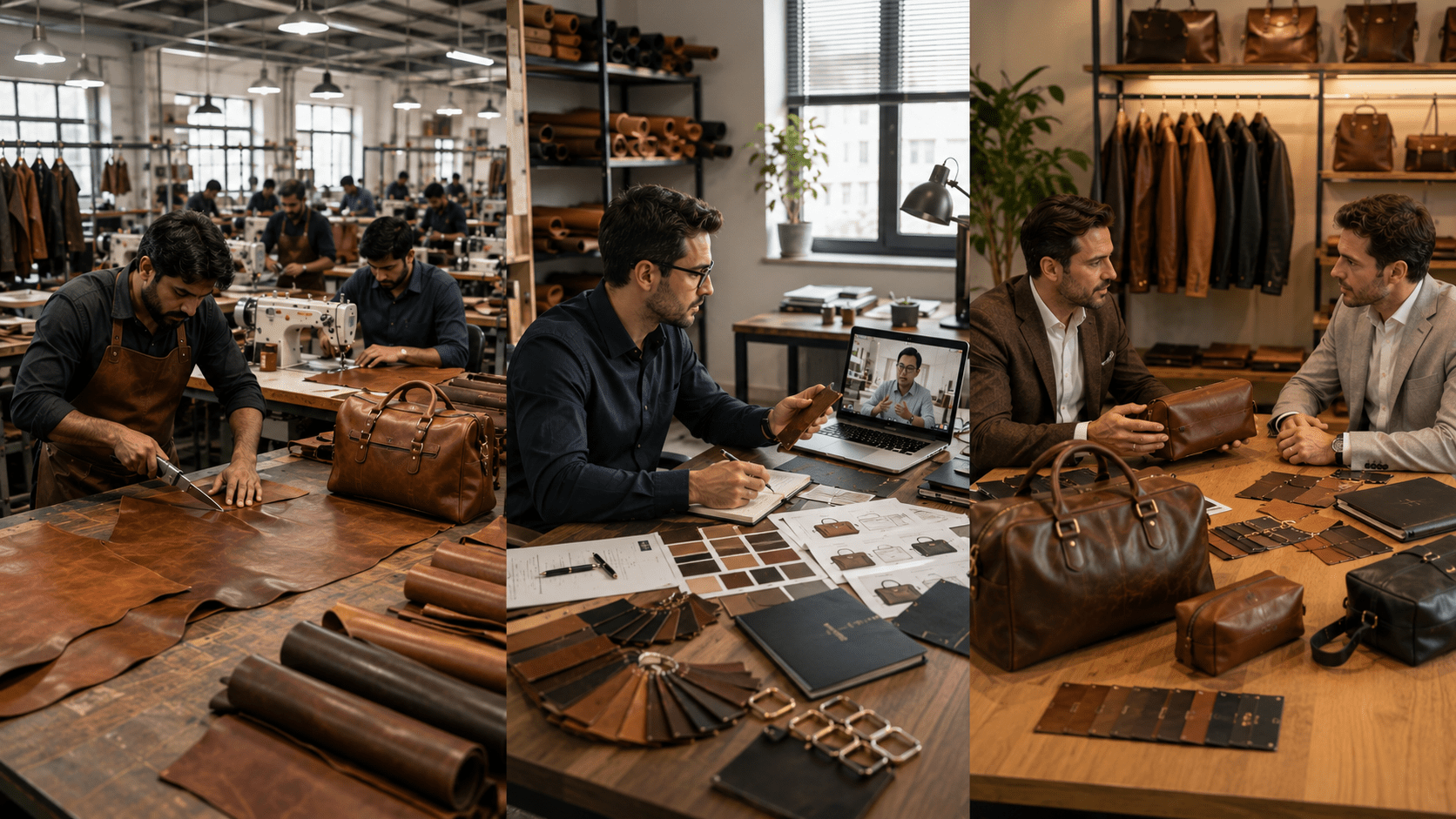
Start a leather brand today and you don’t necessarily need your own factory, machinery, or team of leather craftsmen. Many brands focus on product development, branding, marketing, and sales while specialized manufacturers handle production.
This model reduces the infrastructure required to enter the leather industry, but it doesn’t remove your responsibility for the product. You still need to choose the right products, define quality standards, control costs, approve samples, and select manufacturers capable of consistently producing what your customers expect.
If you want to start a leather brand without manufacturing products yourself, the process begins long before you place your first bulk order.
Can You Start a Leather Brand Without a Factory?
Yes. Owning the brand and owning the factory are two separate business models.
Your business can control the:
- Brand identity
- Product concept
- Target customer
- Product specifications
- Quality standards
- Packaging
- Pricing
- Marketing and sales
A manufacturing partner can handle:
- Material sourcing
- Pattern development
- Cutting
- Stitching
- Assembly
- Finishing
- Bulk production
This allows you to build a product-focused business without investing heavily in manufacturing equipment and facilities.
The important part is maintaining control over the specifications and quality of everything carrying your brand name.
Step 1: Decide What Type of Leather Brand You Want to Build
Don’t start by asking a manufacturer what products they can put your logo on. Start with the customer you want to serve.
Your brand could focus on:
- Premium leather jackets
- Women’s leather bags
- Travel goods
- Motorcycle gear
- Outdoor leather products
- Workwear
- Wallets and accessories
A clear niche makes decisions about products, materials, manufacturers, pricing, and marketing much easier.
You should also define your intended price position. A premium full-grain leather brand requires a different product specification and manufacturing partner than a value-focused accessories brand.
Step 2: Start With a Focused Product Range
Launching too many products creates unnecessary complexity.
Every additional product can mean new samples, patterns, materials, packaging, photography, inventory, and minimum order requirements.
A new brand can instead begin with one strong core product supported by a few closely related products.
For example:
Core product: Leather duffle bag
Supporting products: Toiletry bag, wallet and luggage tag
This creates a recognizable product direction without spreading your initial budget across too many SKUs.
Once actual sales data shows what customers want, you can expand accordingly.
Step 3: Choose How Your Products Will Be Manufactured
You don’t need to design every product from scratch. Manufacturers generally offer different levels of product development.
Private Label
You select an existing product and sell it under your own branding.
This can work when speed and simplicity matter more than having an exclusive design.
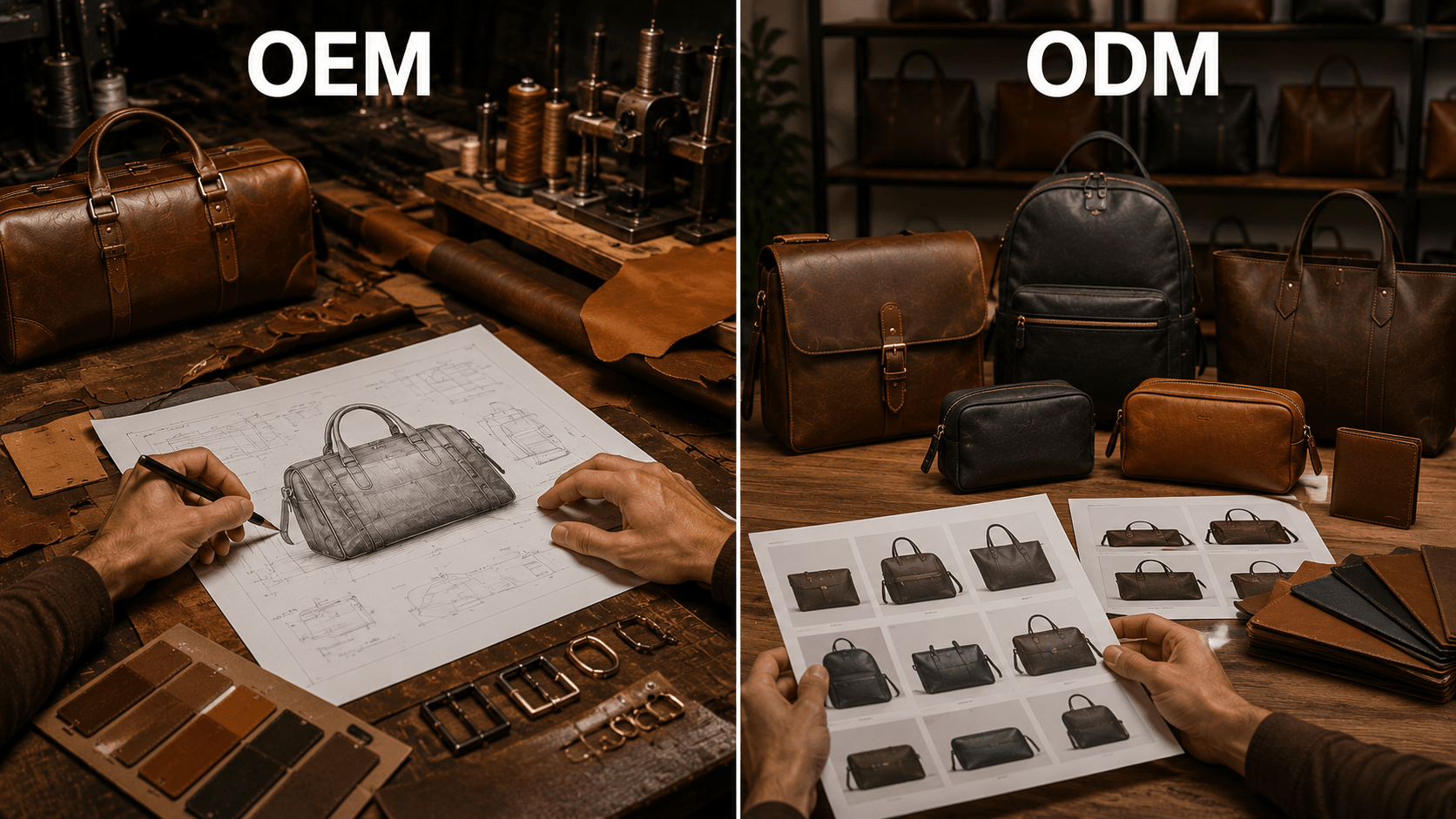
ODM
The manufacturer already has product designs and production capabilities that can be adapted to your requirements.
You may change elements such as:
- Leather
- Color
- Hardware
- Branding
- Packaging
- Certain design details
ODM can provide a balance between development cost and customization.
OEM
OEM gives you considerably more control over the product. You provide your requirements and the manufacturer produces according to those specifications.
Custom patterns, dimensions, construction, materials, hardware, and other details can all become part of the project.
The right choice between ODM vs OEM depends on whether your priority is faster market entry or greater product differentiation.
Step 4: Prepare Your Product Specifications
Don’t approach manufacturers with only a photograph and ask, “How much?”
Give them enough information to quote and develop the product accurately.
A basic specification should include:
- Product dimensions
- Leather type
- Leather thickness
- Color
- Lining
- Hardware
- Stitching
- Logo placement
- Labels
- Packaging
- Expected quantity
For more complex products, create technical drawings or a proper tech pack.
Clear specifications also make supplier comparison easier. If five factories are quoting different materials and construction standards, their prices aren’t directly comparable.
Step 5: Calculate How Much You Can Invest
Your startup budget shouldn’t be based only on the factory’s per-unit quotation.
Budget for the complete development and purchasing cycle:
Product development → Samples → Manufacturing → Quality Control → Packaging → Freight → Duties → Inventory
For custom products, you may also encounter pattern development, tooling, sample revisions, custom hardware, or other setup expenses.
Order quantity matters as well. Larger orders can reduce the cost per unit, but they also require more capital and create greater inventory risk.
The goal isn’t simply to achieve the lowest factory price. Your first production run should be large enough to manufacture economically but small enough that unsold inventory doesn’t consume your working capital.
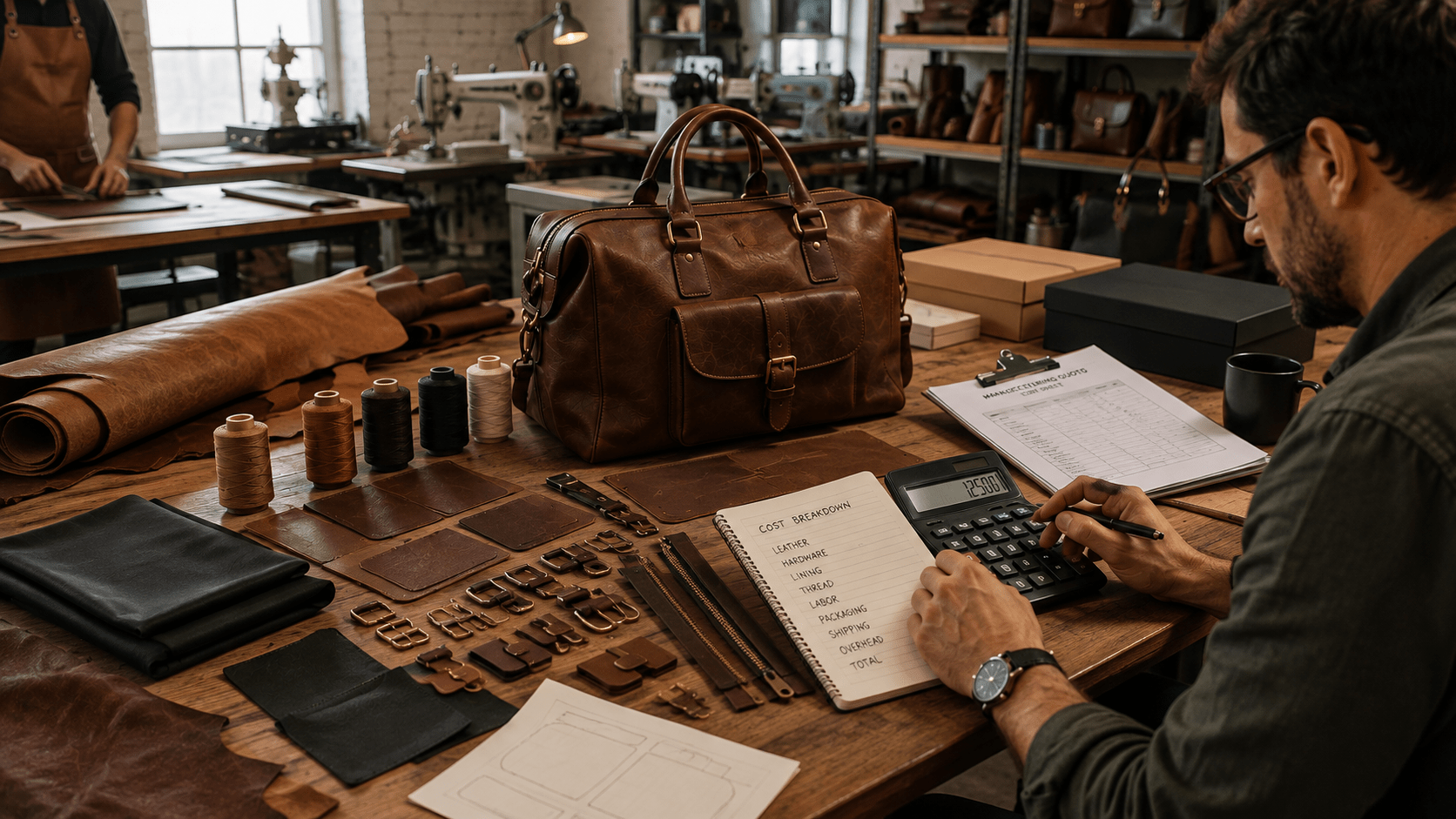
Breaking down your expected leather manufacturing cost before negotiating your first order gives you a much clearer picture of how much money you’ll actually need.
Step 6: Find the Right Leather Manufacturer
Once your product specifications and budget are ready, start looking for manufacturers that already specialize in your product category.
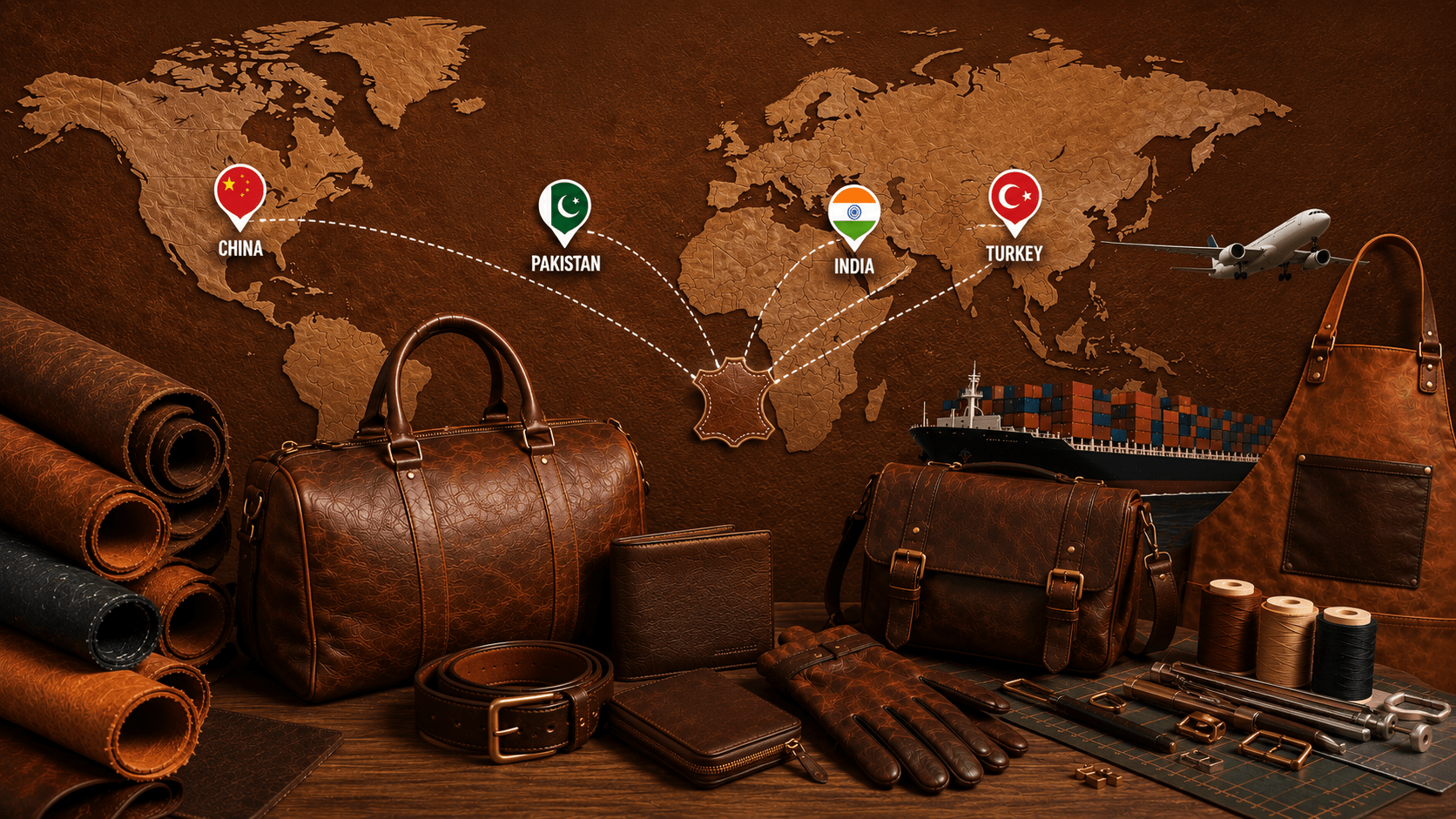
You can source manufacturers through trade shows, industry directories, B2B platforms, direct factory websites, or a dedicated leather marketplace such as Tannorium, where leather manufacturers and suppliers can be compared within the same industry.
Don’t choose a manufacturer based on price alone. Compare:
- Product specialization
- MOQ
- Customization capabilities
- Material options
- Export experience
- Production capacity
- Communication
- Lead times
A manufacturer experienced in your particular product is usually a better candidate than a large factory with little relevant expertise.
Step 7: Request and Approve Samples
Never move directly from a quotation to bulk production.
The sample is your opportunity to see whether the manufacturer can turn your specifications into the product you actually want to sell.
Check:
- Leather quality
- Dimensions and fit
- Stitching
- Hardware
- Lining
- Construction
- Color
- Logo placement
- Finishing
If changes are required, document them clearly and request a revised sample. Your final approved sample should become the reference standard for bulk production.
Step 8: Verify the Manufacturer
A good sample doesn’t automatically prove that a supplier can reliably handle bulk production.
Before paying for a large order, confirm the company’s identity, production capabilities, business details, factory operations, payment terms, and experience with similar products.
The process used to verify a leather manufacturer becomes particularly important when you’re working internationally and haven’t visited the factory yourself.
Avoid manufacturers that provide inconsistent information, refuse reasonable verification requests, or pressure you into making large payments before basic details have been confirmed.
Step 9: Negotiate MOQ and Place Your First Order
Minimum Order Quantity (MOQ) determines how many units a manufacturer expects you to purchase.
For a new brand, the lowest unit price shouldn’t be the main objective. A large MOQ may reduce manufacturing cost per unit while leaving you with thousands of dollars tied up in inventory that hasn’t yet proven demand.
Negotiate around:
- Total quantity
- Quantity per design
- Colors
- Sizes
- Payment terms
- Production timeline
- Packaging
Keep the first production run manageable whenever possible. Once you know which products, sizes, and colors customers actually buy, future orders can be planned using real sales data.
Step 10: Set Quality Standards Before Production
Quality control shouldn’t begin when the shipment arrives.
Your approved sample and specifications should establish what the factory is expected to reproduce during bulk manufacturing.
Define acceptable standards for:
- Leather
- Measurements
- Stitching
- Hardware
- Color
- Construction
- Finishing
- Branding
- Packaging
Leather is a natural material, so some variation is expected. However, knowing which common leather defects indicate genuine quality problems helps you establish reasonable inspection standards before production begins.
A final inspection before shipment can identify problems while the products are still at the factory.
Step 11: Build the Brand While Your Products Are Being Manufactured
Production time shouldn’t become waiting time.
While the factory works on your order, prepare everything required to sell it.
This includes:
- Brand identity
- Website
- Packaging
- Product pages
- Photography plan
- Shipping setup
- Returns policy
- Customer service
- Launch campaign
You can also begin creating educational and brand content before inventory arrives.
The objective is to have your sales infrastructure ready when the products are ready, not several months afterward.
Step 12: Launch Small and Scale With Demand
Your first production run gives you more than inventory. It gives you data.
Monitor which:
- Products sell fastest
- Colors customers prefer
- Sizes generate returns
- Features customers mention
- Products receive complaints
- Products generate repeat purchases
Use this information when planning your next manufacturing order.
Instead of immediately expanding into unrelated categories, improve successful products first. You can then introduce additional designs once your core range has established demand.
A focused brand with several strong products is usually easier to manage than a large catalog with weak product differentiation.
Common Mistakes When Starting a Leather Brand
Avoid:
- Launching too many products
- Choosing manufacturers only by price
- Sending vague product specifications
- Skipping samples
- Ordering excessive inventory for a cheaper unit price
- Ignoring freight and import costs
- Starting production without QC standards
- Copying existing brands too closely
- Building the website only after production is finished
The biggest financial mistakes usually happen before launch, particularly when product development, supplier selection, and inventory decisions aren’t planned carefully.
Final Thoughts
You don’t need to own a factory to start a leather brand. Manufacturing can be handled by an experienced production partner while you retain control over the product concept, specifications, quality standards, branding, pricing, marketing, and customer experience.
The manufacturer should be treated as part of your supply chain, not as the business itself. Start with a focused product range, approve samples carefully, keep your first inventory commitment realistic, and use customer demand to determine how the brand expands.
FAQs
Can I start a leather brand without owning a factory?
Yes. You can outsource manufacturing while managing product development, branding, marketing, sales, and customer experience yourself.
How do I find a manufacturer for my leather brand?
Manufacturers can be sourced through trade shows, factory websites, B2B platforms, industry directories, and dedicated leather marketplaces. Prioritize factories with experience producing your specific product category.
Should a new leather brand use OEM or ODM?
ODM can work well when you want to modify an existing manufacturer-developed product, while OEM is more suitable when you require greater control over design and specifications.
Do I need to order large quantities?
Not necessarily. MOQ varies between manufacturers. New brands should balance unit cost against inventory risk rather than automatically choosing the largest production run.
Should I approve a sample before production?
Yes. The approved sample establishes the expected materials, construction, dimensions, hardware, branding, and finishing for bulk production.
How much does it cost to start a leather brand?
There is no universal amount. Your required capital depends on product development, samples, leather quality, MOQ, manufacturing, packaging, freight, duties, marketing, and other operating expenses.