



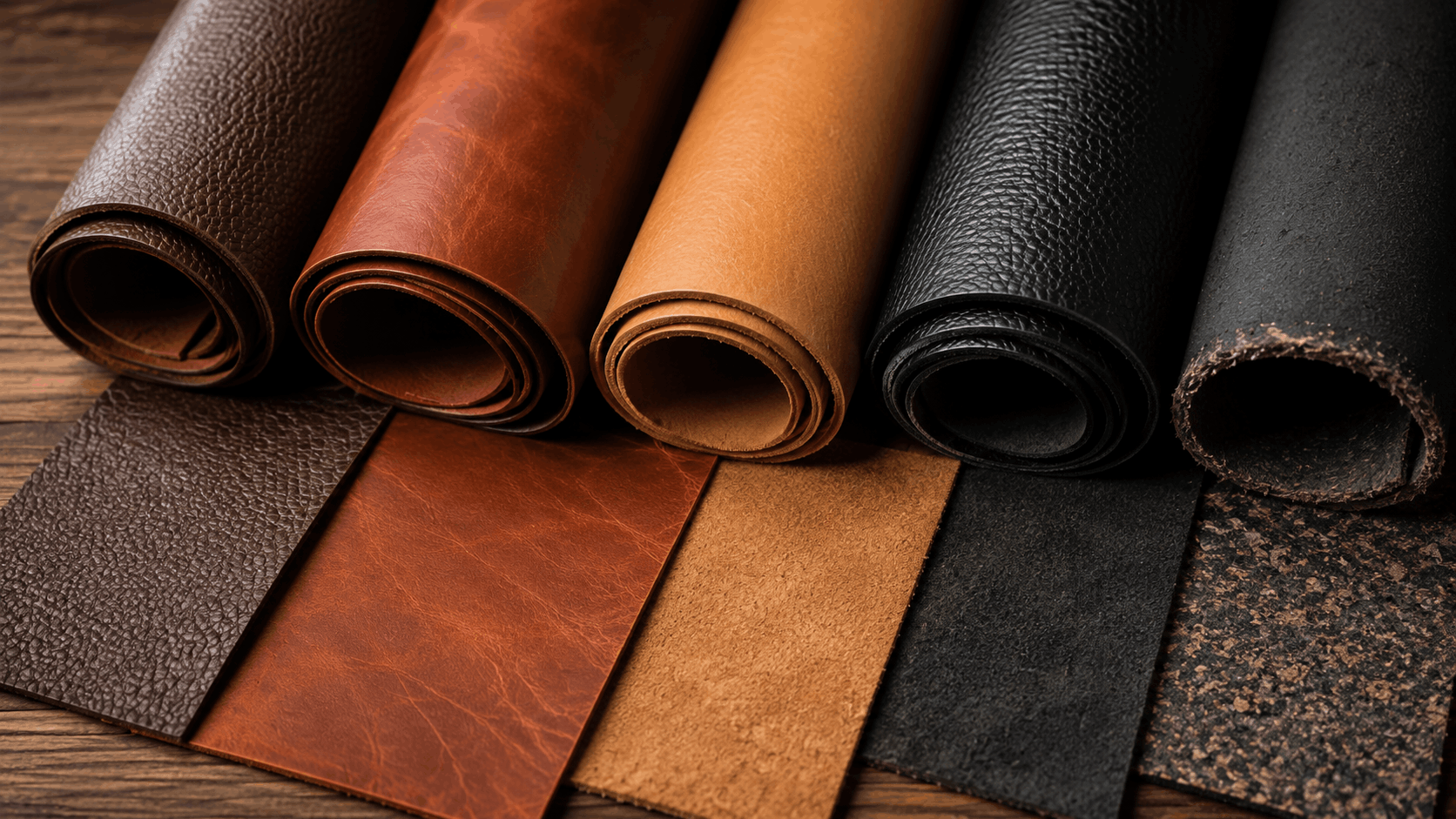
Leather has been valued for centuries because of its durability, natural beauty, and versatility. However, not all leather is the same. Depending on how it is processed and which part of the hide is used, leather can vary significantly in quality, appearance, lifespan, and price.
If you’ve ever wondered what terms like Full Grain Leather, Top Grain Leather, Genuine Leather, and Bonded Leather actually mean, you’re not alone. These terms are often misunderstood, leading buyers to make purchasing decisions based on marketing rather than facts.
In this guide, we’ll explain the different types of leather, compare their strengths and weaknesses, and help you choose the right leather for your needs, whether you’re buying a leather jacket, bag, gloves, apron, or any other leather product.
What Is Leather?
Leather is a natural material made from animal hides, most commonly cattle. The raw hide undergoes several processing stages, including cleaning, tanning, drying, dyeing, and finishing, to transform it into a durable material suitable for manufacturing.
The quality of leather depends on several factors, including:
- The animal hide used
- The section of the hide
- The tanning method
- The finishing process
- Manufacturing standards
These factors determine how long a leather product lasts and how it performs over time.
Why Understanding Leather Types Matters
Knowing the different types of leather helps you make better purchasing decisions.
Understanding leather quality allows you to:
- Choose products that fit your budget
- Understand why prices vary
- Select leather that suits your intended use
- Avoid misleading marketing claims
- Invest in products with better durability
Whether you’re an individual buyer or a business sourcing leather products, understanding leather types can save both money and frustration.
Must Read: A Complete Beginner’s Guide to Types, Grades & Uses
Overview of Different Types of Leather
| Leather Type | Quality | Durability | Price | Best For |
| Full Grain | Premium | Excellent | High | Luxury products |
| Top Grain | High | Very Good | Medium to High | Fashion and everyday use |
| Genuine Leather | Medium | Moderate | Affordable | Daily consumer products |
| Bonded Leather | Low | Limited | Low | Budget furniture and accessories |
Full Grain Leather
What Is Full Grain Leather?
Full Grain Leather is the highest quality leather available. It uses the outermost layer of the hide and retains its natural grain without sanding or correcting imperfections.
Because the strongest fibers remain intact, Full Grain Leather offers exceptional durability and develops a beautiful patina as it ages.
Characteristics
- Natural grain surface
- Visible pores and markings
- Thick and durable
- Ages beautifully
- Develops a unique patina over time
Advantages
- Longest lifespan
- Exceptional strength
- Premium appearance
- Highly breathable
- Gains character with age
Disadvantages
- Higher cost
- Natural imperfections remain visible
- Requires occasional conditioning
Common Products
- Leather jackets
- Premium bags
- Wallets
- Belts
- Boots
- Luxury accessories
Top Grain Leather
What Is Top Grain Leather?
Top Grain Leather is the second-highest quality leather. The outer surface is lightly sanded to remove natural imperfections, creating a smoother and more uniform appearance.
It offers an excellent balance between durability, aesthetics, and affordability.
Characteristics
- Smooth finish
- Refined appearance
- Slightly thinner than Full Grain
- Often protected with surface coatings
Advantages
- Elegant appearance
- Durable
- Easier to maintain
- More stain-resistant
Disadvantages
- Does not develop as rich a patina
- Slightly less durable than Full Grain
Common Uses
- Fashion jackets
- Handbags
- Furniture
- Business accessories
- Corporate gifts
Genuine Leather
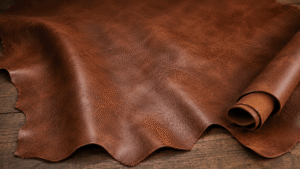
What Is Genuine Leather?
Despite its name, Genuine Leather is not the highest quality leather. It simply means the product contains real leather.
Typically, Genuine Leather is produced from lower layers of the hide after the premium outer layer has been removed. Manufacturers often apply artificial finishes to improve appearance.
Characteristics
- Real leather material
- Processed surface
- Moderate durability
- Widely available
Advantages
- Affordable
- Real leather feel
- Suitable for everyday products
Disadvantages
- Shorter lifespan
- Less breathable
- Does not age as beautifully
- Can crack over time
Best Applications
- Wallets
- Belts
- Fashion accessories
- Entry-level leather goods
Bonded Leather
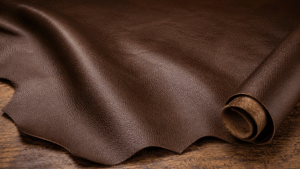
What Is Bonded Leather?
Bonded Leather is made by combining leftover leather fibers and scraps with adhesives. The mixture is pressed onto a fabric backing and embossed with a leather-like texture.
Although it contains some leather, it is not considered premium leather.
How It’s Made
- Leather scraps are shredded.
- Fibers are mixed with polyurethane or latex binders.
- The material is compressed into sheets.
- A synthetic finish is applied.
Advantages
- Low cost
- Uniform appearance
- Suitable for budget products
Disadvantages
- Peels and cracks more easily
- Limited durability
- Does not develop a patina
- Shorter lifespan
Expected Lifespan
With regular use, Bonded Leather typically lasts only a few years before showing signs of wear.
Split Leather
Split Leather is created from the lower layers of the hide after the top grain has been separated.
It is softer and more flexible but generally less durable than Full Grain or Top Grain Leather. Split Leather is commonly used to produce suede.
Common applications include:
- Work gloves
- Casual footwear
- Fashion accessories
- Upholstery
Nubuck Leather
Nubuck Leather is produced by lightly sanding the outer grain surface, creating a soft, velvety texture.
Although it feels luxurious, Nubuck requires more maintenance because its textured surface can absorb dirt and moisture more easily.
It is commonly used for:
- Premium boots
- Luxury handbags
- Jackets
- High-end footwear
Suede Leather
Suede is made from the inner side of Split Leather, giving it a soft and fuzzy finish.
While attractive and comfortable, suede is more vulnerable to water, stains, and abrasion than smooth leather.
Popular suede products include:
- Jackets
- Shoes
- Gloves
- Fashion accessories
Exotic Leather Types
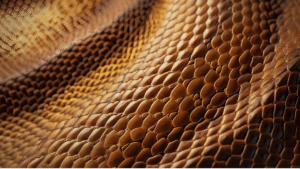
Beyond traditional cowhide, manufacturers also produce leather from other animal hides.
Some examples include:
- Buffalo Leather
- Goat Leather
- Sheep Leather
- Deer Leather
- Ostrich Leather
- Crocodile Leather
- Snake Leather
Each offers unique textures, durability, and visual characteristics for specialized luxury applications.
Comparison Table
| Feature | Full Grain | Top Grain | Genuine | Bonded |
| Quality | Excellent | Very Good | Moderate | Low |
| Lifespan | 20+ years | 10 to 20 years | 5 to 10 years | 2 to 5 years |
| Durability | Excellent | Very Good | Moderate | Limited |
| Patina Development | Excellent | Minimal | Limited | None |
| Appearance | Natural | Smooth | Finished | Artificial |
| Maintenance | Moderate | Easy | Easy | Minimal |
| Price | High | Medium to High | Medium | Low |
Which Leather Type Is Best?
The best leather depends on your intended use.
Choose Full Grain Leather if you want:
- Maximum durability
- Luxury quality
- Long-term investment
- Beautiful aging
Choose Top Grain Leather if you want:
- Premium appearance
- Everyday durability
- Easier maintenance
- Excellent value
Choose Genuine Leather if you want:
- Affordable real leather
- Casual daily use
- Budget-friendly options
Choose Bonded Leather if you want:
- The lowest price
- Decorative or occasional-use products
How to Identify High-Quality Leather
When shopping for leather products, look for these signs of quality:
- Natural grain patterns
- Visible pores and slight imperfections
- Rich leather aroma
- Smooth, finished edges
- Thick, flexible construction
- Even stitching
- High-quality hardware
Avoid products that feel overly plastic-like or have perfectly repeated grain patterns, as these may indicate synthetic or low-quality materials.
Common Myths About Leather Types
Myth 1: Genuine Leather Is the Best Leather
False.
Genuine Leather is real leather, but it is generally considered lower in quality than Full Grain and Top Grain Leather.
Myth 2: Bonded Leather Is the Same as Real Leather
False.
Bonded Leather contains leather fibers but is primarily a manufactured composite material.
Myth 3: All Leather Lasts Forever
False.
The lifespan of leather depends on its quality, construction, and maintenance.
Myth 4: Expensive Leather Always Means Better Quality
Not always.
Manufacturing quality, craftsmanship, tanning methods, and hardware also play major roles in determining the overall value of a leather product.
Frequently Asked Questions
Which leather lasts the longest?
Full Grain Leather offers the longest lifespan when properly maintained.
Is Full Grain Leather worth the higher price?
Yes. Its durability, strength, and natural aging make it an excellent long-term investment.
Is Genuine Leather real leather?
Yes. Genuine Leather is made from real animal hide, but it is not the highest quality grade.
Does Bonded Leather peel?
Yes. Over time, Bonded Leather is more likely to peel, crack, and separate because of its composite construction.
Which leather is best for jackets?
Full Grain and Top Grain Leather are the preferred choices for premium leather jackets.
Which leather is easiest to maintain?
Top Grain Leather generally requires less maintenance than Full Grain Leather due to its protective finish.
Which leather develops a patina?
Only Full Grain Leather develops the rich, natural patina that many leather enthusiasts appreciate.
Which leather is best for bags?
Full Grain Leather provides the greatest durability, while Top Grain Leather offers an excellent balance between style and practicality.
Is Top Grain better than Genuine Leather?
Yes. Top Grain Leather is generally stronger, more durable, and higher in quality than Genuine Leather.
How can I identify real leather?
Check for natural grain patterns, uneven pores, a distinctive leather smell, and slight variations in texture. These characteristics are difficult to replicate with synthetic materials.
Conclusion
Understanding the different types of leather is essential before investing in any leather product. While Full Grain Leather represents the highest level of quality and durability, Top Grain Leather offers excellent performance for everyday use. Genuine Leather provides an affordable entry into real leather products, while Bonded Leather is best suited for budget-conscious purchases with limited longevity.
The right choice ultimately depends on your budget, intended use, maintenance preferences, and expectations for durability. By understanding these differences, you’ll be better equipped to choose leather products that deliver lasting value and performance.