If you’re planning to manufacture leather products, you’ve likely come across the terms ODM and OEM. Although they are often used interchangeably, they refer to two different manufacturing models that determine who designs the product, the level of customization available, and how much control you have over the final product. Regardless of which model you choose, selecting the right types of leather is equally important, as the material directly affects the product’s quality, durability, appearance, and overall performance.
Understanding the ODM vs OEM difference is essential whether you’re launching a new leather brand, sourcing products for wholesale, or expanding your existing product line. The manufacturing model you choose can influence production costs, development timelines, product uniqueness, and long-term business growth. This article explains the OEM vs ODM meaning in manufacturing, compares how each model works, highlights their key differences, and shares practical leather industry examples to help you determine which approach best suits your business.
What Is OEM?
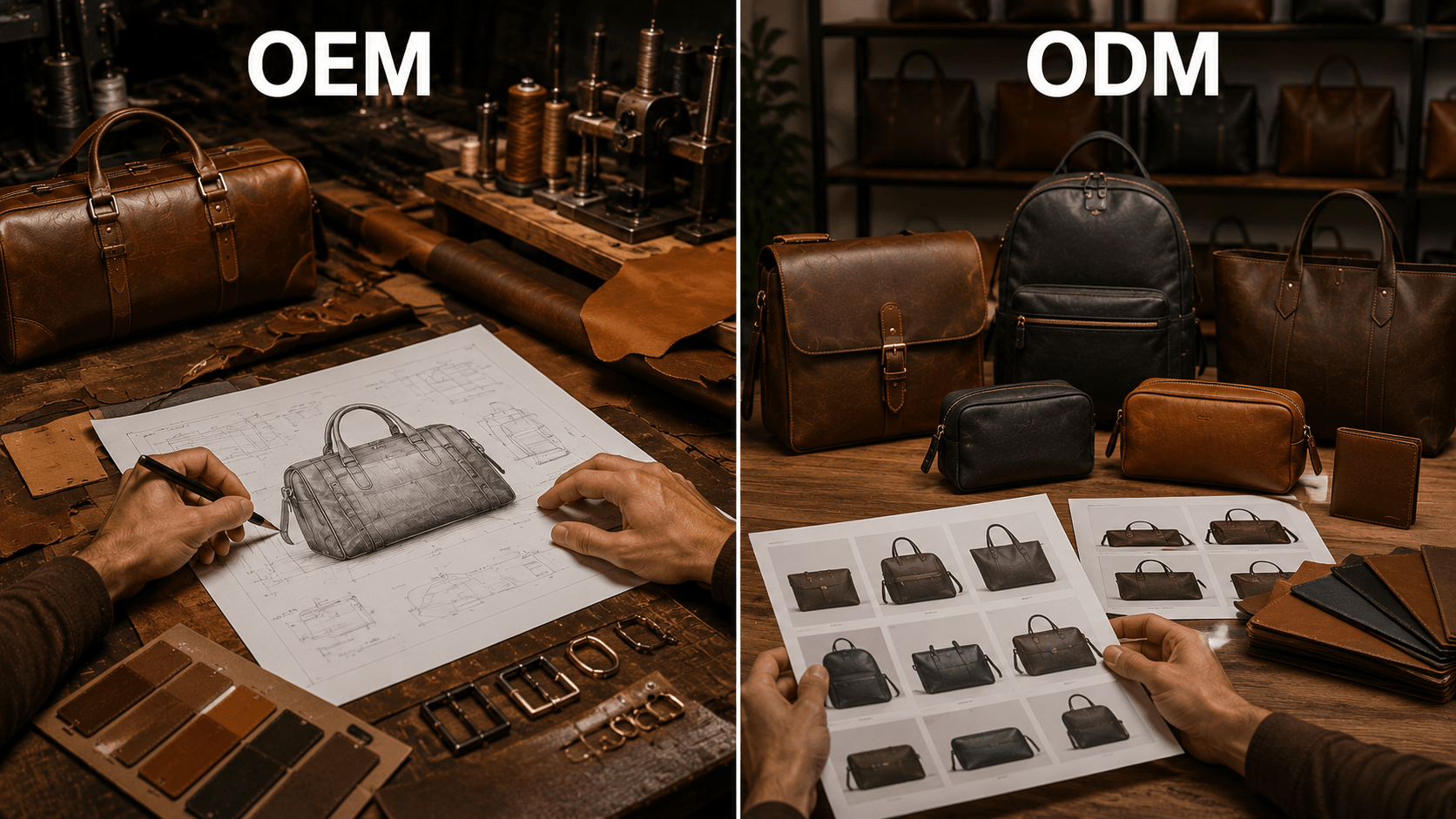
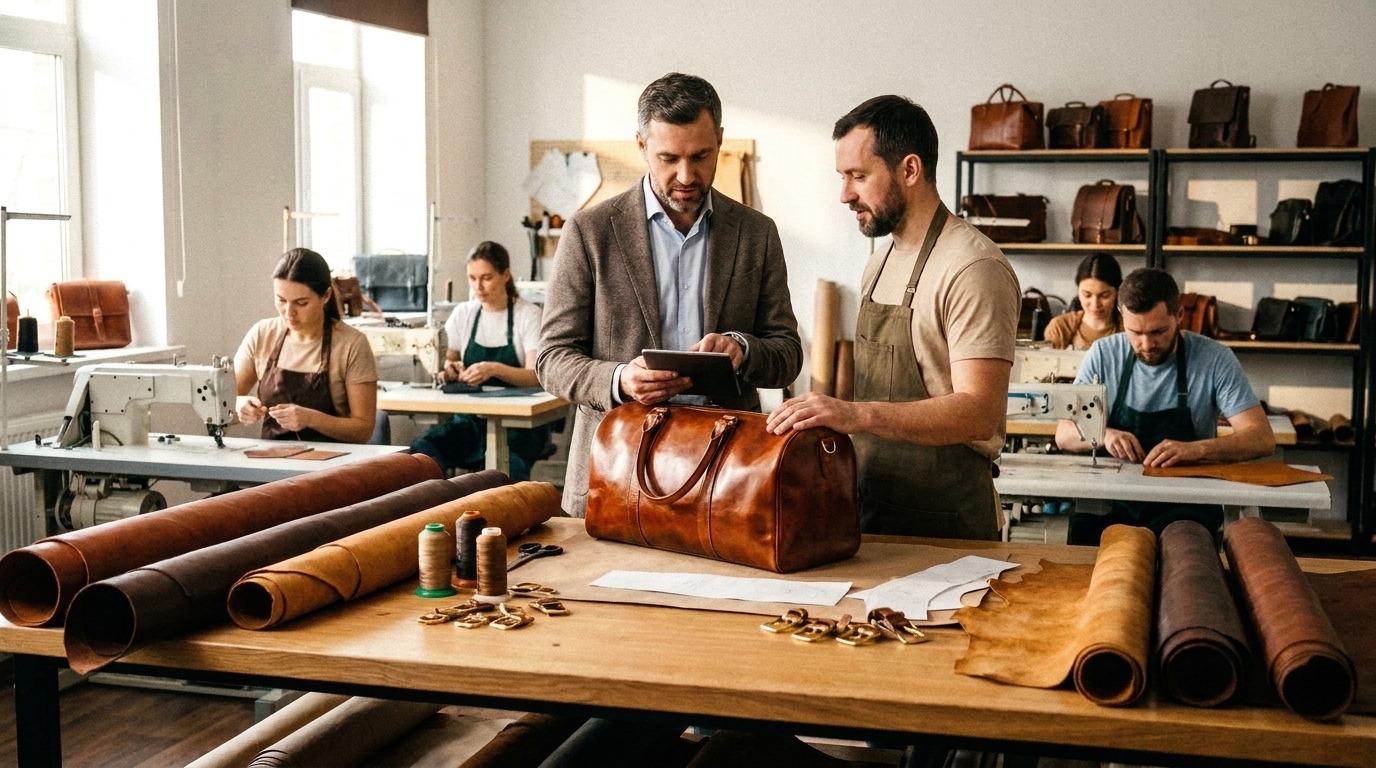
OEM (Original Equipment Manufacturer) is a manufacturing model in which a buyer provides the product concept, specifications, or complete design, and the manufacturer produces the product according to those requirements.
In simple terms, the buyer controls the product, while the manufacturer handles production.
For example, if your brand wants to launch unique leather backpacks with custom dimensions, premium full-grain leather, antique brass hardware, and exclusive branding, you would typically work with an OEM leather manufacturer. The factory manufactures the product based on your specifications rather than selling an existing design.
OEM manufacturing is widely used by businesses that want exclusive products and complete control over quality, materials, branding, and product features.
Although OEM and private label manufacturing are often mentioned together, they serve different business purposes, making it important to understand how each model works before selecting a manufacturing partner.
How OEM Manufacturing Works
A typical OEM project follows these steps:
- The buyer shares product requirements or technical drawings.
- The manufacturer reviews the design and production feasibility.
- Samples or prototypes are developed.
- The buyer approves or requests revisions.
- Bulk production begins.
- Products undergo quality inspection before shipment.
Because each product is manufactured according to the buyer’s specifications, OEM projects generally require more planning, communication, and product development than ready-made manufacturing models.
Buyer Responsibilities
When choosing OEM manufacturing, buyers are usually responsible for:
- Product concept or design
- Material selection
- Product specifications
- Branding requirements
- Packaging preferences
- Sample approval
Manufacturer Responsibilities
The manufacturer typically handles:
- Material sourcing
- Pattern development
- Cutting and stitching
- Hardware installation
- Quality control
- Production
- Packaging and shipping
What Is ODM?
ODM (Original Design Manufacturer) is a manufacturing model where the manufacturer already has existing product designs that buyers can purchase and sell under their own brand.
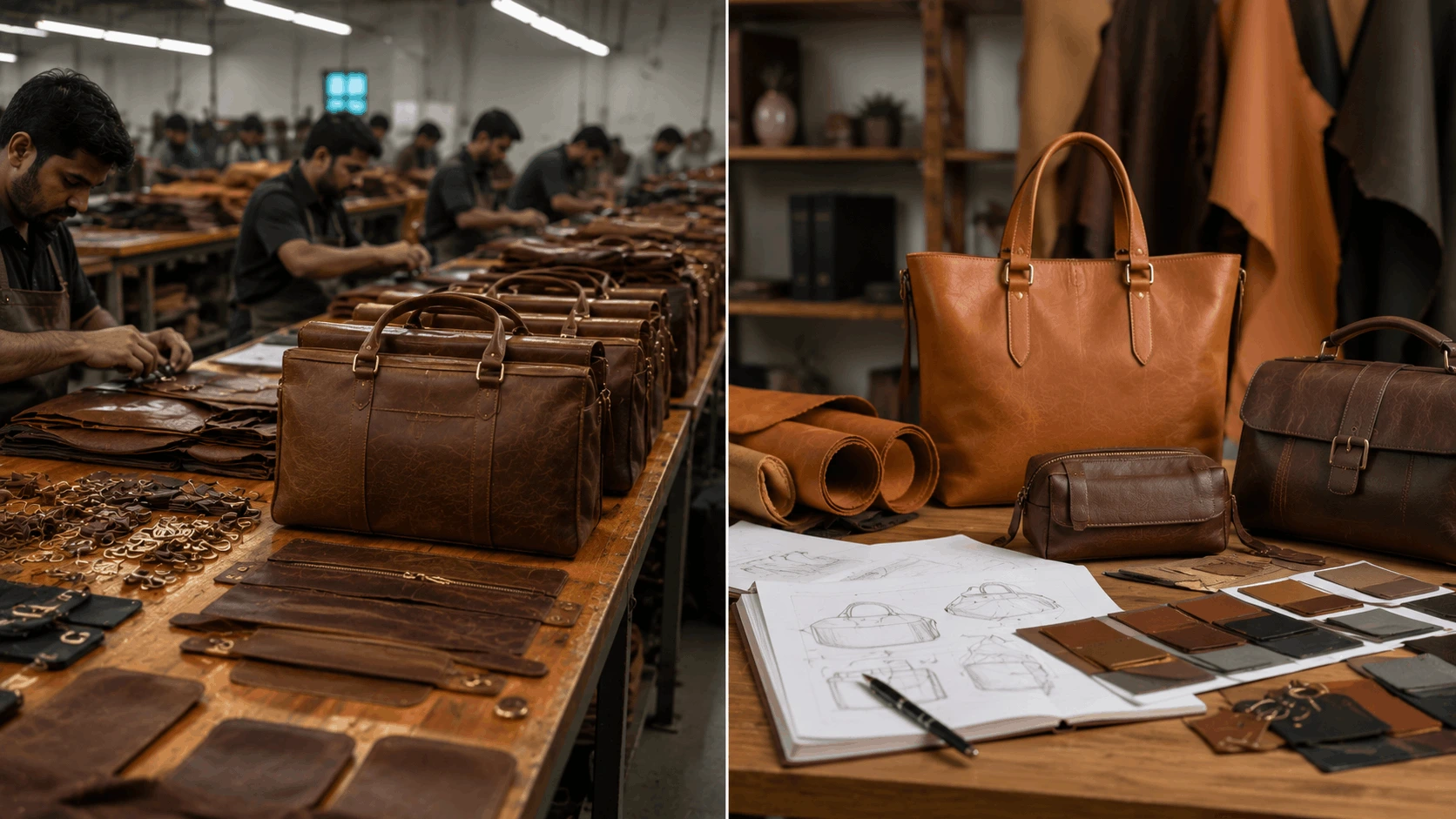
Instead of creating a product from scratch, buyers select from a catalog of pre-designed products and customize certain elements such as logos, colors, labels, or packaging.
For example, a leather factory may already produce a range of wallets, belts, or handbags. A retailer can choose one of these designs, add their own logo and packaging, and launch it under their brand without investing in product development.
ODM manufacturing is often chosen by businesses that want to enter the market quickly while reducing development costs.
How ODM Manufacturing Works
The ODM process is generally much simpler than OEM:
- The manufacturer presents existing product designs.
- The buyer selects a suitable product.
- Branding and limited customization are discussed.
- Samples are approved.
- Production begins.
- Finished products are packaged under the buyer’s brand.
Since the product design already exists, production can usually begin sooner than with OEM manufacturing.
Buyer Responsibilities
With ODM manufacturing, buyers mainly focus on:
- Selecting products
- Choosing branding elements
- Packaging decisions
- Sample approval
- Marketing and sales
Manufacturer Responsibilities
The manufacturer typically manages:
- Product design
- Product development
- Material sourcing
- Manufacturing
- Quality inspection
- Production management
ODM vs OEM: Key Differences
Although both manufacturing models allow businesses to outsource production, the biggest difference lies in who owns the product design.
In an OEM partnership, the buyer develops or controls the product concept, while the manufacturer produces it according to those specifications. This provides greater flexibility and product exclusivity but usually involves longer development times and higher investment.
In an ODM partnership, the manufacturer has already completed the design work. Buyers simply choose an existing product and apply their branding with limited customization. This makes ODM faster and more cost-effective, although it offers less uniqueness than OEM.
Other important differences include intellectual property ownership, customization options, production timelines, and the level of collaboration required throughout the manufacturing process.
OEM vs ODM Comparison Table
| Feature |
OEM |
ODM |
| Product Design |
Buyer creates or controls the design |
Manufacturer provides the design |
| Customization |
Extensive |
Limited |
| Branding |
Fully customized |
Private branding available |
| Development Time |
Longer |
Shorter |
| Initial Investment |
Higher |
Lower |
| Product Exclusivity |
High |
Moderate |
| Intellectual Property |
Usually owned by the buyer |
Usually owned by the manufacturer |
| Speed to Market |
Slower |
Faster |
| Best For |
Established brands and unique products |
Startups and faster product launches |
ODM vs OEM Examples
Understanding the concepts is easier with real-world leather manufacturing examples.
Leather Jackets
A fashion brand develops a custom collection of men’s leather jackets and women’s leather jackets with exclusive patterns, premium hardware, custom sizing, and unique design details. The manufacturer produces these jackets exclusively for that brand based on its specifications. This is OEM leather manufacturing.
Another business selects existing men’s leather jackets and women’s leather jackets from a manufacturer’s catalog, applies its own logo, labels, and packaging, and sells them under its brand. Since the designs are already developed by the manufacturer, this is ODM manufacturing.
Leather Bags
A company creates original travel leather bags with custom compartments and premium materials. The factory manufactures it according to those specifications, making it an OEM project.
Another retailer chooses a ready-made duffel bag already developed by the factory and requests custom labels and packaging. This follows the ODM model.
Leather Wallets
Leather Wallets are among the most common products offered through ODM because many manufacturers already have proven designs that require only branding changes.
Brands looking for unique layouts, custom card slots, or exclusive designs often choose OEM instead.
Leather Belts
A retailer sourcing standard leather belts designs with custom branding is using ODM. A company developing a new buckle system or exclusive construction is using OEM.
Leather Gloves
Protective work leather gloves or fashion gloves with specialized features are often produced through OEM, while classic glove styles are frequently available through ODM.
Leather Aprons
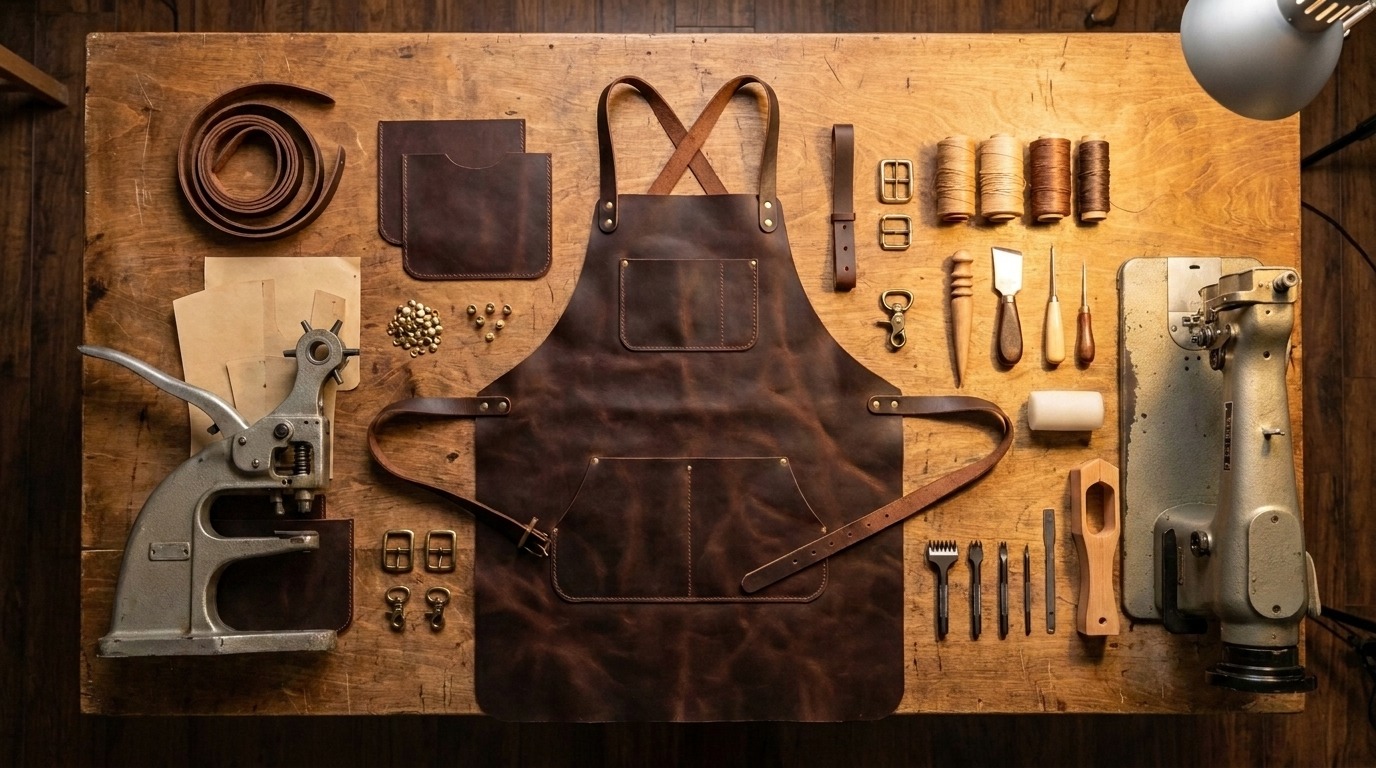
A workshop that needs leather aprons with custom pockets, tool loops, reinforced stitching, and specific dimensions would typically choose OEM. Businesses looking for standard apron designs with branded labels often prefer ODM.
OEM vs ODM Customization
One of the biggest factors businesses consider when comparing OEM vs ODM is the level of customization available. While both models allow companies to sell products under their own brand, the amount of control over the final product is very different.
With OEM manufacturing, nearly every aspect of the product can be customized. Buyers work closely with the manufacturer to develop products that match their exact requirements. This includes selecting the leather type, thickness, color, hardware, stitching style, dimensions, lining, packaging, and branding. Because the product is developed specifically for one brand, OEM offers greater flexibility and product exclusivity.
ODM manufacturing offers more limited customization because the product design already exists. Buyers can usually modify branding elements such as logos, labels, packaging, colors, or minor hardware changes, but the overall design remains the manufacturer’s intellectual property. This approach reduces development time while allowing businesses to launch products more quickly.
OEM Customization
OEM manufacturing typically allows businesses to customize:
- Leather type (full-grain, top-grain, suede, etc.)
- Leather color and finish
- Product dimensions
- Stitching style
- Hardware and zippers
- Interior layout
- Logo embossing
- Labels and tags
- Packaging
- Product features
ODM Customization
ODM manufacturing generally allows:
- Logo printing or embossing
- Brand labels
- Packaging
- Color options offered by the manufacturer
- Minor hardware variations
- Small cosmetic adjustments
If your goal is to build a unique product line, OEM is usually the better choice. If speed and lower development costs are your priority, ODM often provides a practical solution.
Advantages and Limitations of OEM
OEM manufacturing is popular among brands that want to stand out in competitive markets. Since the buyer controls the product design, businesses can create products that reflect their brand identity and meet specific customer needs.
Advantages
- Complete product customization
- Exclusive product designs
- Greater control over quality
- Stronger brand differentiation
- Better long-term competitive advantage
- Opportunity to develop proprietary products
Limitations
- Higher development costs
- Longer production timelines
- More communication throughout development
- Sampling may require several revisions
- Higher investment before launch
Advantages and Limitations of ODM
ODM manufacturing appeals to businesses looking for a faster and more affordable route to market. Since product development has already been completed by the manufacturer, buyers can focus on branding and sales instead of design work.
Advantages
- Faster product launch
- Lower upfront investment
- Simplified sourcing process
- Proven product designs
- Reduced product development risk
Limitations
- Limited customization
- Less product exclusivity
- Multiple brands may sell similar products
- Less control over product innovation
Which Manufacturing Model Should You Choose?
The right manufacturing model depends on your business objectives, rather than one approach being universally better.
OEM Is Best For
OEM manufacturing is often the better option if you:
- Want exclusive leather products
- Have your own product designs
- Need advanced customization
- Are building a premium brand
- Plan to invest in long-term product development
ODM Is Best For
ODM manufacturing may be the better choice if you:
- Want to launch products quickly
- Have a limited development budget
- Need proven product designs
- Are testing a new product category
- Prefer a simpler manufacturing process
Many businesses begin with ODM products to establish their brand before transitioning to OEM manufacturing as their customer base and product requirements grow.
Finding OEM & ODM Leather Manufacturers
Choosing the right manufacturing model is only part of the sourcing process. Equally important is finding the best leather manufacturers with proven experience producing high-quality leather goods.
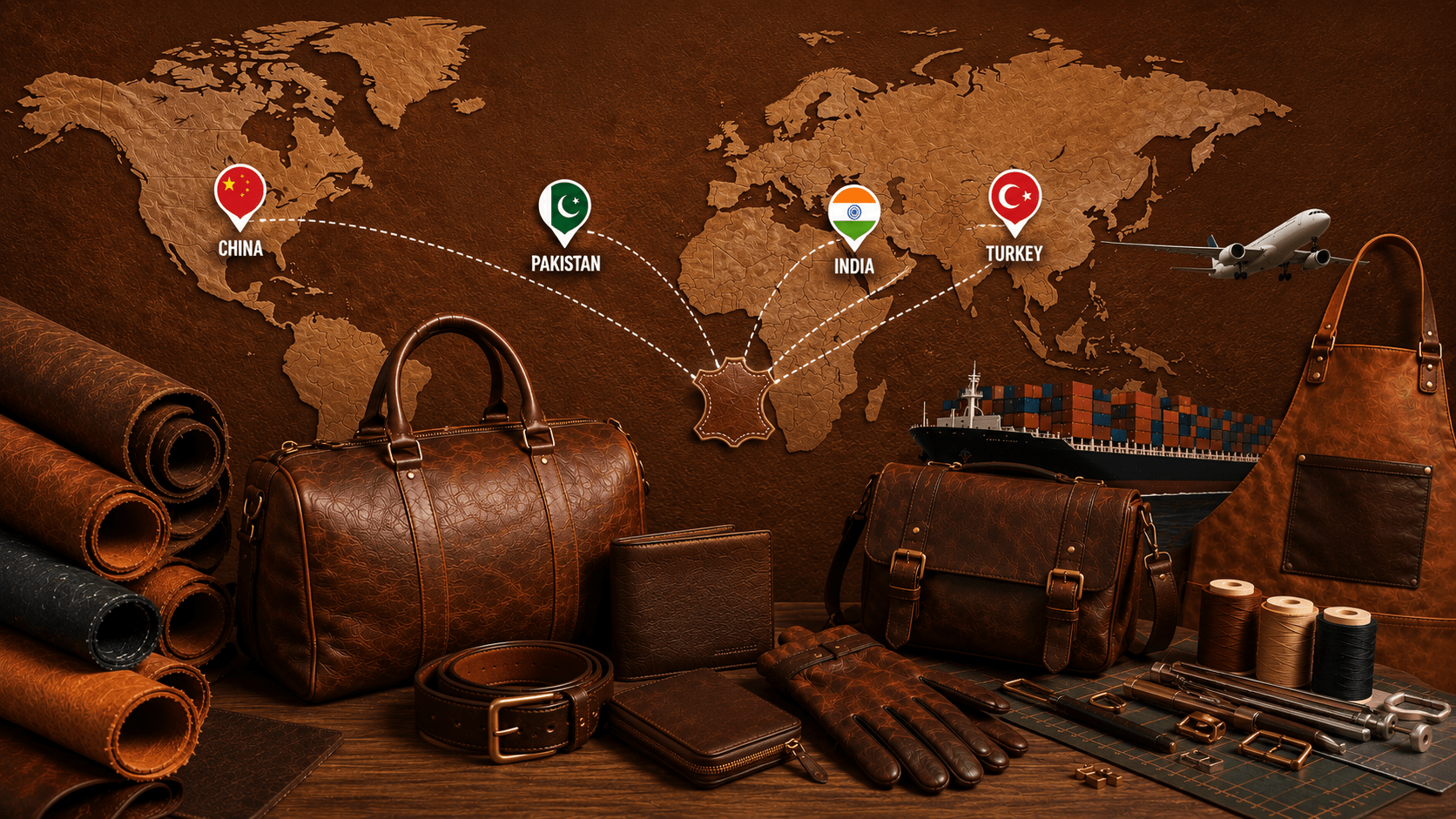
Start by researching manufacturers that specialize in your product category rather than selecting a factory based solely on price. Many businesses also compare reliable leather manufacturers in Pakistan when evaluating production quality, pricing, and export capabilities. Whether you need leather jackets, bags, wallets, gloves, or aprons, working with experienced suppliers often leads to better quality and smoother production.
Before placing an order, it’s also important to verify a leather manufacturer by reviewing their production capabilities, certifications, quality control procedures, previous work, and communication process. Proper supplier evaluation helps reduce risks and build stronger long-term partnerships.
Businesses sourcing internationally can also benefit from working with verified manufacturers through trusted B2B sourcing platforms and partners. If you’re comparing suppliers across different regions, a dedicated leather marketplace makes it easier to discover manufacturers that specialize in leather products while simplifying the sourcing process.
Final Thoughts
The ODM vs OEM decision comes down to your business goals, budget, and product strategy.
If your priority is creating distinctive leather products with complete control over design, materials, and branding, OEM manufacturing provides the flexibility needed to build a unique brand. Although it requires more investment and development time, it offers greater product differentiation and long-term value.
If your goal is to enter the market quickly with lower upfront costs, ODM manufacturing offers an efficient alternative. By using existing product designs and focusing on branding, businesses can reduce development time while still delivering quality leather products to customers.
Understanding the ODM vs OEM difference allows you to choose the manufacturing model that aligns with your current needs and future growth. Whether you’re sourcing leather jackets, bags, wallets, gloves, aprons, or other leather goods, selecting the right manufacturing partner is just as important as choosing the right production model.
FAQs
Is OEM better than ODM?
Neither model is universally better. OEM offers greater customization and product exclusivity, while ODM provides faster production and lower development costs.
Which is more affordable?
ODM manufacturing is generally more affordable because the manufacturer has already completed the product design and development.
Can ODM products be customized?
Yes. Most manufacturers allow customization of logos, labels, packaging, colors, and certain cosmetic features, although major design changes are usually not available.
Who owns the product design?
In OEM manufacturing, the buyer typically owns or controls the product design. In ODM manufacturing, the original design is usually owned by the manufacturer.
Which model is better for leather products?
Both models are widely used in the leather industry. OEM is ideal for brands seeking unique, customized products, while ODM works well for businesses that want to introduce products quickly using established designs.
Can startups use OEM manufacturing?
Yes, but startups should consider the higher costs and longer development timelines associated with OEM. Many new businesses begin with ODM before moving to OEM as they grow.