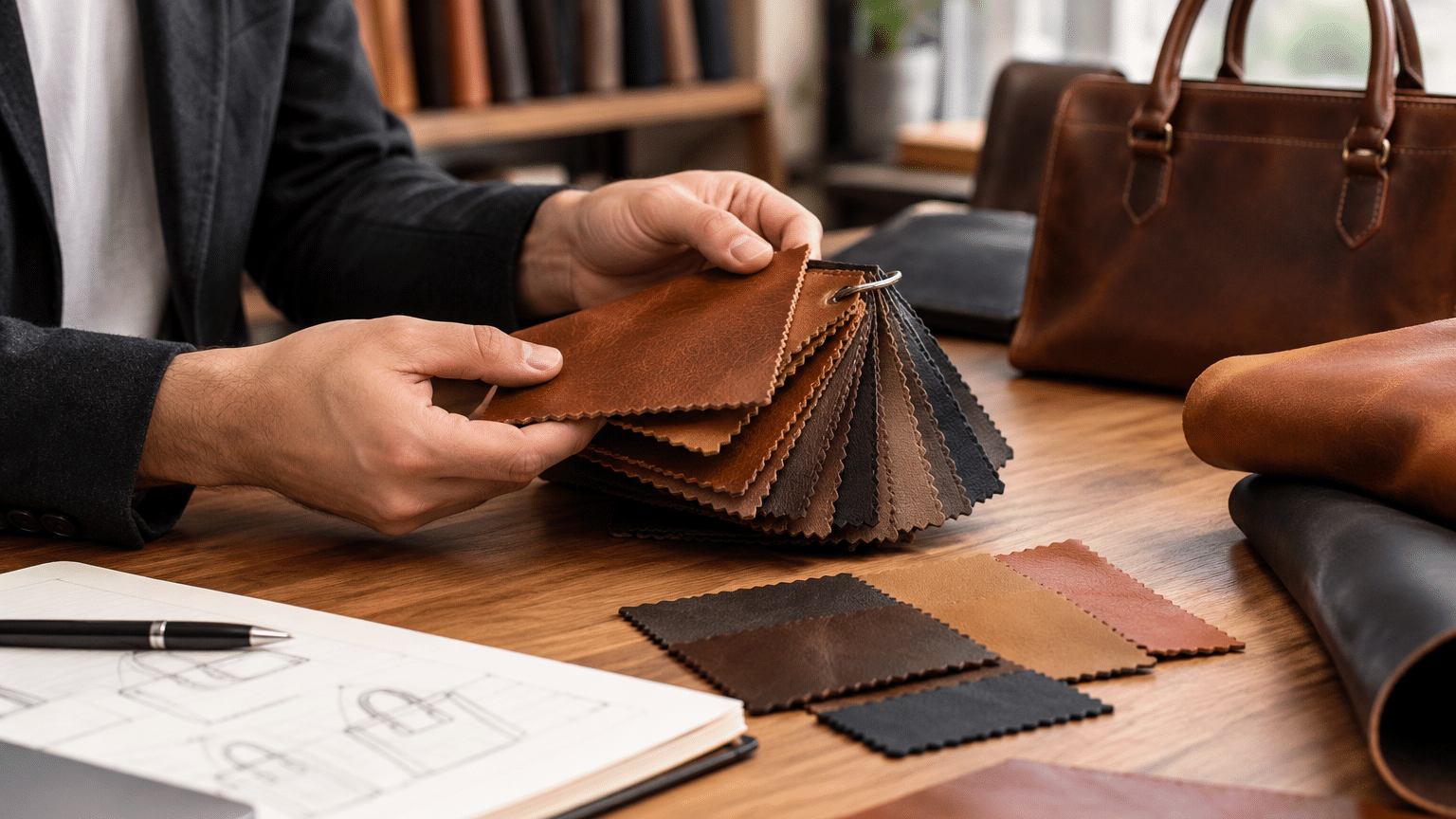
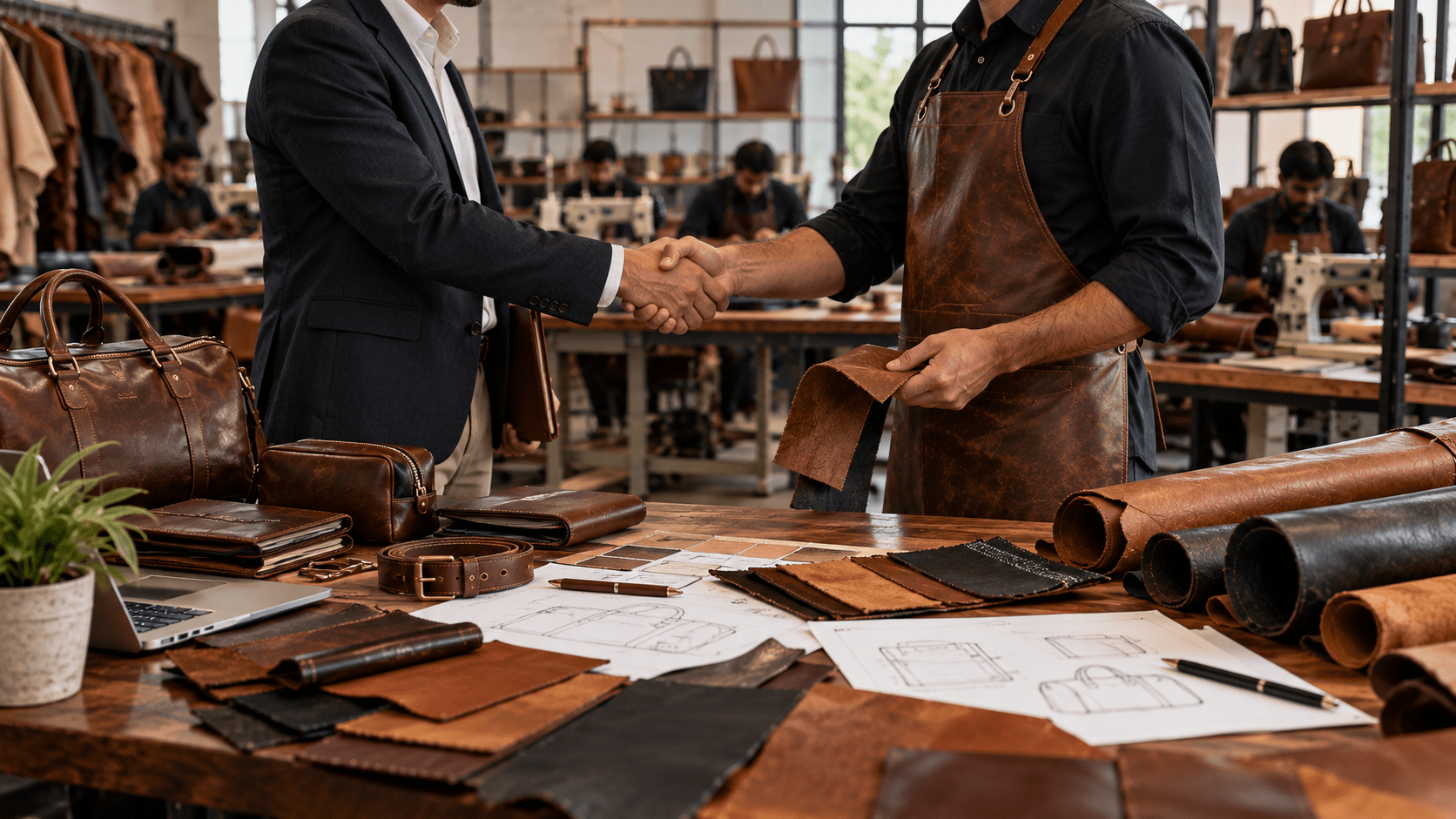
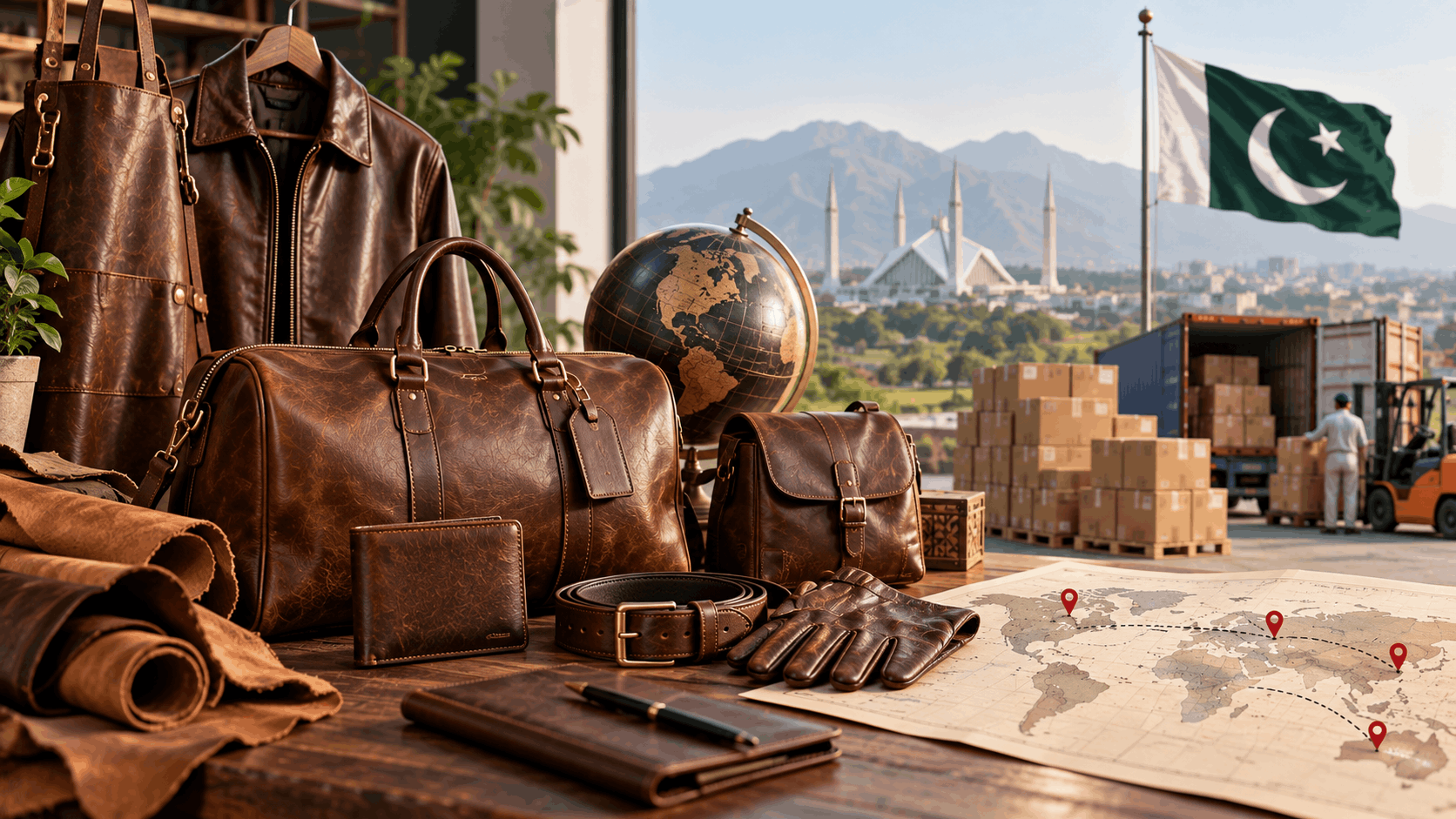
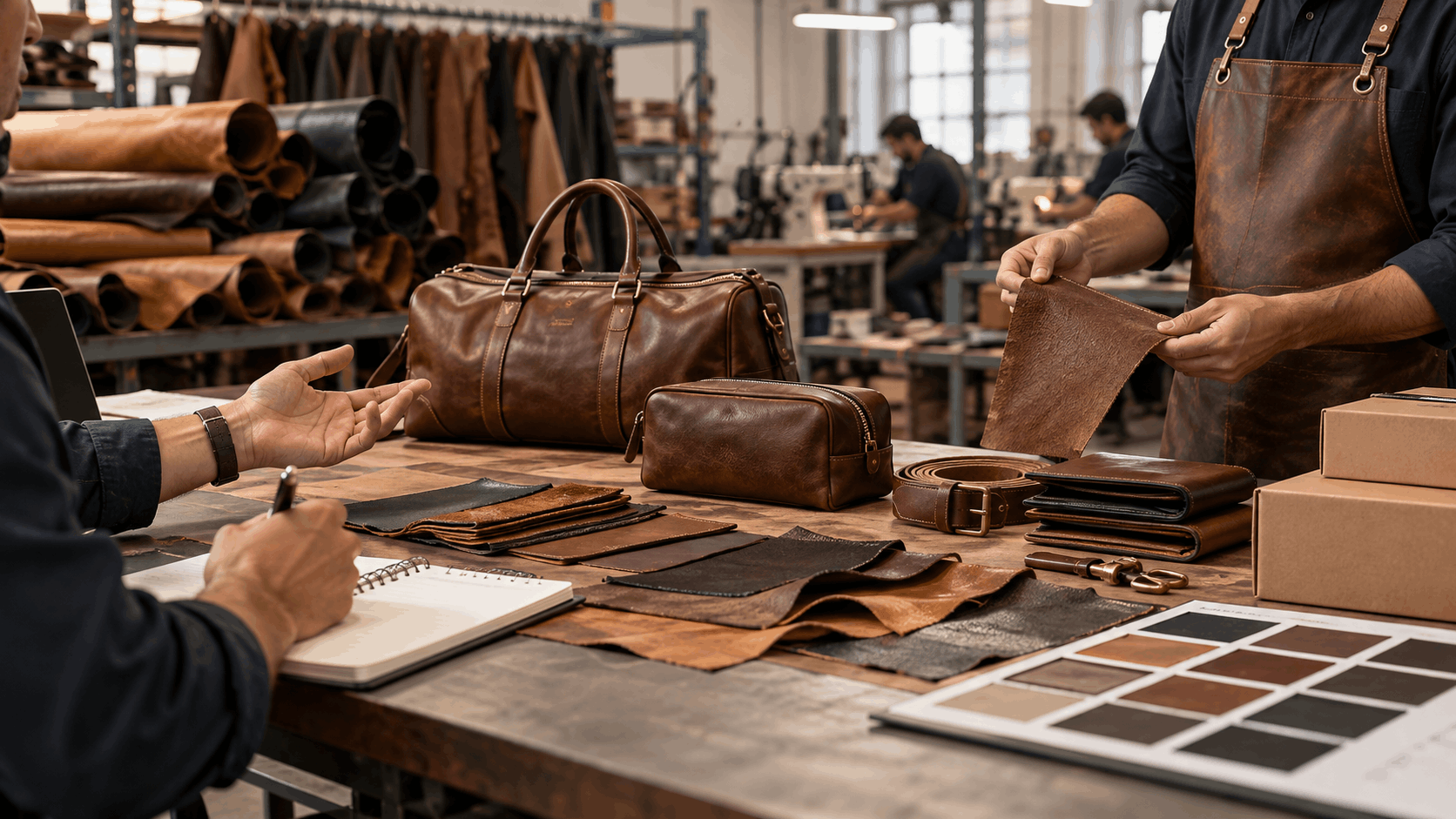
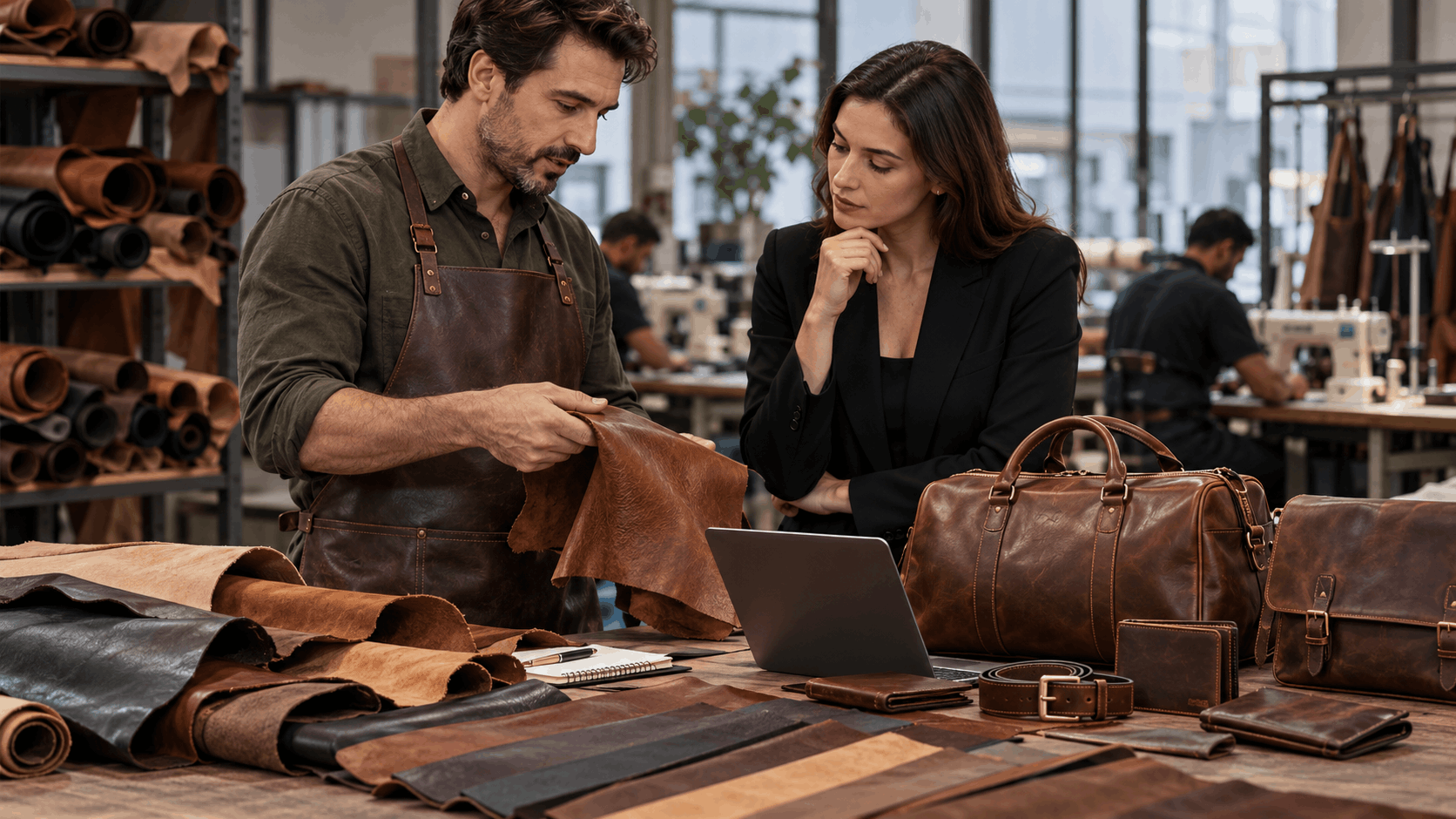
Quality control is a critical part of leather manufacturing because it ensures that leather meets defined requirements for appearance, thickness, strength, color, durability, and finish. Manufacturers use inspections and testing at different production stages to identify defects, maintain consistency, reduce waste, and deliver leather that meets buyer and market specifications.
Why Is Quality Control Important in the Leather Industry?
Quality control helps leather manufacturers maintain consistent material and product quality from one production batch to another. This is particularly important for manufacturers supplying brands, wholesalers, retailers, and international buyers who require specific leather characteristics.
Effective quality control helps with:
- Consistent leather quality: Ensures batches meet agreed specifications.
- Product durability: Helps identify weaknesses that could affect finished products.
- Customer satisfaction: Consistent materials lead to more reliable products.
- Reduced production defects: Problems can be identified before they become expensive production issues.
- Lower returns and waste: Early detection reduces rejected materials and finished products.
- Brand reputation: Reliable quality supports long-term customer and buyer relationships.
- International buyer requirements: Export buyers may require specific physical, chemical, and performance characteristics.
For manufacturers working with different leather types, understanding Leather Grades and Quality Standards is also important when defining specifications and communicating quality expectations with buyers.
How Is Leather Quality Checked?
Leather quality is checked through visual inspection, dimensional measurements, physical testing, chemical testing, and finishing evaluation. The exact tests depend on the leather type, intended application, buyer specifications, and destination market.
1. Raw Hide and Skin Inspection
The inspection process starts with the raw hide or skin. Inspectors look for visible problems such as cuts, scratches, insect damage, scars, holes, uneven surfaces, and other natural or processing-related marks.
The condition and usable area of the hide are also considered because raw material quality can directly affect the final leather.
2. Leather Thickness Check
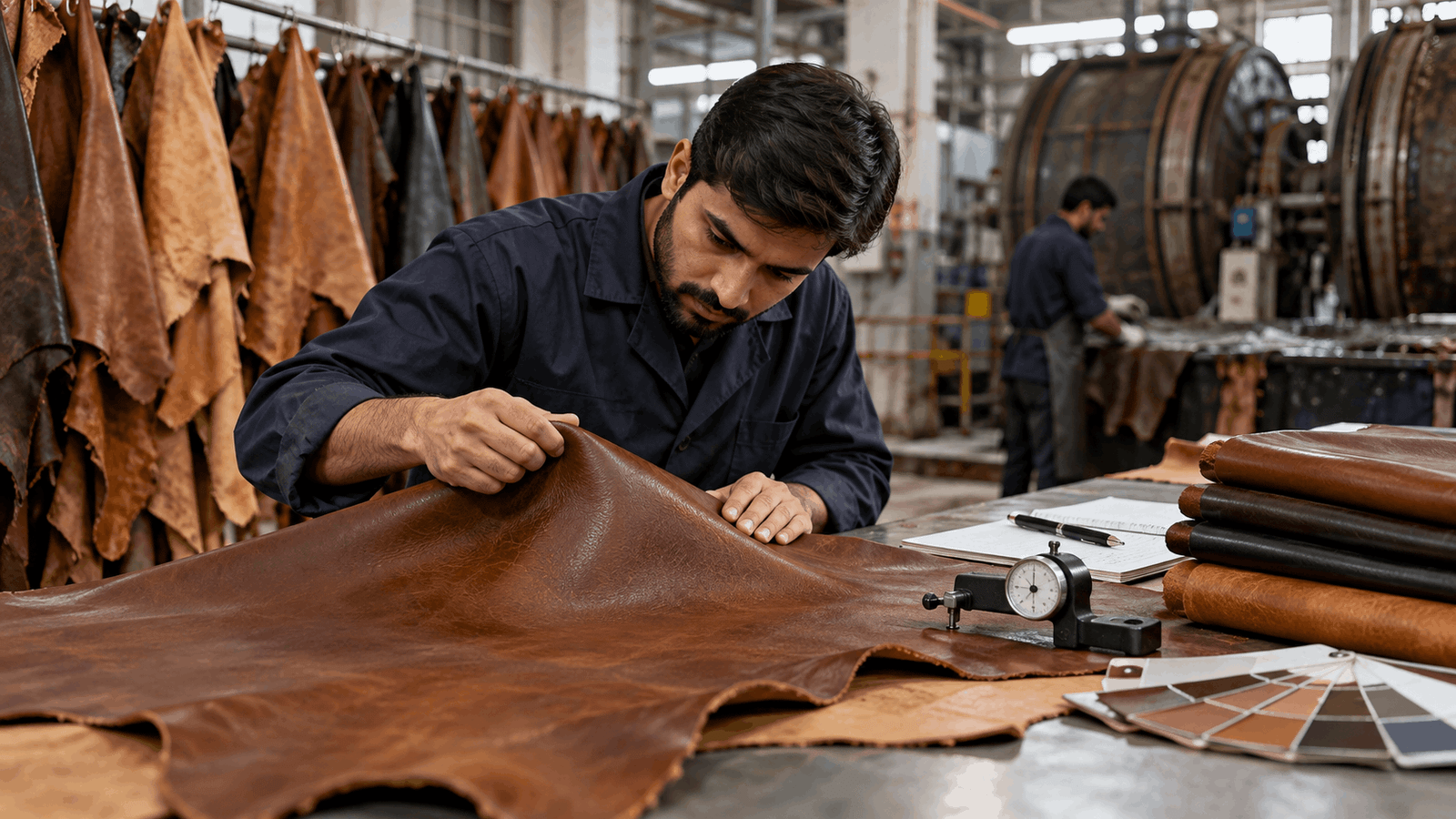
Leather thickness is measured to determine whether the material meets the required specification. Thickness can affect flexibility, strength, appearance, and suitability for applications such as jackets, bags, footwear, upholstery, and leather accessories.
Measurements should remain within the tolerance agreed between the manufacturer and buyer.
3. Grain and Surface Inspection
The grain and surface are examined for consistency, uniformity, visible marks, wrinkles, scratches, coating problems, and other imperfections.
Natural grain variations are not necessarily defects. Their acceptability depends on the leather type and the specifications agreed for the product.
4. Color and Shade Consistency
Leather is inspected to ensure that its color matches the approved sample or specification. Inspectors may compare different pieces or production batches under controlled lighting conditions.
Shade variation can become particularly important when multiple leather panels are used to manufacture one product.
5. Texture and Softness Testing
Texture and softness are evaluated according to the intended application. Leather should provide the required hand feel and flexibility without showing undesirable stiffness or excessive variation between pieces.
6. Strength and Durability Testing
Physical tests can evaluate properties such as tensile strength, tear strength, flex resistance, abrasion resistance, and other performance characteristics.
These tests help determine whether the leather can withstand the stresses expected during manufacturing and normal product use.
7. Moisture Content Testing
Moisture levels can affect leather stability, flexibility, storage, and finishing. Manufacturers monitor moisture content to ensure that leather is properly conditioned and suitable for further processing or shipment.
8. Finishing Quality Inspection
The final surface is inspected for coating uniformity, texture, gloss, color, adhesion, and other finishing characteristics. Any unevenness, peeling, cracking, excessive gloss, or other unwanted surface conditions may indicate a finishing problem.
The Leather Manufacturing Quality Control Process
Quality control should not be limited to the final inspection. A reliable manufacturing system checks leather throughout the production process.
Step 1: Raw Material Inspection
Before production begins, hides or skins are inspected for:
- Overall condition
- Natural marks and scars
- Cuts and scratches
- Holes or damaged areas
- Size and usable surface
- Thickness variation
This initial inspection helps manufacturers identify unsuitable material before it enters further processing.
Step 2: Tanning Quality Control
During tanning, manufacturers monitor whether the leather is being processed according to the required specifications. Factors such as tanning conditions, chemical balance, processing time, and moisture control can influence the stability and performance of the finished leather. The choice of tanning method can also affect the leather’s final characteristics, so understanding Chrome Tanned vs Vegetable Tanned Leather can help buyers and manufacturers evaluate the differences between these two common tanning approaches.
Proper control at this stage helps create consistent material characteristics throughout the batch.
Step 3: Dyeing and Coloring Inspection
Dyeing and coloring require careful control because buyers often expect a consistent shade across an entire order.
Quality checks may include:
- Color matching against an approved sample
- Shade consistency between batches
- Dye penetration
- Color uniformity
- Color fastness
Any significant variation should be identified before the leather moves into final production.
Step 4: Drying and Conditioning
After processing, leather is dried and conditioned to achieve the required moisture level, flexibility, and surface characteristics.
Over-drying or inadequate conditioning can affect the feel, flexibility, and performance of leather. Manufacturers therefore monitor the material before it proceeds to finishing.
Step 5: Finishing Inspection
Finishing can influence the final appearance and performance of leather. Inspectors check the coating, texture, gloss, color, and surface uniformity.
The finished surface should match the approved specification or reference sample.
Step 6: Final Leather Inspection
Before the leather is approved for production or shipment, a final inspection evaluates:
- Appearance
- Dimensions
- Thickness
- Strength
- Surface defects
- Color consistency
- Finish
- Overall batch consistency
The objective is to confirm that the material meets the agreed quality requirements.
What Are the Main Leather Quality Tests?
Leather testing helps manufacturers and buyers measure specific properties instead of relying only on visual inspection. Testing requirements vary according to leather type, application, and buyer specifications.
What Is a Leather Thickness Test?
A leather thickness test measures the thickness of the material at specified points. Multiple measurements can help identify variation across a hide or production batch.
How Is Leather Tensile Strength Tested?
Tensile strength testing measures how much pulling force leather can withstand before it breaks. It is useful for evaluating whether leather has sufficient strength for its intended application.
What Is Leather Colorfastness Testing?
Colorfastness testing evaluates how well leather retains its color when exposed to conditions such as rubbing, moisture, or other specified influences. The appropriate test depends on the intended use and applicable testing method.
How Is Leather Abrasion Resistance Tested?
Abrasion testing evaluates how well the leather surface withstands repeated rubbing or wear. It is particularly relevant for products expected to experience frequent contact and friction.
What Is Leather Tear Strength Testing?
Tear strength testing measures the force required to continue a tear in leather. It can help identify whether the material has sufficient resistance to tearing during manufacturing and use.
How Is Leather Flexibility Tested?
Flexibility testing evaluates how leather responds to repeated bending or flexing. This can be important for applications where the material must repeatedly bend without developing unacceptable cracking or damage.
What Is Leather Water Resistance Testing?
Water resistance testing evaluates how leather responds to exposure to water or moisture under a defined testing procedure. The appropriate requirement depends on the product and its intended environment.
Quality Control Standards for Leather Manufacturing
Leather manufacturers may use international standards and recognized testing methods to evaluate physical performance, chemical safety, and other material characteristics. The specific standard should be selected according to the leather type, application, buyer requirements, and destination market.
ISO Standards for Leather
ISO standards provide internationally recognized methods and specifications for different aspects of leather testing and evaluation. Manufacturers may use relevant ISO methods when buyers require standardized testing.
ASTM Leather Testing Methods
ASTM develops standardized test methods used across different industries, including methods relevant to evaluating leather properties. The applicable method depends on the specific characteristic being tested.
EN Leather Testing Standards
EN standards are used across European markets for various products and testing requirements. Buyers sourcing leather for European applications may specify relevant EN methods or requirements.
REACH Requirements for Leather Products
For products entering the European Union market, REACH is an important regulatory framework concerning chemicals and substances. Leather manufacturers and suppliers need to consider applicable chemical restrictions and documentation requirements based on the product and market.
Chemical Safety and Restricted Substances
Quality control can also include checking for restricted substances and chemical residues where required. Requirements vary according to the destination market and product category.
For example, a manufacturer supplying buyers in the United States, European Union, United Kingdom, or other international markets may need to meet different regulatory, documentation, testing, or chemical-safety expectations.
Manufacturers should therefore confirm the buyer’s requirements and applicable regulations before production rather than assuming that one standard applies to every market.
Quality Control for OEM and Private Label Leather Manufacturing
Quality control becomes especially important in OEM and private label manufacturing because buyers usually provide detailed product specifications that must be reproduced consistently.
Product Specification Approval
The manufacturer and buyer should agree on leather type, thickness, color, finish, dimensions, hardware, construction, and other relevant specifications before production.
Sample Inspection
A sample gives the buyer an opportunity to evaluate the leather and finished product before approving bulk production.
Pre-Production Quality Checks
Before production begins, manufacturers should verify raw materials, approved samples, patterns, specifications, and production requirements.
During-Production Inspection
Quality checks during production can identify problems before the entire order is completed. This may include checking leather, stitching, dimensions, color, hardware, and construction.
Pre-Shipment Inspection
A final inspection confirms whether the completed order meets the approved specifications before shipment.
Packaging Inspection
Packaging should be checked for correct labeling, protection, quantities, and presentation. Proper packaging can also reduce damage during transportation.
Final Approval
The completed order should be reviewed against the approved specifications before it is released for shipment.
How Do Leather Manufacturers Ensure Consistent Quality?
Leather manufacturers maintain consistency by combining standardized specifications, trained inspectors, testing procedures, and documented quality-control processes.
The main practices include:
- Standardize raw materials according to agreed leather specifications.
- Maintain production specifications for thickness, color, finish, dimensions, and other requirements.
- Test leather at different stages instead of relying only on final inspection.
- Use trained quality inspectors who understand leather defects and testing requirements.
- Maintain inspection records to identify recurring production problems.
- Check samples before bulk production to establish an approved reference.
- Perform final inspections before shipment to confirm order compliance.
This approach is especially important when manufacturing large quantities for international buyers because small inconsistencies can become significant when multiplied across a large production order.
How Can Buyers Check Leather Quality Before Bulk Orders?
Buyers should evaluate leather before committing to a large production order. A sample-based inspection can reveal differences in material quality, finish, color, thickness, and construction before significant money is invested in bulk production.
Request Leather Samples
Ask the manufacturer to provide representative samples of the leather that will be used for production.
Ask for Material Specifications
Request information about leather type, thickness, finish, color, origin where relevant, and other specifications important to the product.
Check Thickness and Feel
Measure the sample where appropriate and evaluate its flexibility, softness, weight, and overall hand feel.
Inspect Grain and Finish
Look closely at the grain, surface, coating, texture, gloss, and overall uniformity.
Test Colorfastness
Where color performance is important, request appropriate colorfastness testing or documentation.
Review Quality Certifications
If the manufacturer claims compliance with specific standards or certifications, buyers should review the relevant documentation and verify that it applies to the product being supplied.
Order a Pre-Production Sample
A pre-production sample allows buyers to confirm the actual product before bulk manufacturing begins.
Conduct Pre-Shipment Inspection
For larger orders, buyers can arrange an independent or manufacturer-led pre-shipment inspection to verify quantity, specifications, workmanship, packaging, and other requirements.
Quality Control Checklist for Leather Buyers
A practical buyer checklist can help prevent misunderstandings before production and shipment.
- Leather type confirmed
- Leather thickness confirmed
- Color approved
- Grain and finish approved
- Material sample approved
- Product dimensions confirmed
- Stitching inspected
- Hardware checked
- Packaging approved
- Final inspection completed
The checklist can be adapted according to the product, order size, manufacturing process, and buyer specifications.
What Happens When Leather Quality Control Fails?
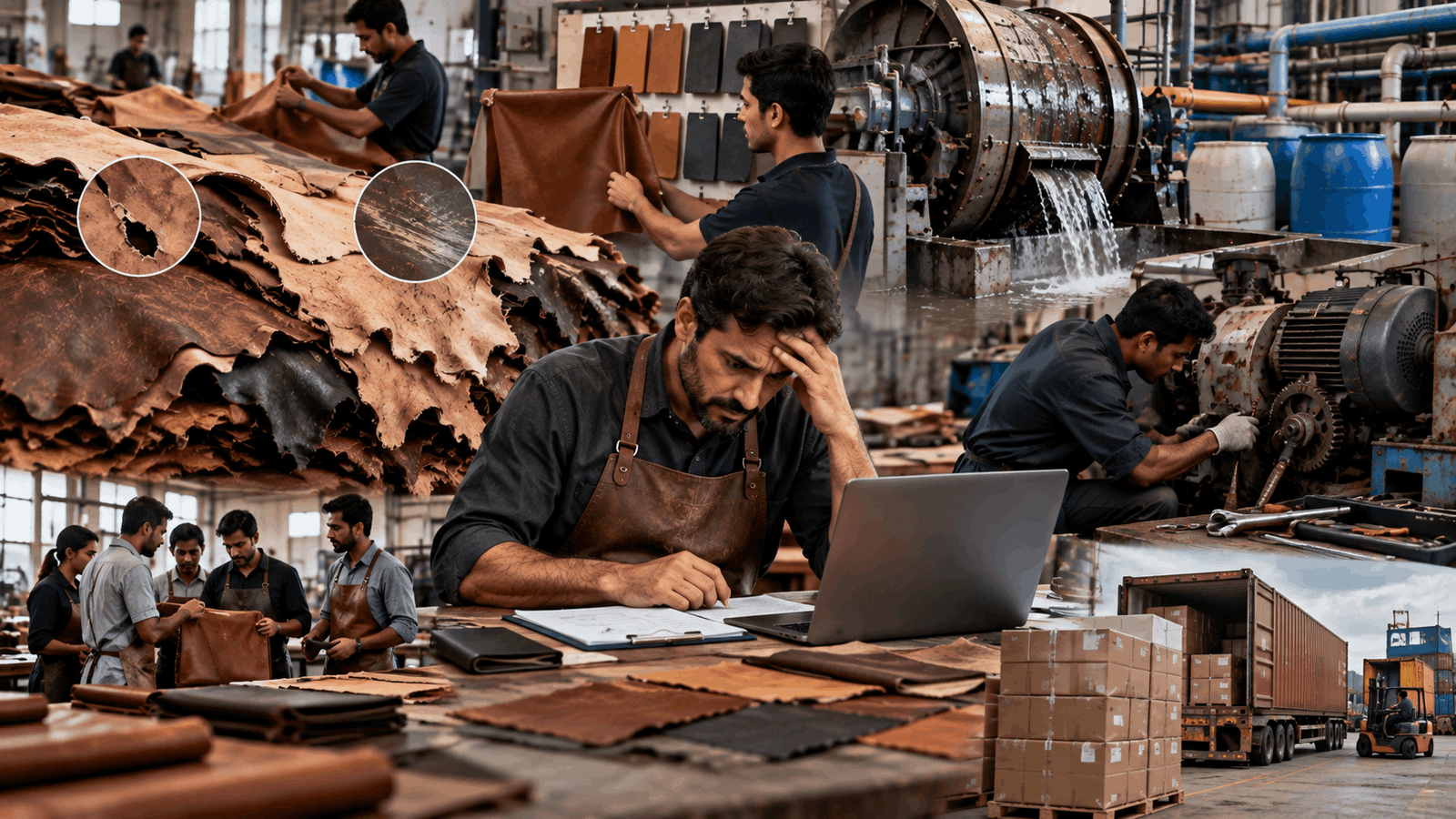
Poor quality control can create problems at several stages of the supply chain. Defective leather may be rejected during production, while defects discovered after shipment can lead to significantly higher costs.
Common consequences include:
- Product rejection
- Increased production waste
- Customer complaints
- Product returns
- Delayed shipments
- Financial losses
- Damage to brand reputation
Manufacturers can reduce these risks by establishing quality specifications before production, inspecting materials at multiple stages, documenting defects, training quality personnel, and conducting final inspections before shipment.
Early detection is generally more efficient than correcting a large completed order.
How to Choose a Leather Manufacturer With Strong Quality Control
Choosing a manufacturer should involve more than comparing price and production capacity. Buyers should understand how the manufacturer controls quality throughout the production process.
Check Manufacturing Experience
Look for relevant experience with the specific leather products and markets you intend to serve.
Ask About Quality Control Procedures
Ask how raw materials, production stages, finished products, and shipments are inspected.
Request Product Samples
Samples provide a practical way to evaluate material quality and workmanship before placing a bulk order.
Verify Testing Capabilities
Ask which leather properties the manufacturer can test internally and which tests are handled by external laboratories.
Review Certifications
Where certifications or standards are important to your market, request relevant documentation and confirm that it applies to the supplied products.
Ask About OEM/Private Label Experience
Manufacturers with established OEM or private label processes may already have systems for handling detailed buyer specifications, samples, approvals, and production inspections.
Check Production Capacity
Quality consistency can become difficult if a manufacturer accepts orders beyond its practical production capacity. Discuss production timelines and capacity before confirming a large order.
Discuss Inspection Before Shipment
Clarify whether final inspection is included and whether buyers can arrange an independent inspection before shipment.
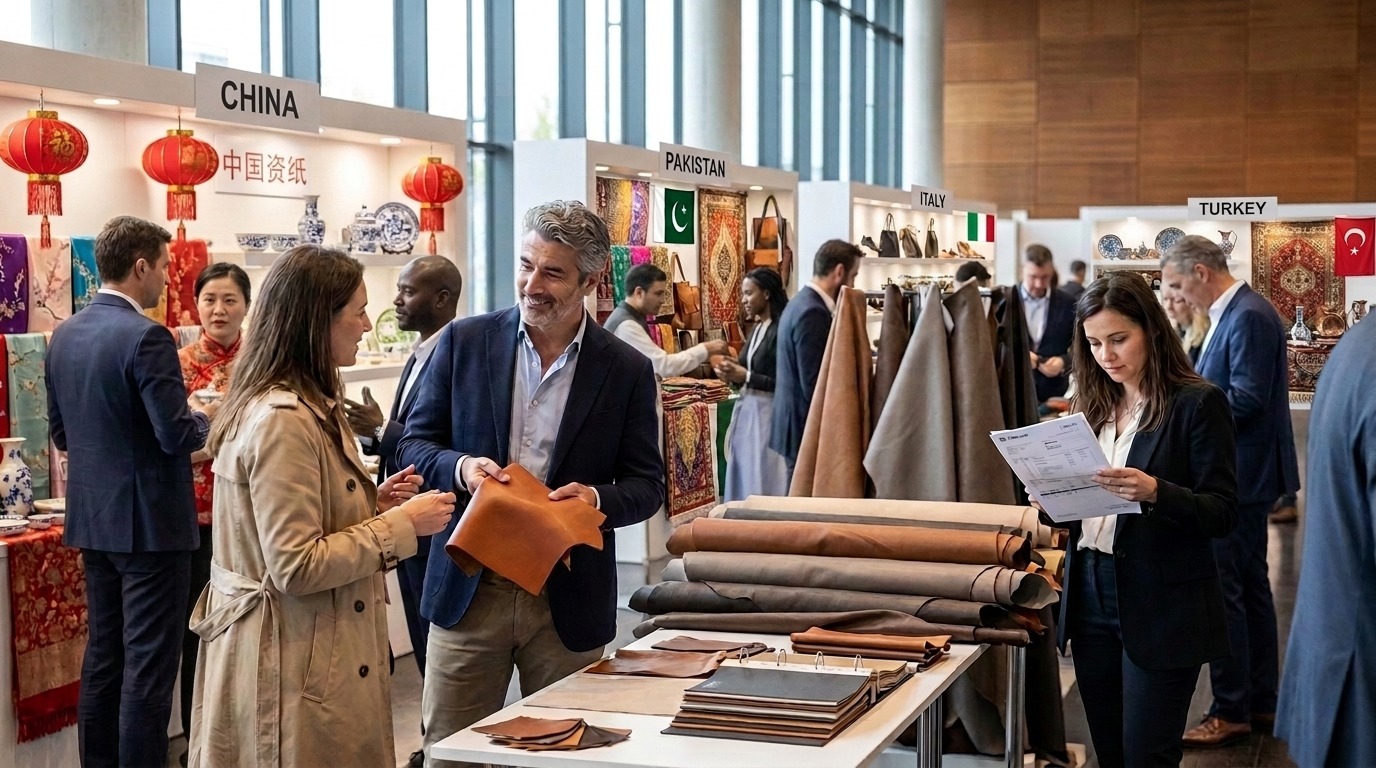
Buyers sourcing from Pakistan, Italy, Turkey, India, China, and other major leather manufacturing markets should apply the same basic quality-control principles while also considering each supplier’s specific capabilities, certifications, export experience, and compliance with the destination market.
Understanding the Leather Manufacturing Process can also help buyers identify where quality checks should take place during production rather than treating quality control as a single final-stage activity.
Frequently Asked Questions About Leather Quality Control
What is quality control in leather manufacturing?
Quality control in leather manufacturing is the process of inspecting and testing leather to ensure that it meets defined requirements for appearance, thickness, color, strength, durability, finish, and other specified characteristics.
How do manufacturers test leather quality?
Manufacturers can use visual inspections, thickness measurements, physical strength tests, colorfastness testing, abrasion and tear testing, moisture checks, and other methods depending on the leather and intended application.
What makes high-quality leather?
High-quality leather generally has characteristics appropriate to its intended use, including consistent construction, suitable strength, acceptable surface quality, appropriate thickness, good finishing, and stable performance. Quality should be evaluated against the specification rather than appearance alone.
A broader understanding of Types of Leather Explained can also help buyers compare materials according to their intended application.
What are the most common leather defects?
Common defects can include scratches, scars, holes, cuts, uneven grain, inconsistent color, surface damage, coating problems, cracking, excessive wrinkles, and other irregularities. Some natural marks may be acceptable depending on the leather type and specification.
How is leather durability tested?
Leather durability can be evaluated through tests such as tensile strength, tear strength, abrasion resistance, flex resistance, and other performance tests selected according to the intended use.
What standards are used for leather testing?
Leather may be tested using applicable ISO, ASTM, EN, and other recognized methods. The correct method depends on the leather type, property being tested, product application, buyer requirements, and destination market.
How can buyers check leather quality?
Buyers can request samples, review specifications, inspect grain and finish, measure thickness, evaluate color and feel, review testing documentation, approve pre-production samples, and conduct pre-shipment inspections.
Why is pre-shipment inspection important?
Pre-shipment inspection provides an opportunity to identify quality, quantity, packaging, or specification problems before an order leaves the manufacturing facility. This can reduce the risk of receiving products that do not match the approved requirements.
What is the difference between leather inspection and leather testing?
Leather inspection generally involves visual, dimensional, and workmanship checks, while leather testing uses defined procedures to measure specific physical, chemical, or performance characteristics. Both can be used together for comprehensive quality control.
How do OEM manufacturers maintain consistent leather quality?
OEM manufacturers maintain consistency by using approved samples and specifications, standardizing materials, conducting inspections throughout production, testing leather when required, maintaining quality records, and completing final inspections before shipment.
Conclusion: Why Quality Control Matters in Leather Manufacturing
Quality control is fundamental to reliable leather manufacturing. A structured process helps manufacturers identify defects early, maintain consistent material characteristics, meet buyer specifications, and reduce waste and production problems.
The relationship is straightforward:
Quality control → Consistent leather → Reliable products → Fewer defects → Satisfied buyers → Stronger brands
For global leather sourcing, OEM manufacturing, private label production, and international B2B trade, quality control should be discussed before production begins. Clear specifications, approved samples, appropriate testing, documented inspections, and final quality checks give both manufacturers and buyers a stronger foundation for consistent, long-term business relationships.