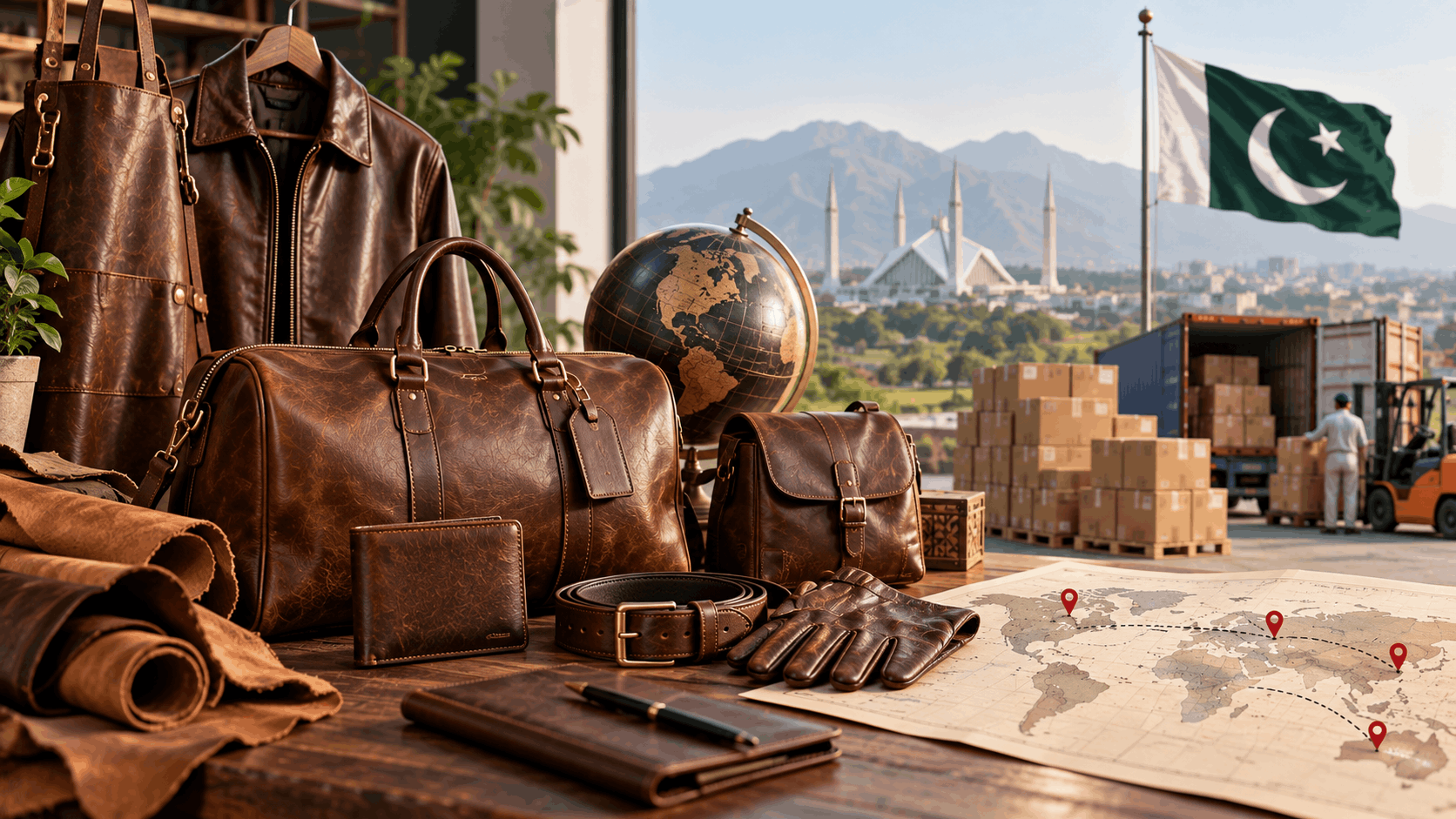
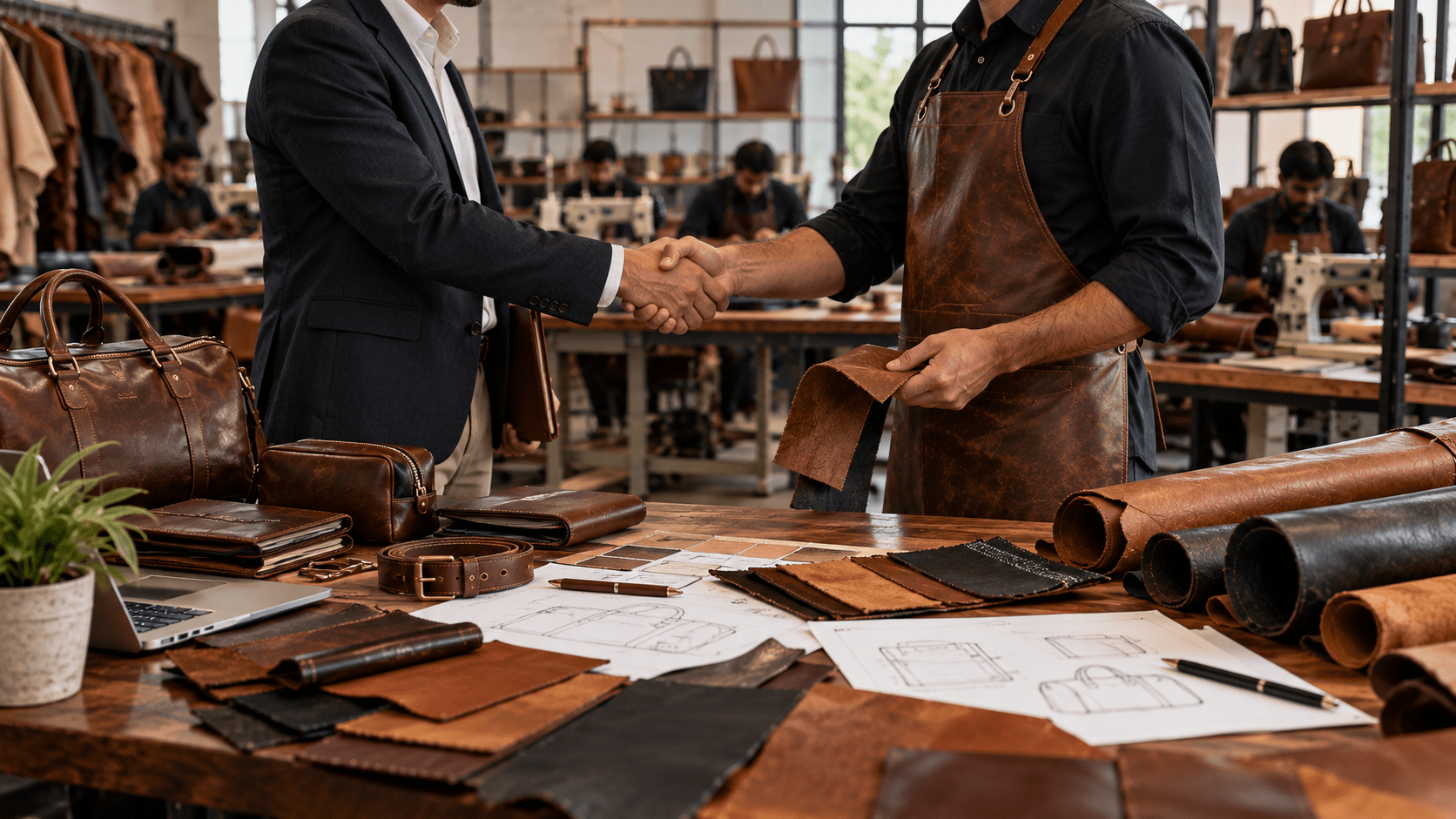
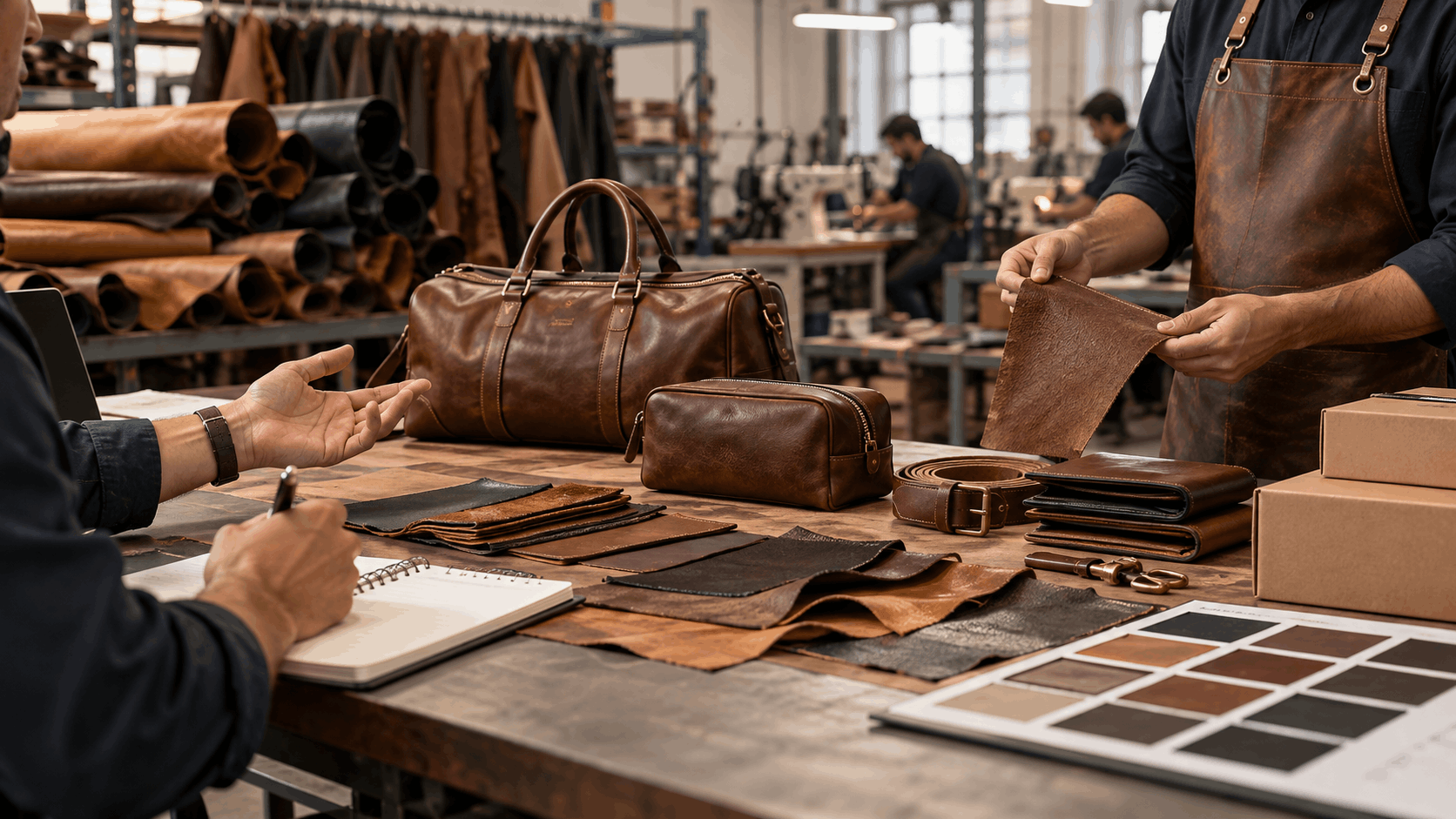
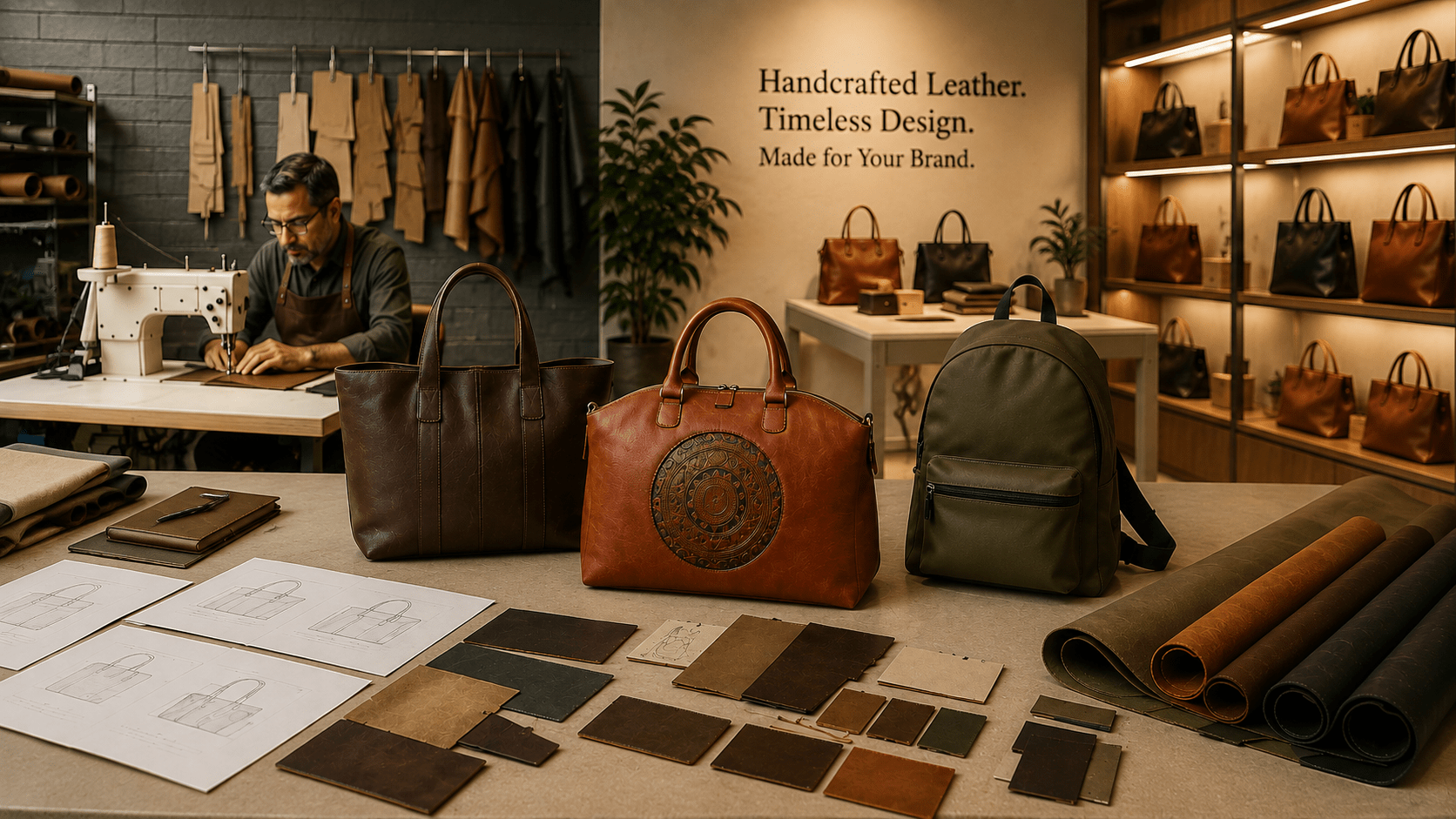
Pakistan is an established manufacturing destination for leather goods, offering products ranging from jackets and bags to wallets, belts, aprons, and other specialty leather items. For international buyers, importing from Pakistan involves more than simply finding a supplier and placing an order. You need to select the right products, verify the manufacturer, approve samples, calculate the landed cost, understand shipping and customs requirements, and clearly document the order terms.
This guide explains how to import leather goods from Pakistan step by step, with practical information for businesses, retailers, wholesalers, and other commercial buyers.
Quick Answer: How Do You Import Leather Goods from Pakistan?
To import leather goods from Pakistan, first decide which products you need and identify suitable Pakistani manufacturers or exporters. Verify the supplier, request samples, confirm leather quality and specifications, negotiate pricing and minimum order quantities, agree on payment and shipping terms, prepare the required documentation, arrange international freight, and complete customs clearance in your destination country.
The basic process is:
- Choose the leather products you want to import.
- Find suitable Pakistani suppliers.
- Verify the supplier and manufacturing capability.
- Request and evaluate samples.
- Confirm pricing, MOQ, specifications, and lead time.
- Finalize payment and shipping terms.
- Prepare the required import and export documents.
- Arrange air or sea freight.
- Complete customs clearance.
- Receive and inspect the shipment.
What Leather Goods Can You Import from Pakistan?
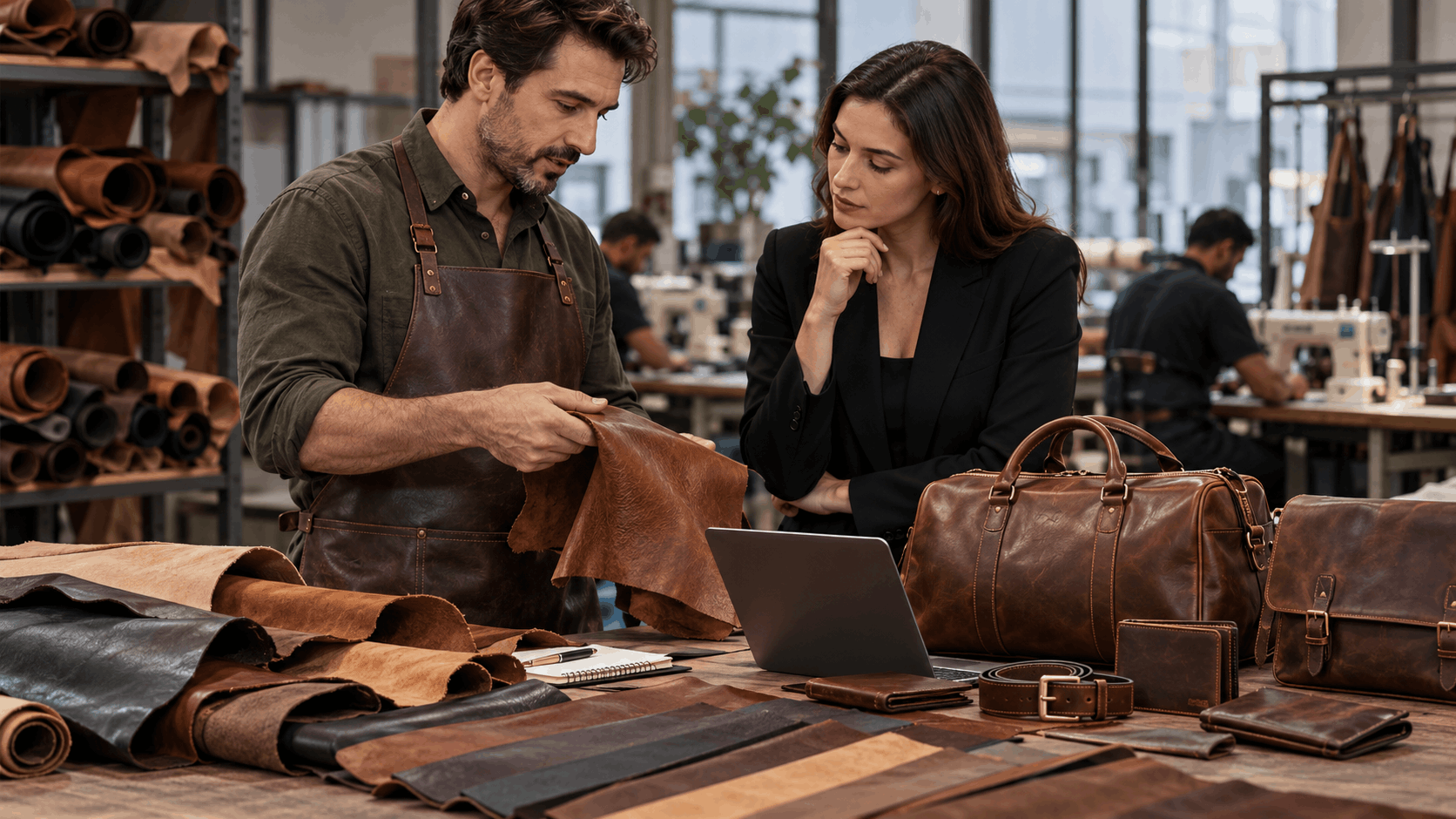
Pakistan produces a wide range of leather products for domestic and international markets. Importers can source both standard products and customized goods depending on the manufacturer’s capabilities.
Common leather goods include:
The best product to import depends on your target market, budget, required quantity, leather specifications, and the supplier’s production capabilities.
What are the most commonly imported leather products from Pakistan?
Leather apparel, bags, wallets, belts, gloves, and specialty leather accessories are among the product categories buyers commonly source from Pakistani manufacturers. Custom-made leather products can also be produced when the buyer provides specific designs, dimensions, materials, and branding requirements.
How Do You Find Leather Goods Suppliers in Pakistan?
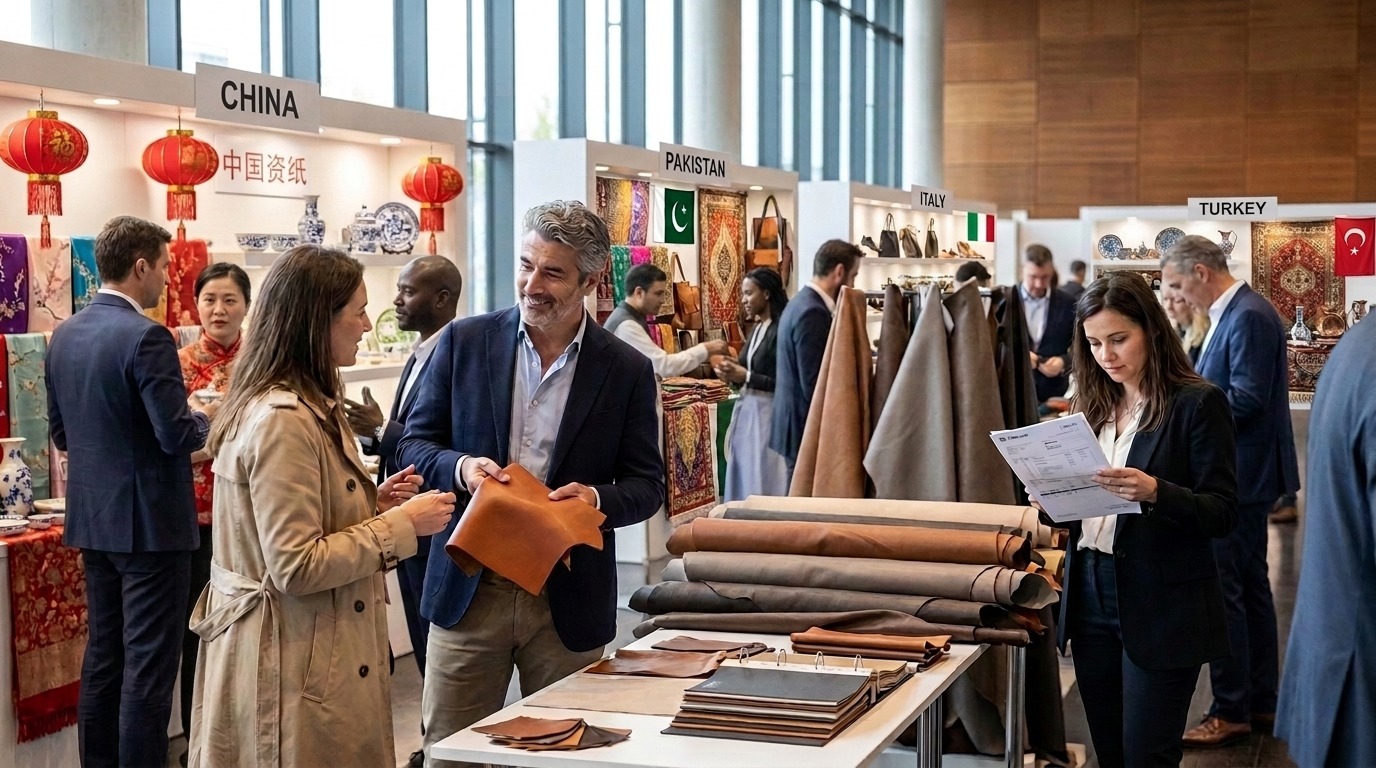
You can find Pakistani leather suppliers through B2B marketplaces, trade directories, industry networks, trade exhibitions, referrals, and established manufacturers with international export experience.
When comparing suppliers, do not focus only on the quoted price. Consider whether the supplier can consistently produce the quality and quantity you require.
Look for:
- Relevant manufacturing experience
- International export experience
- Product specialization
- Leather quality
- Production capacity
- Minimum order quantity
- Customization capabilities
- Quality-control procedures
- Clear communication
- Reliable documentation
A supplier that specializes in your specific product category can often be a better choice than a general supplier offering a lower initial price.
How Do You Verify a Pakistani Leather Supplier?
Verify the supplier before placing a substantial order. Supplier verification helps reduce the risk of inconsistent quality, production delays, unclear specifications, and other problems.
Start by asking for company information, product catalogs, manufacturing details, previous export experience, and references where available. You can also request samples and discuss the supplier’s production and inspection procedures.
Supplier Verification Checklist
Before committing to a bulk order:
- Ask for complete business information.
- Request a product catalog or portfolio.
- Ask about manufacturing capabilities.
- Confirm the supplier’s experience with international orders.
- Request product samples.
- Ask about previous export markets.
- Confirm production capacity.
- Discuss quality-control procedures.
- Clarify payment terms.
- Confirm shipping and delivery arrangements.
The goal is not simply to establish that a supplier exists. You also need to determine whether the supplier is capable of meeting your exact requirements consistently.
How Much Does It Cost to Import Leather Goods from Pakistan?
The total cost depends on the product, leather type, order quantity, supplier price, shipping method, destination country, customs duties, taxes, insurance, and other import-related charges.
Instead of looking only at the manufacturer’s product price, calculate the complete landed cost.
How Do You Calculate Landed Cost?
A basic calculation is:
Product Cost + Packaging + Inland Transportation + Shipping + Insurance + Customs Duties + Taxes + Import Fees = Total Landed Cost
For example, a supplier may offer an attractive unit price, but expensive international freight or destination-country duties could significantly increase your final cost.
Calculate these expenses before confirming a bulk order so you can determine your actual profit margin and selling price.
What Should You Ask a Pakistani Leather Supplier Before Ordering?
Ask detailed questions before agreeing to an order. Clear communication at this stage can prevent misunderstandings later.
Important questions include:
- What type of leather is used?
- What leather grade is available?
- What is the leather thickness?
- What colors and finishes are available?
- What is the minimum order quantity?
- What is the sample cost?
- How long does production take?
- Can the product be customized?
- Can you add private labeling or branding?
- What are the payment terms?
- What shipping terms are available?
- What export documents will you provide?
- How is quality checked before shipment?
- What happens if the delivered products do not match the approved specifications?
Ask the supplier to provide important specifications in writing rather than relying entirely on verbal conversations.
How Do You Order Samples from Pakistan?
Request a sample before placing a large commercial order whenever practical. A sample allows you to evaluate the actual product rather than relying only on photographs or descriptions.
Check the sample for:
- Leather thickness
- Leather texture
- Finish and color
- Stitching quality
- Hardware quality
- Lining
- Edges and finishing
- Zippers and closures
- Dimensions
- Overall construction
- Branding or customization
If you approve a sample, keep its specifications documented. For a large production order, the approved sample can serve as an important quality reference.
What Documents Are Needed to Import Leather Goods?
Import documentation varies according to the product and destination country. Commercial shipments commonly involve documents such as a commercial invoice, packing list, shipping document, and applicable origin or customs documentation.
Common documents may include:
- Commercial invoice
- Packing list
- Bill of lading for sea freight
- Air waybill for air freight
- Certificate of origin, where required
- Export documentation
- Customs declaration
- Product-specific certificates or permits, where applicable
Importers should check the requirements of their destination country before ordering. Requirements can differ according to the product, country of origin, destination, tariff classification, and applicable regulations.
How Are Leather Goods Shipped from Pakistan?
Leather goods can generally be transported internationally by air or sea freight.
Air freight is usually more suitable when speed is important or when the shipment is relatively small. Sea freight is generally more suitable for larger commercial shipments where transportation cost is a major consideration.
Air Freight vs. Sea Freight
| Factor |
Air Freight |
Sea Freight |
| Speed |
Faster |
Slower |
| Transportation cost |
Usually higher |
Usually lower for larger shipments |
| Best suited for |
Samples and smaller/urgent orders |
Bulk commercial orders |
| Shipment capacity |
More limited |
Suitable for large volumes |
The right option depends on your order size, delivery requirements, budget, and destination.
What Are Incoterms and Which One Should an Importer Use?
Incoterms define responsibilities between the buyer and seller for transportation, costs, delivery, and risk during an international shipment.
Importers may encounter terms such as:
- EXW — Ex Works
- FOB — Free on Board
- CIF — Cost, Insurance and Freight
- DDP — Delivered Duty Paid
The appropriate term depends on your logistics arrangements, experience with international freight, destination, and the responsibilities you want the supplier to handle.
Before placing an order, make sure both parties understand exactly what the agreed shipping term includes and which costs remain the buyer’s responsibility.
How Do Customs Duties and Taxes Work?
Customs duties and import taxes depend on the destination country’s regulations and the classification of the imported product.
The amount may depend on factors such as:
- Product type
- HS code or tariff classification
- Declared customs value
- Country of origin
- Applicable trade rules
- Destination-country tax regulations
Importers should identify the appropriate HS code and check current customs requirements before placing an order. Do not assume that the same duty rate applies to every type of leather product.
How Can You Avoid Problems When Importing Leather Goods from Pakistan?
Most common import problems can be reduced by verifying the supplier, approving samples, documenting specifications, calculating the landed cost, confirming shipping terms, and checking customs requirements before the order is shipped.
Common Mistakes to Avoid
Ordering in bulk without requesting a sample: A product can look different in photographs than it does in person. A sample gives you an opportunity to check quality before committing to a larger order.
Not specifying leather quality: Clearly define the required leather type, grade, thickness, finish, and color.
Ignoring the MOQ: Confirm the supplier’s minimum order quantity before negotiating the final price.
Failing to document specifications: Record dimensions, materials, colors, hardware, stitching, packaging, branding, and other important requirements.
Looking only at the product price: Calculate shipping, duties, taxes, insurance, and other expenses to determine the actual landed cost.
Choosing a supplier only because of the lowest price: A lower unit price may not represent better value if quality, communication, or production reliability is poor.
Ignoring destination-country regulations: Confirm customs, import, labeling, and product-specific requirements before shipment.
Using unclear payment terms: Agree on payment milestones, responsibilities, and order conditions in writing.
Step-by-Step: Import Leather Goods from Pakistan
Step 1: Select Your Product
Define exactly what you want to import. Specify the product type, leather, color, size, quantity, packaging, and customization requirements.
Step 2: Find Suppliers
Create a shortlist of Pakistani manufacturers or exporters that specialize in the products you need.
Step 3: Verify Suppliers
Review their business information, manufacturing capabilities, product experience, samples, export history, and quality-control processes.
Step 4: Request a Quote
Ask for pricing based on your required quantity. Also request MOQ, sample cost, production lead time, packaging costs, customization costs, and shipping terms.
Step 5: Approve the Sample
Inspect the sample carefully. Make sure it meets your required leather quality, dimensions, construction, finishing, and design specifications.
Step 6: Finalize the Order
Confirm the final product specifications, quantity, branding, packaging, payment terms, production timeline, shipping method, and delivery terms in writing.
Step 7: Arrange Shipping
Choose air or sea freight according to the shipment size, urgency, and budget.
Step 8: Prepare Customs Documentation
Ensure the necessary commercial, shipping, origin, and customs documents are available and accurately reflect the shipment.
Step 9: Clear Customs
Work with your customs broker or relevant authorities to submit the required information and pay applicable duties, taxes, and fees.
Step 10: Receive and Inspect
When the shipment arrives, inspect the products against the approved sample and purchase specifications. Record any discrepancies immediately.
How Long Does It Take to Import Leather Goods from Pakistan?
Import time depends on several factors, including product availability, sampling, customization, manufacturing time, quality inspection, shipping method, customs processing, and destination country.
The overall process can be divided into:
- Supplier selection and communication
- Sample production and approval
- Bulk production
- Quality inspection
- Freight transportation
- Customs clearance
- Final delivery
Air shipments generally arrive faster than sea shipments, while custom-made products may require additional production time.
For an accurate timeline, ask the supplier for a production lead time and combine it with the estimated transportation and customs-clearance time for your destination.
Frequently Asked Questions
Is Pakistan a good country to source leather goods from?
Yes. Pakistan has an established leather manufacturing sector and offers a broad range of leather products. Buyers can source both standard and customized products, depending on the supplier’s capabilities.
How do I find reliable leather manufacturers in Pakistan?
Look for manufacturers with relevant product experience, export capability, consistent communication, quality-control procedures, and the ability to provide samples. Verify the supplier before placing a large order.
Can I order custom leather goods from Pakistan?
Yes. Many manufacturers can produce customized leather goods when buyers provide specifications such as dimensions, leather type, colors, designs, hardware, packaging, and branding requirements.
What is the MOQ for leather goods from Pakistani manufacturers?
MOQ varies by supplier, product type, design complexity, materials, and customization requirements. Ask each supplier for its MOQ before negotiating the final order.
Can small businesses import leather goods from Pakistan?
Yes. Small businesses can source leather goods from Pakistan, although the most suitable order size depends on the supplier’s MOQ, product type, budget, and shipping costs. Starting with samples or a smaller test order can help evaluate a supplier before scaling up.
Is it cheaper to import leather goods from Pakistan?
It can be cost-effective depending on the product, quantity, leather quality, supplier pricing, shipping costs, duties, taxes, and other expenses. The correct comparison should be based on total landed cost rather than the supplier’s unit price alone.
What documents do I need to import leather products?
Common documents can include a commercial invoice, packing list, bill of lading or air waybill, certificate of origin where required, customs documentation, and any product-specific certificates or permits required by the destination country.
Should I order a sample before a bulk order?
Yes. A sample allows you to evaluate leather quality, construction, dimensions, hardware, finishing, and customization before committing to a larger quantity.
Which is better for importing leather goods: air or sea freight?
Air freight is generally better when speed is important or the shipment is relatively small. Sea freight is generally more economical for larger commercial shipments when delivery time is less critical.
How do I calculate the landed cost of leather goods?
Add the product cost, packaging, inland transportation, international shipping, insurance, customs duties, taxes, and applicable import fees. This gives you a more realistic estimate of the final cost of importing the goods.
Final Takeaway
Importing leather goods from Pakistan can be a straightforward process when each stage is planned carefully. Start by choosing the right product and supplier, verify the manufacturer’s capabilities, request samples, and clearly define your product specifications. Before placing the final order, calculate the complete landed cost and confirm payment, shipping, documentation, and customs requirements.
For new importers, the safest approach is to begin with careful supplier verification and sample approval rather than immediately placing a large order. Once the supplier consistently meets your quality and delivery requirements, you can scale your orders with greater confidence.