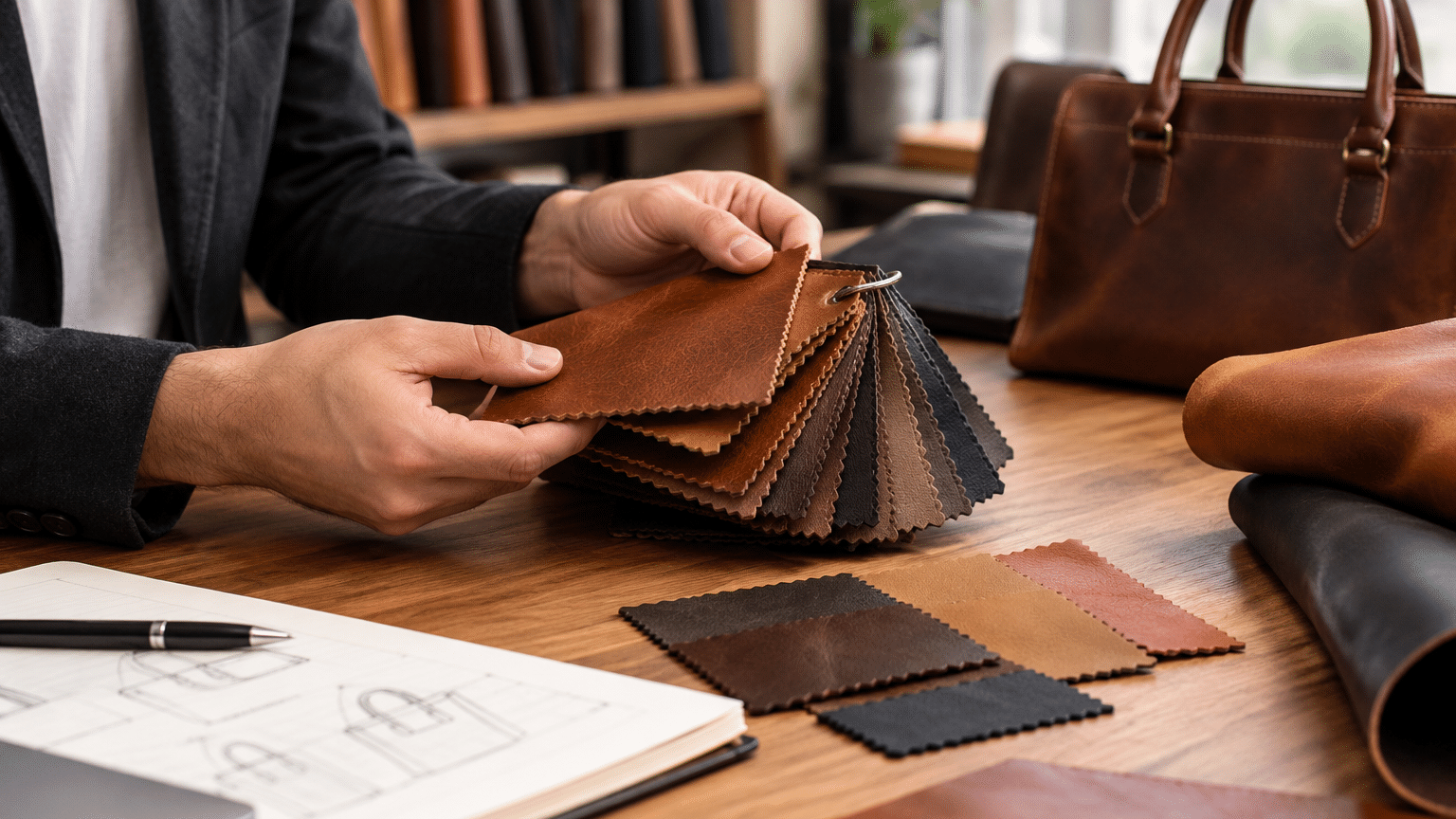
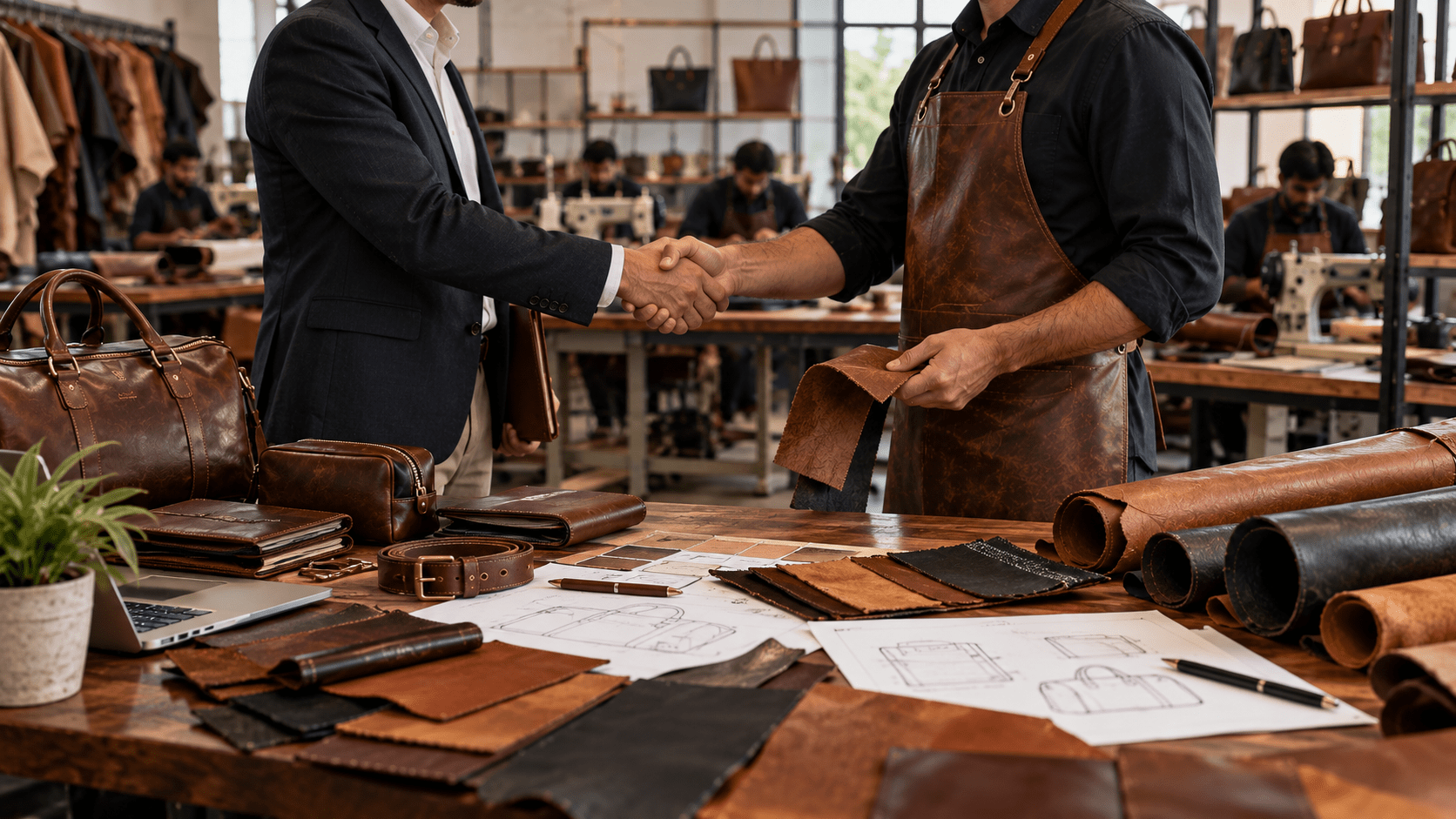
Ordering leather products for your business? One of the first questions you should ask a manufacturer is, “How long will it take to complete my order?”
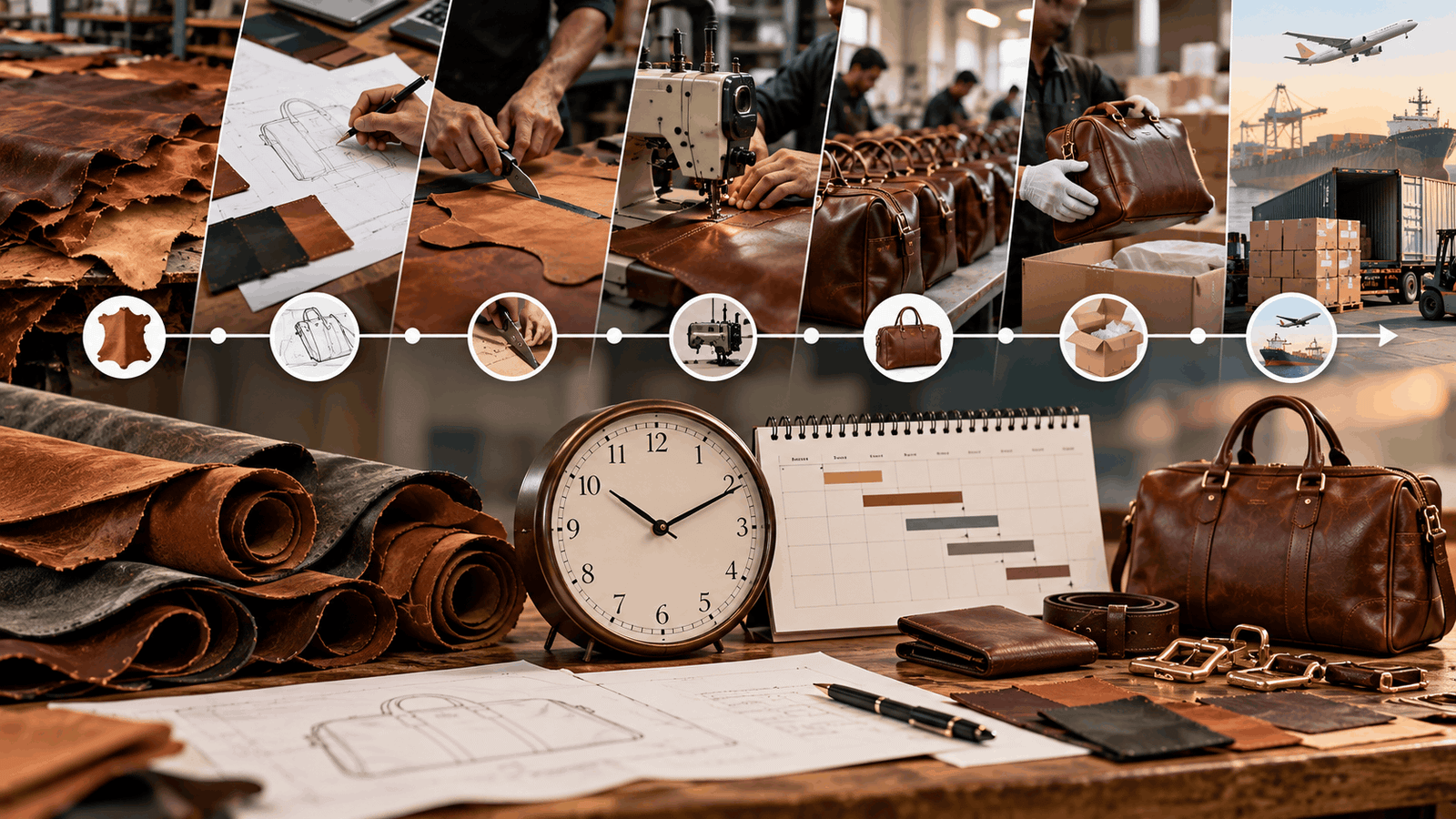
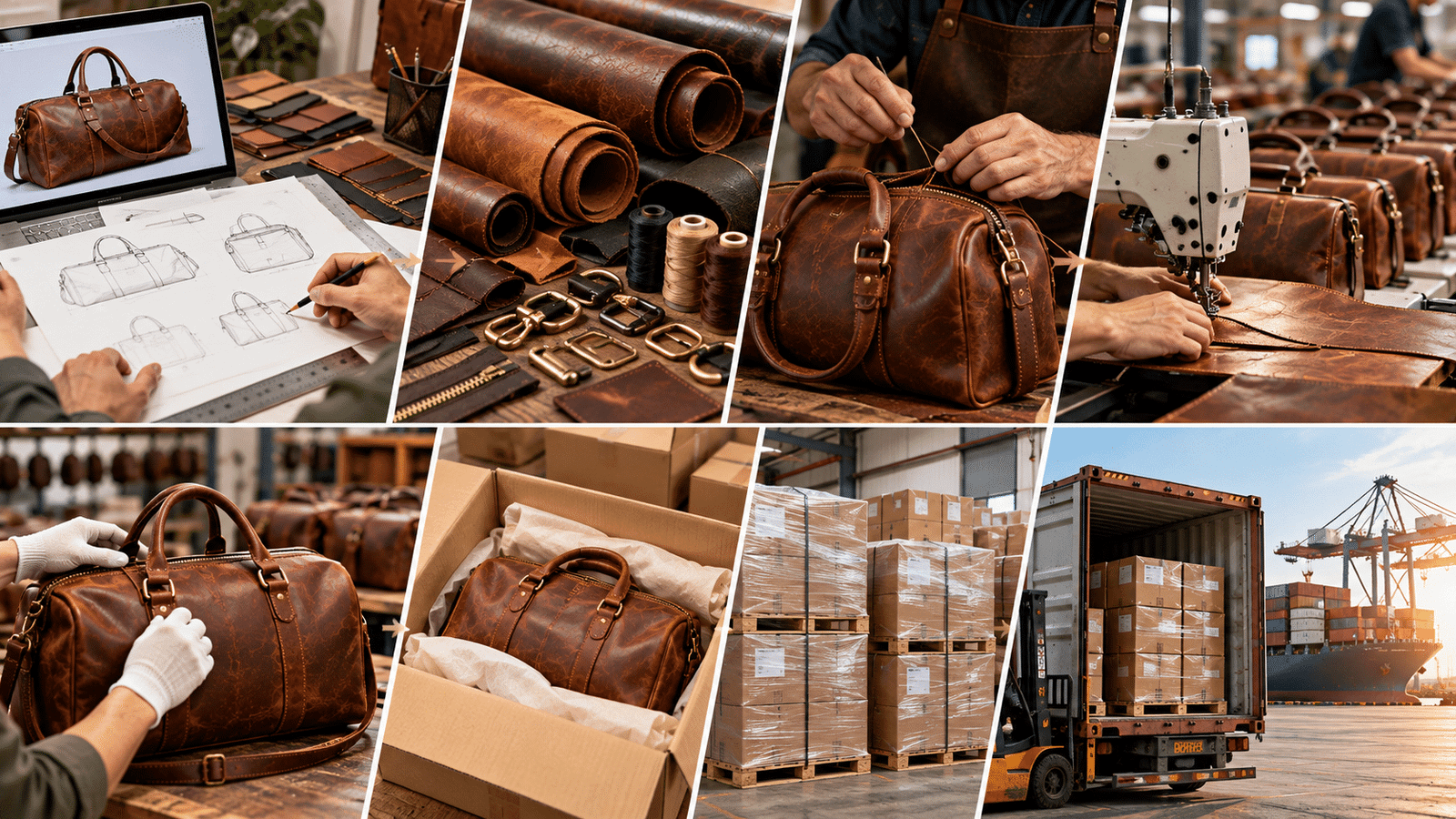
The answer is not always as simple as a few days or weeks. Leather manufacturing involves several stages, including material sourcing, sample development, cutting, stitching, finishing, quality inspection, and shipping. Each stage takes time, and a delay in one step can affect the entire order.
For leather brands, wholesalers, retailers, and importers, understanding manufacturing lead times is essential for managing inventory, planning product launches, and meeting customer expectations.
In this guide, we explain what leather manufacturing lead times mean, which factors affect them, how to estimate your production schedule, and what you can do to avoid unnecessary delays.
What Is Lead Time in Leather Manufacturing?
Lead time in leather manufacturing is the total time required to complete a specific stage of an order or deliver the finished products, depending on how the supplier defines it.
For example, a manufacturer might quote a production lead time of 30 days. However, this does not necessarily mean your products will arrive at your warehouse within 30 days. The quoted period may cover manufacturing only, excluding sample approval, packaging, international shipping, and customs clearance.
There are three important timelines to understand:
- Sampling lead time: The time needed to develop and prepare a product sample for approval.
- Production lead time: The time required to manufacture the agreed quantity of products after the required approvals and production conditions are met.
- Total order lead time: The time from the agreed starting point of the order until the products reach the buyer or another specified destination.
Understanding these differences helps you compare supplier quotations accurately and avoid unexpected delays.
How Long Does Leather Manufacturing Usually Take?
Leather manufacturing lead times vary depending on product complexity, order quantity, material availability, customization, and factory capacity. The following figures are illustrative planning estimates, not guaranteed industry standards.
| Manufacturing stage |
Illustrative timeframe |
| Ready-made product preparation |
A few days to 2 weeks |
| Custom sample development |
1–4 weeks |
| Bulk production |
2–8 weeks or longer |
| Quality inspection and packing |
Several days to 2 weeks |
| International shipping and customs |
Several days to several weeks or longer |
These stages may overlap, and some activities may already be completed before an order is placed. Others may require additional time.
For example, a repeat order using approved specifications and readily available materials may move faster than a first order involving a new design, custom hardware, and multiple sample revisions.
The most reliable estimate comes from a manufacturer that understands your product requirements, order quantity, and delivery destination.
7 Stages That Affect Leather Manufacturing Lead Times
Understanding the manufacturing process makes it easier to identify where delays can occur.
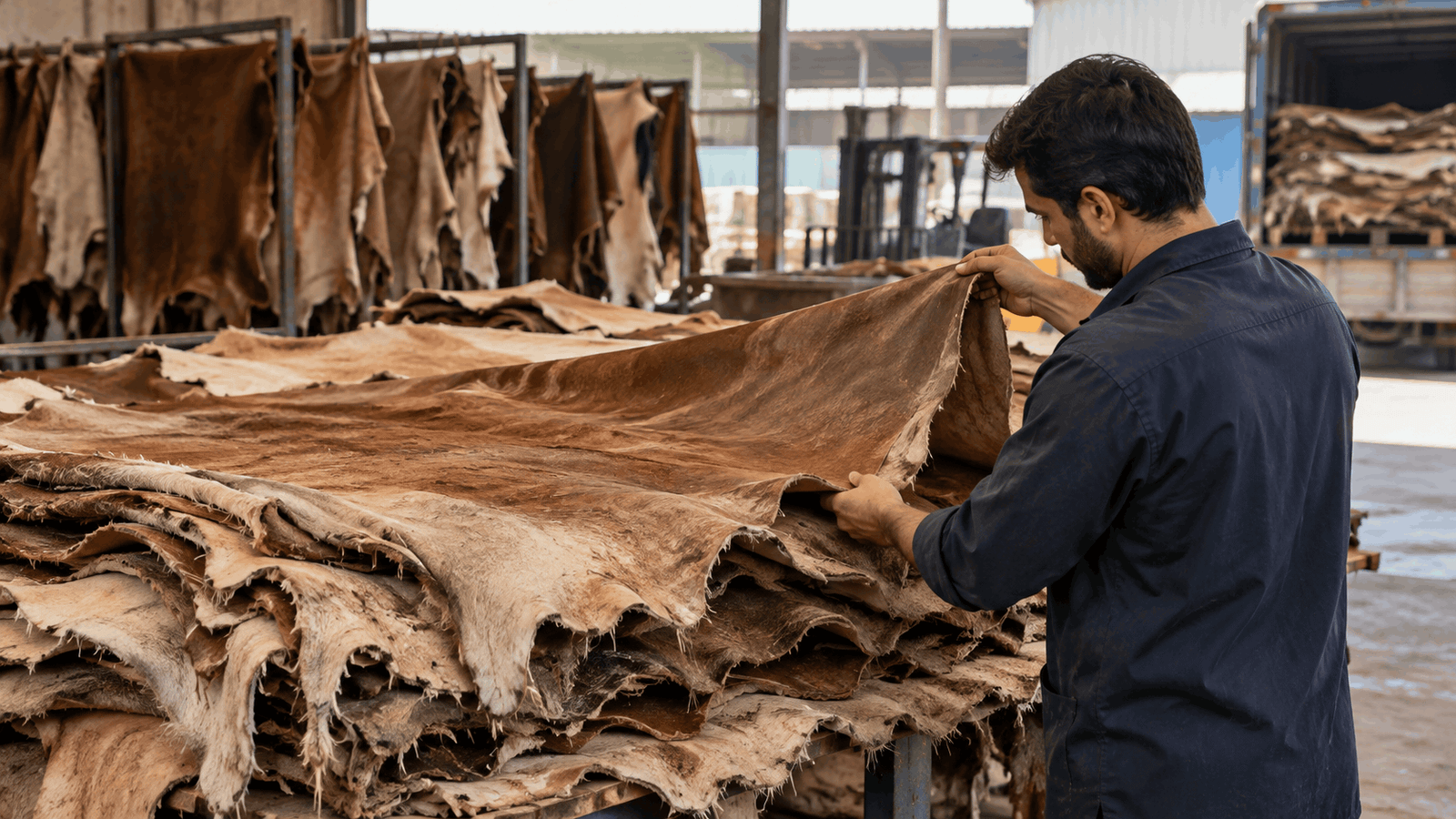
1. Raw Material Sourcing
Before production begins, the manufacturer needs suitable leather and other materials.
Depending on the product, these may include leather hides, lining fabrics, zippers, buckles, metal fittings, thread, adhesives, and packaging materials.
If the required leather is readily available, this stage may be relatively quick. However, special colors, particular leather grades, unusual thicknesses, or custom finishes may require additional sourcing time.
Material availability can also affect consistency. A manufacturer may need to inspect and select suitable hides before cutting begins.
To avoid delays, confirm material specifications and availability before approving the production schedule.
Learn more about how manufacturers source raw leather materials.
2. Product Design and Sample Development
Custom leather products usually require more planning than standard products.
The manufacturer may need to prepare patterns, select materials, create a prototype, and check whether the design can be produced efficiently.
For example, a custom leather bag may require adjustments to its dimensions, compartments, straps, lining, and hardware. A leather jacket may need changes to its fit, panel construction, zipper placement, or overall finish.
Each revision can extend the sampling stage.
Practical tip: Provide clear design references, dimensions, material requirements, and branding instructions before requesting a sample. The more complete your specifications, the less time you may spend correcting misunderstandings.
If you are developing a custom collection, our guide to custom leather goods manufacturing explains the process from product development to finished goods.
3. Sample Approval and Revisions
Receiving a sample does not automatically mean bulk production can begin.
You need to evaluate the sample against your requirements and confirm that the manufacturer has met the agreed specifications.
Important checkpoints include:
- Leather quality, texture, and thickness
- Color and surface finish
- Dimensions and construction
- Stitching and edge finishing
- Hardware and functional components
- Logo placement and branding
- Packaging requirements, where applicable
If something is incorrect, the manufacturer may need to revise the sample or produce another version.
This is why sample approval is one of the most important stages in the production timeline. Approving a sample without checking the details can lead to costly corrections later.
Once the sample meets your requirements, provide written approval and keep a record of the final specifications.
4. Bulk Production
Bulk production begins after the manufacturer has satisfied the agreed conditions, which may include sample approval, material availability, deposit payment, and confirmation of the final order quantity.
Depending on the product, production may involve leather inspection, cutting, skiving, stitching, assembly, edge treatment, finishing, and hardware installation.
The time required depends on several factors:
- Order quantity: Larger orders generally require more production time.
- Product complexity: Products with multiple components or detailed construction may take longer.
- Customization: Special colors, patterns, logos, and hardware can add extra steps.
- Factory capacity: Existing orders and available workers affect scheduling.
- Production efficiency: Experienced teams with suitable equipment may complete certain tasks more efficiently.
For instance, producing a standard leather wallet may require fewer manufacturing steps than creating a complex leather travel bag with multiple compartments and custom hardware.
However, product type alone does not determine lead time. Quantity, materials, production methods, and factory workload all matter.
5. Quality Inspection and Finishing
Manufacturing is not complete simply because every product has been assembled.
Finished goods need to be checked against the agreed quality requirements before shipment.
Inspection may cover leather defects, stitching consistency, dimensions, color variation, hardware function, surface finishing, and branding accuracy.
If inspectors identify defects, products may need repair, rework, or replacement. Significant quality problems can delay the entire shipment.
Buyers should therefore agree on quality standards before production begins. When practical, establish inspection checkpoints during production rather than waiting until every unit is finished.
Clear quality requirements help manufacturers identify problems earlier and reduce the risk of last-minute corrections.
6. Packaging and Shipment Preparation
After inspection, approved products are prepared for shipment.
Packaging requirements can vary considerably. A wholesale order may need standard cartons, while a retail brand may require individual product boxes, branded dust bags, labels, barcodes, or customized packaging.
Special packaging materials can add lead time if they need to be manufactured or sourced separately.
The supplier may also need to prepare commercial invoices, packing lists, and other applicable shipping documents.
Discuss packaging and documentation requirements early so they do not become unexpected obstacles near the shipping date.
7. International Shipping and Customs Clearance
Manufacturing lead time and shipping time are different.
Once the products leave the factory, the shipment still needs to travel to its destination and pass through the relevant customs procedures.
Air freight is generally faster but more expensive. Sea freight is often more economical for larger shipments, although transit times are usually longer.
Delivery can also be affected by transport schedules, port congestion, documentation errors, customs inspections, and local delivery arrangements.
When planning your order, request two separate estimates from the relevant parties:
- The manufacturer’s expected production completion date.
- The freight provider’s estimated transit and delivery timeline.
Combining these estimates gives you a more realistic view of when the goods may arrive.
For additional guidance, read our guide on how to import leather products from manufacturers.
What Factors Can Delay Leather Manufacturing?
Even with an agreed schedule, several issues can affect production.
Unavailable Materials
If a particular leather grade, color, lining, or hardware component is unavailable, production may need to wait until the material arrives.
How to reduce the risk: Ask the manufacturer to confirm material availability before finalizing your order.
Frequent Design Changes
Changes to dimensions, stitching, materials, or branding after sample approval can require new patterns, replacement materials, or additional production work.
How to reduce the risk: Finalize your specifications before bulk production and document any approved changes.
Large or Complex Orders
A high-volume order or a product with detailed construction may require more time than a smaller, simpler order.
How to reduce the risk: Confirm production capacity and ask for a realistic schedule based on your exact quantity.
Factory Workload
A manufacturer may already have other orders scheduled. Your production may therefore begin later than expected, even if the estimated manufacturing duration appears reasonable.
How to reduce the risk: Ask when production can actually start, rather than asking only how many days manufacturing will take.
Quality Problems
Defective stitching, inconsistent colors, incorrect dimensions, or other issues may require rework.
How to reduce the risk: Approve a reference sample, establish measurable quality criteria, and arrange appropriate inspections.
Shipping and Documentation Issues
Incorrect paperwork, missed transport schedules, and customs delays can extend delivery time after production is finished.
How to reduce the risk: Confirm shipping responsibilities, documentation requirements, and transport arrangements before the goods are ready.
For a broader understanding of production risks, explore common manufacturing challenges in leather production.
How to Calculate the Total Lead Time for a Leather Order
A useful way to plan an order is to divide the process into stages and establish a realistic duration for each one.
For example, suppose you are ordering custom leather bags from a manufacturer.
| Stage |
Example duration |
| Sample development and approval |
14 days |
| Material preparation and bulk production |
30 days |
| Inspection and packaging |
5 days |
| International shipping and delivery |
25 days |
| Estimated total |
74 days |
In this example, the order may take approximately 74 days from the beginning of sample development to delivery.
This is only an illustration. Actual lead times vary, and some stages may overlap. If the production estimate already includes material preparation, do not count that time twice.
You should also allow a reasonable contingency period for unexpected issues. The appropriate buffer depends on the supplier’s reliability, the complexity of the order, the shipping route, and how important the delivery deadline is.
Important: Always confirm the exact starting point of each quoted timeline. A 30-day production lead time could mean 30 days after deposit confirmation, after sample approval, or after materials are ready.
How to Reduce Lead Times Without Compromising Quality
Shorter lead times are useful, but rushing production can create quality problems. The goal should be to remove avoidable delays rather than skip important manufacturing steps.
Here are six practical ways to improve your ordering process.
1. Prepare Complete Product Specifications
Share dimensions, leather grade, thickness, colors, hardware details, stitching requirements, branding instructions, and packaging preferences.
A complete specification sheet reduces repeated questions and misunderstandings.
2. Approve Samples Promptly
Arrange internal reviews in advance so the sample does not sit unapproved for several days or weeks.
If revisions are necessary, provide consolidated feedback rather than sending separate changes over multiple rounds.
3. Confirm Material Availability
Ask whether the required leather and components are in stock, need to be processed, or must be ordered from another supplier.
Material planning can prevent production from stopping after the order has been scheduled.
4. Choose a Manufacturer With Relevant Experience
A factory that regularly produces your type of leather product may already have suitable equipment, patterns, skilled workers, and established production procedures.
Verify its capabilities through samples, references, production records, and quality-control practices rather than relying on promises alone.
5. Establish Milestones in Writing
Agree on key dates for sample submission, sample approval, production start, expected completion, inspection, and shipment.
Written milestones make it easier to identify delays early and agree on corrective action.
6. Plan Repeat Orders in Advance
If you sell seasonal products or regularly restock popular items, discuss future production requirements with your supplier before inventory runs low.
Sharing realistic demand forecasts can help the manufacturer plan capacity and materials more effectively.
For more supplier-selection advice, read how to source leather products from Pakistan, China, India, and Turkey.
Questions to Ask a Leather Manufacturer About Lead Times
Before placing an order, ask your potential manufacturing partner these questions:
- What is your current production lead time for this specific product?
- When can production begin after the order is confirmed?
- Are the required leather materials and components available?
- How long will sample development take?
- How many sample revisions are included, if any?
- Does the quoted lead time include material preparation and quality inspection?
- What is your current production capacity?
- Can you accommodate our required delivery date?
- What could delay the order?
- How frequently will you provide production updates?
- When will the products be ready for shipment?
- What additional time should we allow for international shipping and customs clearance?
The answers will help you compare suppliers on more than price alone.
A manufacturer offering the lowest quotation may not be the best option if its production schedule cannot meet your business requirements.
How Lead Times Affect Leather Brands and Wholesalers
Lead times influence more than the date your order arrives. They can affect inventory management, cash flow, marketing campaigns, and customer satisfaction.
Inventory planning: Longer production cycles require earlier purchasing decisions, particularly for products with predictable seasonal demand.
Product launches: Brands need sufficient time for sampling, revisions, manufacturing, photography, packaging, and distribution before launching a new collection.
Cash flow: Money may remain tied up in materials, production deposits, and inventory while an order is being manufactured and transported.
Customer satisfaction: Unrealistic delivery promises can lead to missed deadlines, complaints, cancellations, and lost repeat business.
Supplier relationships: Clear communication and realistic expectations help both buyers and manufacturers manage production more effectively.
For businesses developing exclusive designs, choosing the right manufacturing model also matters. Our guide to OEM vs. private label leather manufacturing explains how different production approaches affect customization and product development.
Frequently Asked Questions
What is a normal lead time for leather manufacturing?
There is no single standard. Simple or repeat orders may be completed relatively quickly, while custom products, large quantities, special materials, and complex designs can require several weeks or longer. Request a product-specific estimate from your manufacturer.
Does leather manufacturing lead time include shipping?
Not necessarily. Production lead time often covers manufacturing only. Always confirm whether sampling, material sourcing, inspection, packaging, freight, and customs clearance are included.
Why do custom leather products take longer to manufacture?
Custom products may require design development, pattern making, sample production, revisions, special materials, and additional quality checks. Each additional requirement can extend the overall timeline.
Can I reduce manufacturing lead time by ordering in bulk?
Not automatically. Larger orders may benefit from more efficient production planning, but they also require more materials, labor, and manufacturing capacity. Ask the factory how your exact order quantity will affect its schedule.
How can I avoid delays when ordering leather products internationally?
Finalize product specifications, confirm material availability, approve samples promptly, verify supplier capacity, establish written milestones, and plan shipping separately from production. Allow extra time for potential disruptions.
When should I place a leather manufacturing order for a seasonal launch?
Work backward from the date you need the products available for sale. Include sample development, revisions, production, inspection, shipping, customs clearance, and a contingency buffer. Start early enough to accommodate unexpected changes.
Should I choose a manufacturer with the shortest lead time?
Not based on speed alone. Compare product quality, relevant manufacturing experience, communication, production capacity, pricing, and delivery reliability. A realistic timeline with consistent quality is usually more valuable than an aggressive promise that cannot be met.
Final Thoughts
Understanding lead times in leather manufacturing helps you make better purchasing decisions, plan inventory, and build more reliable supplier relationships.
The key is to look beyond the number of days quoted by a manufacturer. Understand when the clock starts, which stages are included, what could cause delays, and how long shipping will take after production is complete.
Before placing an order, define your requirements, approve a sample, confirm material availability, and agree on realistic production milestones in writing.
If you are sourcing leather goods for your brand or wholesale business, Tannorium helps you discover leather manufacturers, suppliers, and exporters through a dedicated global leather marketplace. Explore potential suppliers, compare their capabilities, and discuss product requirements and lead times directly before committing to an order.