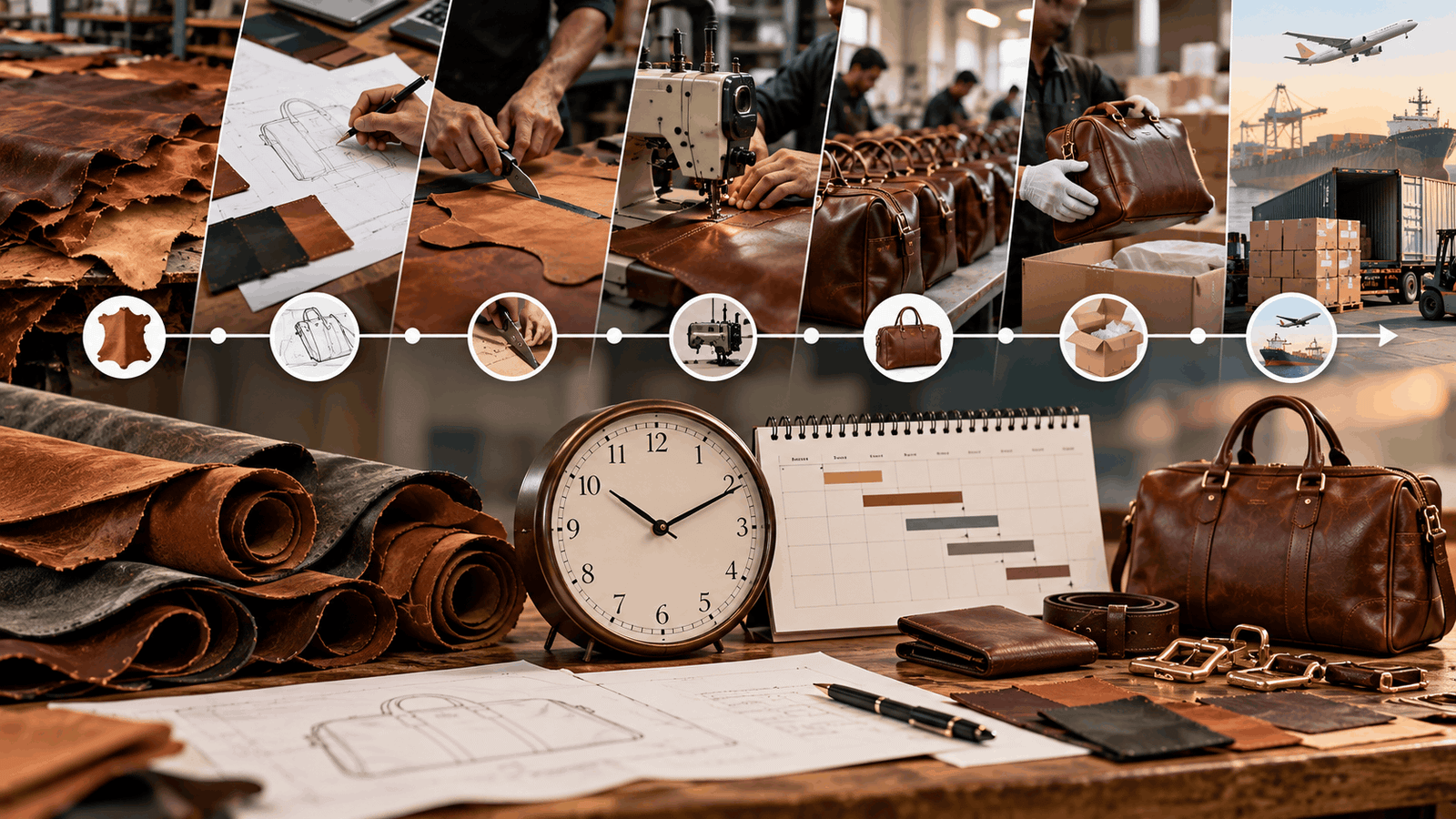
Understanding the leather product manufacturing timeline helps brands plan inventory, coordinate launches, and set realistic delivery expectations. From finalizing product specifications to sourcing materials, producing samples, and completing bulk orders, each stage affects the overall schedule.
The timeline depends on product complexity, material availability, order quantity, customization requirements, and shipping arrangements. Planning these stages in advance helps reduce delays and keeps production aligned with business goals.
How Long Does Leather Product Manufacturing Take?
Leather product manufacturing can take anywhere from a few weeks to several months, depending on the product and order requirements. Simple products using readily available materials may move through production faster than complex, customized designs requiring specialized components.
The overall timeline includes two important phases:
- Sample development: Time required to create, review, and revise a prototype before bulk production.
- Bulk production: Time required to manufacture the approved quantity, complete quality checks, and prepare the order for shipment.
International shipping and customs clearance add time beyond manufacturing. Buyers should request a stage-by-stage schedule from their manufacturer rather than relying on a single estimated delivery date.
What Are the Stages of Leather Product Manufacturing?
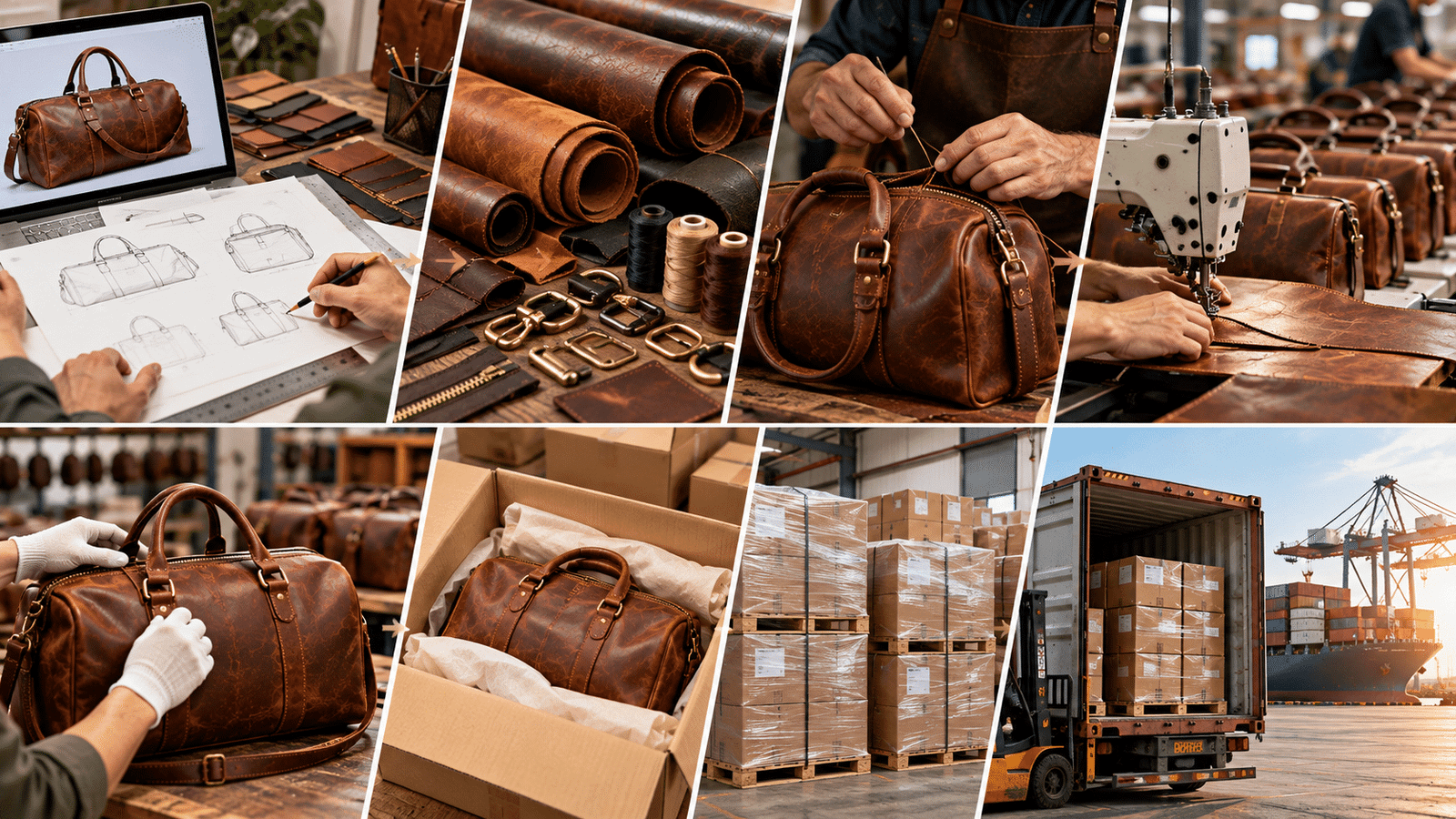
1. Design and Product Specifications
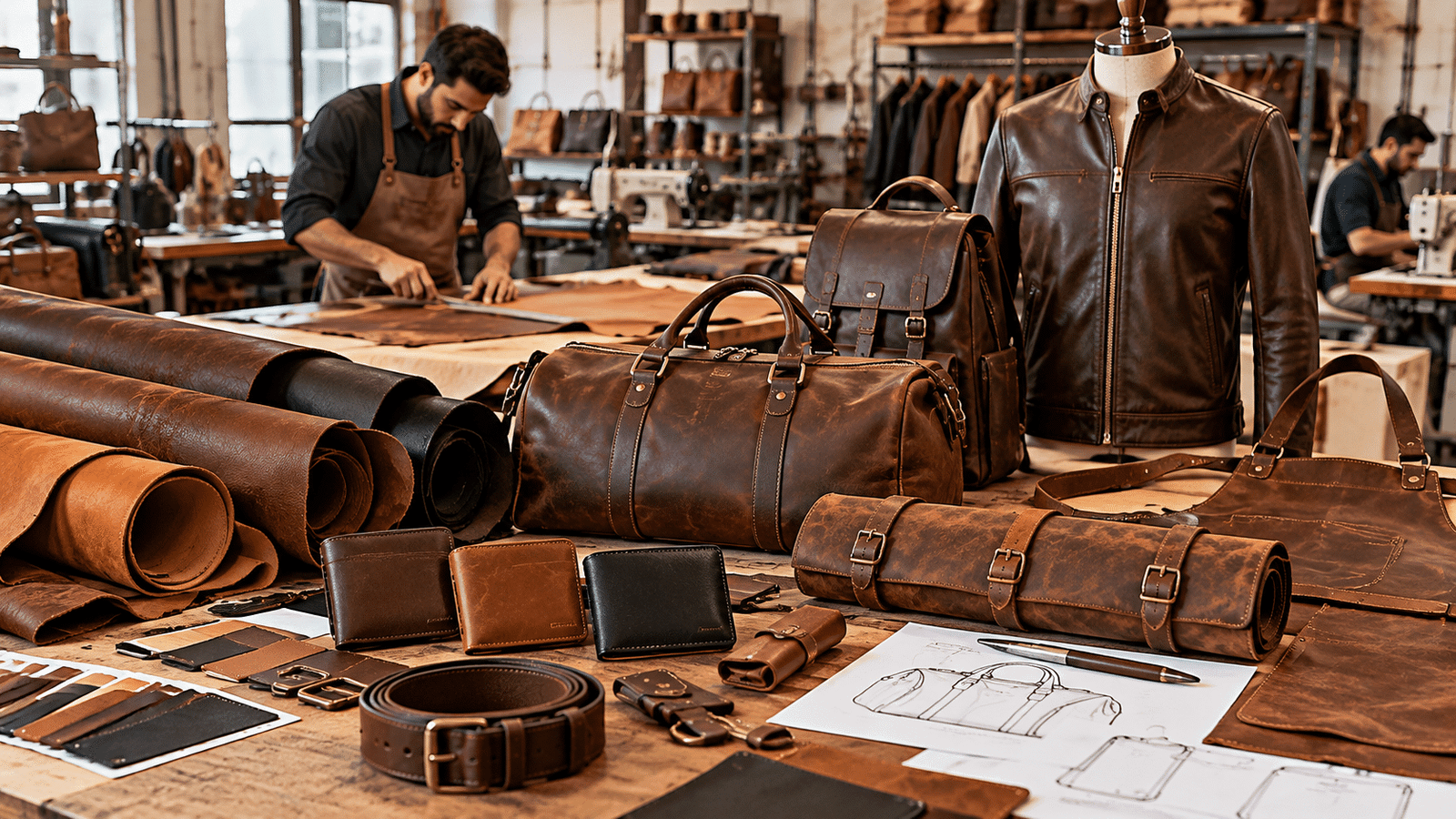
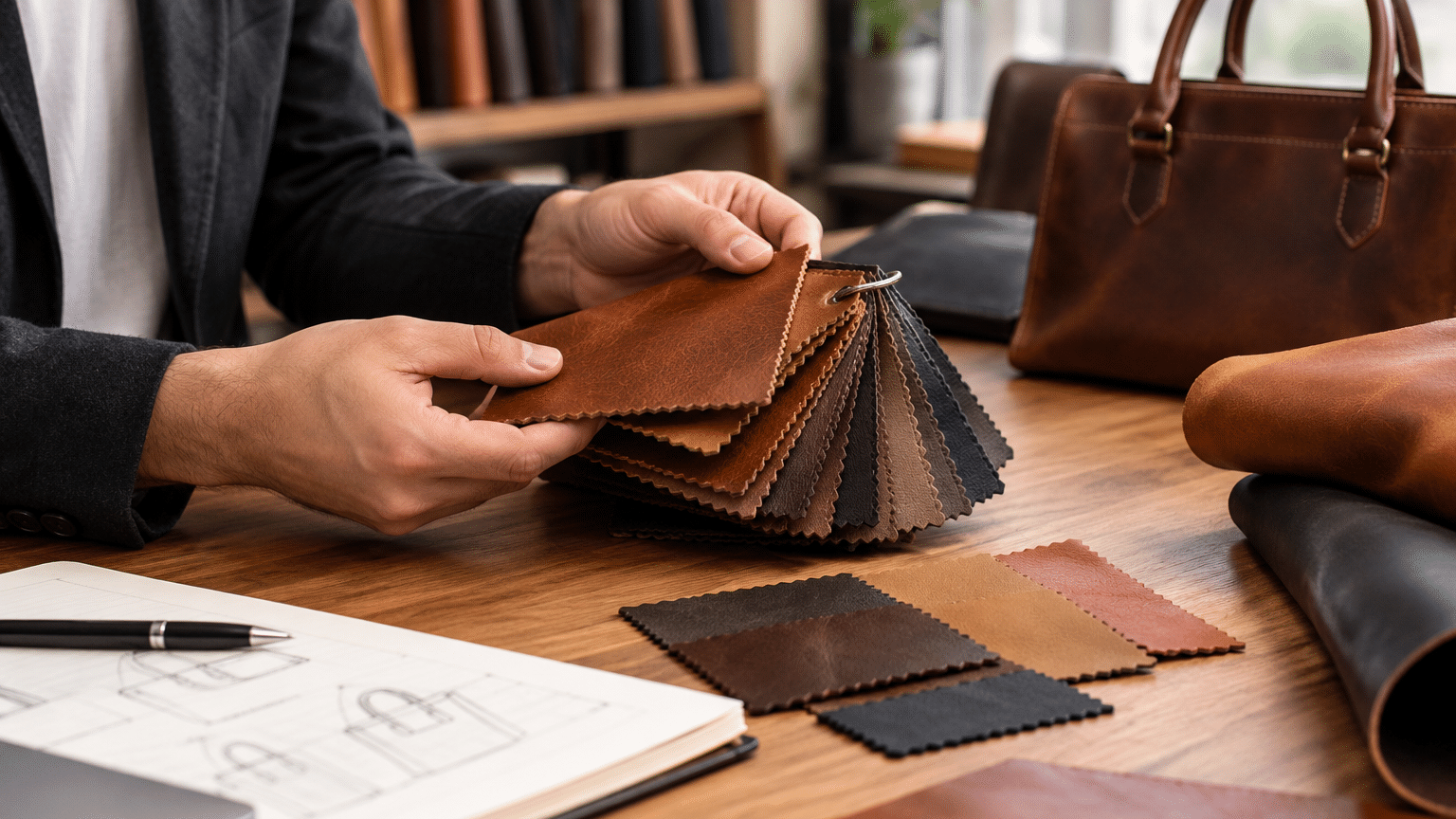
Production begins with a finalized design, including product dimensions, leather type, colors, construction details, hardware, and branding requirements. Technical drawings, reference images, or existing samples help communicate expectations clearly.
Confirming specifications early reduces misunderstandings and minimizes revisions later.
2. Material Sourcing and Preparation
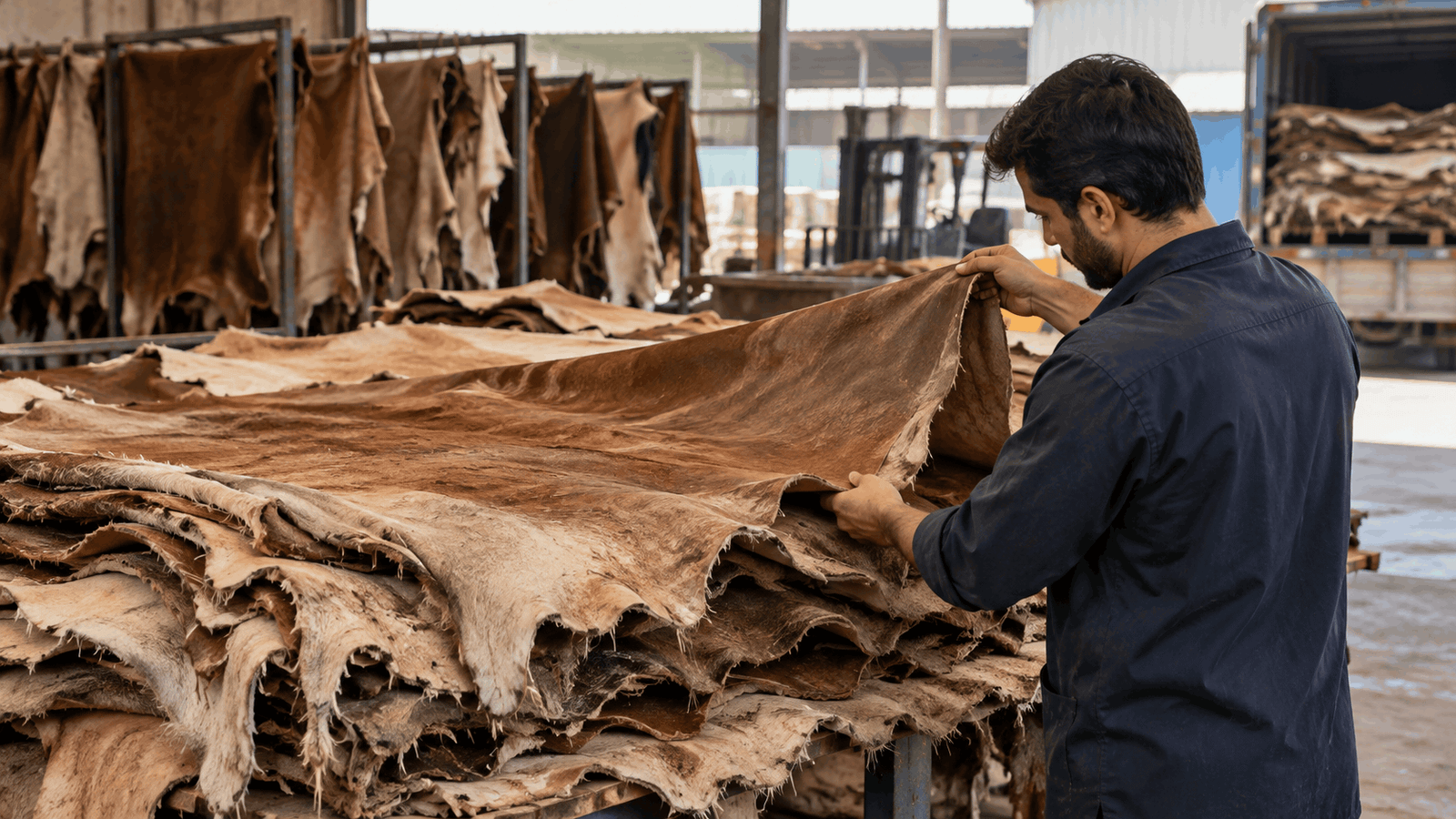
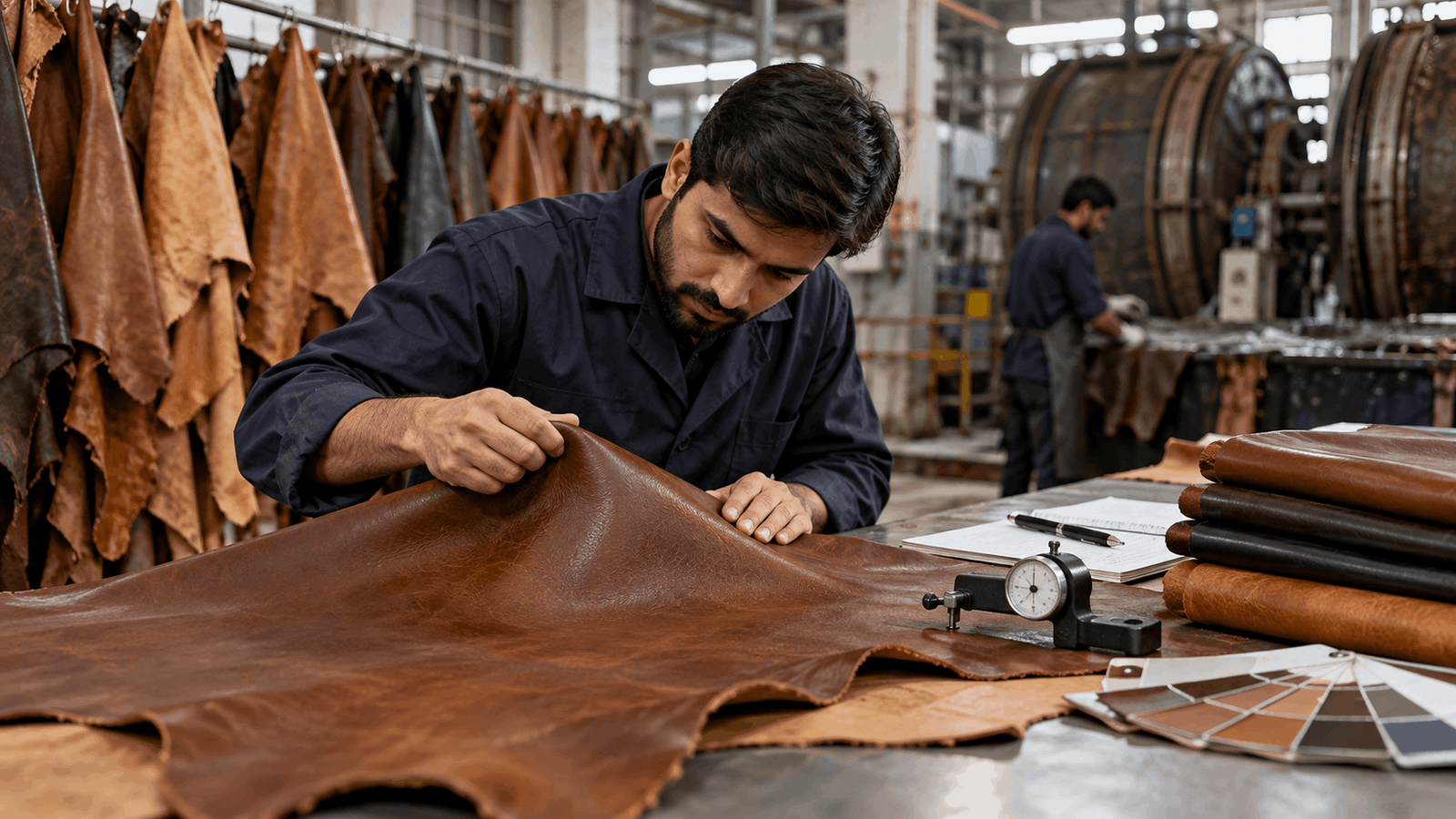
The manufacturer sources leather, linings, zippers, buckles, thread, and other required components. Materials are checked for suitability, quality, and consistency before production begins.
Special leather finishes, custom colors, and branded hardware may require additional sourcing time.
3. Sample Development and Approval
A prototype or sample is created to evaluate the product’s appearance, construction, dimensions, and functionality. The buyer reviews the sample and requests necessary adjustments before approving the final version.
Prompt feedback and written sample approval help prevent avoidable production delays.
4. Bulk Production
After sample approval and confirmation of the order, bulk manufacturing begins. Depending on the product, this stage may involve leather cutting, stitching, component assembly, hardware installation, logo application, and finishing.
Production time varies according to order quantity, design complexity, workforce capacity, and material readiness.
5. Quality Inspection and Packaging
Finished products are checked for stitching consistency, dimensions, material defects, hardware functionality, and branding accuracy. Any identified defects should be addressed before packaging.
Products are then packed according to the buyer’s requirements and prepared for shipment.
6. Shipping and Delivery
The manufacturer arranges dispatch through the agreed shipping method. International orders may require export documentation, transportation, customs clearance, and local delivery.
Buyers should distinguish the manufacturing completion date from the final delivery date when planning product launches or inventory replenishment.
What Factors Can Delay Leather Product Manufacturing?
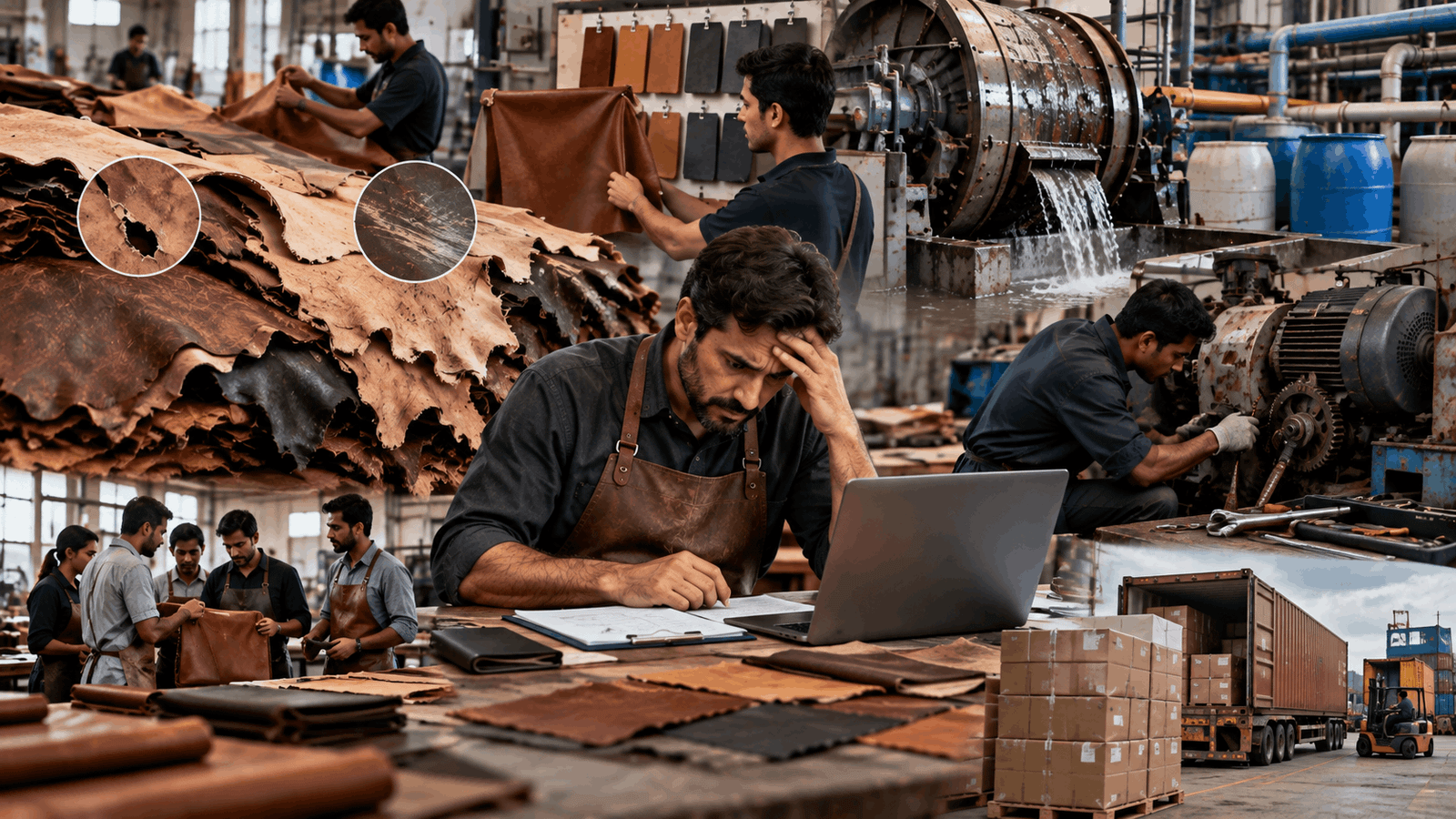
Several issues can extend the production schedule:
- Late design changes: Revisions after sample approval can require additional development work.
- Material shortages: Unavailable leather, hardware, or linings can interrupt production.
- Complex designs: Specialized construction and detailed customization may require more time.
- Large order quantities: Higher volumes can increase cutting, assembly, and finishing requirements.
- Quality issues: Defects may require repairs, replacements, or additional inspections.
- Seasonal demand and shipping: Busy production periods, transport disruptions, and customs delays can affect delivery.
Clear specifications, confirmed material availability, and realistic deadlines help reduce these risks.
How Can Brands Speed Up the Leather Manufacturing Process?
Brands can improve production efficiency by preparing thoroughly before placing an order.
- Finalize product specifications before sampling begins.
- Confirm leather and hardware availability early.
- Provide clear branding files, measurements, and reference images.
- Review samples promptly and consolidate revision requests.
- Choose a manufacturer with suitable product expertise and production capacity.
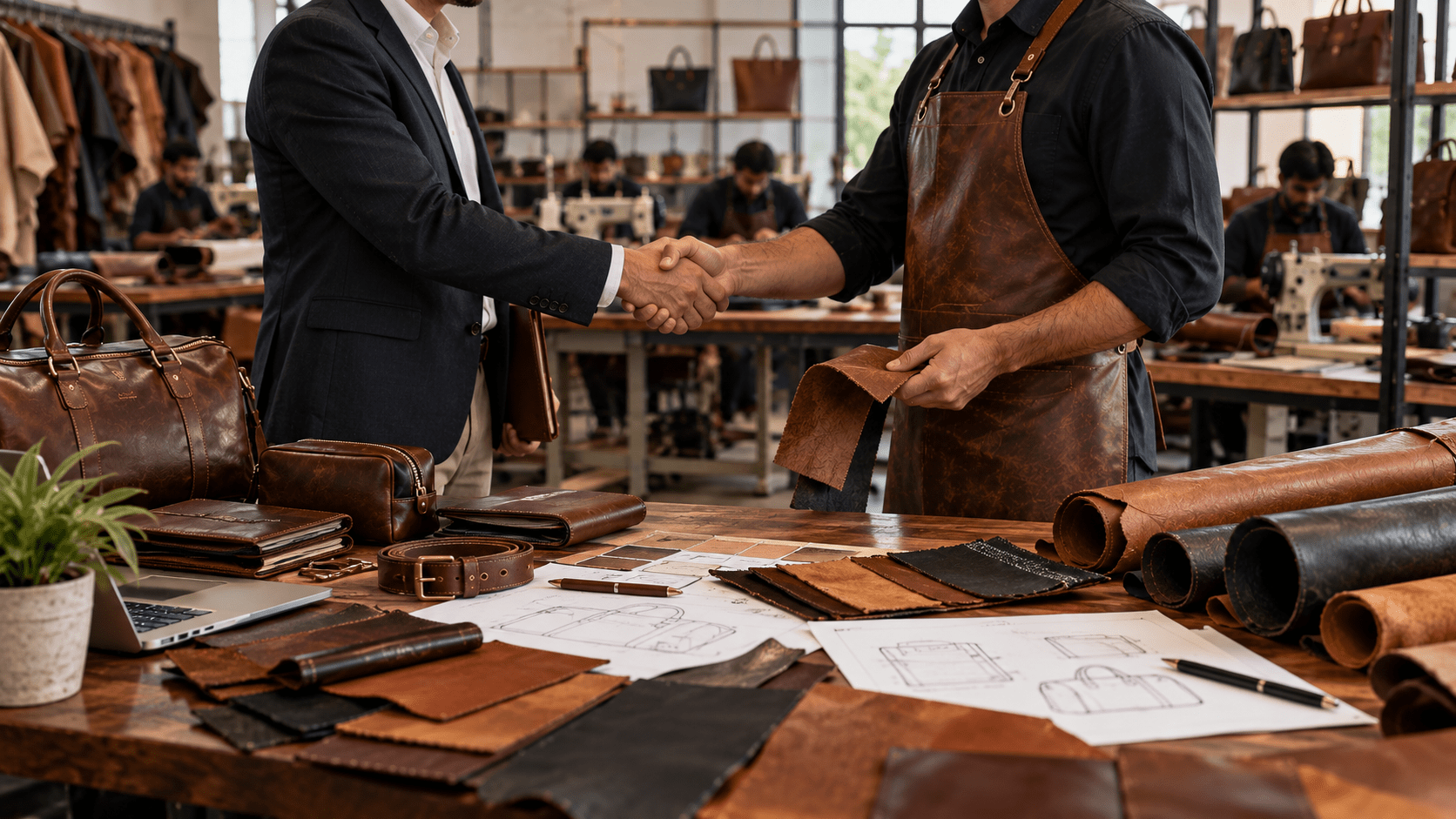
- Confirm order quantities and deadlines in writing.
- Avoid unnecessary changes after bulk production starts.
Faster production should not come at the expense of material quality or inspection standards.
How to Plan a Leather Product Manufacturing Timeline
A practical production plan should cover every stage, from initial design to final delivery.
First, establish the target delivery date. Work backward to identify when design approval, sampling, and production must begin.
Second, allocate time for sampling. Include a reasonable allowance for revisions and final approval.
Third, confirm the production schedule. Ask the manufacturer to specify material sourcing, bulk production, and inspection milestones.
Fourth, include packaging and shipping. Confirm dispatch arrangements, transit estimates, and any customs requirements.
Finally, add a contingency buffer. Unexpected material issues or transport delays can affect even well-planned orders.
For a broader understanding of production methods, explore our guide to Leather Goods Manufacturing. You can also link The Complete Manufacturing to your related manufacturing guide and Label Leather Manufacturing to your article about leather manufacturing and private labeling, provided these match the topics of your existing posts.
Frequently Asked Questions
How long does it take to manufacture leather products?
The timeline varies by product type, customization, material availability, order quantity, and factory capacity. Simple products may require less time than complex or highly customized items. Request a project-specific estimate from the manufacturer.
How long does leather product sampling take?
Sampling time depends on design complexity, material availability, and the number of revisions required. Confirm the expected sample completion date and review period before beginning the project.
What is the bulk production timeline for leather goods?
Bulk production depends on order volume, product construction, material readiness, and manufacturing capacity. The manufacturer should provide a schedule based on the approved sample and confirmed order quantity.
What factors affect leather manufacturing lead times?
The main factors include design complexity, sourcing, customization, sample approval, production capacity, quality inspections, and shipping arrangements.
Does international shipping affect leather product delivery time?
Yes. International shipping adds transit time and may involve export documentation, customs clearance, and local delivery. These stages should be included when calculating the expected arrival date.
Conclusion
The leather product manufacturing timeline covers design, material sourcing, sampling, bulk production, quality inspection, packaging, and delivery. Each stage contributes to the final schedule, and delays can occur when specifications change, materials become unavailable, or shipping takes longer than expected.
Brands can plan more effectively by approving samples promptly, confirming materials early, and establishing clear production milestones. Before placing an order, request a stage-by-stage timeline that separates manufacturing from shipping and includes a reasonable allowance for unexpected delays.