Leather manufacturing is a multi-stage process that starts with raw hides and ends with finished leather for products such as jackets, bags, footwear, gloves, aprons, wallets, and accessories. Every stage requires careful control because issues in raw material selection, tanning, finishing, or inspection can affect the quality of the final product.
For manufacturers, the challenge is producing leather with consistent thickness, color, texture, strength, and appearance while managing production costs, material waste, labor, environmental requirements, and delivery timelines. From inconsistent raw hides and chemical management to changing buyer requirements, understanding these challenges is essential for building a reliable, efficient, and sustainable leather manufacturing process.
What Are the Most Common Challenges in Leather Manufacturing?
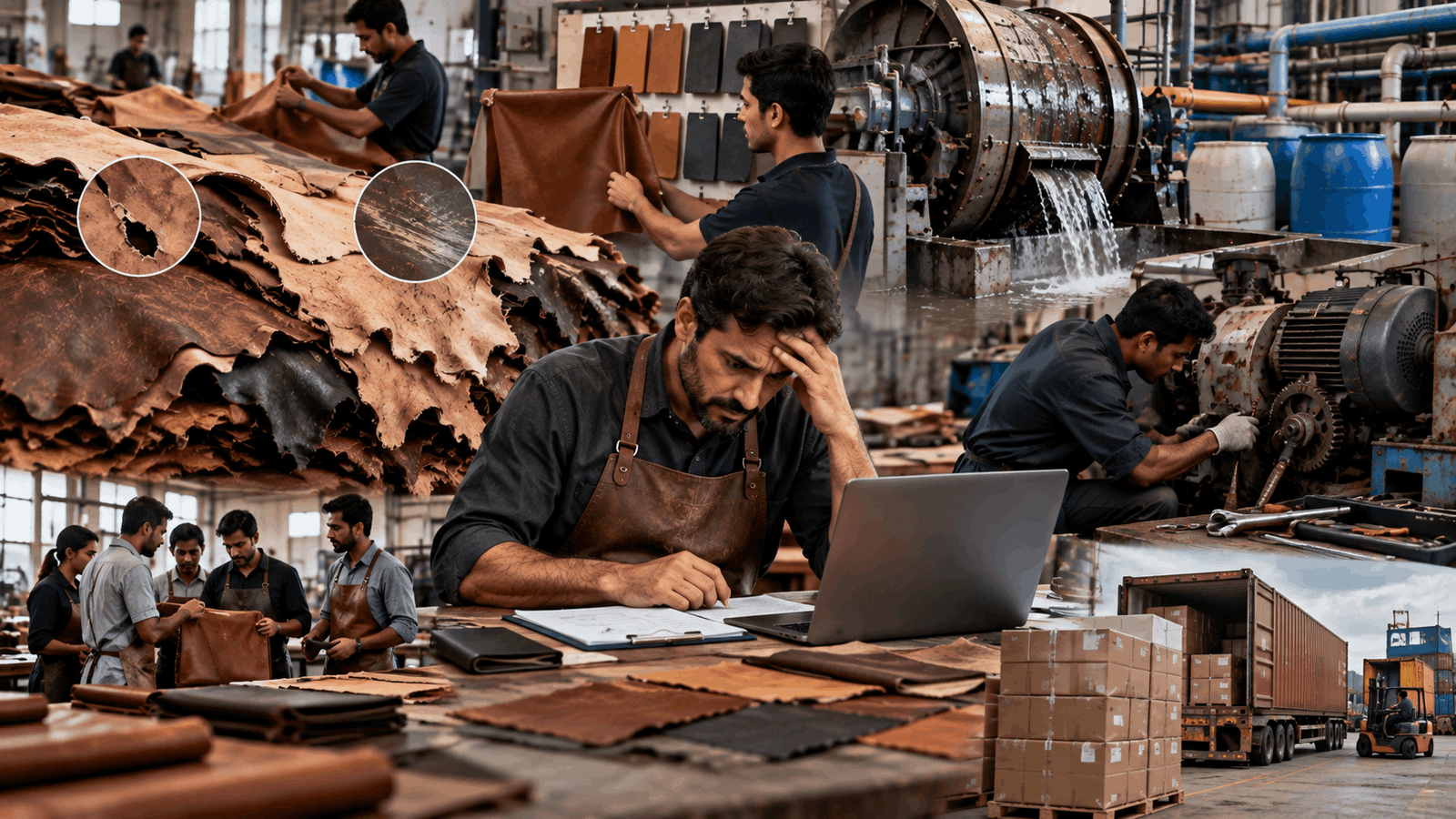
The most common challenges in leather manufacturing include inconsistent raw hide quality, natural defects, color variation, tanning and chemical-control problems, production waste, quality-control issues, skilled labor shortages, machinery downtime, environmental compliance, supply-chain disruptions, and difficulties maintaining consistency during custom or bulk production. Effective manufacturers address these challenges through standardized processes, regular inspection, skilled workers, modern technology, and strong quality-control systems.
1. Inconsistent Raw Hide Quality
The quality of finished leather starts with the quality of the raw hide. Even advanced tanning processes cannot fully correct problems caused by poor-quality raw materials.
Raw hides may contain scratches, scars, insect bites, wrinkles, holes, and branding marks. Animal characteristics, handling, storage, and transportation can also affect their condition. Improper temperature, moisture, or delayed processing may cause further deterioration.
Manufacturers should inspect and grade hides based on condition, size, thickness, surface quality, and intended use. Consistent raw-material selection is especially important for bulk orders, where buyers expect the same quality across every batch.
Better raw material selection helps prevent quality problems later in production.
2. Leather Defects During Production
Not all leather defects originate from the raw hide; some develop during processing. Common issues include uneven grain, wrinkles, cracks, poor dye penetration, inconsistent texture, surface marks, color variation, and finishing problems.
These defects can result from incorrect processing conditions, chemical ratios, excessive mechanical treatment, poor drying, or inconsistent finishing. Identifying them early helps reduce material and production losses.
Manufacturers should therefore use quality checkpoints throughout production rather than relying only on final inspection.
3. Maintaining Consistent Leather Quality
Consistency is one of the biggest challenges in leather production because leather is a natural material. Unlike synthetic materials manufactured from highly uniform sheets, every hide has its own characteristics.
Manufacturers must control several variables, including:
- Thickness
- Strength
- Grain appearance
- Texture
- Softness
- Color
- Finish
- Flexibility
- Moisture content
Batch-to-batch consistency becomes particularly important for brands placing repeat or bulk orders. A buyer may approve one sample and expect subsequent production to match it closely.
This is where standardized specifications become essential. Manufacturers should define measurable requirements for each production batch instead of relying entirely on visual judgment.
How Can Leather Manufacturers Maintain Consistent Quality?
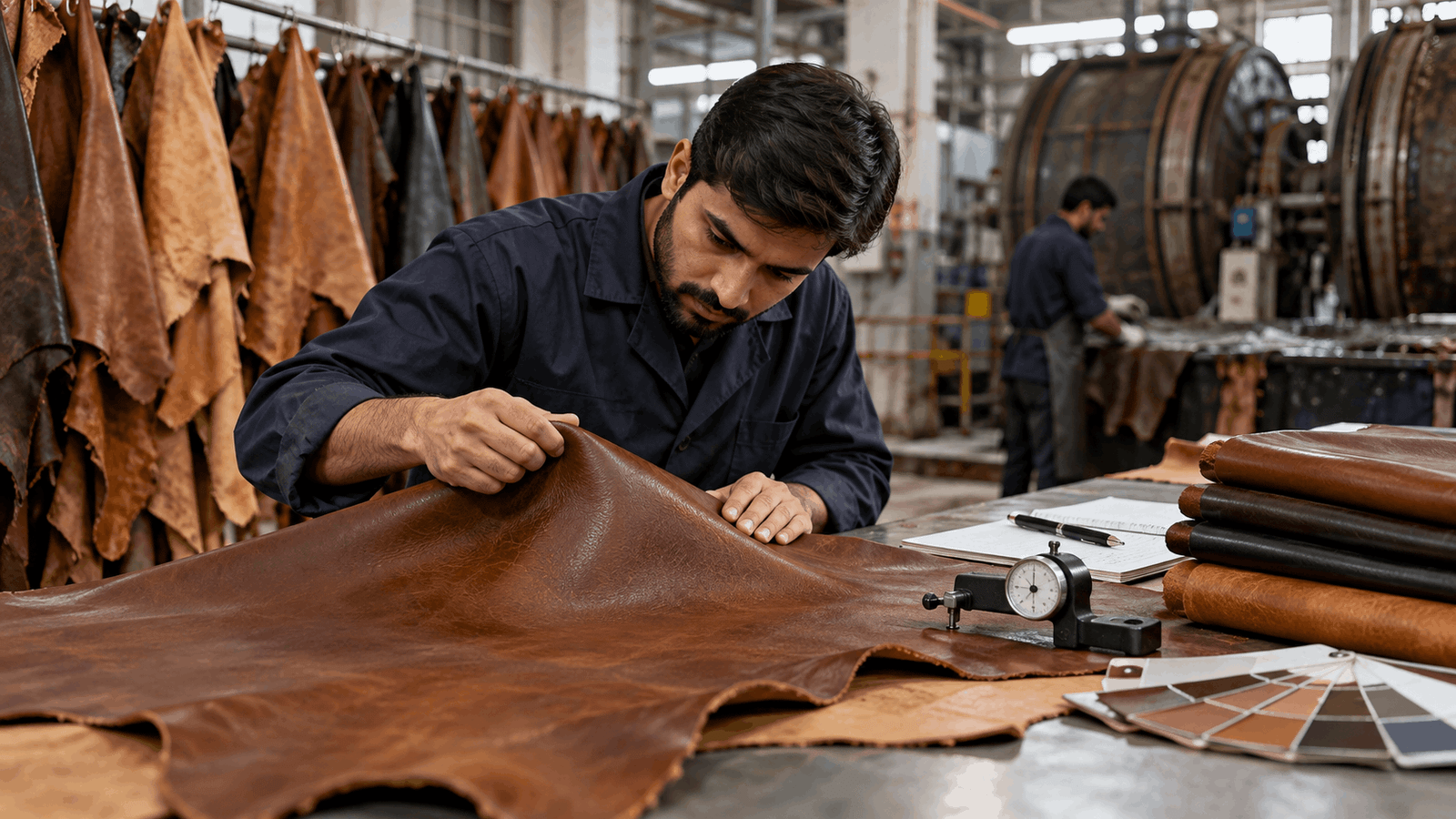
Leather manufacturers can maintain consistent quality through standardized processes, trained inspection teams, documented specifications, regular testing, and quality-control checkpoints.
Raw materials should be inspected before processing, while leather should be checked during tanning, finishing, and final inspection. For buyers, understanding basic leather terminology also helps when defining specifications such as grain, thickness, tanning, finish, and leather grade.
4. Color Matching and Finishing Challenges
Maintaining consistent color can be challenging, especially during large-volume leather production. Natural hides may absorb dyes differently due to variations in structure, thickness, moisture, tanning conditions, and chemical treatment.
Finishing can also affect gloss, texture, surface feel, and coating consistency. Custom colors are even more demanding because the same shade must be reproduced across multiple batches.
Manufacturers can improve color consistency through controlled dye formulations, digital color measurement, standardized recipes, laboratory testing, and documented production parameters. The goal is to reproduce the approved color consistently across every batch.
5. Tanning Process Challenges
Tanning is one of the most technically sensitive stages of leather production, transforming raw hides into stable leather suitable for manufacturing. Common methods include chrome tanning and vegetable tanning, each with different processing requirements.
Manufacturers must carefully control chemical ratios, pH, temperature, processing time, drum conditions, moisture, and tanning-agent penetration. Poor process control can affect leather softness, strength, color, flexibility, shrinkage, and appearance.
Accurate process documentation and regular testing help prevent over-processing, under-processing, and inconsistent results. For more detail, see Tannorium’s guide on Chrome Tanned vs Vegetable Tanned Leather.
6. Production Waste and Material Loss
Leather production naturally generates waste because hides have irregular shapes and contain areas that may not be suitable for particular applications.
Waste can occur during:
- Hide trimming
- Defect removal
- Splitting
- Cutting
- Finishing
- Product manufacturing
Defective hides and inefficient cutting can increase material loss, while chemical and water usage create additional waste-management challenges. Manufacturers can reduce waste through better hide grading, optimized cutting, production planning, defect mapping, and effective use of leather offcuts.
Reducing waste not only supports sustainability but also improves manufacturing efficiency and lowers material costs.
7. Skilled Labor and Workforce Challenges
Leather manufacturing requires skilled workers for hide grading, cutting, finishing, stitching, and quality inspection. A lack of experienced workers can lead to inconsistent quality and production errors.
Manufacturers can address these challenges through proper training, documented procedures, skill development, and strong quality-control systems. Combining skilled craftsmanship with modern technology helps make production more consistent and efficient.
8. Machinery and Technology Issues
Modern leather production depends on specialized machinery, and equipment problems can quickly affect productivity.
Outdated machinery may result in:
- Inconsistent processing
- Higher material waste
- Lower production speed
- Poor finishing
- Increased maintenance requirements
- Production downtime
Unexpected machine failures can be costly, especially when manufacturers are working against bulk-order deadlines. Preventive maintenance is therefore essential, with equipment regularly inspected and serviced according to a planned schedule.
Modern technology can also improve production through automated inspection, digital color matching, production monitoring, data collection, and process-control systems that help identify inconsistencies early.
9. Environmental and Regulatory Challenges
Leather manufacturing can require significant amounts of water and chemicals, making wastewater treatment, chemical management, and waste reduction important responsibilities. Manufacturers supplying international markets may also need to meet specific environmental, safety, and certification requirements.
Sustainable practices such as improving water efficiency, reducing chemical use, treating wastewater, minimizing waste, and monitoring energy consumption can help manufacturers reduce their environmental impact while improving production efficiency.
10. Supply Chain and Raw Material Challenges
Leather manufacturing depends on a steady supply of hides, tanning chemicals, dyes, finishing materials, machinery components, and packaging. Disruptions, price changes, shipping delays, or shortages can quickly affect production and delivery schedules.
Manufacturers can reduce these risks through reliable suppliers, inventory planning, supplier diversification, and realistic production schedules. Buyers should also consider a supplier’s ability to manage materials and maintain consistent delivery timelines.
11. Meeting Custom and Bulk Order Requirements
Custom and bulk orders create another major challenge because manufacturers must translate buyer specifications into repeatable production standards.
A buyer may require a specific:
- Leather type
- Thickness
- Color
- Texture
- Finish
- Product dimension
- Hardware specification
- Packaging style
- Branding requirement
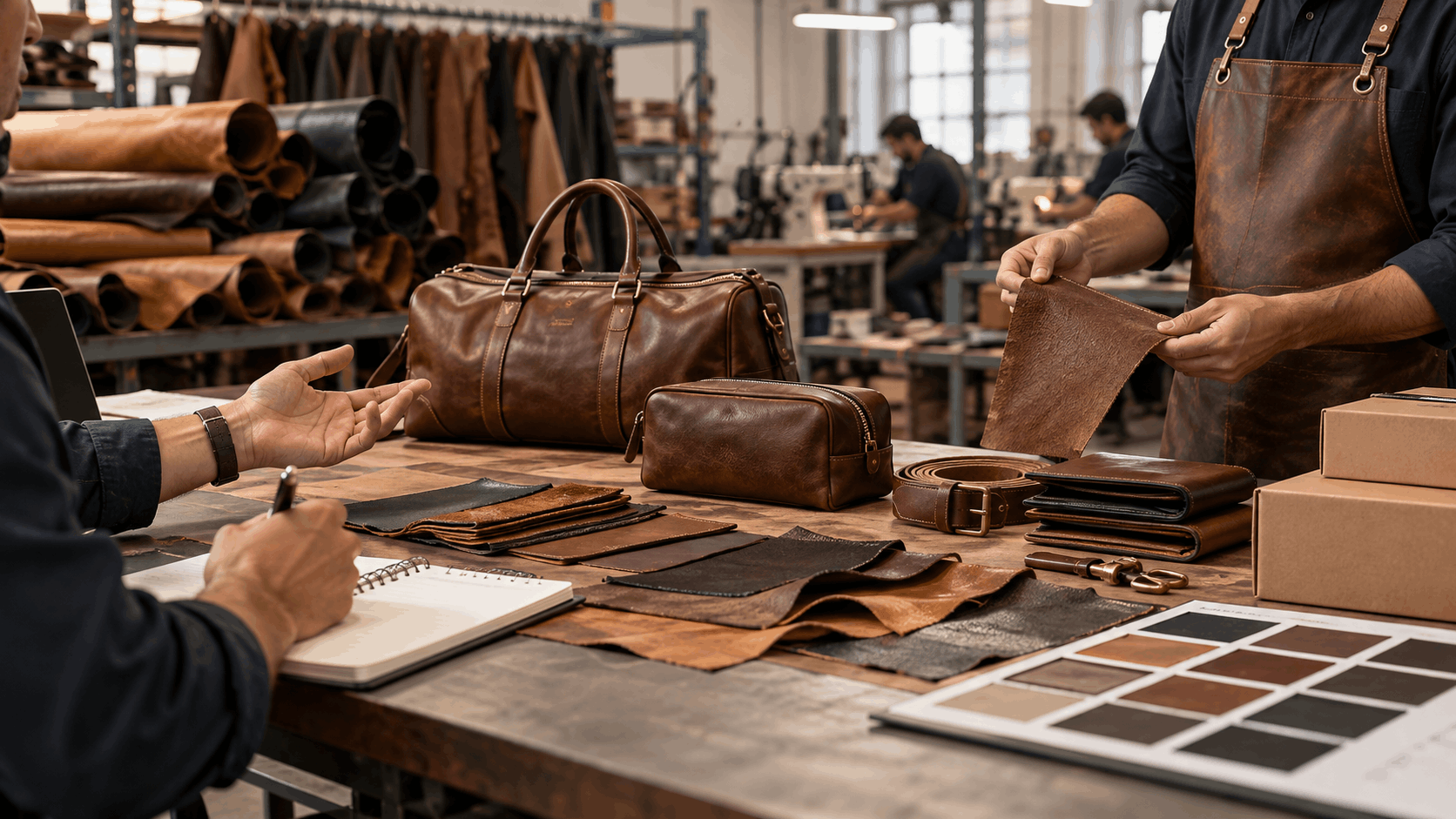
The challenge increases when hundreds or thousands of units must meet the same specifications. OEM and private-label projects require clear communication and strict adherence to approved buyer requirements throughout production.
Before bulk manufacturing, buyers should approve samples and document final specifications. Manufacturers can then use these approved standards as the production benchmark. Businesses exploring these models can also review Tannorium’s guide to OEM vs Private Label Leather Manufacturing.
How Can Leather Manufacturers Overcome These Challenges?
The most effective approach is to treat manufacturing quality as a system rather than a final inspection step.
Better Raw Material Inspection
Inspect and grade hides before production. Separate materials according to quality, thickness, surface condition, and intended application.
Standardized Production Processes
Document chemical ratios, temperatures, processing times, machine settings, finishing specifications, and other critical parameters.
Strong Quality Control Systems
Introduce inspection checkpoints throughout production instead of waiting until the final stage to identify defects.
Modern Machinery and Automation
Use appropriate machinery, preventive maintenance, automated inspection, and digital monitoring where they can improve consistency and efficiency.
Employee Training
Train workers to understand material characteristics, production specifications, defect identification, machinery operation, and quality requirements.
Sustainable Manufacturing Practices
Reduce water consumption, manage chemicals responsibly, treat wastewater, minimize material waste, and improve energy efficiency.
Supplier and Inventory Management
Maintain reliable relationships with raw-material and chemical suppliers while keeping appropriate inventory levels for critical production inputs.
Regular Product Testing
Test leather for thickness, color, strength, flexibility, finish, and other relevant characteristics before approving production batches.
Quality Control in Leather Manufacturing
Quality control should exist throughout the leather production cycle rather than only at the end.
Raw material inspection helps manufacturers identify unsuitable hides before they enter production. In-process inspections help detect problems during tanning, drying, dyeing, finishing, and mechanical processing. Finished leather testing then confirms whether the final material meets the required specifications.
Important quality checks can include:
- Raw hide inspection
- Thickness testing
- Color and finish inspection
- Grain and surface inspection
- Tensile or strength testing
- Flexibility testing
- Durability testing
- Moisture-related checks
- Finished leather inspection
For a more detailed look at these checkpoints, readers can continue to Tannorium’s Quality Control in Leather Manufacturing article.
The Role of Technology in Modern Leather Manufacturing
Technology is helping manufacturers make leather production more consistent, measurable, and efficient. Automated inspection systems can identify surface defects and color differences, while digital color matching and production monitoring help maintain consistent results.
Data-driven quality control also helps manufacturers compare batches and identify recurring defects. AI and machine vision can further support defect detection, hide grading, production monitoring, and predictive maintenance.
Technology does not replace skilled workers; it gives them better tools to improve production and quality decisions.
Sustainable Solutions for Leather Manufacturing Challenges
Sustainability in leather manufacturing is closely connected with efficiency.
When a manufacturer reduces water consumption, minimizes chemical waste, improves hide utilization, or lowers energy consumption, it can potentially reduce both environmental impact and operating costs.
Practical measures include:
- Water-efficient processing systems
- Improved wastewater treatment
- Responsible chemical management
- Eco-conscious tanning methods
- Optimized cutting and hide utilization
- Recycling and reuse of suitable by-products
- Energy-efficient machinery
- Responsible raw-material sourcing
Sustainable production should therefore be viewed as a combination of environmental responsibility, resource efficiency, and long-term manufacturing performance.
Frequently Asked Questions
What are the biggest challenges in leather manufacturing?
The biggest challenges include inconsistent raw hide quality, production defects, color variation, tanning-process control, material waste, skilled labor shortages, machinery problems, environmental compliance, supply-chain disruptions, and maintaining consistency during bulk production.
Why is raw hide quality important in leather production?
Raw hide quality directly influences the appearance, strength, usable area, and final performance of leather. Defects such as scars, scratches, insect bites, and branding marks can remain visible after processing and reduce the usable portion of the hide.
What causes defects in finished leather?
Finished leather defects can result from poor raw hides, incorrect tanning conditions, chemical imbalance, improper drying, mechanical damage, inconsistent dyeing, or poor finishing. Early inspection helps manufacturers identify problems before they become more expensive to correct.
How do leather manufacturers maintain consistent quality?
Manufacturers maintain consistency through standardized production procedures, controlled tanning and finishing processes, trained workers, regular inspections, laboratory testing, approved samples, and documented quality specifications.
How can leather manufacturers reduce production waste?
Waste can be reduced through better raw-hide grading, optimized cutting, defect mapping, improved production planning, efficient chemical and water use, and finding suitable applications for usable leather offcuts.
What are the environmental challenges of leather production?
Major environmental challenges include water consumption, wastewater, chemical management, solid waste, and energy use. Manufacturers can address these issues through wastewater treatment, efficient production systems, responsible chemical management, waste reduction, and energy-efficient machinery.
How does technology improve leather manufacturing?
Technology can improve manufacturing through automated defect inspection, digital color matching, production monitoring, predictive maintenance, process control, and data-driven quality management. These tools can improve consistency while reducing avoidable waste and production errors.
How can manufacturers improve leather production efficiency?
Manufacturers can improve efficiency by standardizing processes, maintaining machinery, training employees, reducing material waste, improving inventory planning, monitoring production data, and identifying defects early in the manufacturing cycle.
Conclusion
Leather manufacturing requires consistent control from raw hide selection to final inspection. By improving quality control, production processes, skilled labor, technology, and sustainable practices, manufacturers can reduce waste, improve efficiency, and deliver more consistent leather. For buyers, understanding these challenges also helps in selecting reliable suppliers and setting clear production requirements.