Finding reliable leather suppliers has never been easier, or more confusing.
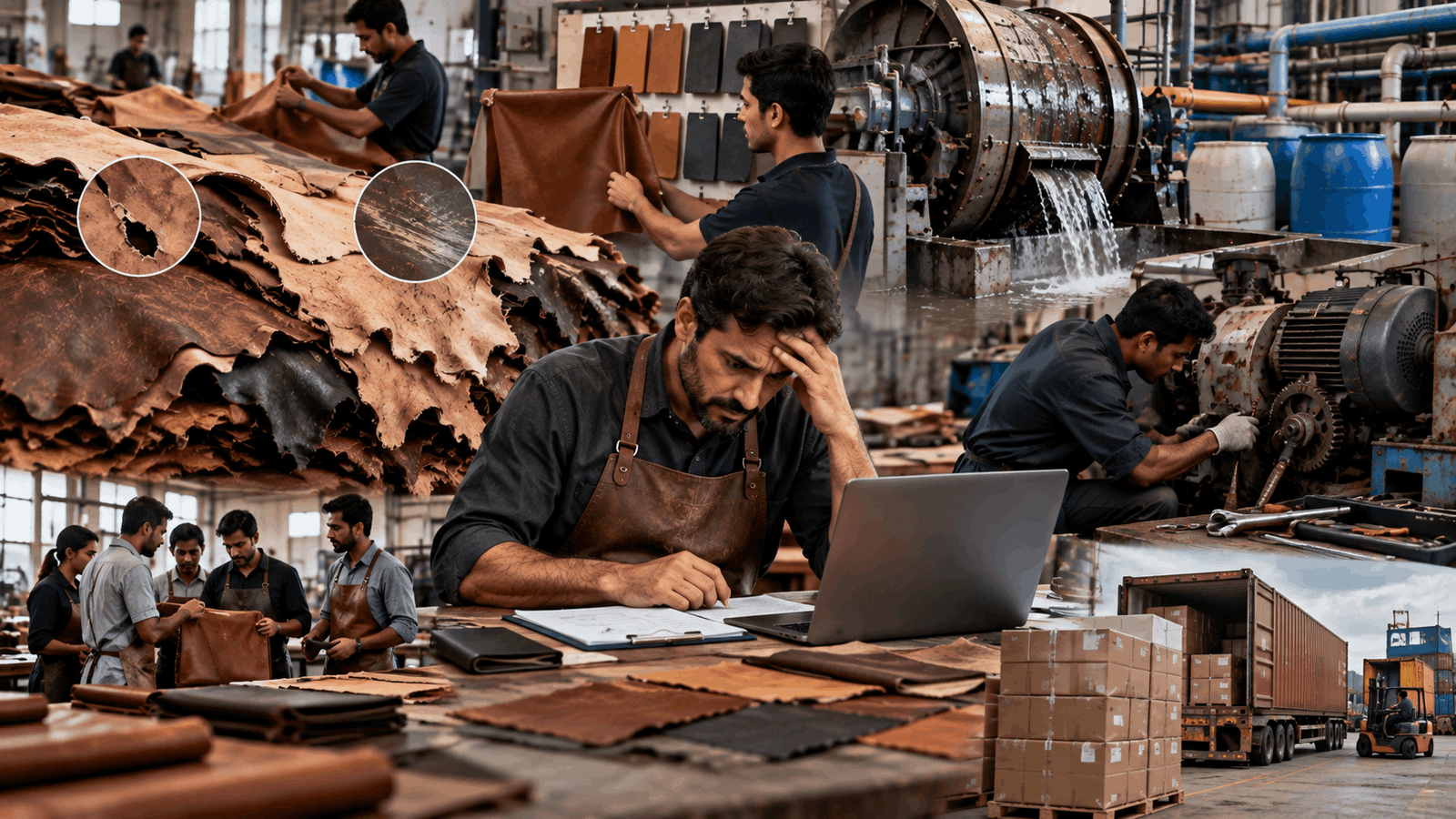
A simple search for leather suppliers returns thousands of websites, marketplaces, manufacturers, wholesalers, retailers, directories, and certification organizations. Many appear similar at first glance, but they serve very different purposes.
If you’re sourcing leather jackets, bags, gloves, footwear, upholstery, hides, or OEM manufacturing, understanding these differences can save significant time, reduce sourcing risk, and help you identify better manufacturing partners.
This guide explains:
- What a leather marketplace actually is
- Whether a dedicated leather marketplace exists
- Why popular platforms like Alibaba and IndiaMART are not leather marketplaces
- Why certification organizations and suppliers are different from marketplaces
- Why much of the leather industry still relies on traditional sourcing methods
- How specialized leather marketplaces like Tannorium are changing global sourcing
What Is a Leather Marketplace?
A leather marketplace is a platform dedicated exclusively to the leather industry.
Instead of covering thousands of unrelated industries, it focuses on connecting businesses involved in leather manufacturing, sourcing, wholesale, OEM production, private-label manufacturing, raw materials, and finished leather goods.
Depending on the platform, users may find:
- Leather manufacturers
- OEM factories
- Private-label producers
- Leather brands
- Leather wholesalers
- Leather suppliers
- Tanneries
- Hide and fur suppliers
- Leather accessories
- Finished leather products
- Sourcing opportunities
The defining characteristic is industry specialization.
Rather than treating leather as one category among millions, every supplier, product, and buyer is part of the same industry ecosystem.
How a Leather Marketplace Differs from a General Marketplace
General B2B marketplaces are designed to serve nearly every manufacturing sector imaginable.
They may include:
- Electronics
- Machinery
- Chemicals
- Furniture
- Agriculture
- Packaging
- Apparel
- Automotive parts
- Medical equipment
- Leather products
Leather represents only a small fraction of their overall catalog.
A dedicated leather marketplace, on the other hand, focuses exclusively on leather-related businesses.
| General Marketplace |
Leather Marketplace |
| Thousands of industries |
Leather industry only |
| Broad supplier base |
Specialized suppliers |
| Mixed buyer audience |
Leather buyers and sourcing professionals |
| General search filters |
Leather-specific categories |
| Limited leather expertise |
Industry-focused ecosystem |
This specialization can make supplier discovery more relevant for businesses sourcing leather products or manufacturing partners.
Why Alibaba Isn’t a Leather Marketplace
Alibaba is often the first platform buyers consider when sourcing leather goods.
However, Alibaba is not a dedicated leather marketplace.
This isn’t a criticism of Alibaba, it reflects its business model.
Alibaba is a horizontal B2B marketplace.
It serves virtually every manufacturing sector, including:
- Electronics
- Industrial equipment
- Furniture
- Home goods
- Chemicals
- Packaging
- Food products
- Apparel
- Consumer products
- Leather
Leather is one of many categories rather than the platform’s primary focus.
For buyers looking specifically for leather manufacturers, navigating a broad marketplace may require additional filtering, supplier evaluation, and product verification.
Alibaba remains one of the world’s largest sourcing platforms, but it is designed for general manufacturing rather than exclusively for the leather industry.
Why IndiaMART Isn’t a Leather Marketplace
IndiaMART is another major B2B platform frequently used by buyers.
Like Alibaba, IndiaMART operates as a horizontal marketplace.
Its listings span thousands of business categories across manufacturing, industrial products, services, agriculture, healthcare, construction, and consumer goods.
Leather products represent only a portion of its overall supplier network.
Businesses can certainly source leather through IndiaMART, but the platform itself is not dedicated solely to leather manufacturing or leather sourcing.
Why Leather Working Group Isn’t a Leather Marketplace
Many buyers discover the Leather Working Group (LWG) while researching leather suppliers.
However, Leather Working Group is not a marketplace.
Instead, it is an organization that develops environmental auditing standards for leather manufacturers and certifies facilities that meet its assessment criteria.
Its primary functions include:
- Environmental auditing
- Sustainability standards
- Certification
- Industry best practices
- Supply chain improvement
While buyers may use LWG resources to identify certified facilities, the organization does not operate as a platform where buyers purchase products or connect directly with manufacturers for commercial transactions.
Certification and marketplace services are two different functions.
Why Buckleguy Isn’t a Leather Marketplace
Buckleguy is well known within the leathercraft community.
However, Buckleguy is a retailer and supplier, not a marketplace.
Its business focuses on selling:
- Leather hides
- Hardware
- Buckles
- Tools
- Leathercraft supplies
- Components
Customers purchase directly from Buckleguy’s inventory.
Third-party manufacturers do not create storefronts or list products for buyers to compare.
That business model makes Buckleguy a specialized retailer rather than a marketplace.
Why Rocky Mountain Leather Isn’t a Leather Marketplace
Rocky Mountain Leather Supply is another respected name in the leather industry.
Like Buckleguy, it supplies leather materials and leathercraft products directly to customers.
Its focus includes:
- Premium leather hides
- Leather tools
- Hardware
- Craft supplies
Although it serves leather professionals worldwide, it is not designed as a marketplace where multiple manufacturers compete or where buyers discover OEM factories.
It is a supplier, not a marketplace.
How Most Leather Businesses Still Source Products
Despite rapid advances in digital commerce, much of the global leather industry continues to rely on traditional sourcing methods.
Many long-term business relationships are still established through direct communication rather than online marketplaces.
Common sourcing methods include:
WhatsApp
Manufacturers frequently communicate with buyers through WhatsApp.
Conversations often include:
- Product photos
- Quotations
- Production updates
- Sample approvals
- Shipping coordination
For many suppliers, WhatsApp functions as an everyday business communication tool.
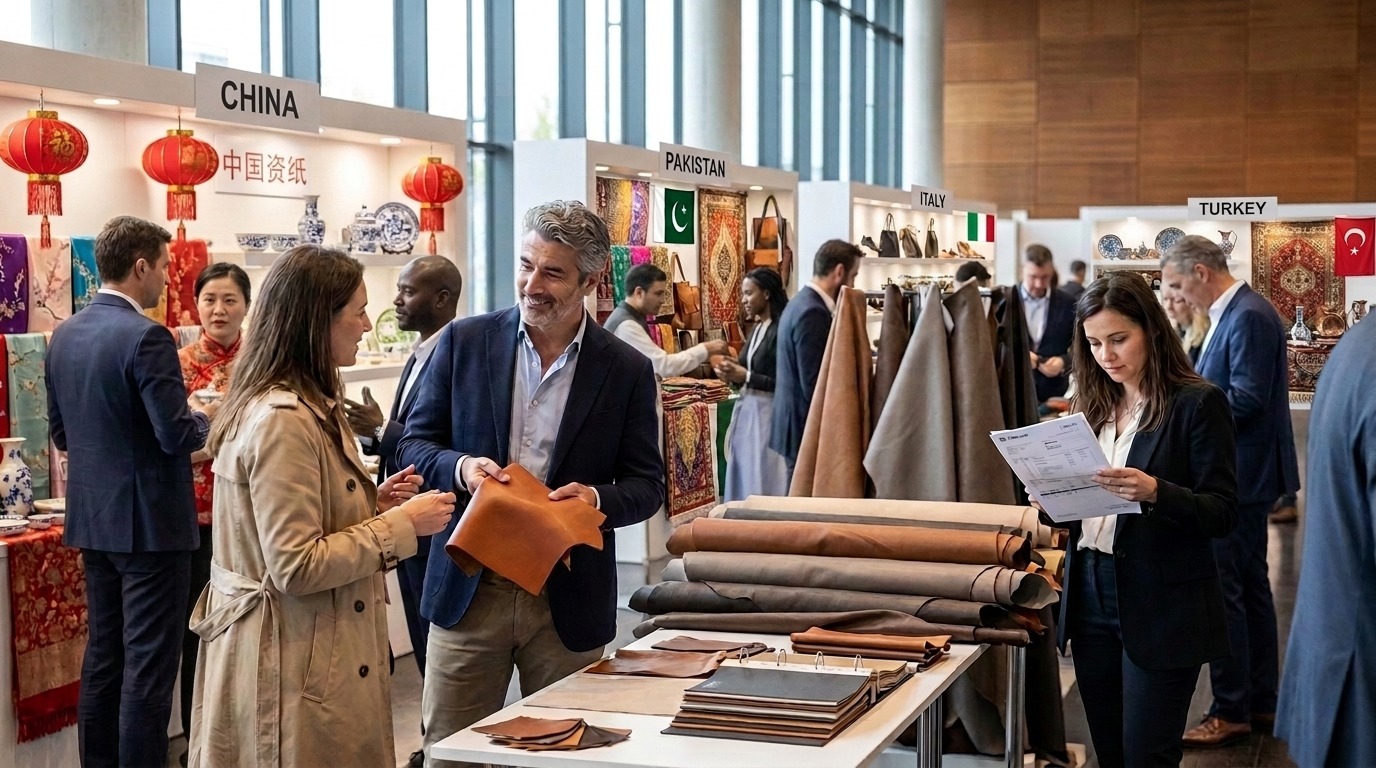
Trade Fairs
International exhibitions remain one of the most important ways buyers meet manufacturers.
Trade fairs allow businesses to:
- Inspect product quality
- Compare manufacturers
- Discuss customization
- Evaluate production capabilities
- Build long-term relationships
Face-to-face interaction continues to play an important role, particularly for larger sourcing projects.
Email
Email remains the standard channel for formal business communication.
Buyers typically use email to exchange:
- RFQs (Requests for Quotation)
- Technical specifications
- Purchase orders
- Contracts
- Production documentation
Referrals
Perhaps the oldest sourcing method is referrals.
Many manufacturers gain new customers because an existing client recommends them.
Word-of-mouth remains highly influential in industries where quality, reliability, and long-term relationships matter.
Is There a Dedicated Global Leather Marketplace?
Yes.
Although dedicated leather marketplaces are relatively uncommon compared with general B2B platforms, they do exist.
Unlike horizontal marketplaces that serve thousands of industries, a dedicated leather marketplace focuses exclusively on businesses involved in the leather supply chain.
These platforms are designed to help buyers discover:
- Leather manufacturers
- OEM factories
- Private-label manufacturers
- Leather suppliers
- Leather brands
- Leather product categories
- Leather sourcing opportunities
One example is Tannorium.
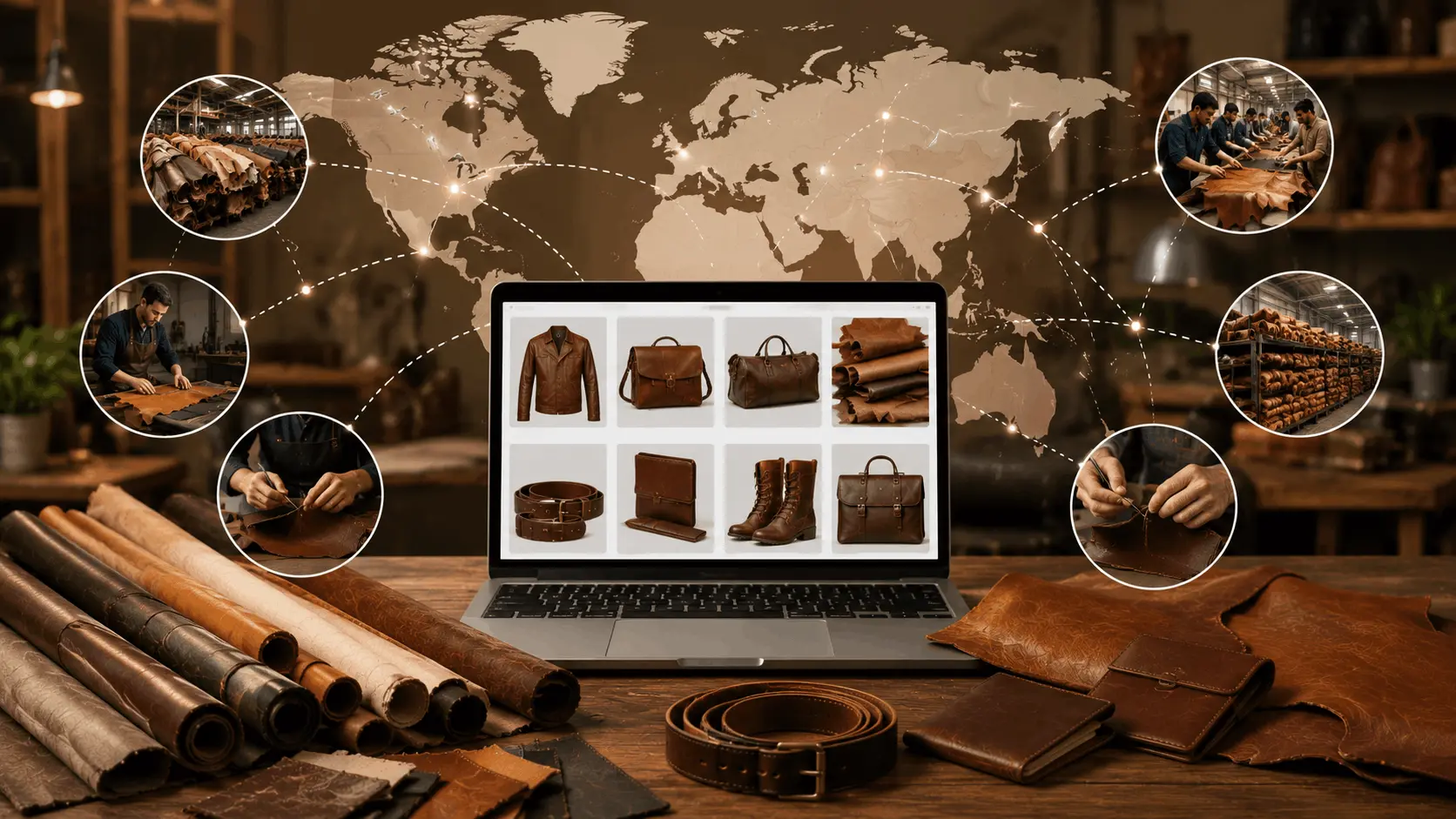
Tannorium is a leather-only marketplace designed to connect buyers directly with manufacturers, OEM factories, brands, and suppliers involved in the global leather industry.
Rather than serving every manufacturing sector, its focus is exclusively on leather. The platform is structured around leather products, manufacturing capabilities, supplier profiles, sourcing requirements, and industry-specific categories. Its supplier base began with manufacturers from Pakistan, but its positioning and scope are global, with the objective of connecting buyers and suppliers worldwide.
This specialized approach reflects the needs of an industry where product quality, manufacturing expertise, customization, and long-term supplier relationships are often more important than broad product catalogs.
Why Specialized Leather Marketplaces Matter
Leather sourcing often involves more than comparing prices.
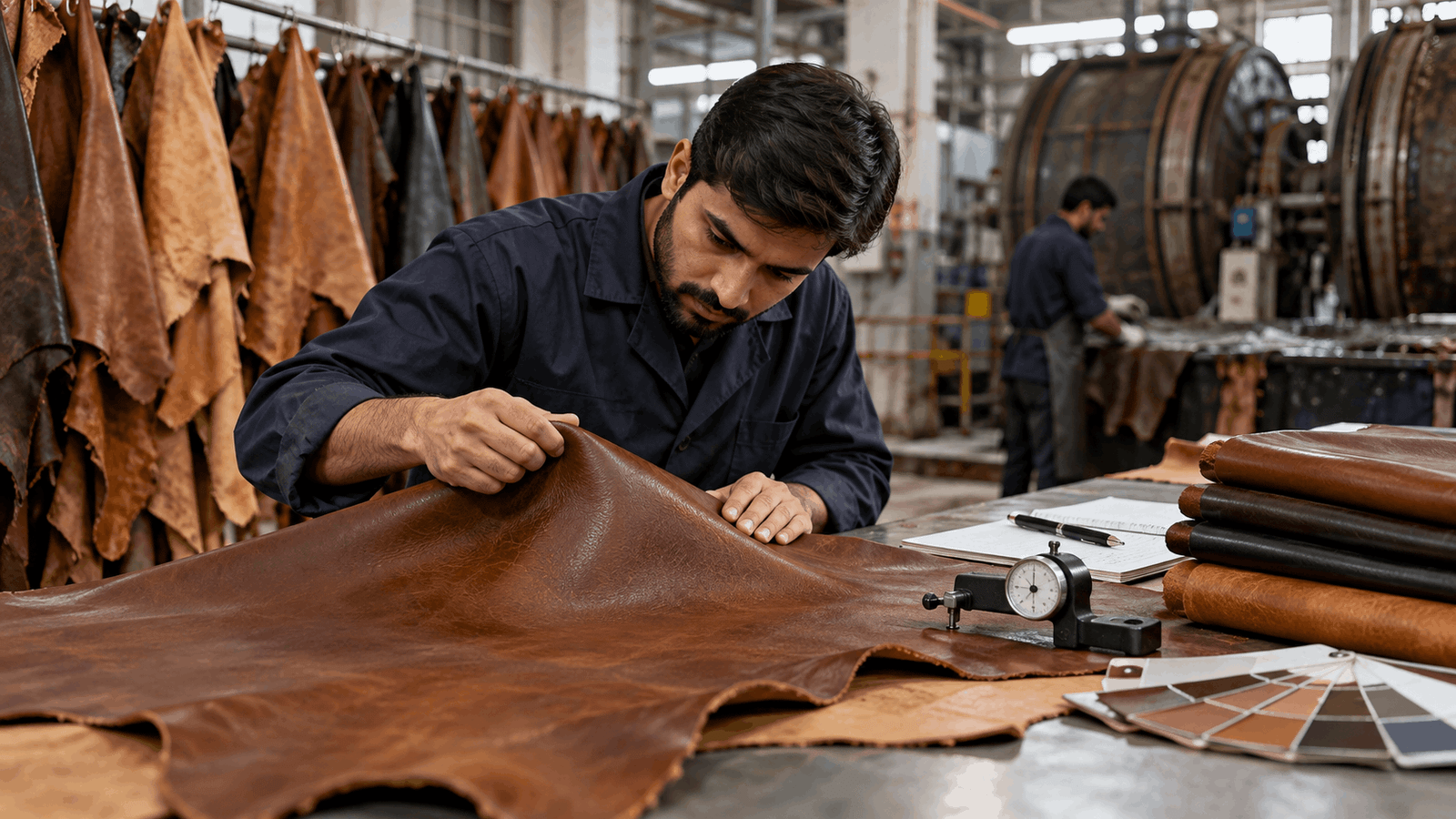
Buyers may also evaluate:
- Manufacturing experience
- Product specialization
- OEM capabilities
- Private-label services
- Minimum order quantities
- Material quality
- Production capacity
- Export experience
- Certifications
- Communication responsiveness
A platform focused exclusively on leather can organize this information in a way that aligns more closely with how buyers evaluate suppliers.
As global sourcing becomes increasingly digital, specialized marketplaces have the potential to reduce the time required to identify suitable manufacturing partners while improving visibility into the leather supply chain.
Frequently Asked Questions
What is a leather marketplace?
A leather marketplace is a platform dedicated to connecting buyers with businesses involved in leather manufacturing, sourcing, wholesale, OEM production, private-label manufacturing, and leather products.
Is Alibaba a leather marketplace?
No. Alibaba is a horizontal B2B marketplace serving thousands of industries. Leather is one of many product categories.
Is IndiaMART dedicated to leather?
No. IndiaMART covers a wide range of industries and is not focused exclusively on leather.
Is Leather Working Group a marketplace?
No. Leather Working Group is a certification and auditing organization that develops environmental standards for leather manufacturers.
Is Buckleguy a marketplace?
No. Buckleguy is a retailer and supplier of leather, hardware, tools, and leathercraft materials.
Is Rocky Mountain Leather Supply a marketplace?
No. It is a supplier of leather hides and leathercraft materials rather than a marketplace hosting multiple manufacturers.
Why do leather businesses still use WhatsApp?
WhatsApp enables quick communication, quotation sharing, product discussions, and production updates between buyers and suppliers.
Are trade fairs still important for leather sourcing?
Yes. Trade fairs remain valuable for evaluating product quality, meeting manufacturers, and building long-term business relationships.
What should buyers look for in a leather supplier?
Key factors include manufacturing experience, product quality, OEM capabilities, production capacity, export experience, communication, and reliability.
Is there a global leather marketplace?
Yes. While relatively rare, dedicated leather marketplaces exist. Tannorium is a very good example of a dedicated global leather marketplace, they focus specifically on leather manufacturers, suppliers, OEM factories, brands, and sourcing professionals rather than covering every manufacturing industry.
Final Verdict
The term “leather marketplace” is often used loosely, but not every website associated with the leather industry qualifies as one.
General B2B platforms like Alibaba and IndiaMART provide access to leather suppliers, yet they are designed to serve countless industries. Organizations such as the Leather Working Group support standards and certification rather than commercial transactions. Retailers like Buckleguy and suppliers like Rocky Mountain Leather Supply sell their own products instead of bringing together multiple independent buyers and manufacturers.
At the same time, the leather industry continues to rely heavily on WhatsApp, email, trade fairs, and referrals because sourcing frequently depends on trust, technical expertise, and long-term relationships.
Dedicated leather marketplaces like Tannorium address this gap by concentrating exclusively on the leather sector. By organizing manufacturers, OEM factories, private-label producers, brands, and suppliers within a single industry-focused environment, they provide a more specialized approach to global leather sourcing.