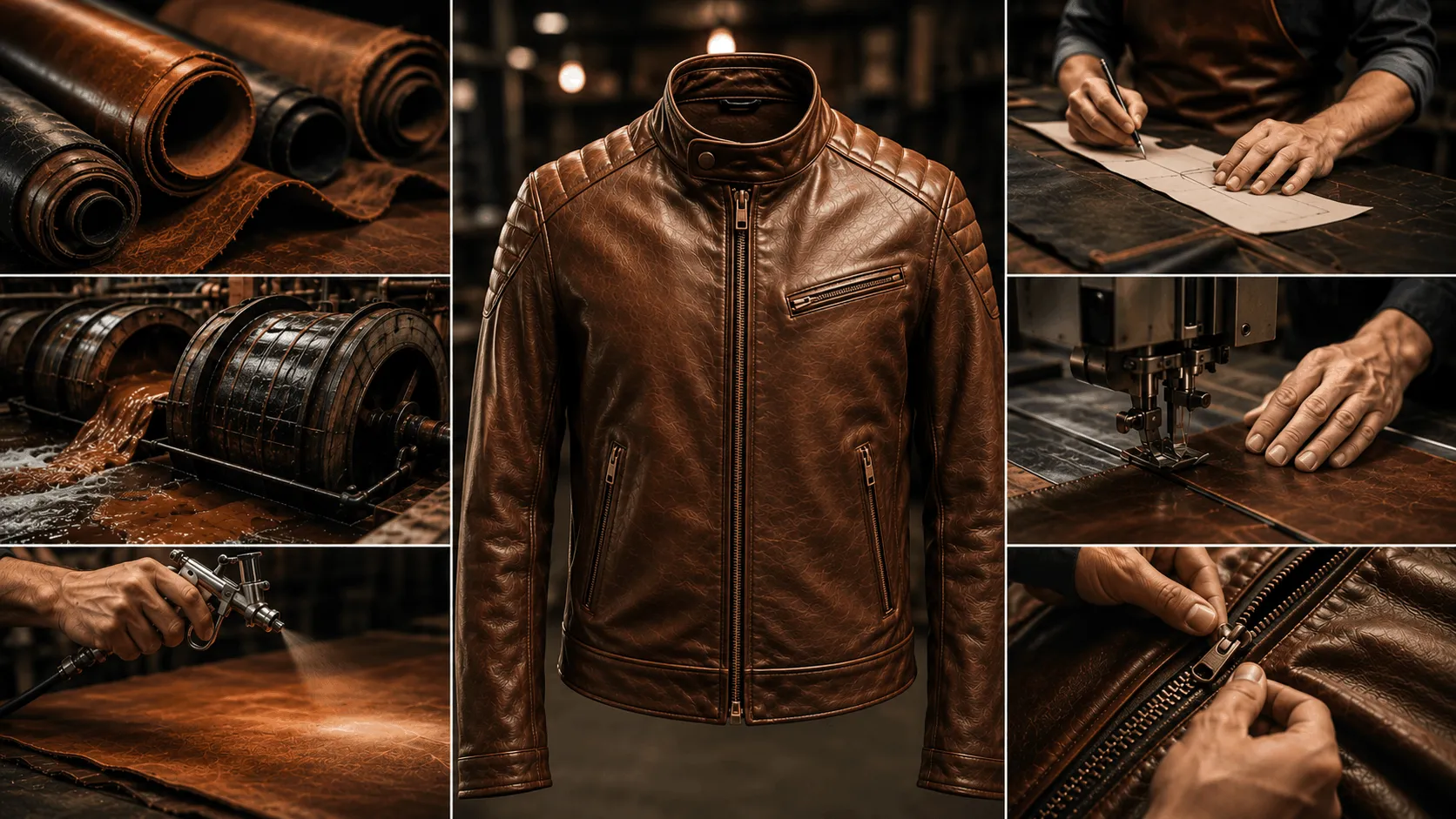
A leather jacket is much more than stitched pieces of leather. It is the result of skilled craftsmanship, carefully selected materials, precision manufacturing, and strict quality control. From selecting premium hides to adding the final zipper, every stage plays an important role in creating a jacket that offers durability, comfort, and timeless style.
Whether you’re a fashion enthusiast, a brand owner, or simply curious about how genuine leather jackets are made, this guide walks you through every step of the manufacturing process.
The Journey of a Leather Jacket
Manufacturing a leather jacket involves a series of specialized processes that transform raw animal hides into premium outerwear. Each stage requires experienced craftsmen, modern machinery, and quality inspections to ensure the final product meets industry standards.
While every manufacturer has its own production techniques, the overall workflow remains similar across the leather industry.
Step 1: Selecting High Quality Animal Hides
Everything starts with choosing the right leather. The quality of the hide has a direct impact on the jacket’s appearance, strength, softness, and lifespan.
Some of the most commonly used hides include:
- Cowhide for durability and abrasion resistance
- Lambskin for a soft, lightweight feel
- Sheepskin for comfort and flexibility
- Goatskin for a balance of strength and softness
- Buffalo leather for rugged applications
Each hide has unique characteristics, making it suitable for different jacket styles. If you’d like to learn more about how each material compares, read our guide on Different Animal Hides.
After selection, every hide is carefully inspected for scars, wrinkles, insect bites, and other natural imperfections before moving to the next stage.
Step 2: Tanning the Leather
Raw hides cannot be used immediately because they naturally decompose. Tanning preserves the leather while improving its flexibility, strength, and resistance to moisture.
The two most common tanning methods are:
Vegetable Tanning
Vegetable tanning uses natural tannins extracted from tree bark and plants. It produces firm leather that develops a rich patina over time.
Chrome Tanning
Chrome tanning relies on chromium salts to create softer leather with faster production times. It also offers better color consistency and flexibility, making it popular for fashion jackets.
Many manufacturers choose their tanning method based on the desired finish and product requirements. For a detailed comparison, see our guide on Vegetable vs Chrome Tanned Leather.
Step 3: Dyeing and Finishing the Leather
Once tanning is complete, the leather moves to the finishing department.
Here, manufacturers apply colors, oils, waxes, and protective coatings to achieve the desired appearance and texture.
Depending on the design, leather may receive finishes such as:
- Matte finish
- Semi-aniline finish
- Full aniline finish
- Pull-up finish
- Waxed finish
These treatments not only improve aesthetics but also enhance durability and resistance to everyday wear.
Step 4: Pattern Making and Jacket Design
Before any leather is cut, designers create patterns for every part of the jacket.
A standard leather jacket consists of multiple individual panels, including:
- Front panels
- Back panel
- Sleeves
- Collar
- Cuffs
- Waistband
- Pocket pieces
- Lining components
Patterns are carefully graded into different sizes while maintaining consistent proportions and fit.
Step 5: Precision Leather Cutting
Leather is an expensive material, so every cut must be planned carefully to minimize waste.
Manufacturers inspect each hide and position pattern pieces around natural marks or imperfections.
Cutting may be performed using:
- Hand knives
- Hydraulic cutting presses
- CNC cutting machines
- Computerized nesting systems
Accurate cutting ensures every panel fits perfectly during assembly while maximizing leather utilization.
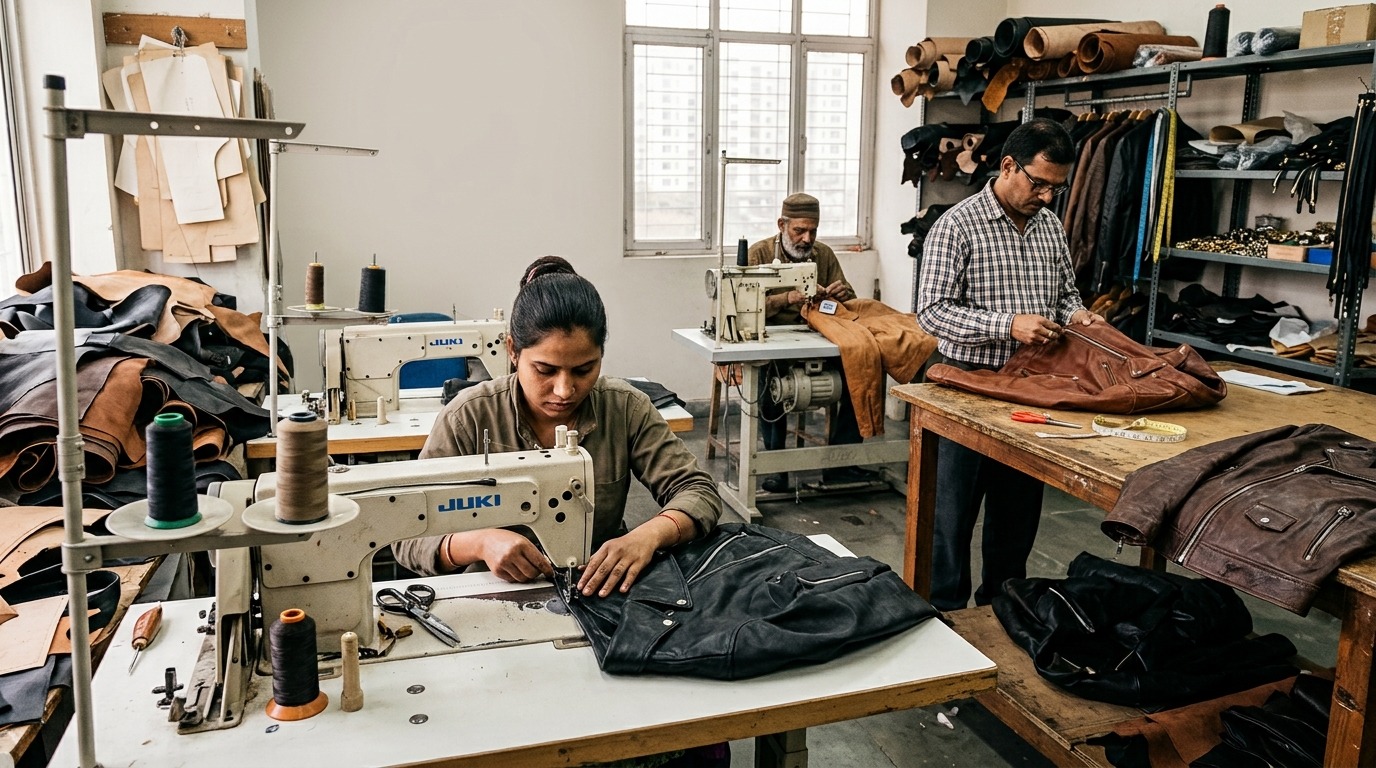
Step 6: Stitching the Jacket Together
After cutting, all components move to the sewing department.
Experienced operators stitch the jacket piece by piece using heavy-duty industrial sewing machines designed specifically for leather.
Key stitching areas include:
- Shoulder seams
- Sleeves
- Side panels
- Pockets
- Collar
- Waistband
- Lining attachment
Premium manufacturers often reinforce stress points with double stitching to improve long-term durability.
Step 7: Installing Hardware
Once the body of the jacket is assembled, hardware is added.
Typical components include:
- Metal zippers
- Snap buttons
- Rivets
- Buckles
- Adjustable straps
- Decorative studs
- Inner labels
- Brand tags
High-quality hardware contributes to both functionality and the overall premium appearance of the jacket.
Step 8: Edge Finishing and Final Detailing
Before inspection, craftsmen refine every visible detail.
This stage includes:
- Trimming loose threads
- Edge painting
- Burnishing exposed leather edges
- Cleaning excess adhesive
- Conditioning the leather surface
- Polishing metal hardware
These finishing touches create the clean, professional look expected from a premium leather jacket.
Step 9: Quality Inspection
Quality control is one of the most important stages in manufacturing.
Every jacket undergoes a detailed inspection to ensure it meets production standards.
Inspectors typically check:
- Stitch consistency
- Leather quality
- Color uniformity
- Proper alignment
- Functional zippers
- Secure buttons
- Accurate sizing
- Clean finishing
Any defects are corrected before the jacket moves to packaging.
Step 10: Packaging and Shipping
After final approval, jackets are prepared for storage and transportation.
Most manufacturers package each jacket using:
- Protective garment bags
- Tissue paper
- Moisture protection
- Branded packaging
- Shipping cartons
Proper packaging helps prevent wrinkles, scratches, and dust during transit.
Handcrafted vs Machine Manufactured Leather Jackets
Both handcrafted and machine-manufactured jackets have their advantages.
Handcrafted jackets often feature greater attention to detail, unique finishing, and artisan craftsmanship. They typically require more production time and come at a higher price.
Machine-manufactured jackets provide excellent consistency, faster production, and cost efficiency, making them ideal for larger-scale manufacturing while still maintaining high quality when produced by experienced manufacturers.
Why Manufacturing Quality Matters
A leather jacket is a long-term investment, and manufacturing quality determines how well it performs over the years.
High-quality production offers several benefits:
- Longer lifespan
- Better comfort
- Stronger stitching
- Improved shape retention
- Reliable hardware
- Premium appearance
- Greater value for money
Even the finest leather cannot compensate for poor construction, making skilled manufacturing just as important as material selection.
How to Identify a Well Manufactured Leather Jacket
If you’re shopping for a leather jacket, pay attention to these details before making a purchase:
- Straight, even stitching throughout
- Smooth, wrinkle-free lining
- Premium-quality zippers and hardware
- Symmetrical pocket placement
- Cleanly finished edges
- No excess glue or loose threads
- Soft yet durable leather
Checking these features can help you distinguish a premium jacket from a lower-quality product.
For additional buying tips, understanding a jacket’s thickness can also make a difference. Our Leather Thickness Guide explains how leather weight affects durability, flexibility, and overall comfort.
Common Mistakes Low Quality Manufacturers Make
Poor manufacturing practices often lead to jackets that wear out quickly.
Common issues include:
- Uneven stitching
- Cheap hardware
- Thin leather panels
- Poor pattern alignment
- Weak seam construction
- Inconsistent dye application
- Low-quality lining materials
These shortcuts may reduce production costs, but they also compromise the jacket’s performance and lifespan.
Conclusion
Manufacturing a leather jacket is a detailed process that combines premium materials, technical expertise, and skilled craftsmanship. From selecting quality hides and tanning the leather to precision cutting, stitching, finishing, and final inspection, every stage contributes to the durability and appearance of the finished garment.
Understanding this process also helps buyers recognize the value behind a well-made jacket and make more informed purchasing decisions. If you’re interested in learning more about leather materials, our guides on Leather Manufacturing Process and Types of Leather provide additional insights into how leather products are created and what sets different leather varieties apart.
Frequently Asked Questions
How long does it take to manufacture a leather jacket?
Depending on the design and production method, manufacturing can take anywhere from several hours to a few days. Handcrafted jackets generally require more time than mass-produced ones.
Which leather is best for leather jackets?
There is no single best option. Cowhide offers excellent durability, lambskin provides exceptional softness, goatskin balances strength and flexibility, while sheepskin delivers lightweight comfort.
Why is tanning important in leather manufacturing?
Tanning prevents raw hides from decomposing while improving durability, flexibility, and resistance to moisture and daily wear.
Are handmade leather jackets better?
Handmade jackets often feature greater attention to detail and unique craftsmanship, while high-quality machine-made jackets provide excellent consistency and durability.
What machines are used to manufacture leather jackets?
Manufacturers commonly use hydraulic cutting presses, CNC cutting machines, industrial leather sewing machines, edge finishing equipment, and hardware installation presses.
How can I identify a high-quality leather jacket?
Look for premium leather, even stitching, durable hardware, clean finishing, accurate sizing, and a well-constructed lining. These are strong indicators of quality craftsmanship.