




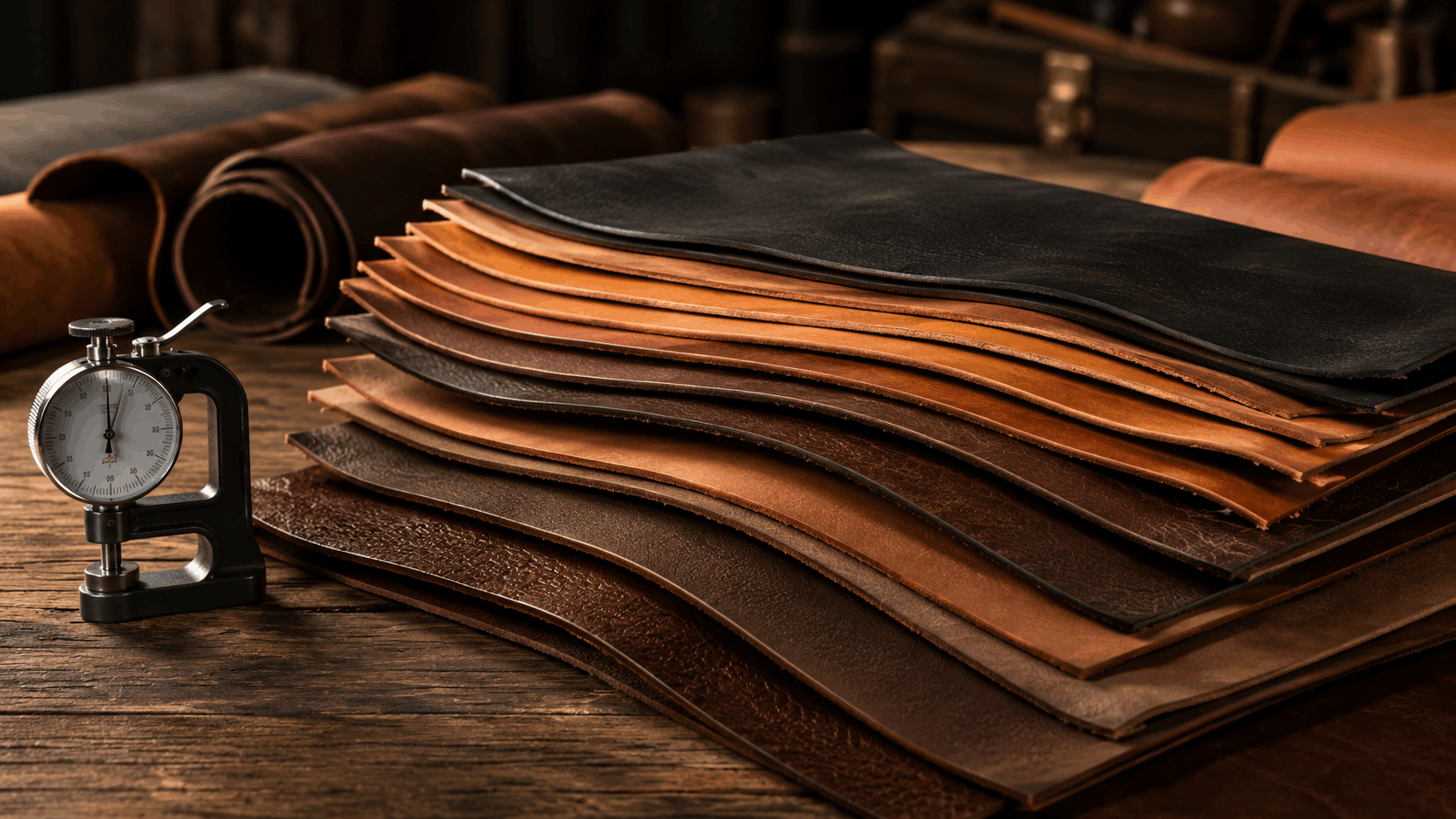
Selecting the right leather begins with understanding its thickness. Whether you’re buying leather for a jacket, wallet, belt, handbag, or a custom project, the material’s thickness directly affects its durability, flexibility, comfort, and overall performance. This leather thickness guide explains how leather thickness is measured, what leather weight means, and how to choose the appropriate thickness for different applications.
Leather is commonly measured in both millimeters (mm) and ounces (oz), which can be confusing for first-time buyers. While the term “weight” may suggest the actual mass of the leather, it refers to its thickness rather than how heavy it is. Once you understand this system, comparing different leather types becomes much easier and helps you make informed purchasing decisions.
Whether you’re a leathercraft hobbyist, product manufacturer, or simply looking for quality leather goods, this guide provides the essential knowledge you need to understand leather measurements with confidence.
What Is Leather Thickness?
Leather thickness refers to the distance between the grain side and the flesh side of a leather hide after it has been processed. It is one of the most important characteristics because it influences how the leather feels, performs, and ages over time.
Thinner leather is generally softer and more flexible, making it suitable for garments, gloves, and wallet linings. Thicker leather offers greater rigidity and durability, making it a preferred choice for belts, saddlery, work gear, and heavy-duty accessories.
Leather thickness should not be confused with leather quality. Two pieces of leather may have the same thickness but differ significantly in strength, texture, longevity, and finish depending on the hide quality and tanning process.
If you’re new to leather, understanding thickness is an excellent starting point before learning topics such as Understanding Leather Grades, which explains how different quality levels are classified within the leather industry.
How Leather Thickness Is Measured
Leather manufacturers and suppliers typically use two measurement systems:
- Millimeters (mm)
- Ounces (oz)
Millimeters provide the actual physical thickness of the leather and are widely used in international trade and manufacturing.
The ounce system is more common in North America. Unlike standard weight measurements, each ounce represents approximately 1/64 of an inch in thickness rather than the material’s actual mass. For example, 4 oz leather is roughly 1.6 mm thick.
This standardized method allows manufacturers and buyers to communicate leather specifications consistently across different industries.
Leather Measurement Methods
Leather thickness is measured using specialized precision tools known as leather thickness gauges or calipers. These instruments apply consistent pressure to the leather, ensuring accurate readings without compressing the material excessively.
Professional manufacturers often measure leather at multiple points across a hide because natural leather can vary slightly in thickness from one area to another. This careful leather measurement process helps maintain quality standards and ensures the material meets the intended application.
Leather Thickness Chart
The following leather thickness chart provides a quick reference between leather weight and approximate thickness.
| Leather Weight (oz) | Approximate Thickness (mm) | Common Applications |
| 2 to 3 oz | 0.8 to 1.2 mm | Gloves, wallet lining, garments |
| 3 to 4 oz | 1.2 to 1.6 mm | Wallets, handbags, lightweight accessories |
| 4 to 5 oz | 1.6 to 2.0 mm | Leather jackets, bags, footwear |
| 5 to 6 oz | 2.0 to 2.4 mm | Medium belts, aprons |
| 6 to 7 oz | 2.4 to 2.8 mm | Heavy bags, straps |
| 7 to 8 oz | 2.8 to 3.2 mm | Utility belts, tack |
| 8 to 9 oz | 3.2 to 3.6 mm | Heavy-duty belts, holsters |
| 9 to 10 oz | 3.6 to 4.0 mm | Saddlery, industrial leather goods |
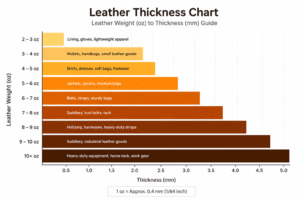
This leather weight chart serves as a practical reference when comparing leather options for different products. Keep in mind that slight variations may occur depending on the tannery, hide selection, and finishing process.
Choosing the Right Leather Thickness
The ideal leather thickness depends on how the finished product will be used. Selecting leather that is too thin may reduce durability, while overly thick leather can make an item unnecessarily stiff or difficult to work with.
Thin Leather (0.8 to 1.2 mm)
Thin leather is lightweight, flexible, and comfortable. It bends easily without adding bulk, making it suitable for products that require softness and movement.
Common applications include:
- Fashion garments
- Gloves
- Wallet linings
- Small leather accessories
Medium Leather (1.2 to 2.0 mm)
Medium-thickness leather offers an excellent balance between flexibility and durability. It is one of the most versatile thickness ranges used across the leather goods industry.
It is commonly selected for:
- Leather jackets
- Handbags
- Shoes
- Wallet exteriors
- Everyday accessories
Many manufacturers also consider this range ideal because it accepts various Leather Finishing Types while maintaining a premium appearance.
Thick Leather (2.0 mm and Above)
Thicker leather is designed for products that must withstand repeated stress, abrasion, and heavy use. Although less flexible, it provides exceptional structural strength and long-term durability.
Typical applications include:
- Belts
- Tool belts
- Holsters
- Saddlery
- Harnesses
- Heavy-duty straps
Does Thicker Leather Mean Better Quality?
A common misconception is that thicker leather is always better. In reality, thickness and quality are two different characteristics.
Premium leather is determined by factors such as the quality of the hide, tanning process, grain integrity, and craftsmanship rather than thickness alone. A well-made full-grain leather jacket measuring 1.2 mm can easily outperform a poorly processed 3 mm leather product in both durability and appearance.
The best choice depends entirely on the intended application. A soft leather glove requires flexibility, while a work belt requires rigidity and strength. Neither is superior simply because it is thicker.
For a broader understanding of how leather characteristics work together, readers can also explore our Types of Leather Explained and Detail Leather Guide, which cover leather varieties, construction, and practical selection tips in greater depth.
Factors That Affect Leather Thickness
Leather thickness is not random. It is influenced by several factors throughout the manufacturing process, from the type of hide selected to the intended use of the finished product. Understanding these factors helps buyers choose leather that matches both performance and design requirements.
1. Animal Hide
Different animals naturally produce hides with varying thicknesses. For example, cowhide is generally thicker than sheepskin, while goatskin offers a balance of strength and flexibility despite being relatively thin. The age and breed of the animal can also affect the final thickness.
2. Splitting Process
After tanning, leather can be split into multiple layers using specialized machinery. This allows manufacturers to produce leather at specific thicknesses for different applications. The same hide can therefore be processed into thinner leather for garments or thicker leather for heavy-duty products.
3. Intended Application
Manufacturers select leather thickness based on the product being made. A leather jacket requires softness and flexibility, while a belt or saddle demands greater rigidity and wear resistance. Choosing the correct thickness ensures both comfort and durability.
4. Tanning and Finishing
Although tanning does not drastically change thickness, different tanning and finishing techniques can slightly influence the leather’s feel, firmness, and overall structure. Some finishes make leather appear more substantial, while others maintain a softer, more natural character.
Common Leather Thickness for Popular Products
Different leather goods require different thickness ranges to achieve the right balance between flexibility, durability, and appearance.
| Product | Wallet | Jacket | Handbag | Watch Strap | Shoes | Boots | Apron | Belt | Holster | Saddlery |
| Thickness | 0.8 to 1.2 mm | 0.9 to 1.3 mm | 1.4 to 2.0 mm | 1.2 to 2.0 mm | 1.6 to 2.2 mm | 1.8 to 2.4 mm | 1.6 to 2.2 mm | 3.5 to 4.5 mm | 3.2 to 4.0 mm | 3.5 mm+ |
These recommendations serve as general guidelines. Some manufacturers may choose slightly thinner or thicker leather depending on the product design, construction method, and desired feel.
Frequently Asked Questions
What is the best leather thickness for wallets?
Most wallets are made using leather between 0.8 mm and 1.2 mm. This thickness provides durability while keeping the wallet slim and comfortable to carry.
Is thicker leather always more durable?
Not necessarily. Durability depends on several factors, including the quality of the hide, tanning process, and craftsmanship. Thickness is only one part of the equation.
What leather thickness is best for jackets?
Leather jackets are commonly made using leather between 0.9 mm and 1.3 mm. This range offers a good balance between flexibility, comfort, and durability.
How do I measure leather thickness at home?
The most accurate method is using a digital caliper or a leather thickness gauge. Standard rulers are generally not precise enough for measuring leather.
What does 4 oz leather mean?
Four-ounce leather refers to a thickness of approximately 1.6 mm, not the actual weight of the leather.
Why do leather thickness measurements vary slightly?
Leather is a natural material, so small variations can occur across different areas of the hide. Professional manufacturers measure multiple points to maintain quality standards.
Conclusion
Understanding leather thickness is essential when selecting leather for any project or finished product. Whether you’re purchasing leather for clothing, accessories, belts, footwear, or industrial applications, choosing the right thickness improves durability, comfort, and overall performance.
This leather thickness guide has explained how leather thickness is measured, how to interpret a leather thickness chart, and how a leather weight chart helps compare different materials. By combining accurate leather measurement with an understanding of your product requirements, you can confidently select leather that delivers the right balance of strength, flexibility, and long-term value.