




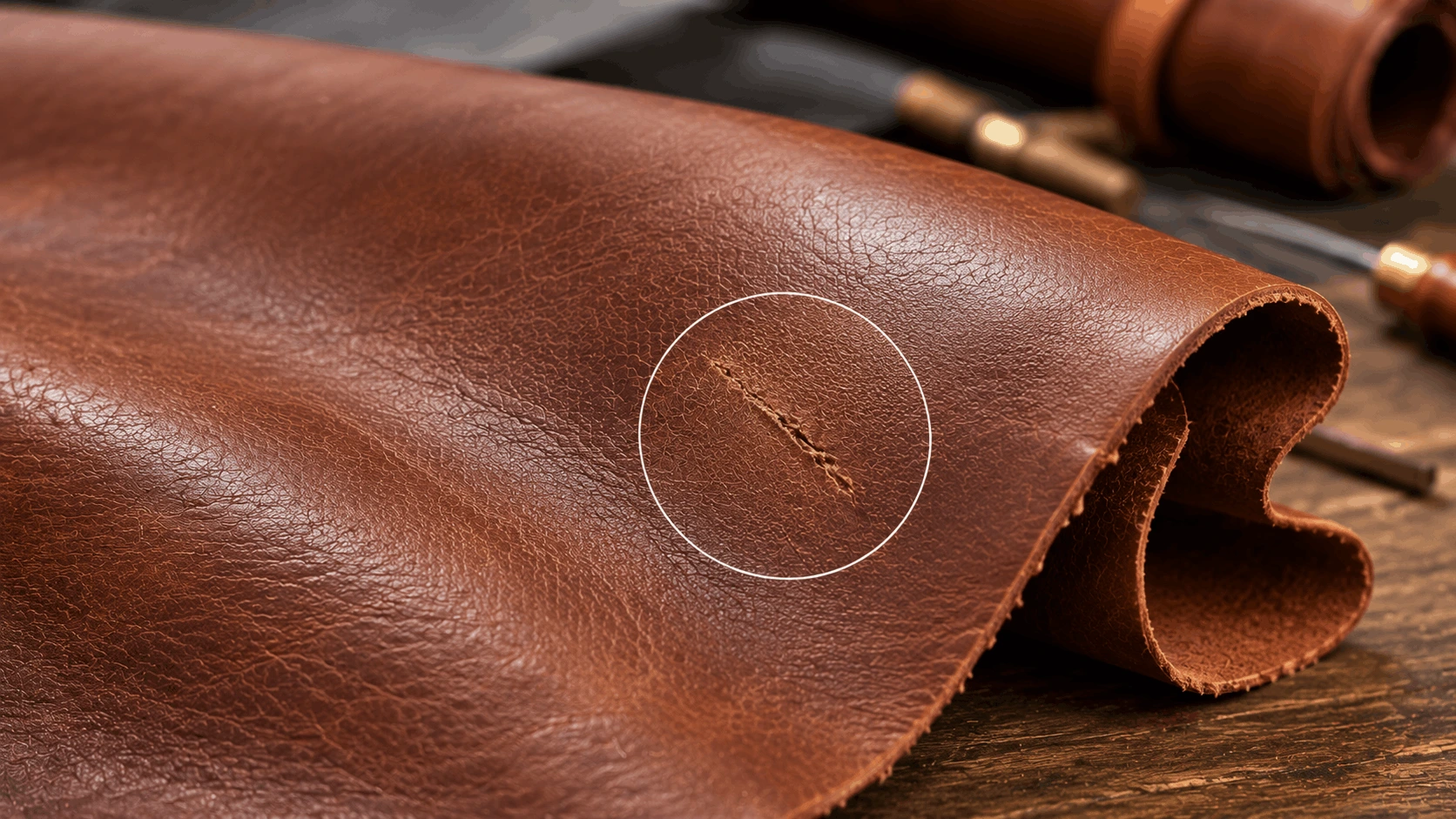
Leather is a natural material valued for its durability, appearance, and unique character. However, no two hides are exactly alike, which means leather products may display marks, textures, or variations that often raise questions among buyers. While some of these features are completely natural, others result from manufacturing, tanning, or handling issues that can affect the leather’s quality and lifespan.
Understanding the difference between natural characteristics and actual defects helps you make informed purchasing decisions. Instead of assuming every mark is a flaw, you’ll be able to recognize which imperfections add authenticity and which indicate poor craftsmanship or quality control.
In this guide, we’ll explore the most common defects found in leather, explain what causes them, and help you identify which ones are acceptable and which should be avoided.
Are All Leather Imperfections Considered Defects?
The simple answer is no. Since leather is made from animal hides, natural marks such as scars, wrinkles, insect bites, and slight color variations are normal and often indicate authentic leather rather than poor quality.
True leather defects occur during manufacturing, tanning, finishing, or storage. Unlike natural characteristics, these flaws can affect the leather’s appearance, durability, and overall performance.
To better understand how leather quality is classified, explore our guide on Leather Grades.
Common Natural Leather Imperfections
Natural imperfections develop before the leather manufacturing process begins. They are a normal part of authentic leather and should not automatically be viewed as defects.
Scars
Animals naturally acquire scars throughout their lives from scratches, fences, or minor injuries. When the hide is transformed into leather, these scars remain visible on the surface.
Small scars are common in full grain leather and don’t compromise its durability. Instead, they give every leather product a unique appearance that cannot be replicated by synthetic materials.
Stretch Marks
Stretch marks form as animals grow and move. They typically appear as subtle lines or wrinkles across certain areas of the hide.
These marks are especially common in larger hides and are considered completely natural. They have little to no impact on the leather’s strength or performance.
Insect Bites
Minor insect bites may leave tiny marks on the hide before processing. Although they are visible in some premium leather products, they rarely affect durability.
Many manufacturers retain these marks intentionally because they demonstrate the leather’s natural origin.
Vein Marks
Vein marks are faint lines created by the animal’s blood vessels beneath the skin. They often become more visible after tanning and finishing.
Rather than indicating poor quality, vein marks simply reflect the natural structure of the hide.
Wrinkles
Wrinkles commonly appear around areas that experienced frequent movement, such as the neck and shoulders of the animal.
These natural folds are particularly noticeable in high-quality leather because the grain hasn’t been heavily corrected or sanded.
Brand Marks
Livestock branding may leave permanent marks on the hide. Depending on the product design, some manufacturers intentionally preserve these marks as a symbol of authenticity and individuality.
Because every hide is unique, products featuring brand marks are often considered one-of-a-kind pieces.
The visibility of these natural characteristics also depends on the Leather Finishing process. Transparent finishes preserve more of the hide’s original appearance, while heavily pigmented finishes can hide many natural markings.
Common Manufacturing Defects in Leather
Unlike natural characteristics, manufacturing defects occur during leather production or finishing. These flaws often result from poor-quality raw materials, improper processing, inadequate quality control, or mistakes during manufacturing.
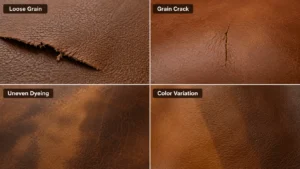
Loose Grain
Loose grain occurs when the grain layer separates slightly from the underlying fibers, creating a rippled appearance when the leather is bent. It is usually caused by poor hide quality or improper tanning.
Grain Crack
Grain cracking appears as small surface cracks when leather is folded or stretched. It commonly results from excessive drying, poor tanning, or low-quality leather and tends to worsen over time.
Uneven Dyeing
Uneven dyeing causes patches of darker or lighter color due to inconsistent dye application or poor finishing. While slight variations are normal, noticeable blotches usually indicate a manufacturing defect.
Color Variation
Not all color variation is a defect. Natural leather often displays subtle tonal differences because each hide absorbs dyes differently. While these variations add to the leather’s unique character, noticeable streaks, blotches, or uneven coloring usually indicate inconsistent processing or finishing.
Different Types of Leather also absorb dyes differently, resulting in slight variations in appearance.
In addition, the type of Animal Hides used—including cowhide, goatskin, buffalo leather, or sheepskin—can influence texture, grain pattern, and color absorption, making some natural variations completely normal rather than defects.
Remaining Manufacturing Defects
Surface Scratches
Minor surface scratches can occur during handling and are often manageable, especially on premium leather. However, deep scratches caused by poor manufacturing or careless handling can permanently damage the grain and reduce the leather’s appearance.
Poor Finishing
Poor finishing may result in peeling coatings, uneven color, excessive shine, or rough textures. Besides affecting appearance, it can also reduce the leather’s resistance to moisture and everyday wear.
Delamination
Delamination is the separation of leather layers, commonly found in lower-quality or bonded leather. It is usually caused by poor bonding, inferior materials, or prolonged exposure to heat and moisture, and is often difficult to repair.
Cuts and Holes
Cuts and holes occur when damaged hides aren’t properly inspected before manufacturing. Reputable manufacturers remove these sections during production, so visible cuts or punctures in a new leather product often indicate poor quality control.
Defects Caused During the Tanning Process
Tanning transforms raw animal hides into durable leather, but mistakes during this stage can significantly affect the final product.
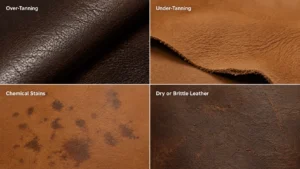
Over-Tanning
Over-tanning occurs when hides are exposed to tanning chemicals for too long or under unsuitable conditions. This may cause the leather to become stiff, overly dry, or less flexible than intended.
Leather affected by over-tanning often loses some of its natural softness, making it more susceptible to cracking over time.
Under-Tanning
Under-tanning is the opposite problem. If the tanning process is incomplete, the leather fibers aren’t fully stabilized, resulting in weaker leather with reduced durability.
Under-tanned leather may absorb moisture more easily, deform under stress, or deteriorate faster than properly processed leather.
Chemical Stains
Chemical stains appear when tanning agents, dyes, or finishing chemicals aren’t evenly distributed or thoroughly removed during processing.
These stains often show up as irregular discoloration or visible patches on the leather surface. In severe cases, they can permanently affect the leather’s appearance.
Dry or Brittle Leather
Leather should feel smooth and flexible. When it becomes excessively dry or brittle immediately after manufacturing, it usually indicates improper tanning, insufficient conditioning, or excessive drying during production.
Although regular conditioning may improve minor dryness, severely brittle leather often has permanent structural damage.
Defects Caused by Poor Storage or Handling
Even well-manufactured leather can develop defects if it isn’t stored or handled properly.
Mold and Mildew
Leather stored in damp or poorly ventilated areas can develop mold and mildew, leading to stains, unpleasant odors, and weakened fibers.
Water Stains
Prolonged exposure to water can leave stains or discoloration. Drying leather naturally and conditioning it afterward helps minimize damage.
Heat Damage
Excessive heat removes the leather’s natural oils, making it dry, stiff, and more likely to crack. Keep leather away from direct heat sources.
Sun Fading
Extended exposure to sunlight can fade leather’s color and dry out its surface, affecting its overall appearance over time.
Excessive Dryness
Without regular conditioning, leather can lose moisture, become brittle, and develop cracks, reducing its lifespan.
How to Identify Leather Defects Before Buying
A careful inspection can help you avoid purchasing leather products with significant defects.
- Examine the leather under good lighting to check for deep scratches, cuts, cracks, or uneven coloring.
- Feel the surface with your hands. Quality leather should feel smooth, supple, and consistent rather than excessively stiff or rough.
- Bend the leather gently. Minor natural creases are normal, but noticeable grain cracking or separation may indicate poor quality.
- Inspect the stitching, edges, and hardware. High-quality craftsmanship often reflects better manufacturing standards overall.
- Don’t confuse natural markings with defects. Small scars, wrinkles, and subtle color variations are often signs of authentic leather rather than poor quality.
Can Leather Defects Be Repaired?
Some leather defects are cosmetic and can be improved, while others are permanent.
Minor surface scratches, dryness, and light stains can often be treated using leather conditioners, creams, or professional restoration products. Regular maintenance also helps preserve the leather’s appearance and prevent further damage.
However, defects such as grain cracking, severe delamination, deep cuts, or major structural damage are much more difficult to repair. In these cases, replacement is often the most practical solution.
Proper care after purchase also plays an important role in extending the lifespan of leather products and preventing avoidable damage.
How Manufacturers Reduce Leather Defects
Reputable manufacturers invest heavily in quality control throughout the leather production process.
The first step is selecting high-quality hides with minimal damage. Skilled technicians carefully inspect each hide before it enters production, removing sections that contain serious defects.
Modern tanning methods, controlled finishing processes, and consistent quality inspections help minimize manufacturing defects while maintaining the leather’s natural beauty. Experienced craftsmen also pay close attention to cutting, stitching, edge finishing, and final assembly to ensure the finished product meets high standards.
Although no genuine leather is completely free from natural characteristics, careful manufacturing significantly reduces defects that affect durability and performance.
Frequently Asked Questions
Are all marks on leather considered defects?
No. Natural features such as scars, wrinkles, stretch marks, and vein marks are common in genuine leather and are often considered signs of authenticity rather than defects.
What is the most common leather manufacturing defect?
Loose grain, uneven dyeing, poor finishing, and grain cracking are among the most common manufacturing defects found in leather products.
Can cracked leather be repaired?
Small surface cracks may improve with conditioning, but deep grain cracks usually cannot be fully repaired and often become more noticeable over time.
How can I identify poor-quality leather?
Look for excessive cracking, peeling finishes, loose grain, deep cuts, uneven coloring, poor stitching, and inferior hardware. These issues often indicate lower manufacturing standards.
Conclusion
Not every mark on leather is a defect. Many natural characteristics, including scars, wrinkles, and subtle color variations, are evidence that the material comes from genuine animal hides and contributes to its unique character. Understanding the difference between natural imperfections and manufacturing defects allows you to evaluate leather more accurately and shop with confidence.
By paying attention to the quality of the leather, its construction, and overall craftsmanship, you can choose products that are built to last. A well-made leather item may display natural individuality, but it should never show defects that compromise its durability, functionality, or long-term performance.
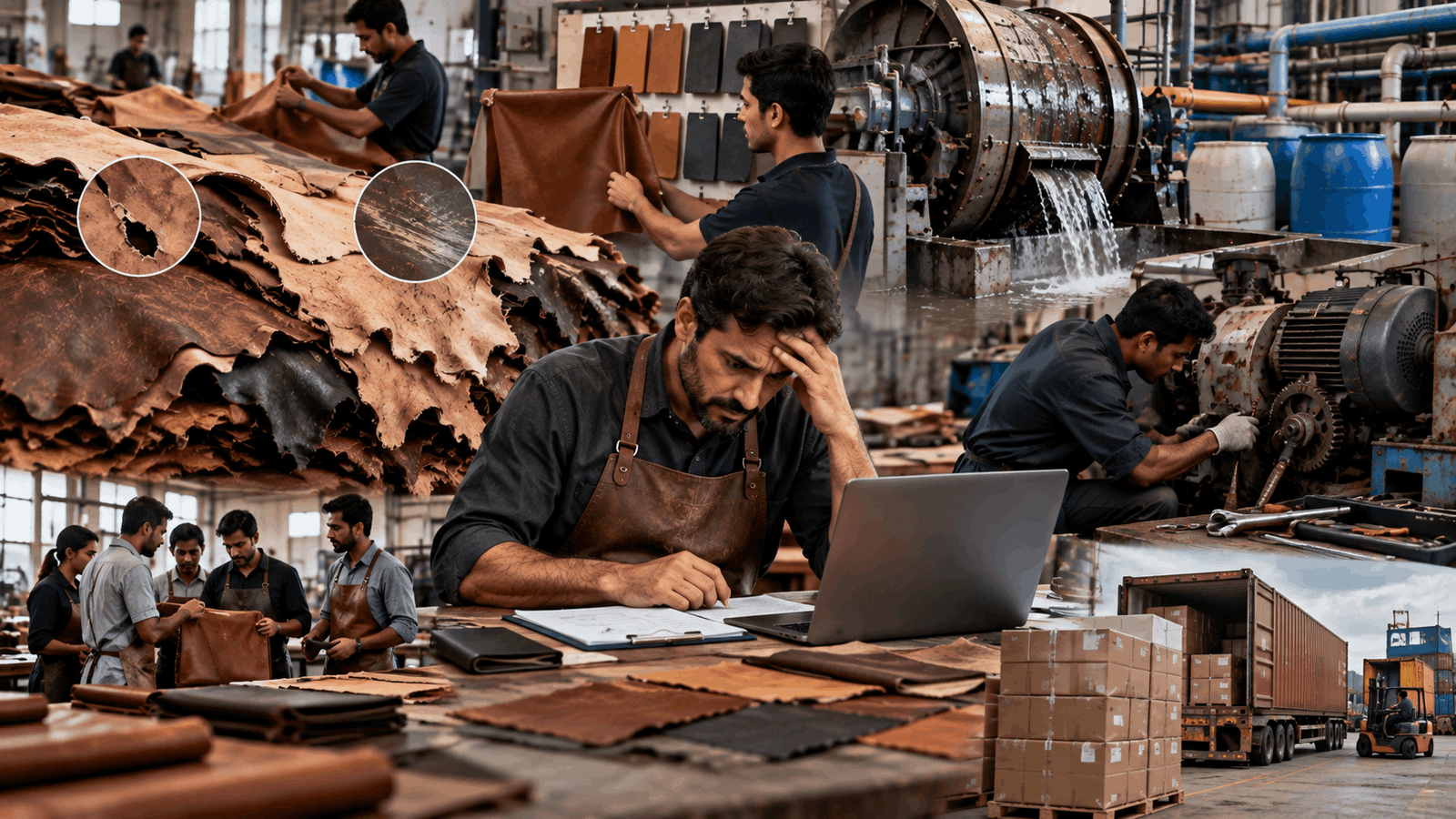
Common Manufacturing Challenges in Leather Production

Leather manufacturing is a multi-stage process that starts with raw hides and ends with finished leather for products such as...
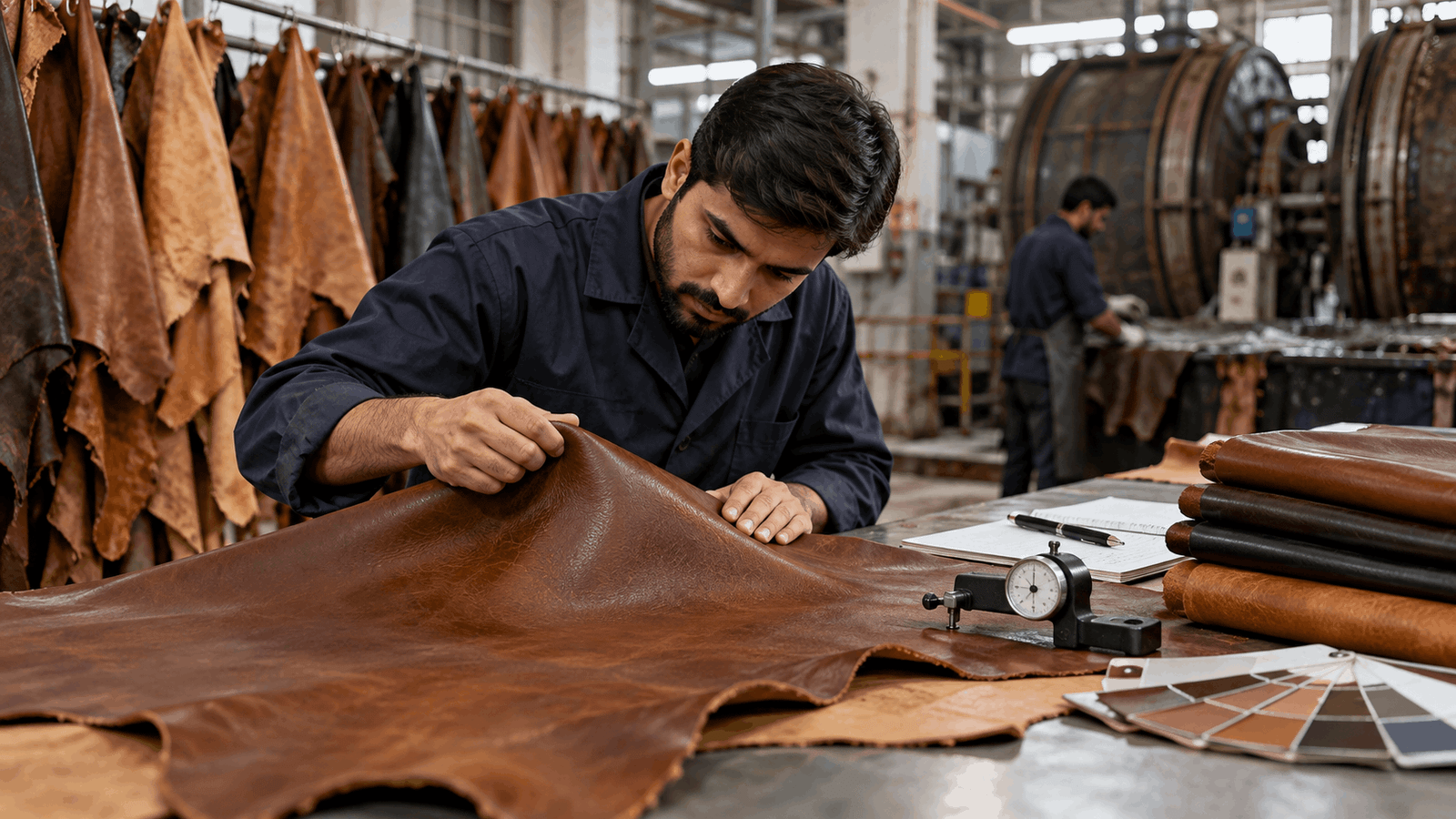
Quality Control in Leather Manufacturing: Standards, Processes & Best Practices
Quality control is a critical part of leather manufacturing because it ensures that leather meets defined requirements for ap...

Best Leather Aprons for Chefs and Culinary Students
A quality leather apron is one of the most valuable pieces of gear for chefs, culinary students, grill masters, and kitchen p...
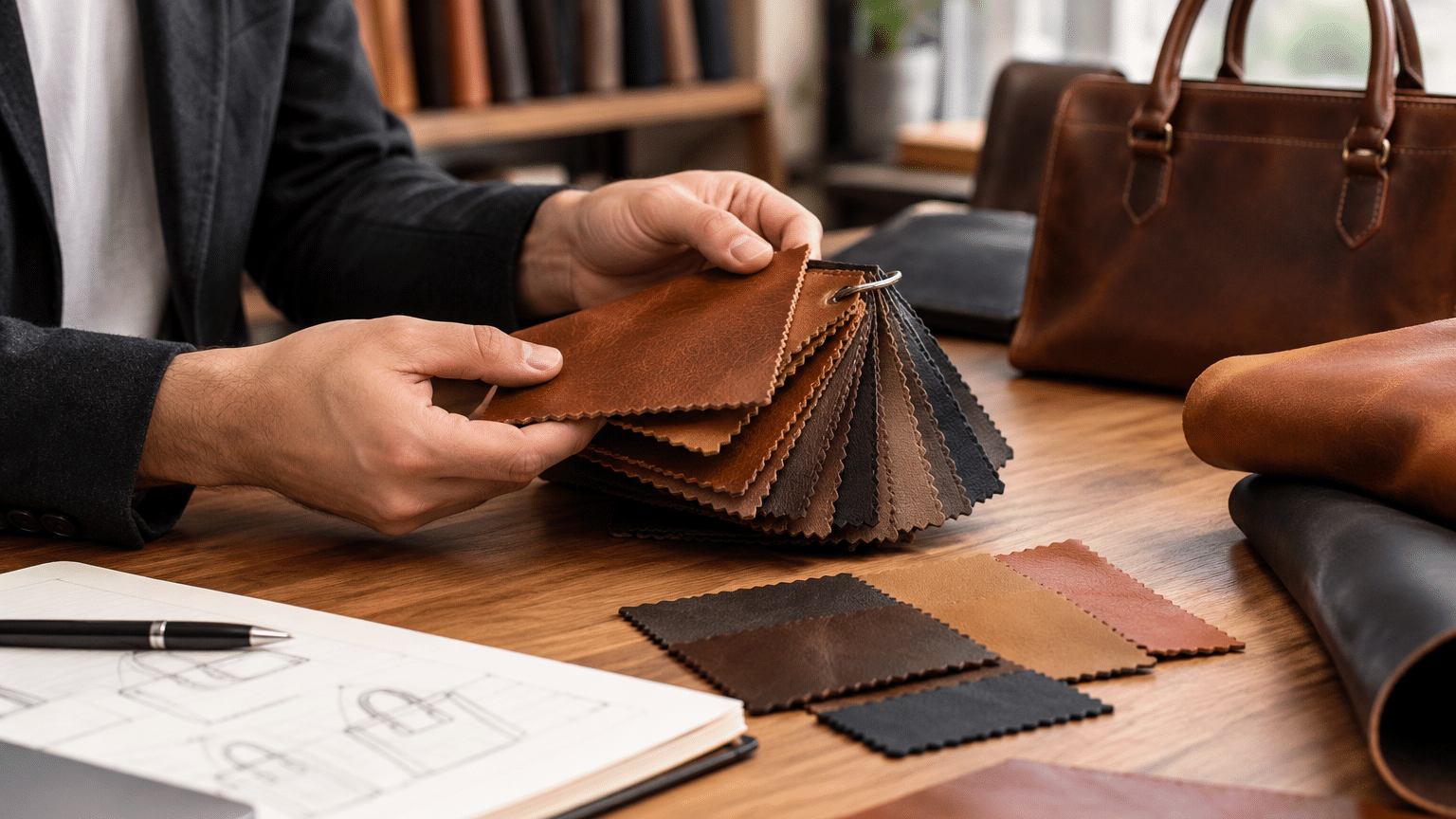
Why Leather Product Samples Matter Before Bulk Orders
Leather product samples allow buyers to verify material quality, construction, sizing, finishing, and overall specifications ...

How to Find Leather Buyers for Your Factory
Finding consistent buyers is essential for leather factories that want stable production volumes, predictable revenue, and lo...
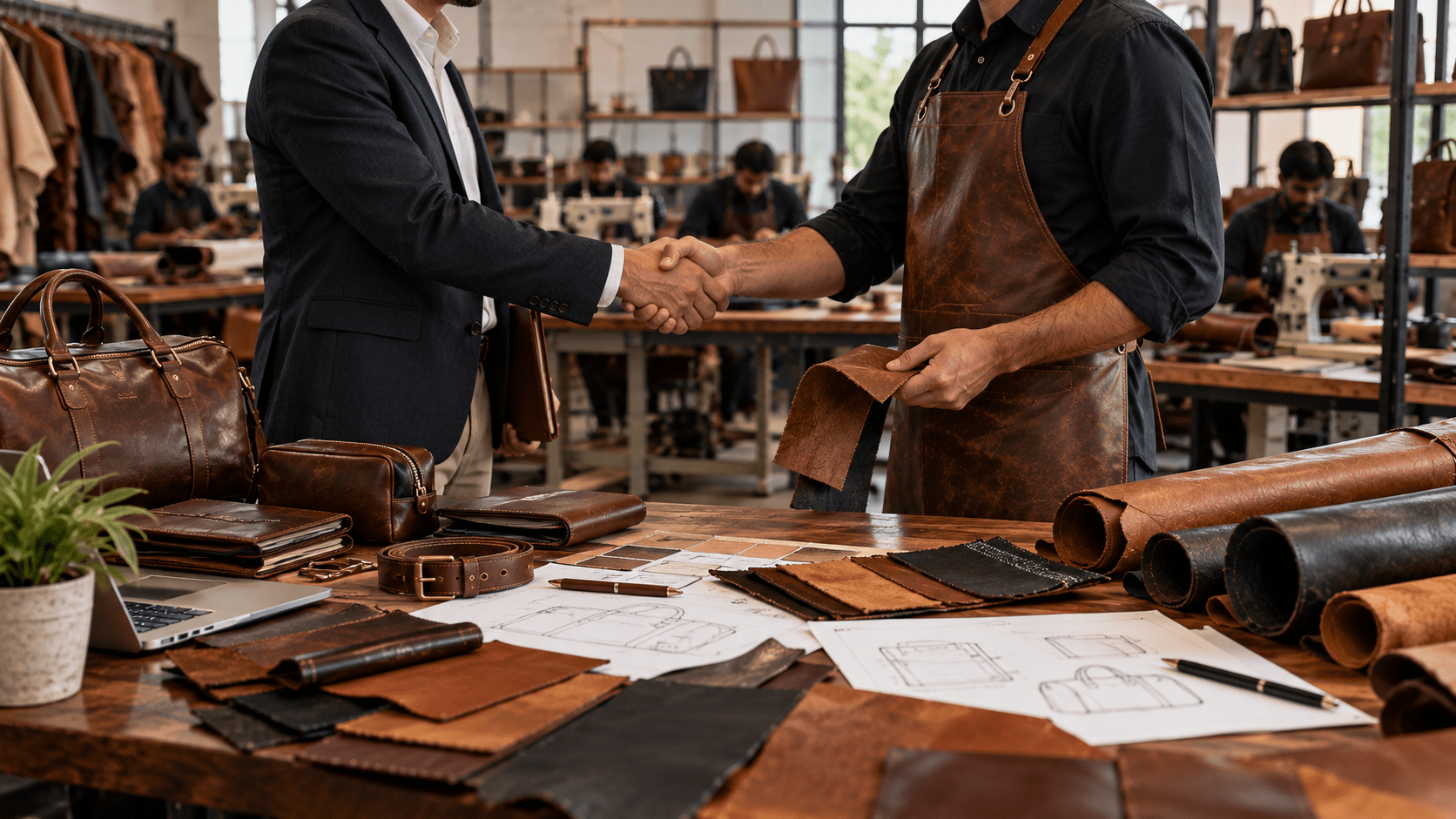
How to Choose the Right Leather Manufacturer for Your Brand
Choosing the right leather manufacturer can directly affect your product quality, production costs, consistency, and brand re...
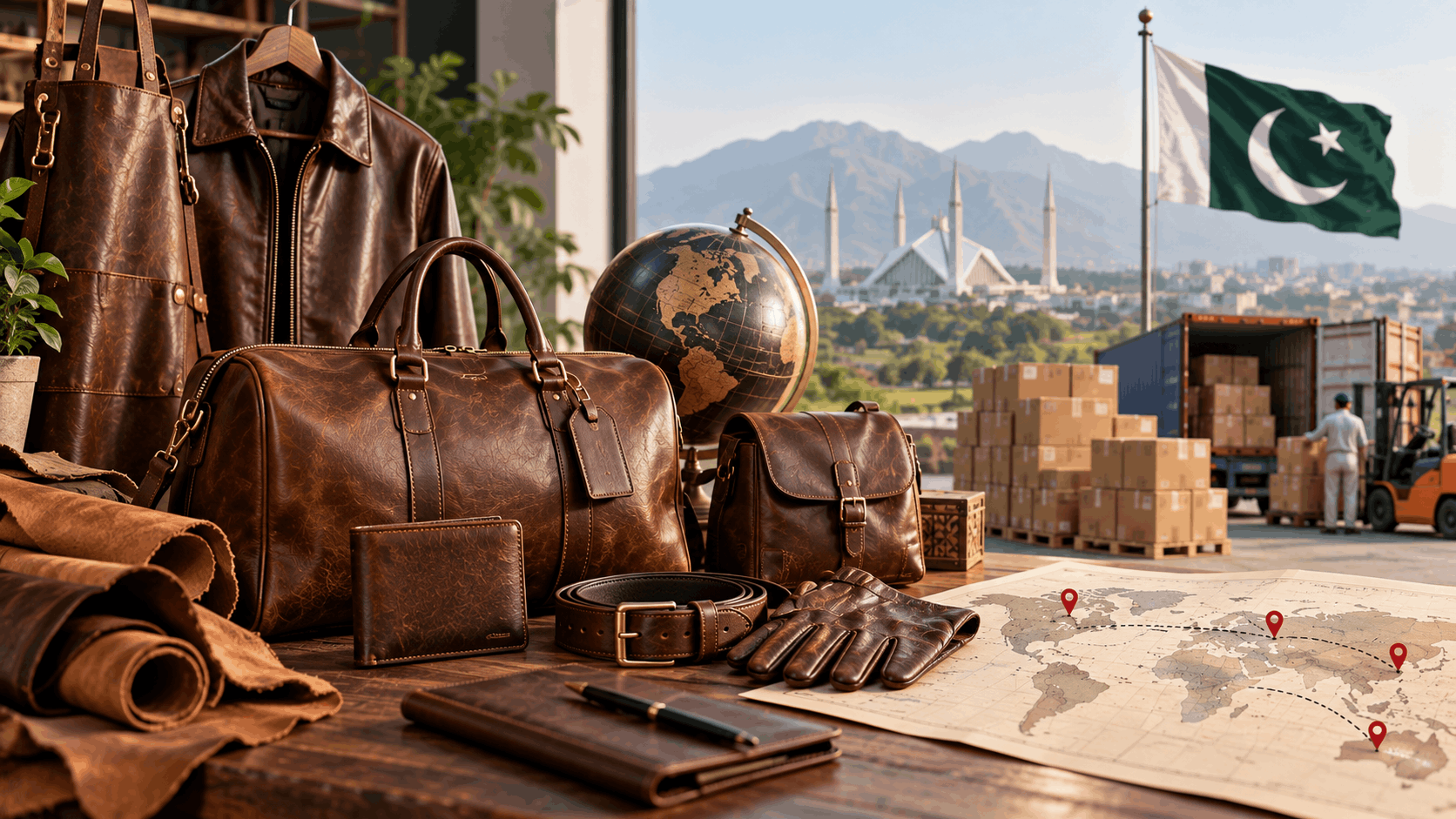
How to Import Leather Goods from Pakistan
Pakistan is an established manufacturing destination for leather goods, offering products ranging from jackets and bags to wa...
Leather MOQ Explained: Everything Buyers Need to Know
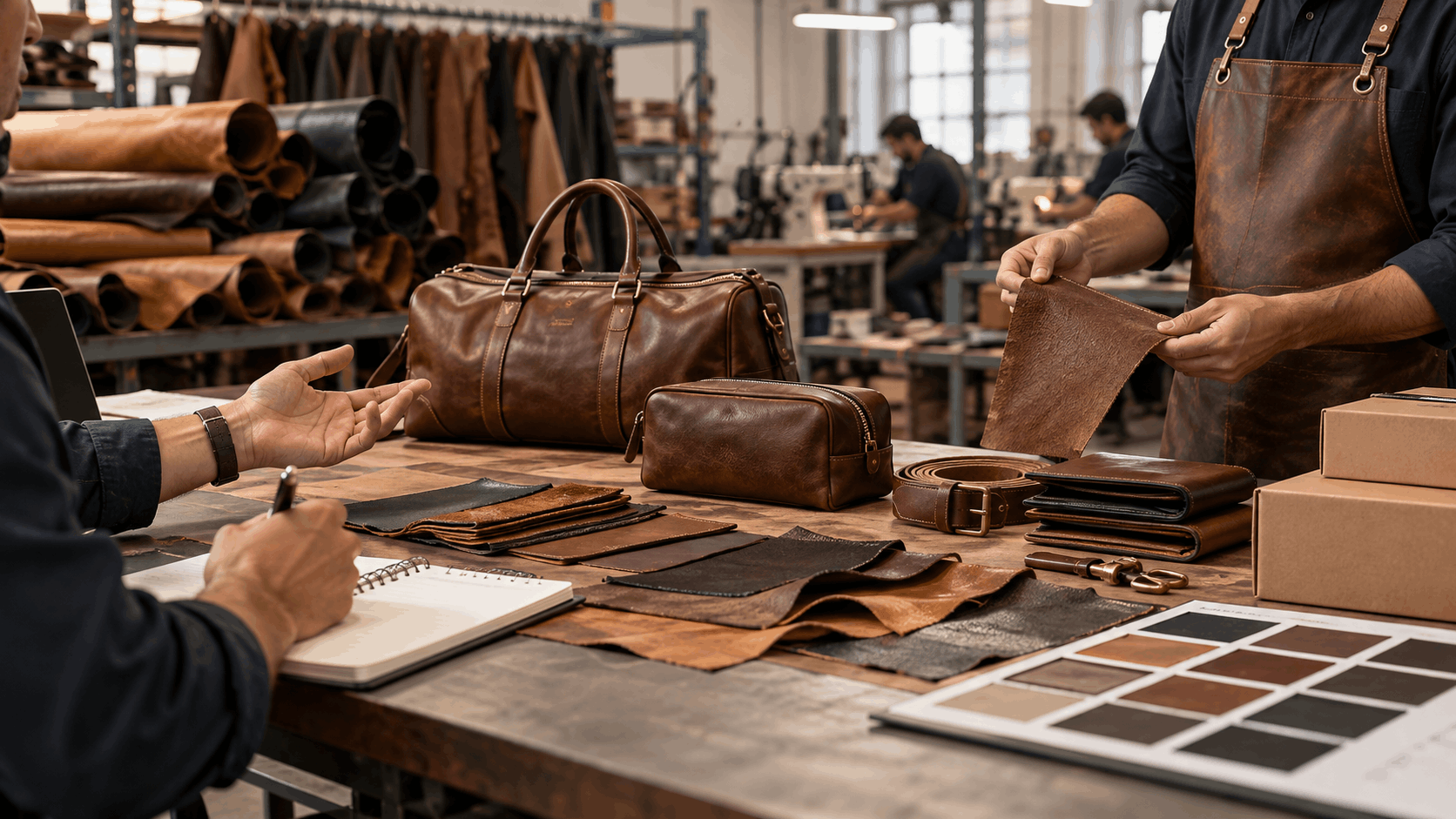
MOQ, or Minimum Order Quantity, is the smallest quantity of a leather product a manufacturer is willing to produce or sell in...
What Questions Should You Ask Before Hiring a Leather Manufacturer?
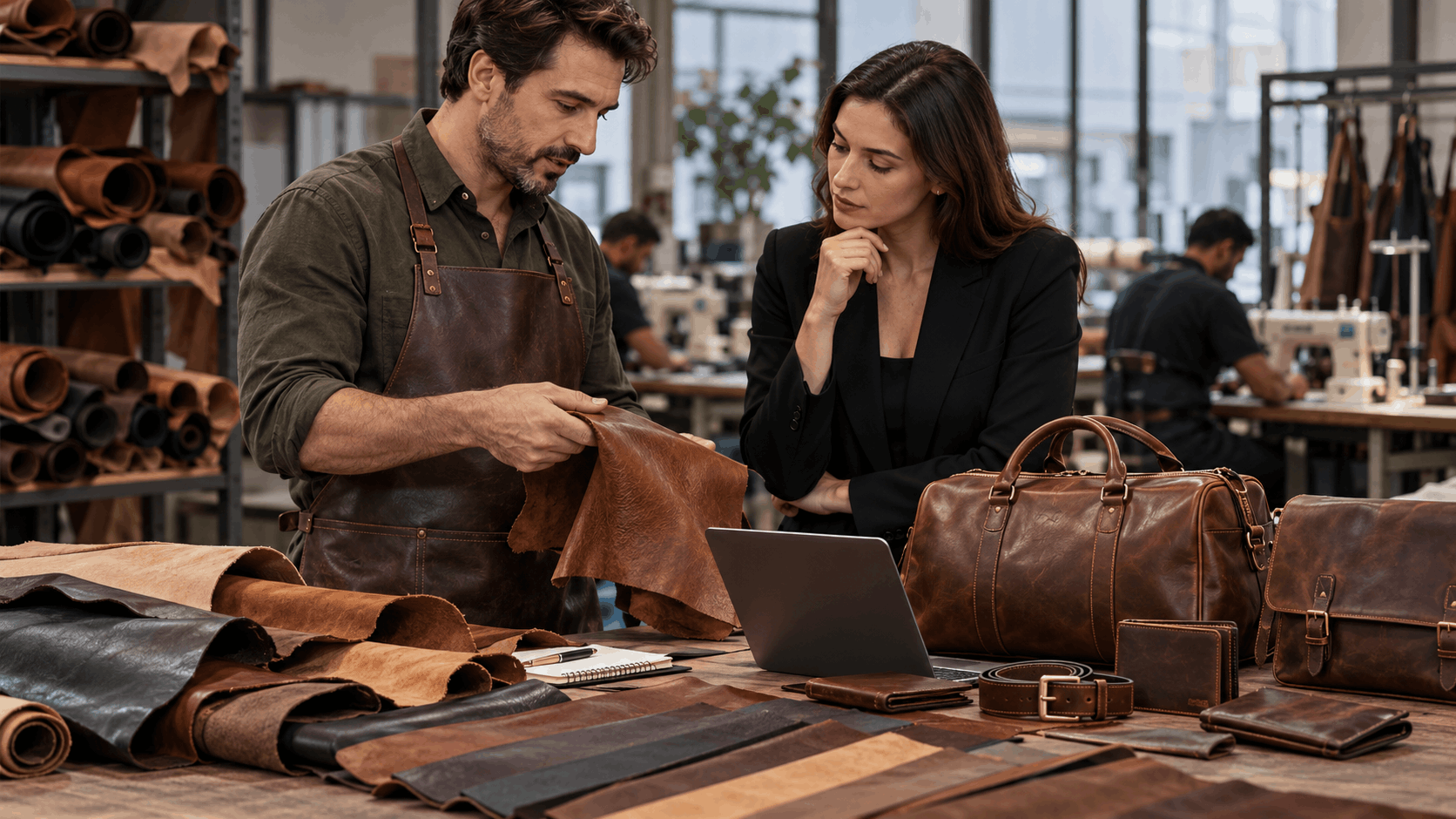
Choosing a leather manufacturer is about more than finding the lowest price. The quality of the leather, manufacturing capabi...
State of the Leather Industry 2026: Growth, Statistics & 2027–28 Outlook
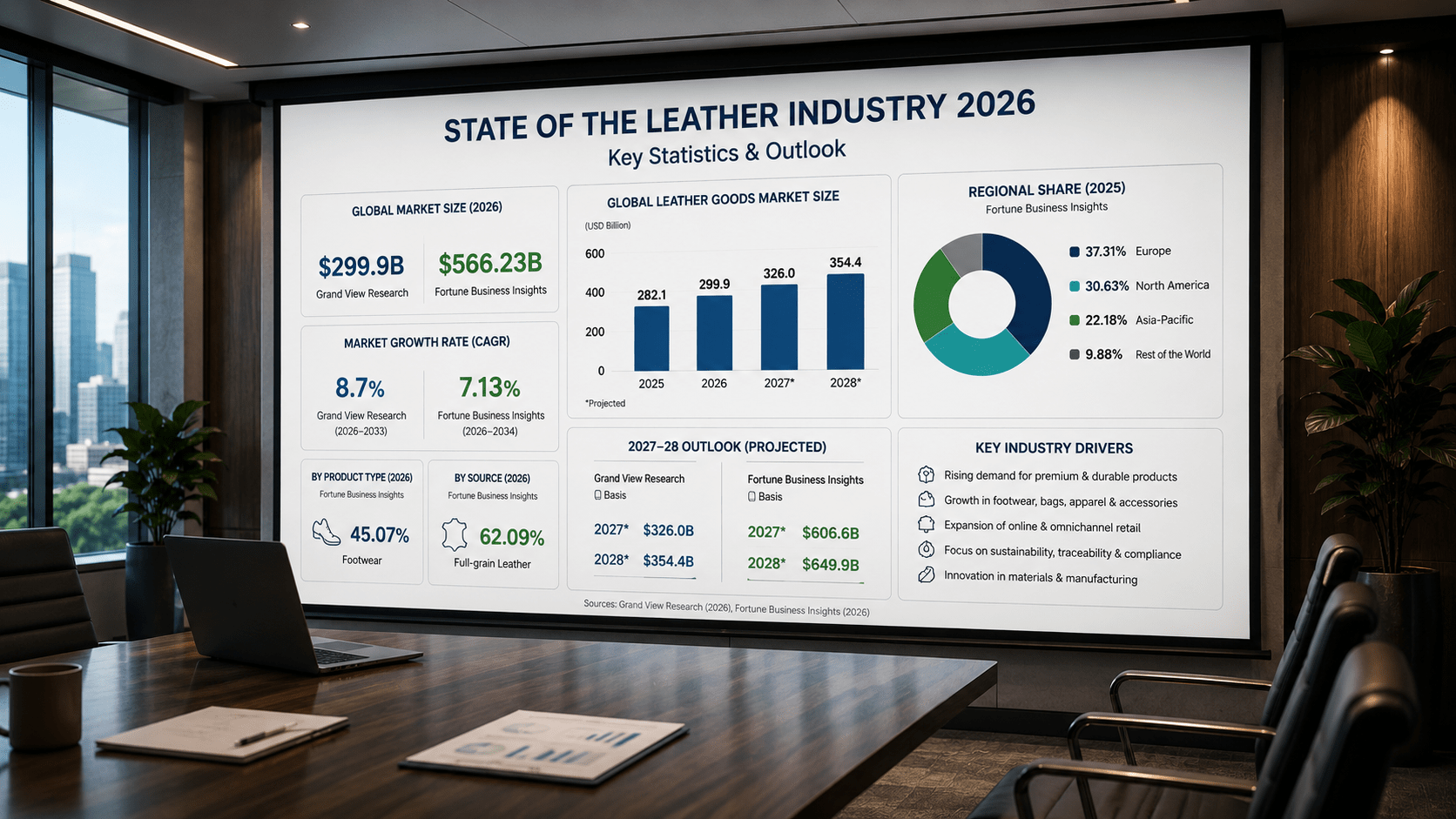
State of the Leather Industry analysis in 2026 shows a large, expanding global market, but the headline numbers vary consider...
Leather Industry Events 2026: Upcoming Trade Shows
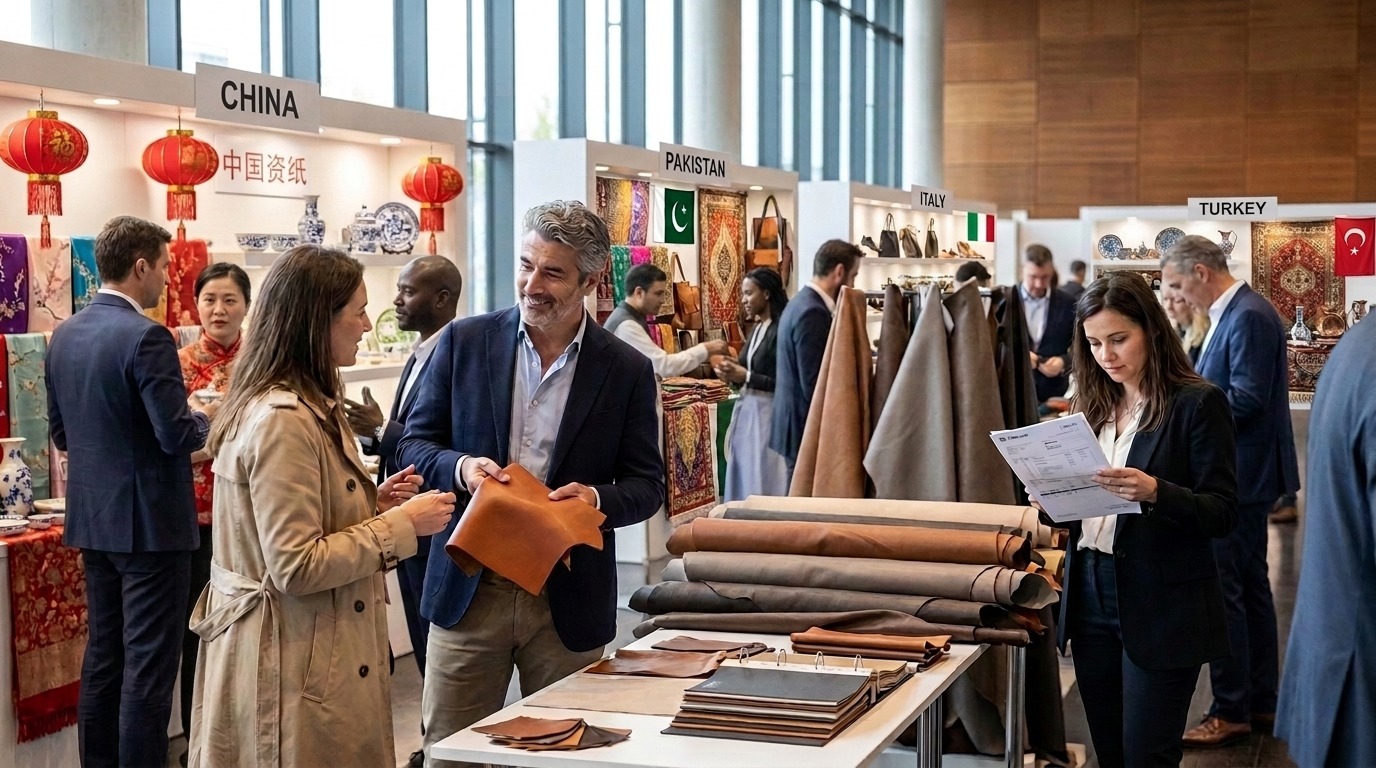
Leather Industry Events 2026 become especially important from September onward, with major exhibitions scheduled in China, It...

Global Leather Bags Trade Report: Imports, Exports & Top Markets
Global leather bags trade report data shows that international trade in leather handbags is concentrated among a relatively s...