




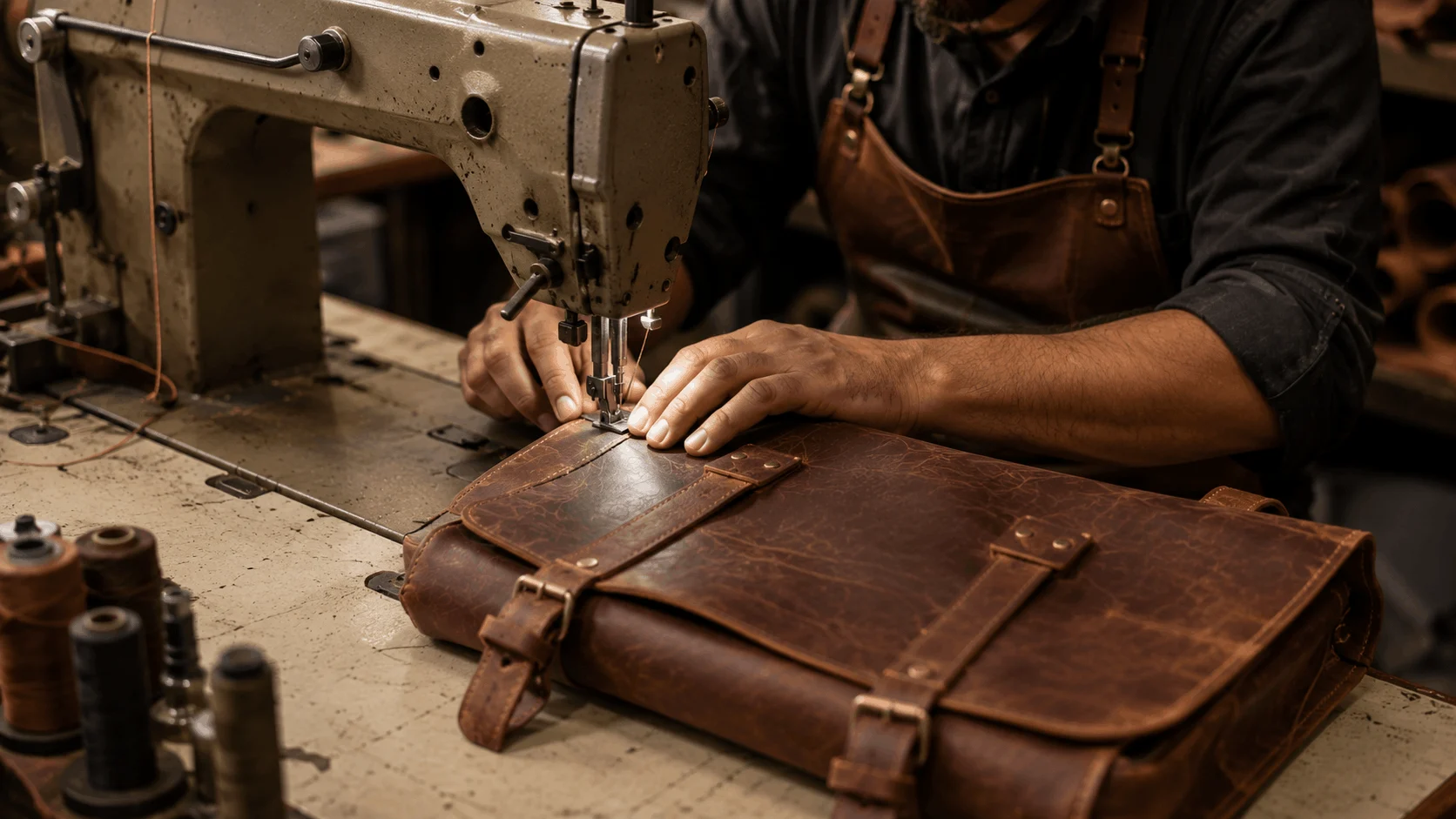
Leather bags have remained a popular choice for decades because they combine durability, functionality, and timeless style. Whether it’s a luxury handbag, business briefcase, travel duffle, backpack, or messenger bag, a well-made leather bag can last for many years when crafted with quality materials and skilled workmanship.
Behind every premium leather bag is a carefully planned manufacturing process. From selecting the right leather to final quality inspection, each stage plays a critical role in determining the bag’s appearance, strength, and longevity.
In this guide, you’ll learn how leather bags are made step by step, understand the manufacturing techniques used by professional leather manufacturers, and discover what separates a high-quality leather bag from an average one.
Step 1: Selecting the Right Leather
The manufacturing process begins with choosing the right leather. This decision influences the bag’s durability, appearance, texture, flexibility, and overall quality.
Manufacturers select leather based on the intended purpose of the bag. A travel duffle requires thicker, more durable leather, while a fashion handbag may prioritize softness and a refined finish.
Common leather types used for bags include:
- Full-grain leather
- Top-grain leather
- Genuine leather
- Suede leather
- Nubuck leather
Each leather type offers different characteristics in terms of strength, texture, maintenance, and price.
Before selecting leather for a project, it’s helpful to understand the different leather categories and their characteristics in our Detail Leather Guide, which explains how various leather types perform in real-world applications.
Step 2: Inspecting and Preparing the Leather
Before production begins, every leather hide is carefully inspected.
Manufacturers examine each hide for natural imperfections such as:
- Scars
- Insect bites
- Wrinkles
- Stretch marks
- Branding marks
- Uneven grain
These imperfections are evaluated to determine where different bag components should be cut.
The leather is then graded according to its quality, consistency, and usable surface area. Moisture levels are also checked because leather that is too dry or too moist can create problems during cutting and stitching.
Proper inspection ensures consistent production quality while minimizing material waste.
If you’re interested in how leather quality is classified, read our guide on Understanding Leather Grades.
Step 3: Designing the Leather Bag
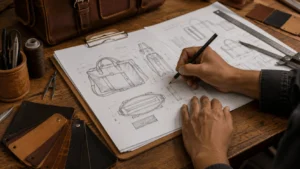
Every leather bag starts with a design concept.
Designers consider both aesthetics and functionality before creating technical drawings that specify dimensions, pocket placement, stitching lines, hardware locations, and construction methods.
The process typically includes:
- Market research
- Product concept development
- CAD or technical drawings
- Pattern development
- Prototype creation
- Sample testing
Several prototypes may be produced before final approval to ensure the design meets durability, usability, and production standards.
Pattern accuracy is especially important because even small measurement errors can affect assembly and fit.
Step 4: Cutting the Leather
Once patterns are finalized, manufacturers cut each leather component.
The cutting method depends on production volume and product complexity.
Manual Cutting
Skilled craftsmen use knives to cut leather by hand. This method offers excellent control and is commonly used for custom-made and luxury leather bags.
Die Cutting
Steel dies are pressed into the leather to produce identical pieces quickly. This technique is widely used for medium-scale manufacturing.
Precision Cutting
Large manufacturers often use CNC or laser-guided cutting systems to maximize accuracy and reduce material waste.
Careful layout planning allows manufacturers to utilize each hide efficiently while avoiding defective areas.
Step 5: Skiving and Edge Preparation
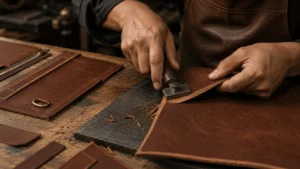
Not every leather piece can retain its original thickness.
Skiving is the process of thinning selected sections of leather, particularly around folds, seams, handles, and edges. This makes the material easier to stitch while reducing bulk.
Edge preparation includes:
- Trimming
- Leveling
- Beveling
- Preparing fold lines
Proper edge preparation improves both appearance and durability by ensuring clean assembly and stronger seams.
The required thickness varies depending on the product. Our Leather Thickness Guide explains how manufacturers choose appropriate leather thickness for different leather goods.
Step 6: Leather Finishing and Surface Treatment
Before the bag is assembled, or in some manufacturing processes after construction is complete, the leather undergoes various finishing treatments to improve its appearance, durability, and overall performance.
These processes enhance both appearance and performance.
Common finishing methods include:
- Dyeing for color consistency
- Protective coatings
- Water-resistant finishes
- Waxing
- Polishing
- Texture enhancement
Finishing also helps improve scratch resistance, UV protection, stain resistance, and overall durability.
Different products require different finishes depending on their intended use. Learn more in our guide to Leather Finishing Types, where we explain the most common leather finishing techniques used by manufacturers.
Step 7: Stitching and Assembly
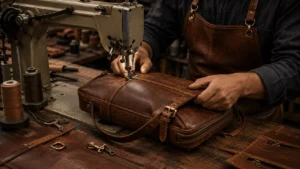
This is where the leather bag begins to take shape.
Individual panels are stitched together using industrial sewing machines or, for premium handcrafted bags, by experienced artisans.
During assembly, manufacturers install:
- Interior pockets
- Zipper compartments
- Linings
- Reinforcement panels
- Handles
- Shoulder straps
- Structural supports
Stress points receive additional reinforcement to improve long-term durability.
The quality of stitching has a significant impact on the strength and lifespan of the finished bag. Straight, evenly spaced stitches indicate careful craftsmanship.
If you’re interested in another leather manufacturing process, you may also enjoy our guide on How Leather Jackets Are Manufactured, which explains how leather garments are constructed using many similar production techniques.
Step 8: Installing Hardware
Once the main body is assembled, hardware components are added.
Depending on the bag design, manufacturers install:
- Zippers
- Buckles
- Rivets
- Magnetic closures
- Snaps
- D-rings
- Logo plates
- Decorative hardware
High-quality hardware is essential because these components experience constant use.
Manufacturers carefully test hardware alignment, attachment strength, and functionality before moving to final inspection.
Step 9: Quality Inspection
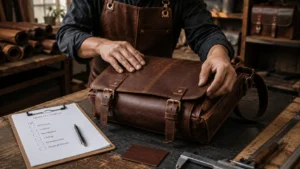
Quality control is one of the most important stages in leather bag manufacturing.
Every finished bag undergoes a detailed inspection to verify:
- Stitch consistency
- Leather quality
- Color uniformity
- Hardware installation
- Measurements
- Structural integrity
- Pocket functionality
- Handle strength
- Surface finish
Manufacturers also inspect for common production flaws such as loose stitching, uneven edges, scratched leather, misaligned hardware, poor glue application, and color inconsistencies.
Comprehensive inspections ensure customers receive products that meet quality standards.
For a deeper understanding of manufacturing issues, read our guide on Common Defects Found in Leather and Their Causes.
Step 10: Packaging and Shipping
Before shipment, each leather bag receives a final cleaning.
Dust, fingerprints, and minor surface marks are removed using specialized leather cleaning products.
The bag is then packaged using protective materials such as:
- Dust bags
- Tissue paper
- Foam inserts
- Protective sleeves
- Cartons
For international shipments, manufacturers also prepare export documentation, product labeling, and shipping cartons designed to protect the bags during transportation.
Proper packaging helps preserve the bag’s condition from the factory to the customer.
Handmade vs Machine-Made Leather Bags
Both handmade and machine-made leather bags have their advantages.
| Feature | Handmade | Machine-Made |
| Craftsmanship | High attention to detail | Highly standardized |
| Production Speed | Slower | Faster |
| Consistency | Slight natural variation | Uniform production |
| Cost | Higher | More affordable |
| Best For | Luxury, custom, artisan products | Large-scale retail production |
Handmade bags are often chosen for their individuality and craftsmanship, while machine-made bags offer consistent quality and greater affordability for mass-market production.
What Makes a High-Quality Leather Bag?
Not every leather bag is built to last.
Several factors distinguish premium leather bags from lower-quality alternatives.
Premium Leather
High-quality bags are typically made from full-grain or top-grain leather, which offers superior durability and develops an attractive patina over time.
Strong Stitching
Even stitching with reinforced stress points improves structural strength and prevents premature wear.
Quality Hardware
Reliable zippers, buckles, rivets, and clasps contribute significantly to long-term performance.
Durable Lining
Strong interior linings protect the bag’s contents while increasing overall durability.
Proper Leather Thickness
Manufacturers carefully select leather thickness based on the bag’s intended purpose, balancing strength, flexibility, and comfort.
Skilled Craftsmanship
Experienced artisans ensure every component is assembled accurately, resulting in better fit, finish, and longevity.
Attention to Detail
Small details—such as clean edge finishing, symmetrical construction, precise stitching, and careful inspection—often separate exceptional leather bags from ordinary ones.
FAQs
What leather is best for making bags?
Full-grain leather is generally considered the best option because it offers exceptional durability, develops a natural patina, and retains the strongest fibers of the hide.
How long does it take to make a leather bag?
Production time varies depending on the design and manufacturing method. Simple machine-made bags may take a few hours, while handcrafted premium leather bags can require several days.
Are leather bags handmade or machine-made?
Both methods are widely used. Luxury and custom leather bags are often handmade, while large-scale manufacturers rely on industrial machinery for consistent production.
Why are genuine leather bags more expensive?
The cost reflects the price of quality leather, skilled labor, premium hardware, detailed craftsmanship, and thorough quality control throughout the manufacturing process.
How do manufacturers ensure quality?
Manufacturers perform inspections at multiple stages, including leather selection, cutting, stitching, hardware installation, finishing, and final product testing to ensure consistent quality.
Conclusion
Making a high-quality leather bag involves far more than simply cutting and stitching pieces of leather together. Every stage of the manufacturing process, from selecting premium leather hides and preparing the material to cutting, stitching, installing hardware, finishing, inspecting, and packaging, plays an important role in determining the bag’s durability, functionality, and overall appearance.
Whether you’re buying a leather bag for personal use or sourcing products from a manufacturer, understanding how leather bags are made helps you recognize true quality beyond the surface. High-quality materials, skilled craftsmanship, precision manufacturing, and careful attention to detail work together to create leather bags that not only look exceptional but also provide reliable performance and develop character with years of use.
Custom Leather Goods Manufacturing: Complete OEM Guide

Custom leather goods manufacturing allows brands to develop leather products according to their own designs, specifications, ...
Common Manufacturing Challenges in Leather Production
Leather manufacturing is a multi-stage process that starts with raw hides and ends with finished leather for products such as...
Quality Control in Leather Manufacturing: Standards, Processes & Best Practices
Quality control is a critical part of leather manufacturing because it ensures that leather meets defined requirements for ap...
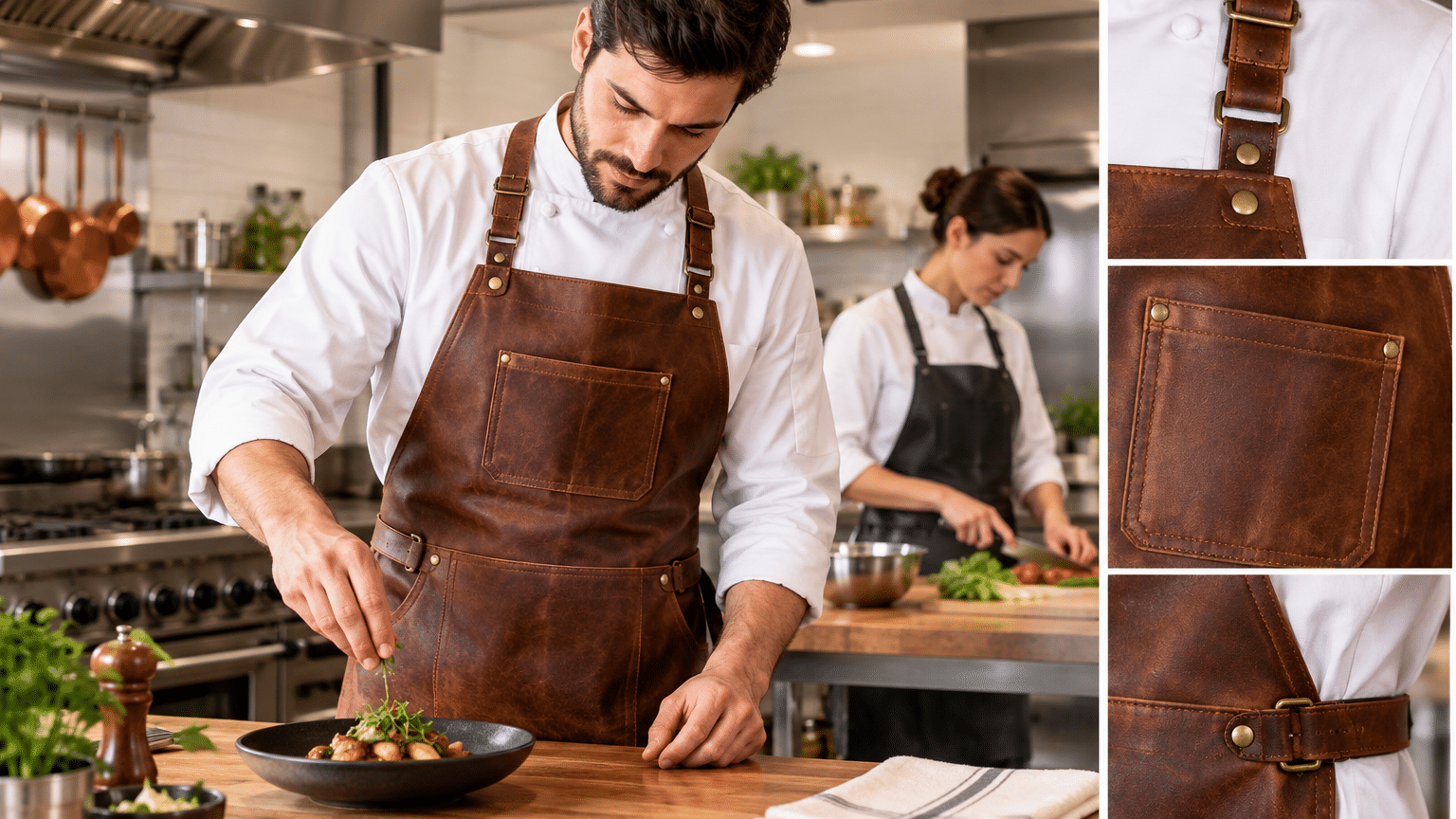
Best Leather Aprons for Chefs and Culinary Students
A quality leather apron is one of the most valuable pieces of gear for chefs, culinary students, grill masters, and kitchen p...
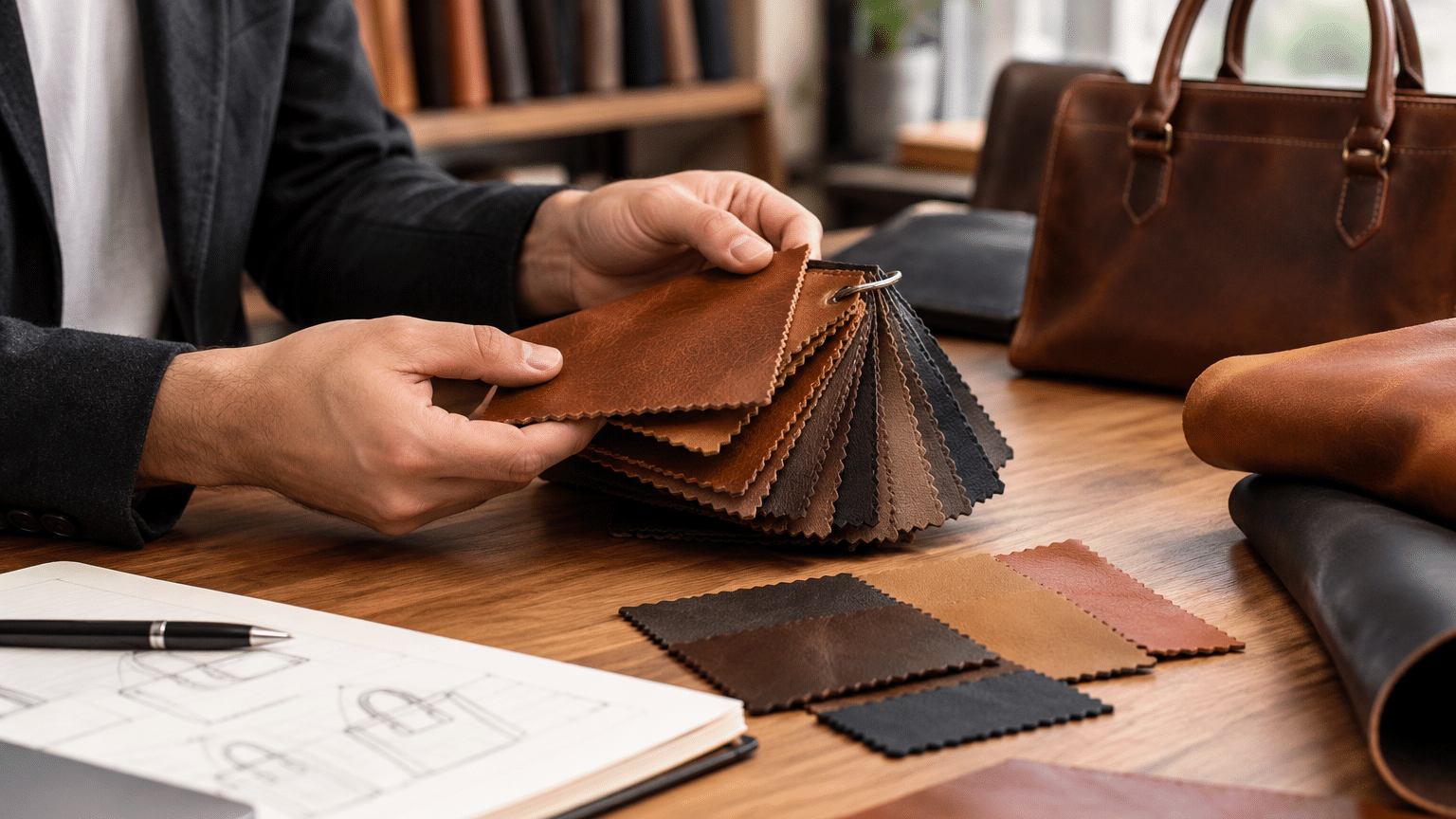
Why Leather Product Samples Matter Before Bulk Orders
Leather product samples allow buyers to verify material quality, construction, sizing, finishing, and overall specifications ...
How to Find Leather Buyers for Your Factory
Finding consistent buyers is essential for leather factories that want stable production volumes, predictable revenue, and lo...
How to Choose the Right Leather Manufacturer for Your Brand
Choosing the right leather manufacturer can directly affect your product quality, production costs, consistency, and brand re...
How to Import Leather Goods from Pakistan
Pakistan is an established manufacturing destination for leather goods, offering products ranging from jackets and bags to wa...
Leather MOQ Explained: Everything Buyers Need to Know
MOQ, or Minimum Order Quantity, is the smallest quantity of a leather product a manufacturer is willing to produce or sell in...
What Questions Should You Ask Before Hiring a Leather Manufacturer?
Choosing a leather manufacturer is about more than finding the lowest price. The quality of the leather, manufacturing capabi...
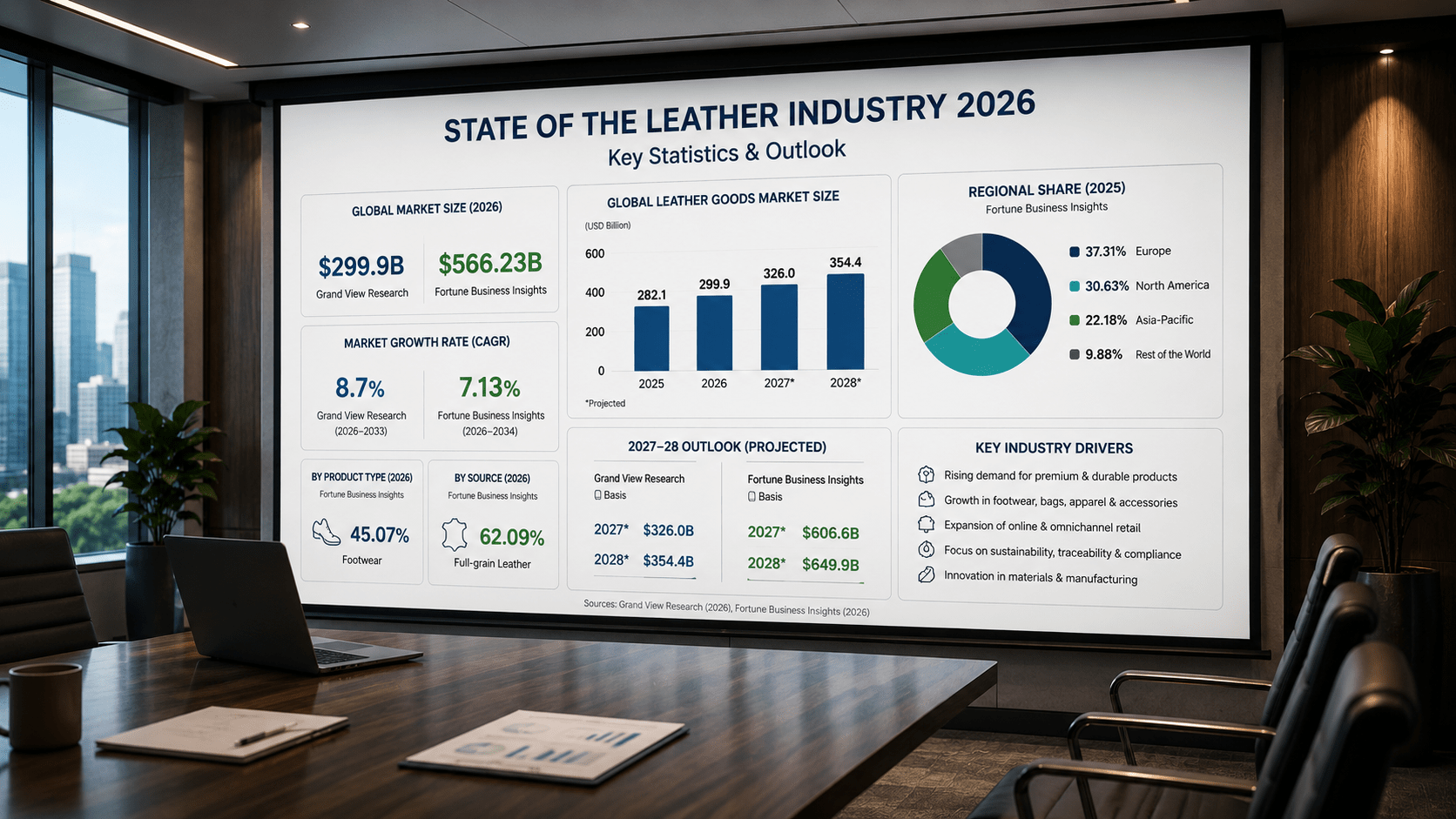
State of the Leather Industry 2026: Growth, Statistics & 2027–28 Outlook
State of the Leather Industry analysis in 2026 shows a large, expanding global market, but the headline numbers vary consider...
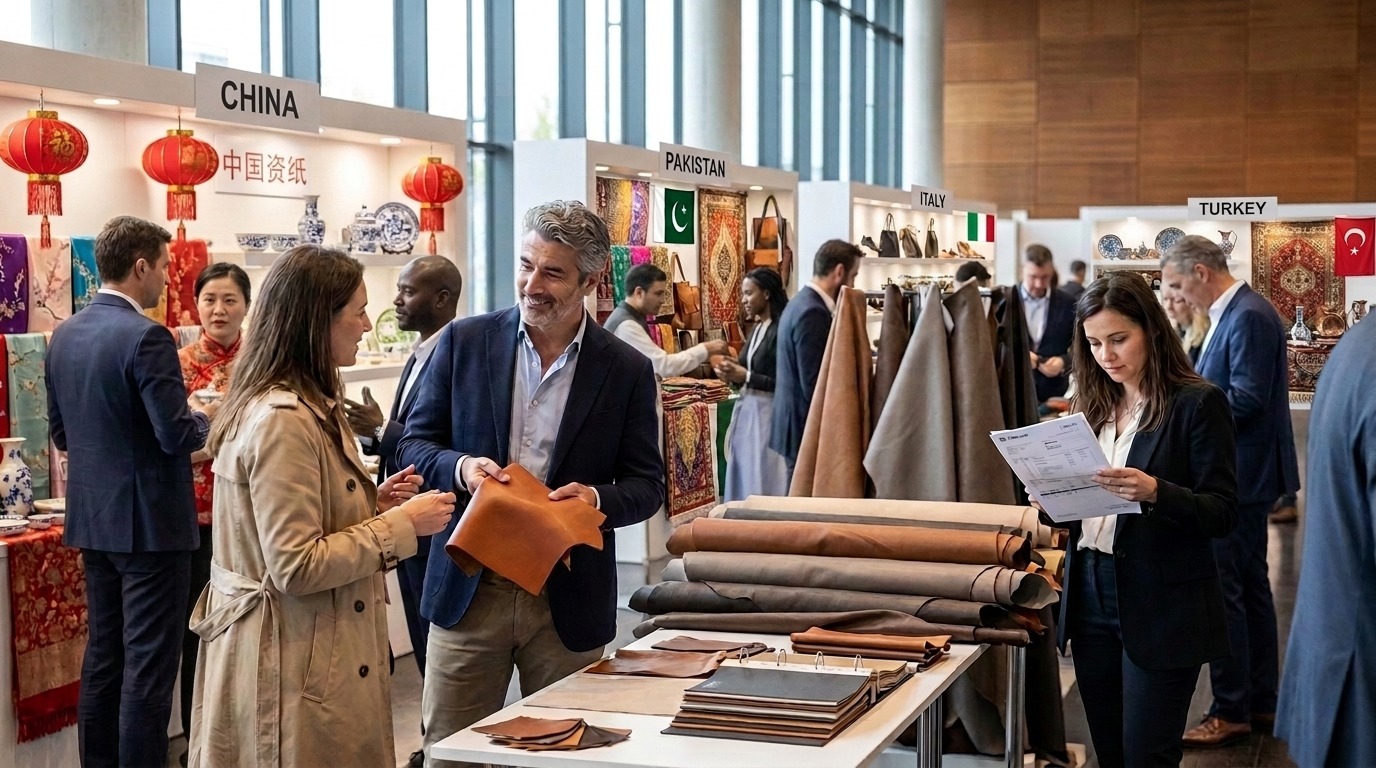
Leather Industry Events 2026: Upcoming Trade Shows
Leather Industry Events 2026 become especially important from September onward, with major exhibitions scheduled in China, It...