




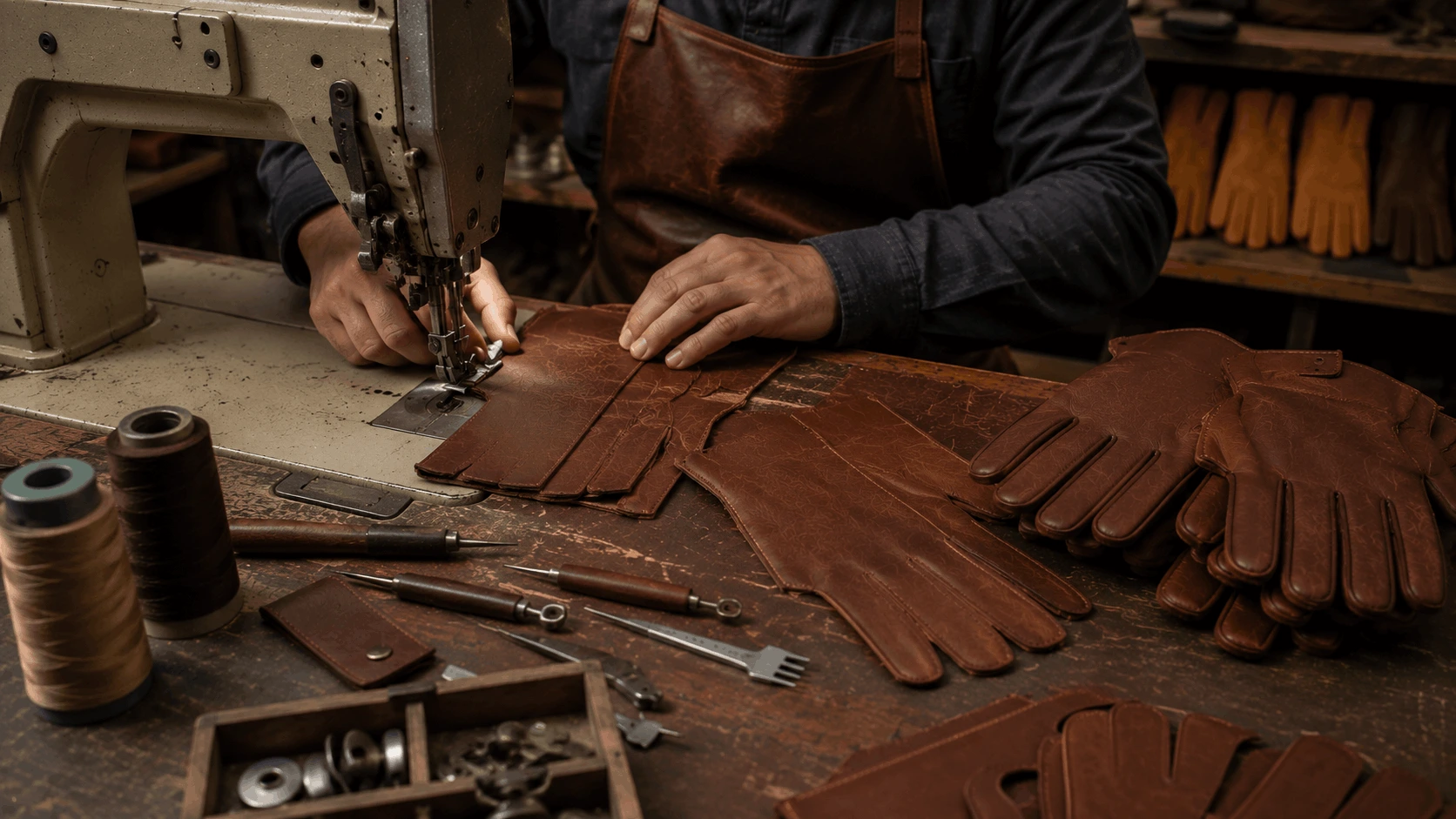
Leather gloves have long been valued for their durability, comfort, protection, and timeless appearance. Whether used for work, driving, motorcycle riding, winter wear, or fashion, high-quality leather gloves provide excellent grip, flexibility, and long-lasting performance when made from premium materials.
Behind every well-crafted pair of leather gloves is a detailed manufacturing process that combines skilled craftsmanship with precision production techniques. From selecting the right leather to final quality inspection, every stage contributes to the gloves’ fit, comfort, strength, and overall quality.
In this guide, you’ll learn how leather gloves are manufactured step by step, discover the techniques used by professional manufacturers, and understand what makes a premium pair of leather gloves stand out from ordinary alternatives.
Step 1: Selecting the Right Leather
The manufacturing process begins with selecting the most suitable leather for the intended glove application.
Different leather types offer varying levels of durability, softness, flexibility, and abrasion resistance. Manufacturers choose leather based on how the gloves will be used.
Common leathers used for glove manufacturing include:
- Cowhide
- Goatskin
- Sheepskin
- Deerskin
Cowhide is known for its durability and strength, making it ideal for work and industrial gloves. Goatskin offers excellent flexibility while maintaining durability, making it a popular choice for driving and utility gloves. Sheepskin provides exceptional softness and comfort, whereas deerskin combines flexibility with natural resistance to wear.
Selecting the appropriate leather ensures the finished gloves deliver the right balance of comfort, protection, and longevity.
To better understand the characteristics of different leathers, explore our guide on Leather Terminology, which explains the most common leather types and industry terms.
Step 2: Inspecting and Grading the Leather
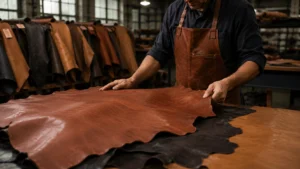
Before production begins, each leather hide undergoes a detailed inspection.
Manufacturers examine the surface for natural characteristics and imperfections such as:
- Scars
- Insect bites
- Wrinkles
- Stretch marks
- Uneven grain
- Branding marks
These areas are carefully evaluated so the highest-quality sections are used for visible glove components.
The leather is then graded according to its quality, grain consistency, thickness, and usable surface area. Only suitable portions of the hide are selected for cutting glove patterns.
This inspection process helps maintain consistent quality while minimizing production waste.
For a deeper understanding of leather classification, read our guide on Leather Quality, which explains how manufacturers evaluate leather before production.
Step 3: Conditioning and Preparing the Leather
After inspection, the leather is conditioned to prepare it for manufacturing.
Proper moisture levels are essential because leather that is too dry may crack during production, while excessive moisture can affect cutting accuracy and stitching quality.
Manufacturers prepare the leather by:
- Balancing moisture content
- Softening the material
- Relaxing leather fibers
- Ensuring flexibility throughout the hide
Conditioning helps create leather that is easier to cut, stitch, and shape while improving consistency throughout the production process.
Step 4: Designing and Pattern Making
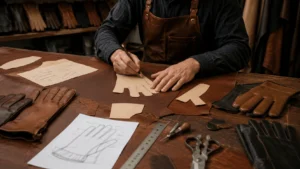
Every leather glove begins with an accurately developed pattern.
Designers consider the intended purpose of the gloves, ergonomic fit, finger movement, and overall comfort before creating production patterns.
The design process typically includes:
- Hand measurements
- Technical drawings
- Pattern creation
- Size grading
- Sample production
- Wear testing
Prototype gloves are tested and refined until the desired fit, flexibility, and performance are achieved.
Precise patterns ensure that every glove size fits consistently across production batches.
Step 5: Precision Leather Cutting
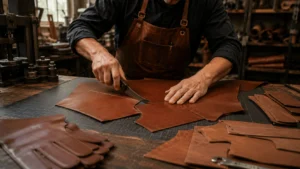
Once patterns are approved, the leather is cut into individual glove components.
Manufacturers use different cutting methods depending on production volume.
Manual Cutting
Experienced craftsmen hand-cut leather for custom or premium glove production, allowing maximum control over grain placement and hide utilization.
Die Cutting
Steel dies enable manufacturers to produce large quantities of identical glove components quickly and accurately.
To achieve a consistent appearance, manufacturers carefully align the grain direction before cutting. Proper layout planning also helps reduce material waste while maximizing usable leather.
Step 6: Skiving and Edge Preparation
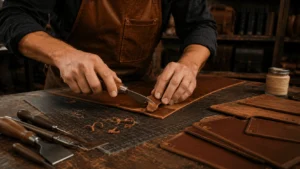
Leather used in gloves often requires skiving before assembly.
Skiving is the process of reducing leather thickness in selected areas, particularly around seams and finger joints. This minimizes bulk and improves flexibility without compromising durability.
Edge preparation includes trimming and smoothing leather pieces to create cleaner seams and improve overall comfort.
Choosing the correct leather thickness is equally important because overly thick leather can restrict hand movement, while leather that is too thin may wear out more quickly. Our Leather Thickness Guide explains how manufacturers select the ideal leather thickness for different leather products.
Step 7: Stitching and Assembly
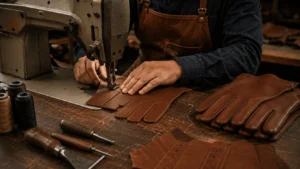
Once all leather components are prepared, the gloves move into the assembly stage.
Manufacturers carefully stitch together:
- Finger sections
- Palm panels
- Back panels
- Thumb components
- Wrist openings
Additional reinforcement stitching is added in high-stress areas to improve durability and extend the gloves’ lifespan.
Depending on the glove design, manufacturers may also install:
- Soft fabric linings
- Thermal insulation
- Waterproof membranes
- Elastic cuffs
Accurate stitching ensures the gloves maintain their shape while providing comfort and flexibility during use.
Many of the construction techniques used during glove production are similar to those found in How Leather Bags Are Made and How Leather Jackets Are Manufactured, although glove manufacturing requires much greater precision because of the small individual components.
Step 8: Leather Finishing and Treatment
Before final inspection, the leather undergoes finishing treatments that improve both appearance and performance.
Depending on the product requirements, manufacturers may apply:
- Dyeing
- Protective coatings
- Water-resistant treatments
- Surface finishing
- Polishing
These finishing processes help improve color consistency, enhance durability, reduce moisture absorption, and create the desired texture and appearance.
To learn more about these manufacturing techniques, read our guide on Leather Finishing Types.
Step 9: Quality Inspection
Every pair of leather gloves is carefully inspected before packaging.
Quality control teams evaluate:
- Stitch consistency
- Fit and sizing
- Leather quality
- Color uniformity
- Finger alignment
- Lining installation
- Overall workmanship
- Hardware, when applicable
Manufacturers also inspect for production issues such as loose stitching, uneven leather surfaces, poor finishing, sizing inconsistencies, and other Common Leather Defects that may affect durability or appearance.
Only gloves that meet quality standards proceed to packaging and shipment.
Step 10: Packaging and Shipping
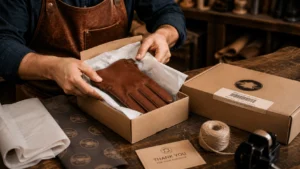
Before shipping, each pair of gloves is cleaned and inspected one final time.
Manufacturers ensure that matching left and right gloves are paired correctly before packaging.
The packaging process typically includes:
- Surface cleaning
- Pair matching
- Protective wrapping
- Individual packaging
- Bulk carton packing
- Export labeling
- Shipping preparation
Proper packaging protects the gloves during storage and transportation while preserving their appearance until they reach customers.
Handmade vs Machine-Made Leather Gloves
Both handmade and machine-made leather gloves have distinct advantages.
| Feature | Handmade | Machine-Made |
| Craftsmanship | Exceptional attention to detail | Highly standardized production |
| Production Speed | Slower | Faster |
| Precision | Skilled artisan finishing | Excellent production consistency |
| Cost | Higher | More affordable |
| Scalability | Limited production | High-volume manufacturing |
| Best Applications | Luxury, custom, premium gloves | Retail, industrial, and commercial production |
Handmade gloves often offer superior craftsmanship and individuality, while machine-made gloves provide consistent quality and efficient large-scale production.
What Makes High-Quality Leather Gloves?
Several factors determine whether leather gloves deliver long-term performance and comfort.
Premium Leather Selection
High-quality gloves begin with carefully selected leather that matches the intended application.
Proper Leather Thickness
The correct leather thickness provides the ideal balance between flexibility, durability, and comfort.
Strong Stitching
Even reinforced stitching prevents seam failure and improves durability.
Comfortable Fit
Well-designed patterns create gloves that fit naturally while allowing unrestricted hand movement.
Softness and Flexibility
Proper conditioning and finishing help the leather remain supple without sacrificing strength.
Quality Finishing
Professional finishing treatments improve appearance while protecting the leather against moisture and everyday wear.
Durability
Premium materials combined with skilled craftsmanship produce gloves capable of lasting for years with proper care.
FAQs
What type of leather is best for gloves?
Goatskin, deerskin, sheepskin, and cowhide are among the most commonly used leathers. The best choice depends on whether durability, softness, flexibility, or protection is the priority.
How long does it take to manufacture leather gloves?
Production time varies based on the design and manufacturing method. Machine-made gloves can be produced relatively quickly, while handcrafted premium gloves may require several days to complete.
Are leather gloves handmade?
Both handmade and machine-made leather gloves are widely available. Luxury and custom gloves are often handcrafted, while commercial production typically combines skilled labor with industrial machinery.
Why are leather gloves expensive?
Premium leather, skilled craftsmanship, precise stitching, quality finishing, and strict quality control all contribute to the overall cost of high-quality leather gloves.
How do manufacturers ensure quality?
Manufacturers perform inspections throughout the production process, including leather selection, cutting, stitching, finishing, sizing, and final quality checks before packaging.
Conclusion
Manufacturing high-quality leather gloves requires far more than simply cutting and stitching pieces of leather together. Every stage of the process, from selecting premium hides and conditioning the leather to precision cutting, stitching, finishing, inspection, and packaging, contributes to the gloves’ comfort, durability, fit, and overall performance.
Whether you’re purchasing leather gloves for work, riding, fashion, or everyday use, understanding how they are manufactured helps you recognize true quality beyond appearance alone. Premium materials, skilled craftsmanship, and strict quality control at every stage ensure leather gloves that provide lasting comfort, reliable protection, and years of dependable use.
Custom Leather Goods Manufacturing: Complete OEM Guide

Custom leather goods manufacturing allows brands to develop leather products according to their own designs, specifications, ...
Common Manufacturing Challenges in Leather Production
Leather manufacturing is a multi-stage process that starts with raw hides and ends with finished leather for products such as...
Quality Control in Leather Manufacturing: Standards, Processes & Best Practices
Quality control is a critical part of leather manufacturing because it ensures that leather meets defined requirements for ap...
Best Leather Aprons for Chefs and Culinary Students
A quality leather apron is one of the most valuable pieces of gear for chefs, culinary students, grill masters, and kitchen p...
Why Leather Product Samples Matter Before Bulk Orders
Leather product samples allow buyers to verify material quality, construction, sizing, finishing, and overall specifications ...

How to Find Leather Buyers for Your Factory
Finding consistent buyers is essential for leather factories that want stable production volumes, predictable revenue, and lo...
How to Choose the Right Leather Manufacturer for Your Brand
Choosing the right leather manufacturer can directly affect your product quality, production costs, consistency, and brand re...
How to Import Leather Goods from Pakistan
Pakistan is an established manufacturing destination for leather goods, offering products ranging from jackets and bags to wa...
Leather MOQ Explained: Everything Buyers Need to Know
MOQ, or Minimum Order Quantity, is the smallest quantity of a leather product a manufacturer is willing to produce or sell in...
What Questions Should You Ask Before Hiring a Leather Manufacturer?
Choosing a leather manufacturer is about more than finding the lowest price. The quality of the leather, manufacturing capabi...
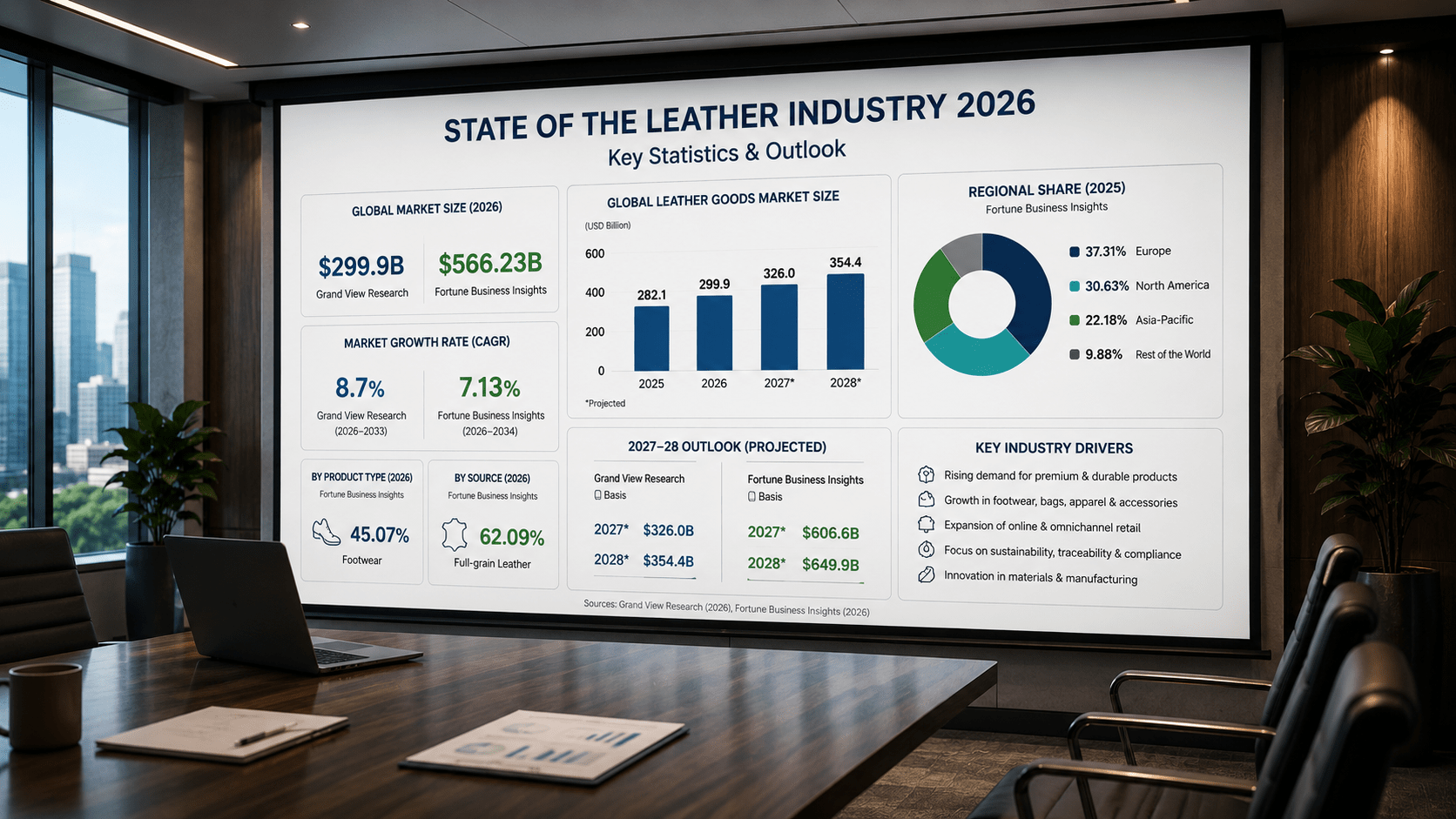
State of the Leather Industry 2026: Growth, Statistics & 2027–28 Outlook
State of the Leather Industry analysis in 2026 shows a large, expanding global market, but the headline numbers vary consider...
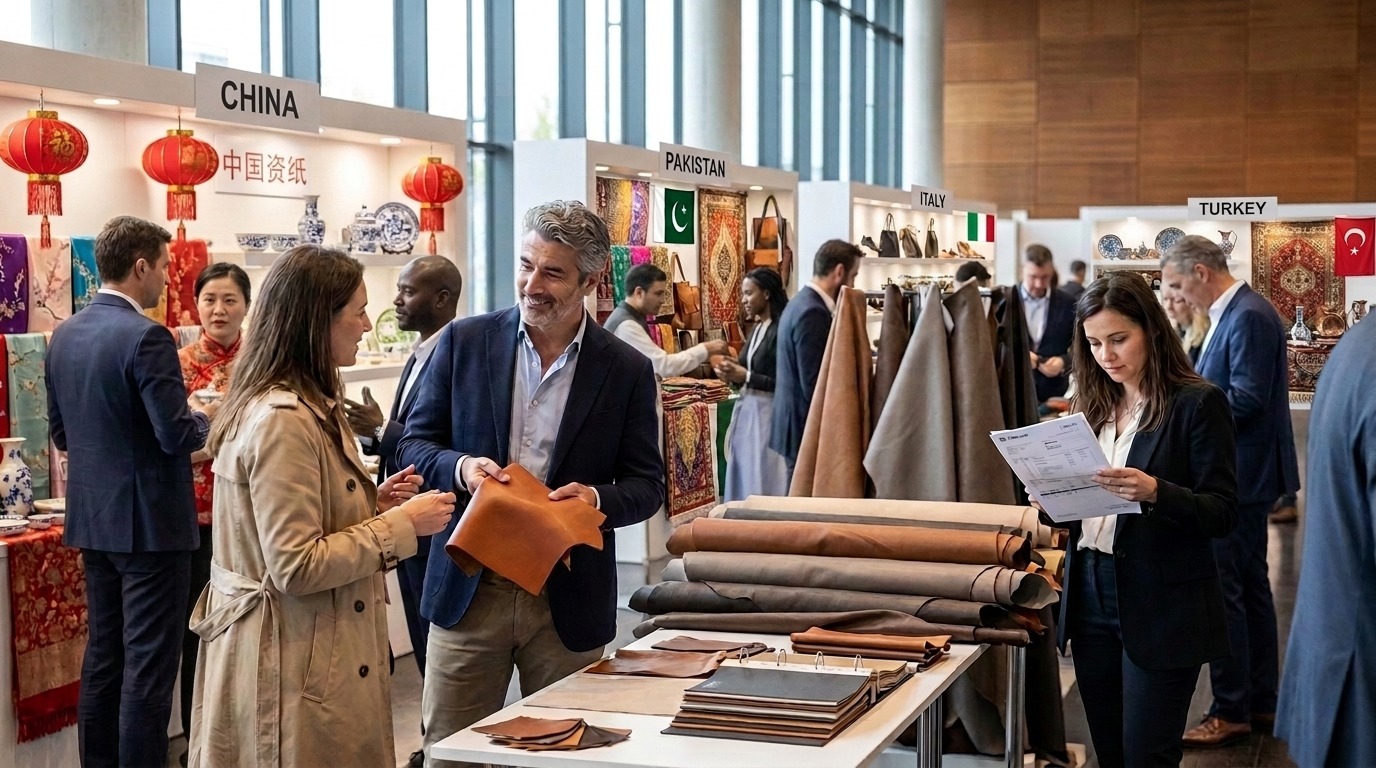
Leather Industry Events 2026: Upcoming Trade Shows
Leather Industry Events 2026 become especially important from September onward, with major exhibitions scheduled in China, It...