



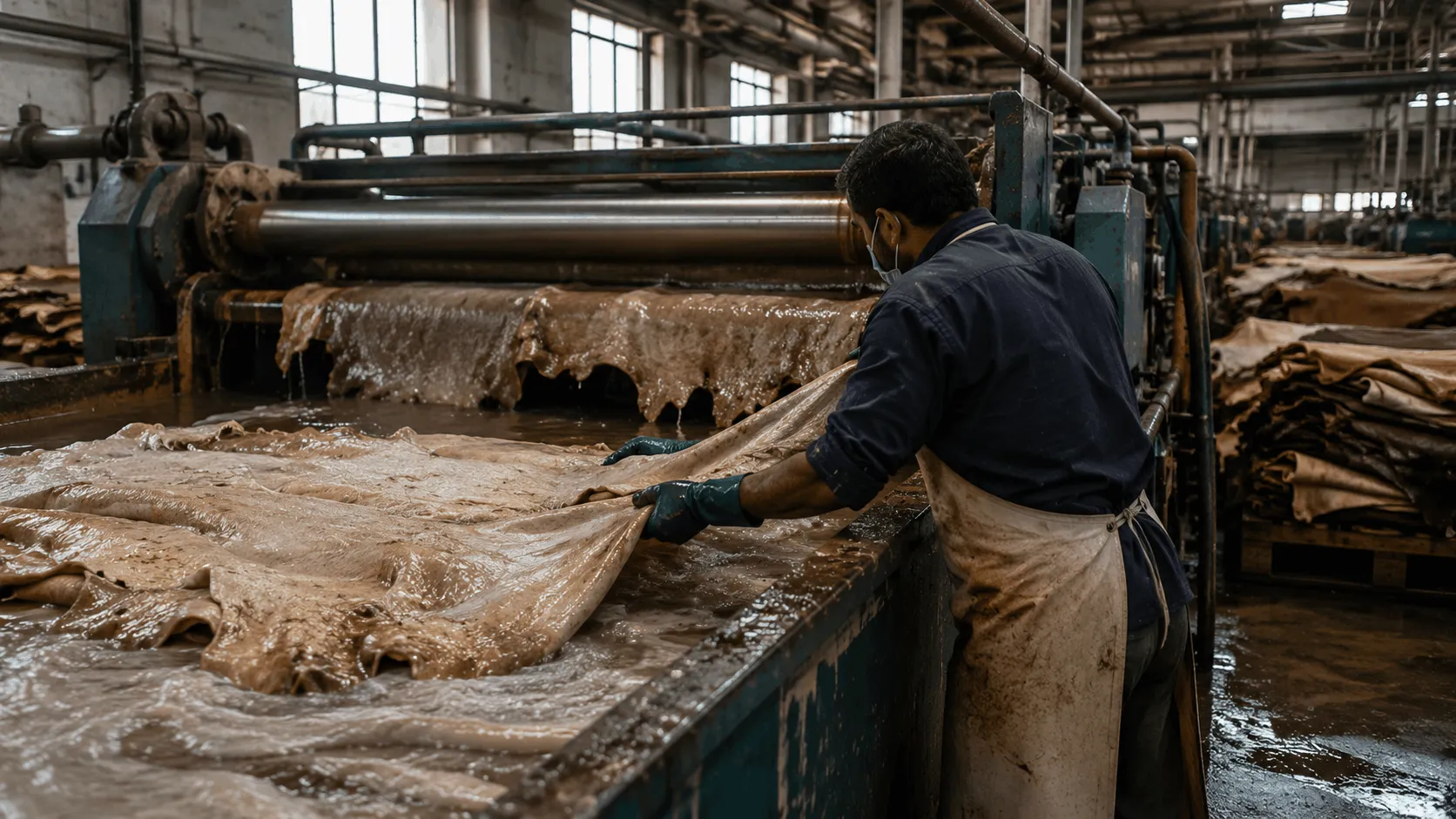
Leather is one of the oldest and most versatile materials used to manufacture jackets, bags, wallets, belts, footwear, furniture, and countless other products. While the finished product appears refined and durable, it begins as a raw animal hide that must pass through multiple processing stages before becoming usable leather.
Every step in the manufacturing process plays an important role in determining the leather’s strength, flexibility, appearance, and longevity. From preserving the raw hide to tanning, dyeing, and finishing, each stage contributes to the quality of the final product.
Whether you’re an importer, brand owner, sourcing agent, or simply interested in how leather products are made, understanding the manufacturing process can help you make more informed purchasing and sourcing decisions.
This guide explains how leather is made, step by step, from raw hide to finished leather ready for manufacturing.
What Is Leather?
Leather is a natural material produced by processing animal hides through a series of manufacturing steps designed to improve durability, flexibility, and resistance to decomposition.
The most common hides used in leather production include:
- Cowhide
- Buffalo hide
- Goat skin
- Sheep skin
- Calfskin
Raw animal hides cannot be used directly because they naturally decompose over time. Through tanning and other manufacturing processes, the hide becomes stable, durable, and suitable for producing high-quality leather goods.
If you’re unfamiliar with the different leather materials available, our Types of Leather Explained guide provides a detailed overview of the most common leather types used in manufacturing.
Step 1: Raw Hide Collection
Leather production begins immediately after the animal hide is removed.
The quality of the finished leather largely depends on the condition of the raw hide. Deep scars, insect bites, branding marks, and improper handling can affect the final appearance and performance of the leather.
Manufacturers inspect hides before processing to identify defects and determine the most suitable applications for each hide.
During this stage, they also sort hides based on factors such as:
- Size
- Thickness
- Surface quality
- Species
- Intended product use
Higher-quality hides are typically reserved for premium leather products, while lower-grade hides may be used for products with corrected finishes.
Step 2: Curing and Preservation
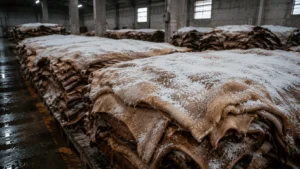
Fresh hides begin to deteriorate within hours if they are not properly preserved.
To prevent bacterial growth and decomposition, manufacturers cure the hides before transporting them to a tannery.
Common preservation methods include:
Salt Curing
Large quantities of salt are applied to remove moisture and slow bacterial activity. This is the most widely used preservation method.
Refrigeration
Some manufacturers temporarily store hides under controlled temperatures before processing.
Air Drying
In certain regions, hides are dried under controlled conditions to preserve them before tanning.
Proper curing helps maintain hide quality during transportation and storage.
Step 3: Soaking and Cleaning
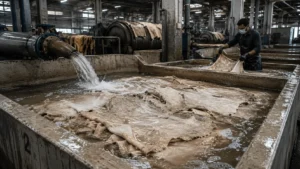
Once the hides arrive at the tannery, they are thoroughly soaked in water.
This process restores moisture lost during curing while removing:
- Dirt
- Blood
- Salt
- Dust
- Surface contaminants
Cleaning ensures that the hide is properly prepared for the next manufacturing stages and allows chemicals used later in the process to penetrate more evenly.
Step 4: Liming and Hair Removal
After cleaning, the hides are treated with a lime solution.
This stage loosens hair, removes unwanted proteins, and opens the fiber structure, making the hide easier to process.
Machines then remove the hair and remaining surface tissue.
Liming also prepares the leather for tanning by improving chemical penetration and creating a cleaner working surface.
Without this step, producing high-quality leather would be extremely difficult.
Step 5: Fleshing and Splitting
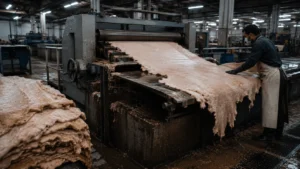
After hair removal, the underside of the hide still contains excess fat and connective tissue.
During fleshing, specialized machines remove these unwanted materials, leaving a clean and even hide.
The hide is then split into different layers depending on its intended use.
The upper grain layer is generally used for premium leather products, while lower layers are processed for other leather applications.
If you’d like to understand how these layers affect leather quality, read our guide on Understanding Leather Grades.
Step 6: Deliming and Bating
Following liming, the hide undergoes deliming to reduce its alkalinity.
Enzymes are then introduced during the bathing process to soften the fibers and improve flexibility.
Although this stage receives less attention than tanning, it has a significant impact on the finished leather’s softness, texture, and workability.
Proper deliming and bating help manufacturers produce leather that feels comfortable while maintaining structural strength.
Step 7: Pickling
Before tanning begins, the hide is treated with acids and salts in a process known as pickling.
The primary purpose of pickling is to lower the pH level of the hide, creating the ideal conditions for tanning agents to penetrate evenly.
Skipping or poorly performing this stage can reduce tanning effectiveness and negatively affect the leather’s durability.
Step 8: Tanning
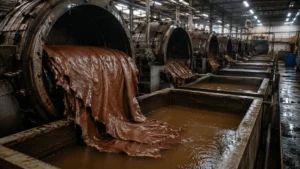
Tanning is the most important stage in leather manufacturing.
Without tanning, animal hides would eventually decay.
The tanning process stabilizes the collagen fibers inside the hide, transforming it into durable leather that resists moisture, bacteria, and decomposition.
The two most common tanning methods are chrome tanning and vegetable tanning.
Chrome Tanning
Chrome tanning uses chromium salts to produce soft, flexible leather in a relatively short period.
This method is widely used for manufacturing:
- Leather jackets
- Handbags
- Shoes
- Upholstery
- Fashion accessories
Chrome tanned leather is known for its consistent appearance, flexibility, and efficient production.
Vegetable Tanning
Vegetable tanning uses natural tannins extracted from tree bark and other plant materials.
Although the process takes much longer, it produces leather with a firm structure and a rich natural appearance.
Vegetable tanned leather is commonly used for:
- Belts
- Wallets
- Saddlery
- Watch straps
- Luxury leather goods
If you’re comparing these two methods in detail, our guide on Chrome vs Vegetable Tanned Leather explains their differences, advantages, and ideal applications.
Step 9: Dyeing and Fatliquoring
Once tanning is complete, manufacturers add color and improve the leather’s flexibility.
During dyeing, pigments penetrate the leather to achieve the desired shade.
After dyeing, oils and lubricants are added through a process called fatliquoring.
This step helps:
- Maintain softness
- Improve flexibility
- Prevent cracking
- Enhance durability
Proper fatliquoring ensures the leather remains comfortable and performs well throughout its lifespan.
Step 10: Drying and Conditioning
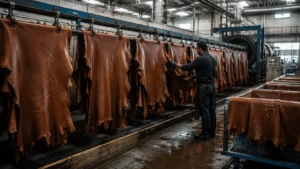
After dyeing and fatliquoring, the leather still contains moisture that must be carefully removed. Controlled drying helps maintain the leather’s shape, texture, and strength while preventing shrinkage or distortion.
Manufacturers use different drying techniques depending on the type of leather and the intended application.
Common drying methods include:
- Air drying
- Vacuum drying
- Toggle drying
- Hang drying
Once the leather reaches the desired moisture level, it is conditioned with oils and finishing treatments to improve softness and flexibility.
Proper drying and conditioning ensure the leather remains comfortable to work with and performs well in finished products.
Step 11: Finishing
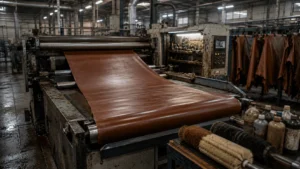
The finishing stage gives leather its final appearance and improves its performance.
Depending on the product requirements, manufacturers may apply various finishing techniques to achieve a specific look or feel.
Common finishing processes include:
Buffing
The surface is lightly polished to create a smoother finish and remove minor imperfections.
Embossing
A patterned texture is pressed onto the leather to create decorative designs or imitate exotic leather textures.
Protective Coating
A protective finish improves stain resistance, scratch resistance, and overall durability.
Surface Coloring
Additional pigments may be applied to achieve consistent color across large production runs.
The finishing process allows manufacturers to produce leather with different textures, colors, and performance characteristics for various industries.
Step 12: Quality Inspection
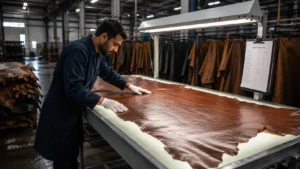
Before leather leaves the tannery, it undergoes a final quality inspection.
This stage ensures the material meets the required standards before being supplied to manufacturers.
Inspectors typically examine:
- Surface quality
- Grain consistency
- Leather thickness
- Color uniformity
- Softness and flexibility
- Visible defects
- Overall finish
Leather that passes inspection is graded and prepared for shipment.
Quality inspection helps manufacturers reduce production issues and maintain consistency across large orders.
From Leather to Finished Products
After inspection, the finished leather is supplied to manufacturers who transform it into a wide range of consumer and industrial products.
Common applications include:
- Leather jackets
- Handbags
- Wallets
- Belts
- Shoes
- Boots
- Gloves
- Travel bags
- Furniture upholstery
- Safety equipment
Each product requires different leather characteristics. For example, jackets often require soft and flexible leather, while belts benefit from firmer leather with greater structural strength.
Understanding these differences helps buyers select the right leather for their products.
If you’re comparing premium leather materials, our guide on Full Grain vs Top Grain Leather explains how these two popular leather types differ in durability, appearance, and applications.
Why the Manufacturing Process Matters
Leather quality is influenced by every stage of the manufacturing process, not just the tanning method.
Proper processing contributes to:
Durability
Careful tanning and finishing produce leather that withstands years of regular use.
Appearance
Consistent dyeing and finishing create attractive products with uniform color and texture.
Flexibility
Correct processing ensures leather remains soft and comfortable without compromising strength.
Product Lifespan
High manufacturing standards help extend the life of leather products and reduce the likelihood of cracking or premature wear.
Customer Satisfaction
Well-manufactured leather products perform better, require fewer repairs, and offer greater long-term value.
Common Myths About Leather Manufacturing
Myth 1: Leather Is Simply Dried Animal Skin
This is incorrect.
Leather undergoes multiple manufacturing stages, including curing, cleaning, tanning, dyeing, finishing, and quality inspection before becoming a durable material suitable for commercial use.
Myth 2: All Leather Is Made the Same Way
Different leather products are manufactured using different tanning methods, finishing techniques, and quality standards.
The manufacturing process varies depending on the intended application.
Myth 3: Faster Production Always Means Lower Quality
Not necessarily.
For example, chrome tanning is much faster than vegetable tanning, but both methods can produce high-quality leather when carried out correctly.
Myth 4: Leather Quality Depends Only on Tanning
Tanning is only one part of the process.
Hide quality, finishing, dyeing, conditioning, quality control, and craftsmanship all influence the performance of the finished leather.
If you’re unsure how leather classifications affect quality, our article on Genuine Leather vs Real Leather explains why product labels alone don’t always indicate quality.
Conclusion
Leather manufacturing is a carefully controlled process that transforms raw animal hides into durable, attractive, and versatile materials used in countless products around the world.
From hide selection and preservation to tanning, finishing, and quality inspection, every stage contributes to the leather’s appearance, strength, flexibility, and longevity.
For buyers, understanding how leather is made makes it easier to evaluate manufacturers, compare materials, and select products that meet specific quality and performance requirements. Rather than focusing on the finished product alone, it’s equally important to understand the manufacturing process behind it.
Whether you’re sourcing leather for private label production, OEM manufacturing, or your own brand, knowing how leather is produced is an important step toward making informed purchasing decisions.
Frequently Asked Questions
How is leather made?
Leather is made by processing raw animal hides through several stages, including curing, soaking, liming, tanning, dyeing, drying, finishing, and quality inspection.
What is the first step in leather manufacturing?
The first step is collecting and inspecting raw animal hides, followed by curing to prevent decomposition during storage and transportation.
Why is tanning necessary?
Tanning stabilizes the hide’s collagen fibers, preventing decomposition while improving durability, flexibility, and resistance to moisture.
What is the difference between chrome tanning and vegetable tanning?
Chrome tanning uses chromium salts to produce soft, flexible leather quickly, while vegetable tanning uses natural plant tannins to create firmer leather that develops a rich patina over time.
How long does leather manufacturing take?
The timeline depends on the tanning method. Chrome tanning can often be completed within a day, while vegetable tanning may take several weeks.
What animals are commonly used for leather?
The most common hides come from cattle, buffalo, goats, sheep, and calves.
How is leather dyed?
After tanning, leather is dyed using specialized pigments that penetrate the material, followed by oils that improve softness and flexibility.
How do manufacturers inspect leather quality?
Manufacturers inspect grain consistency, thickness, color, flexibility, surface defects, and overall finish before grading and shipping the leather.
What makes high-quality leather?
High-quality leather depends on several factors, including hide selection, tanning method, finishing process, quality control, and manufacturing standards.
Why is leather conditioning important?
Conditioning helps maintain flexibility, prevents drying and cracking, and extends the lifespan of leather products.
Pakistan Leather Industry Statistics 2026: Exports, Products & Trade

Pakistan leather industry statistics show that Pakistan exported $848.26 million in leather and leather products during FY202...
Top Leather Producing & Exporting Countries in 2026
The top leather producing & exporting countries are not necessarily the same. Production depends largely on the supply of...
Private Label Leather Jackets: Everything You Need to Know
Private label leather jackets are manufactured by a third-party factory and sold under your own brand name, labels, packaging...
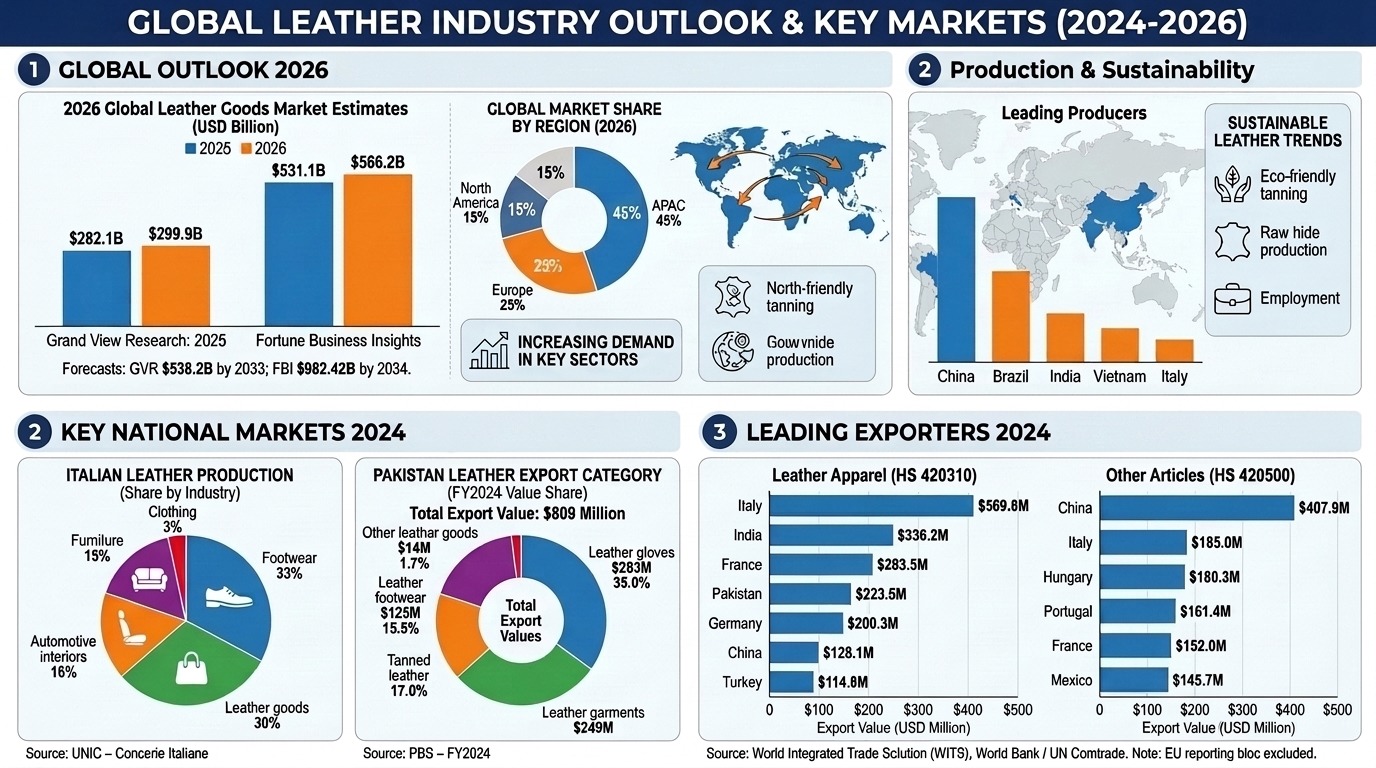
The Global Leather Industry in 2026: Market Size, Production, Trade & Statistics
The global leather industry in 2026 spans a much larger value chain than leather jackets, handbags, and footwear. It begins w...
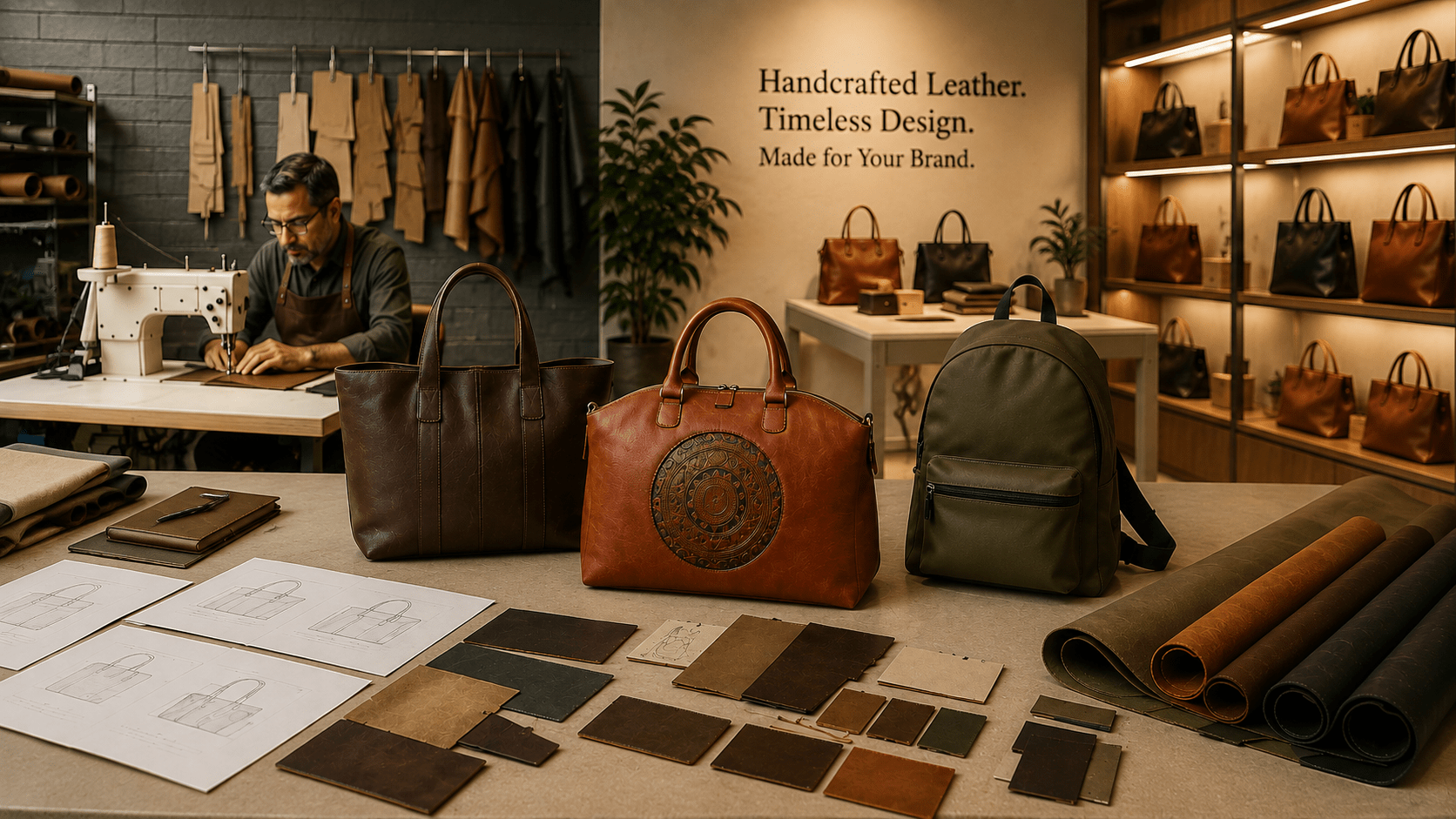
Private Label Leather Bags: Complete Guide for Brands
Private label leather bags allow you to sell professionally manufactured leather bags under your own brand without operating ...
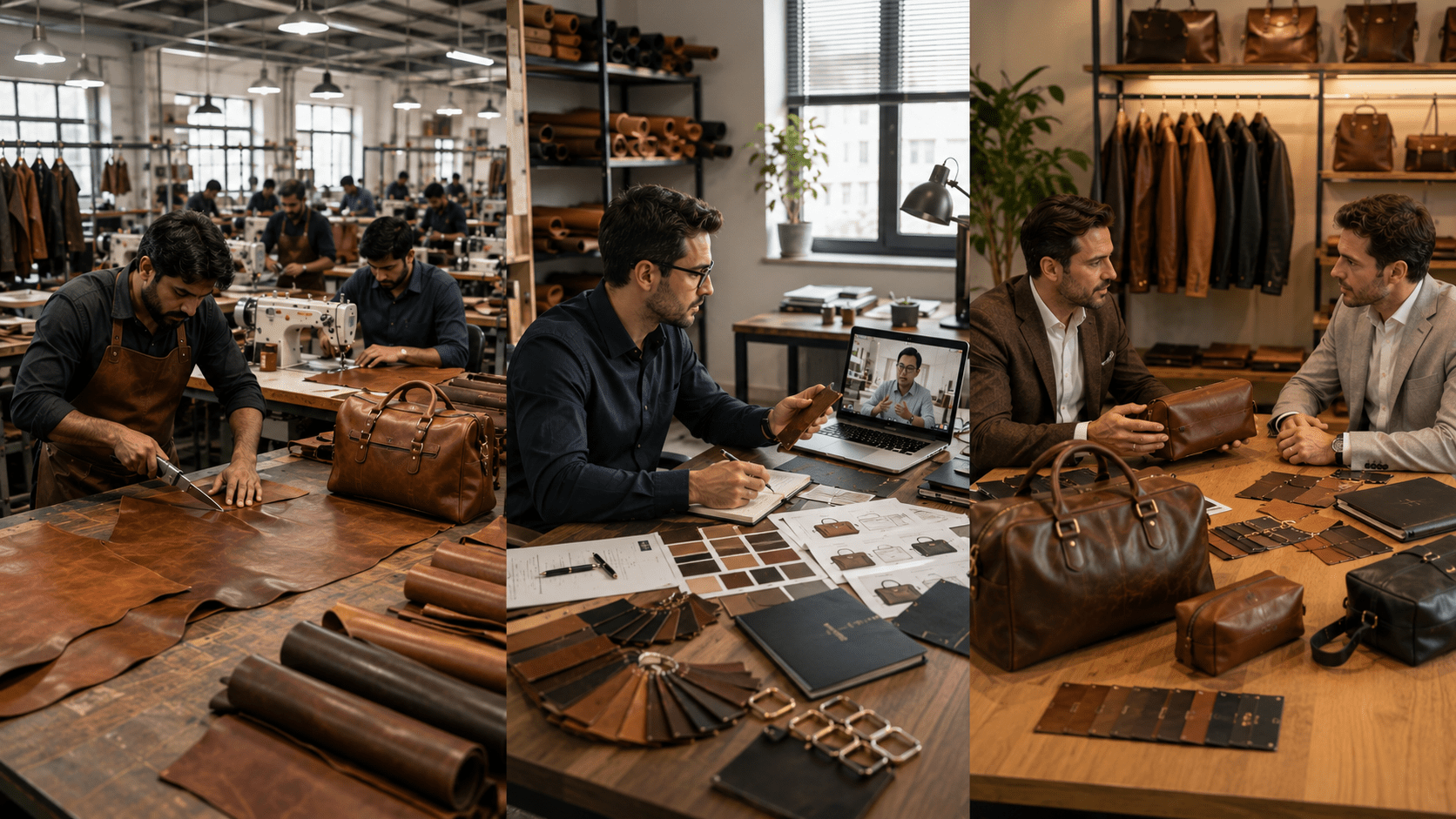
Leather Supplier vs Manufacturer vs Trader: 7 Key Differences Buyers Should Know
Leather supplier, manufacturer, and trader are terms you will frequently encounter when sourcing leather goods, but they don'...
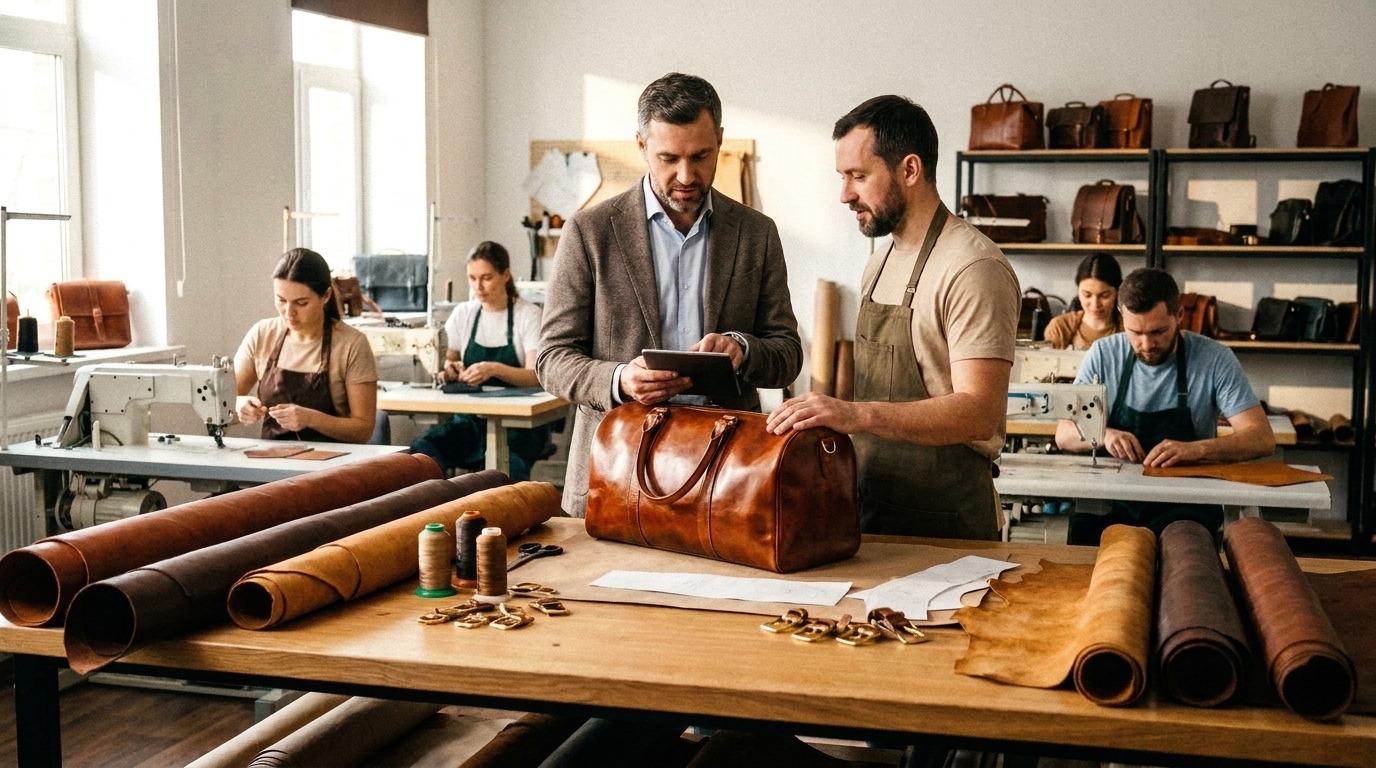
How to Start a Leather Brand Without Owning a Factory In 2026
Start a leather brand today and you don't necessarily need your own factory, machinery, or team of leather craftsmen. Many br...
How Much Does It Cost to Manufacture Leather Products? Complete Cost Breakdown
Leather manufacturing cost can vary significantly even when two products look almost identical. A leather bag made from full-...
How to Find Reliable Leather Suppliers in 2026: A Complete Buyer’s Guide
Finding the right leather suppliers is one of the most important decisions you'll make when sourcing leather products for you...
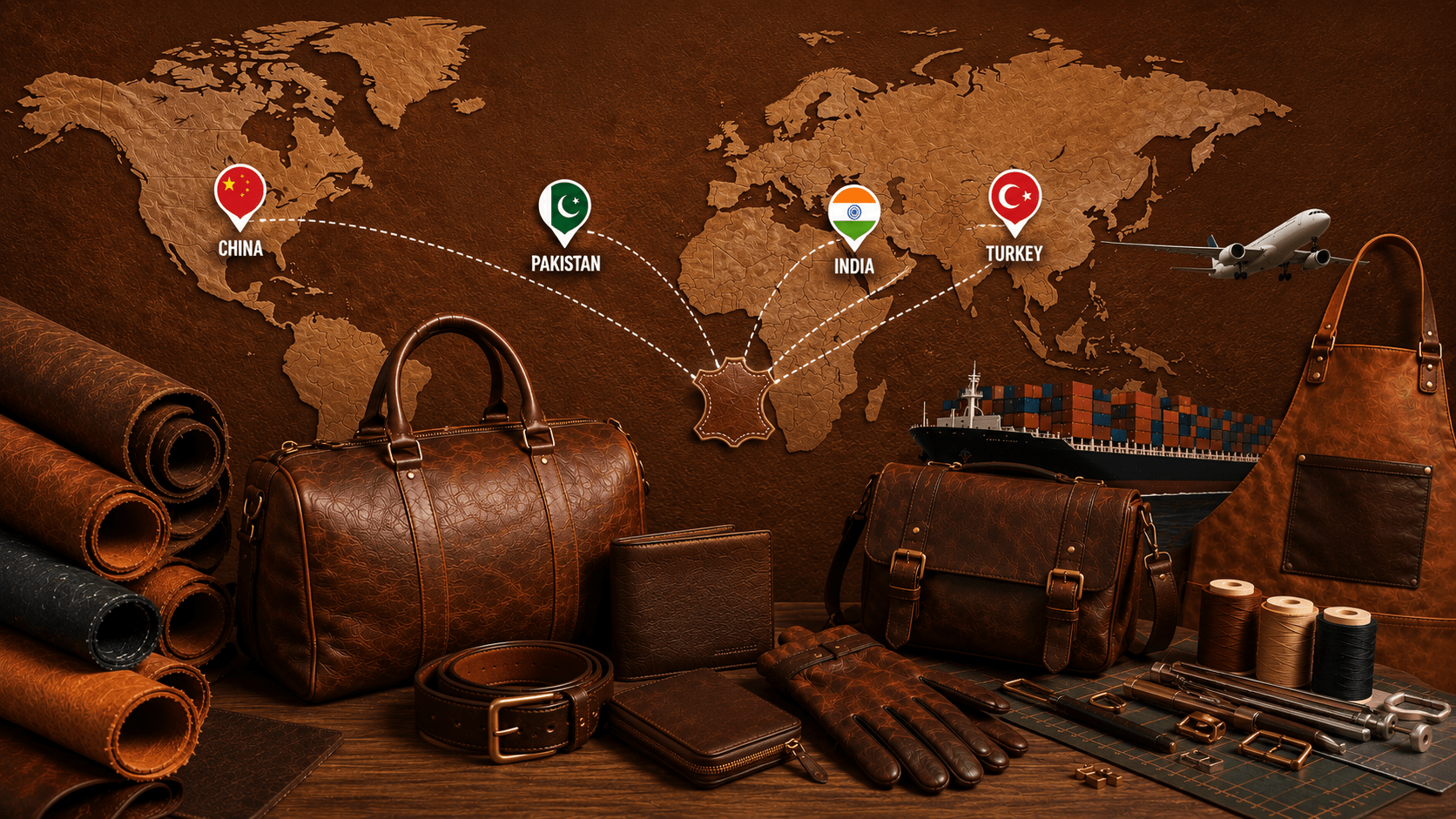
Leather Sourcing: How to Source Leather Products from Pakistan, China, India & Turkey
Leather sourcing is one of the most important decisions you'll make if you're planning to launch a leather brand, expand your...
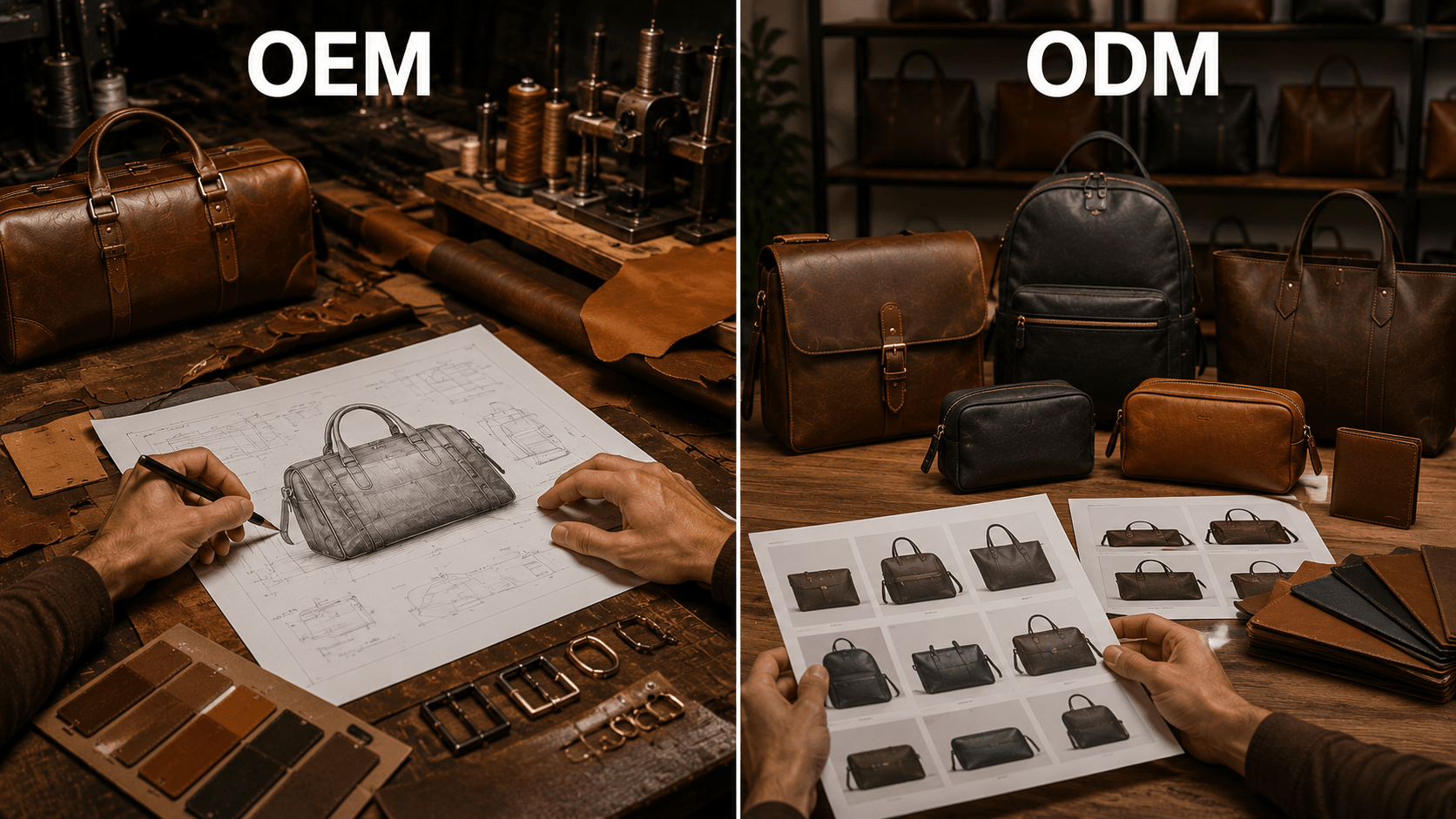
ODM vs OEM: What’s the Difference in Leather Manufacturing?
If you're planning to manufacture leather products, you've likely come across the terms ODM and OEM. Although they are often ...
Best Leather Manufacturers in the World (2026 List)
Finding the best leather manufacturers is one of the most important decisions for any business selling leather products. Whet...