Leather sourcing is one of the most important decisions you’ll make if you’re planning to launch a leather brand, expand your product range, or source products for wholesale or retail. While thousands of manufacturers promise competitive pricing, premium quality, fast production, and worldwide shipping, the real challenge isn’t finding suppliers; it’s finding the right manufacturing partner that aligns with your product requirements, budget, quality expectations, and long-term business goals.
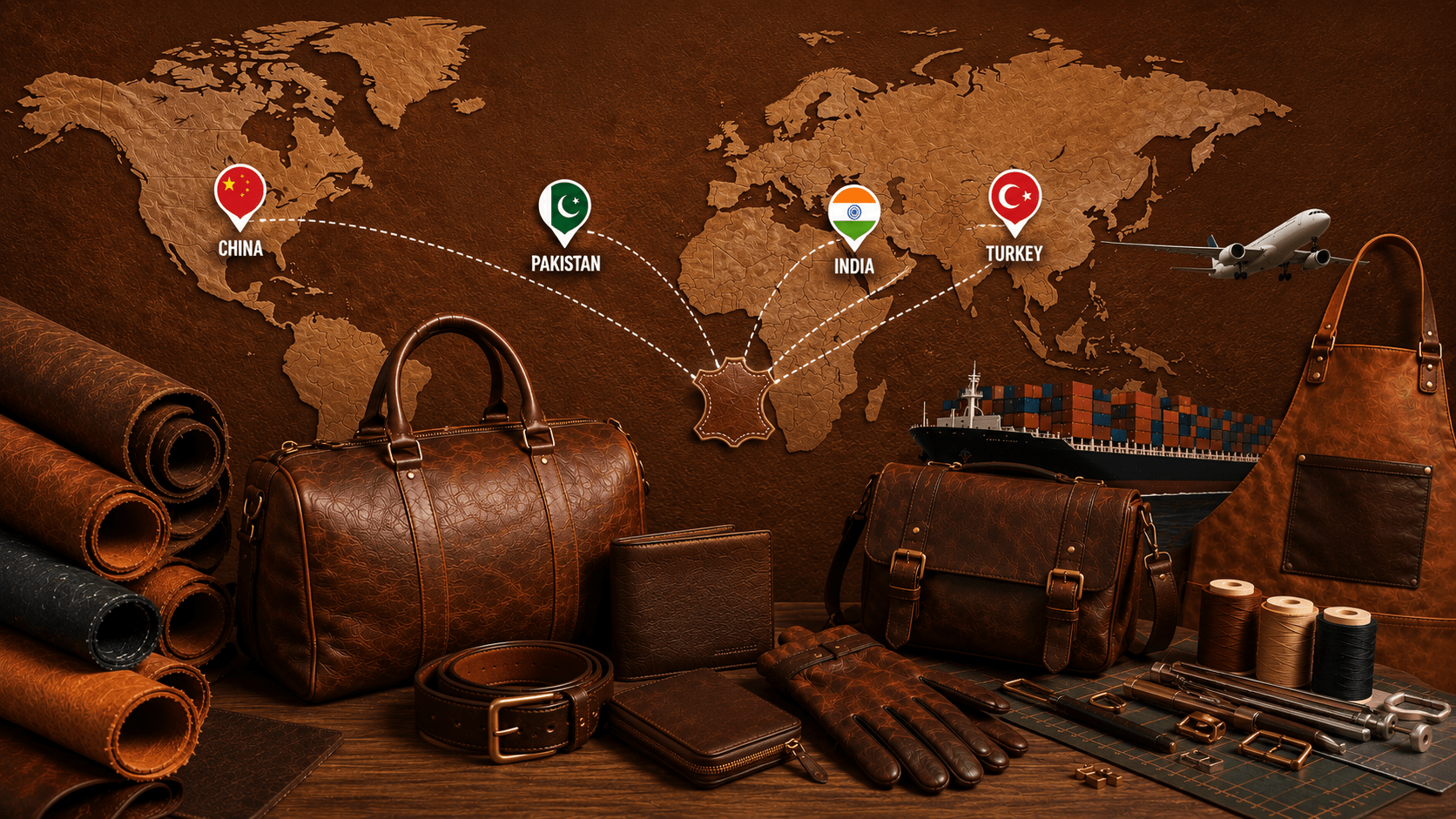
Whether you’re sourcing leather jackets, bags, gloves, wallets, aprons, or other leather goods, the country you choose can significantly influence product quality, production costs, lead times, and overall business success. China, Pakistan, India, and Turkey are among the world’s leading leather manufacturing hubs, but each offers unique strengths depending on the products you want to source and the manufacturing model you need.
This leather sourcing guide walks you through the complete sourcing process, from choosing the right manufacturing country and evaluating suppliers to comparing OEM and ODM options and avoiding costly mistakes. By the end, you’ll know how to source leather products with confidence and build reliable, long-term relationships with manufacturers that support your business growth.
What Is Leather Sourcing?
Leather sourcing is the process of finding and working with manufacturers or suppliers who can produce leather products that meet your quality, pricing, and customization requirements.
Depending on your business model, sourcing may involve purchasing ready-made products, creating fully customized designs, or developing a private-label collection under your own brand.
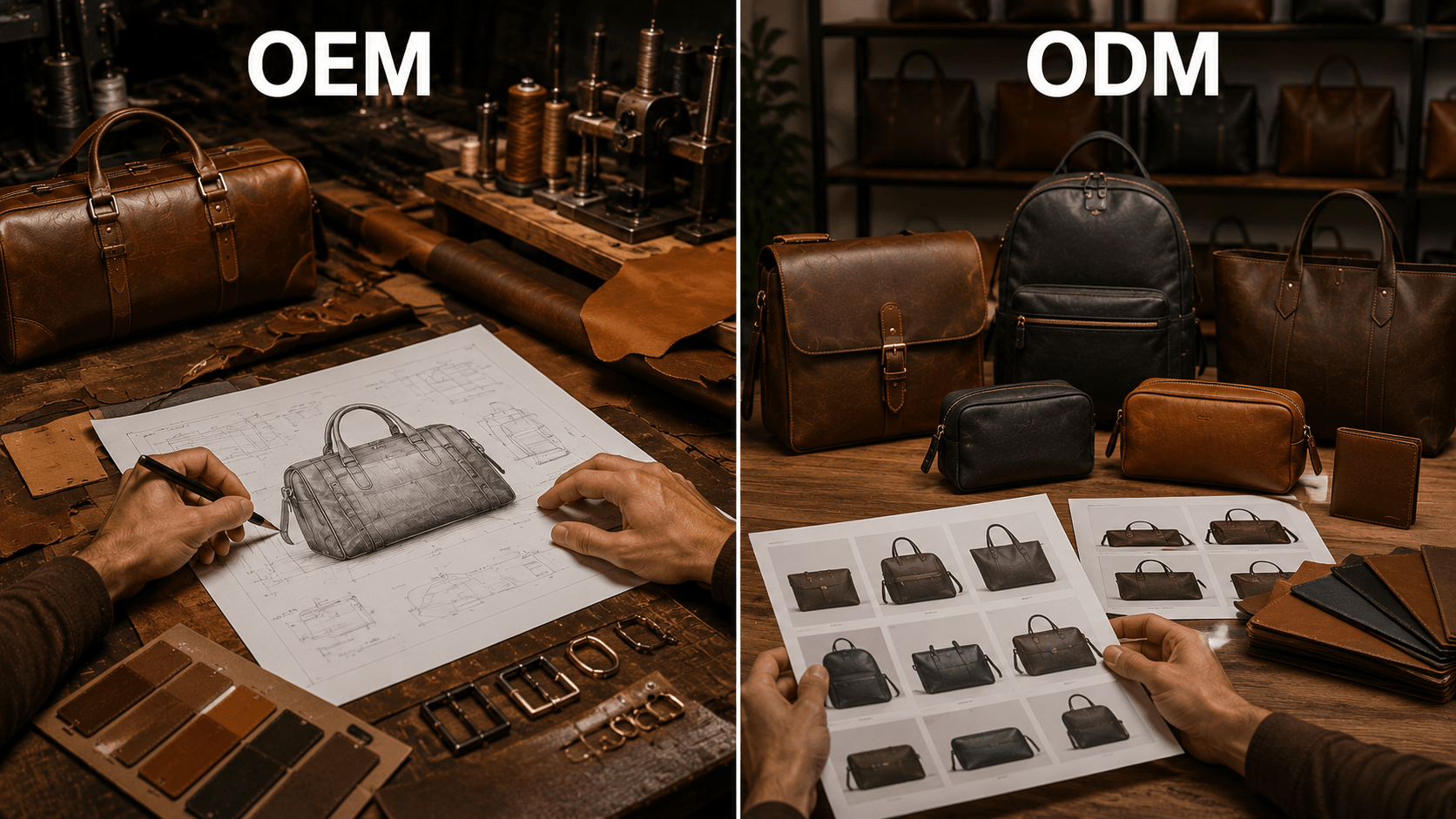
Before contacting suppliers, it’s important to understand which manufacturing model fits your business. If you’re unsure whether you need a custom manufacturer or an existing product with your branding, our guides on ODM vs OEM and OEM vs Private Label Leather Manufacturing explain the differences and help you choose the right approach.
Generally, leather sourcing falls into three categories:
Buying Ready-Made Products
The fastest option if you want to start selling quickly.
Manufacturers already have existing designs that you can purchase with little or no customization.
Best for:
- Retailers
- Online sellers
- Small businesses
- Testing new product categories
OEM Manufacturing
If you already have product designs, specifications, or branding requirements, OEM manufacturing allows you to create products exclusively for your business.
This option gives you greater control over:
- Materials
- Leather quality
- Hardware
- Dimensions
- Colors
- Packaging
- Branding
It’s an excellent choice if you’re building a long-term leather brand.
Private Label Manufacturing
Private labels offer a middle ground between ready-made products and completely custom manufacturing.
You select an existing product and customize it with your logo, labels, packaging, or minor design changes.
This approach usually requires less investment while still helping you establish your own brand identity.
Step 1: Decide What You Want to Source
One of the biggest mistakes buyers make is contacting manufacturers before clearly defining what they actually need.
Manufacturers can only provide accurate pricing and production estimates when they understand exactly what you’re looking for.
Before reaching out to any supplier, ask yourself these questions:
- What type of leather products do you want to source?
- Who is your target customer?
- What quality level are you aiming for?
- What is your budget?
- Will you need custom branding?
- How many units do you plan to order?
The clearer your requirements, the easier it becomes to compare suppliers fairly.
Common Leather Products You Can Source
Depending on your business, you may want to source:
- Leather jackets
- Leather bags
- Leather wallets
- Leather belts
- Leather gloves
- Leather aprons
- Leather backpacks
- Travel bags
- Gun cases
- Knife rolls
- Horse riding equipment
- Fashion accessories
If you’re sourcing a specific product category, understanding how it’s manufactured can help you evaluate suppliers more effectively. For example, learning how leather bags are made, how leather jackets are manufactured, how leather gloves are manufactured, or how leather aprons are made gives you a better understanding of the production process and the quality checkpoints you should discuss with manufacturers.
Step 2: Choose the Right Leather
Not all leather is the same.
Even if two manufacturers offer identical products, the type and quality of leather they use can significantly affect durability, appearance, comfort, and pricing.
Before requesting quotations, you should understand:
- Which animal hide is being used
- Leather grade
- Leather thickness
- Tanning method
- Surface finish
These details will also make communication with manufacturers much easier.
Start with the Basics
If you’re new to leather sourcing, begin by understanding what leather is and the different types of leather available in the market.
You’ll also benefit from learning about:
Knowing this terminology helps you avoid misunderstandings when discussing product specifications with suppliers. Our Leather Terminology guide is also a useful reference if you’re unfamiliar with common manufacturing and sourcing terms.
Step 3: Choose the Right Country for Leather Sourcing
Many buyers ask,
“Which country is the best for leather sourcing?”
The answer depends entirely on what you’re planning to manufacture.
There isn’t one country that’s best at everything.
Some countries specialize in large-scale production, while others are better known for craftsmanship, premium materials, or custom manufacturing.
Here’s a general overview:
- China is known for high-volume production and extensive manufacturing capacity.
- Pakistan is recognized for premium leather garments, gloves, sports leather products, and strong OEM manufacturing capabilities.
- India has a large leather industry with strengths in footwear, fashion accessories, and finished leather goods.
- Turkey is often preferred for premium leather products, smaller production runs, and supplying European fashion brands.
Rather than choosing a country based solely on price, consider:
- Product category
- Quality expectations
- MOQ
- Customization needs
- Lead time
- Shipping destination
- Communication
- Long-term partnership potential
In the next sections, we’ll compare each country in detail so you can decide which sourcing destination aligns best with your business goals.
Leather Sourcing from China
If your priority is large-scale production, competitive pricing, and access to a vast manufacturing ecosystem, China is often one of the first countries buyers consider.
China has spent decades building one of the world’s largest manufacturing networks, producing everything from fashion accessories and leather bags to wallets, belts, footwear, and travel goods. Because thousands of leather factories operate across different regions, you’ll usually find suppliers capable of handling both small and very large production volumes.
China is also a strong choice if you’re interested in OEM or ODM manufacturing. Many factories offer complete product development services, allowing you to customize materials, colors, hardware, packaging, and branding based on your business requirements.
China may be a good choice if you want to:
- Produce products at scale
- Source multiple leather product categories
- Develop custom products through OEM
- Launch products quickly using ODM
- Compare a large number of suppliers
However, don’t choose a supplier simply because they offer the lowest quotation.
Always request product samples, verify manufacturing capabilities, review previous export experience, and confirm quality standards before placing an order. Taking these steps early can save significant time and cost later.
If you’re evaluating suppliers from any country, not just China, it’s equally important to verify a leather manufacturer before placing an order. Performing due diligence helps reduce the risk of quality issues, communication problems, and production delays.
Leather Sourcing from Pakistan
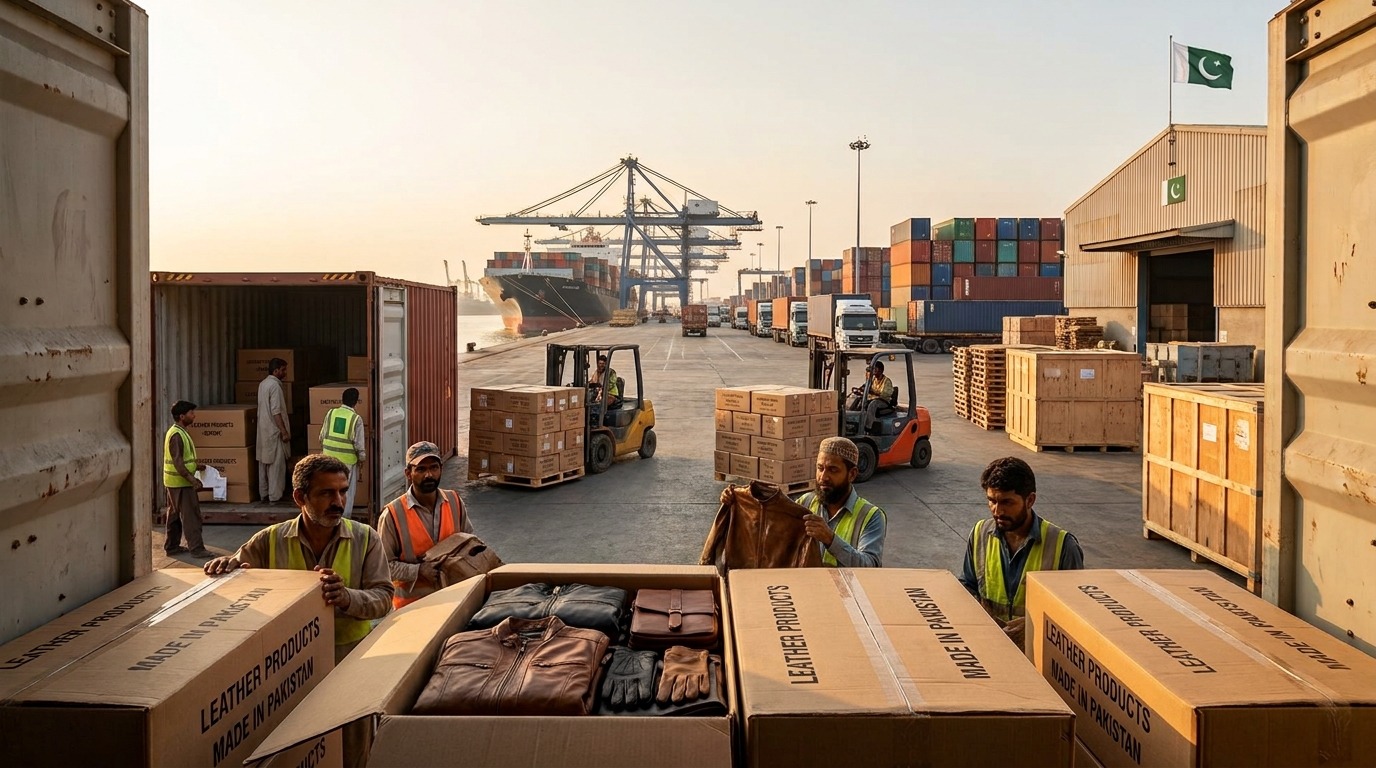
If you’re looking for premium leather jackets, gloves, bags, sports leather products, or custom leather goods, Pakistan should be one of the first countries on your shortlist.
Pakistan has been part of the global leather industry for decades and is widely recognized for its skilled craftsmanship, competitive manufacturing costs, and strong export capabilities. Many factories manufacture products for international brands through OEM and private-label partnerships, making the country an excellent choice for those planning to launch or grow their own leather brand.
Unlike buyers who focus only on price, you should evaluate suppliers based on their experience, production capacity, communication, and ability to consistently meet your quality standards.
Pakistan may be the right choice if you want to:
- Manufacture premium leather jackets
- Source leather gloves and sports leather products
- Develop custom leather goods through OEM
- Work with experienced export manufacturers
- Balance quality and competitive pricing
If you’re specifically considering Pakistan, our guide on reliable leather manufacturers in Pakistan explains what to look for and how to evaluate suppliers before making a decision.
Leather Sourcing from India
India is one of the world’s largest leather producers and offers an extensive manufacturing ecosystem covering everything from raw hides to finished leather products.
If you’re sourcing footwear, handbags, wallets, belts, fashion accessories, or lifestyle leather goods, India provides a wide range of manufacturers serving both domestic and international markets.
Many Indian factories offer OEM and private-label manufacturing, making the country attractive for businesses looking to customize products while maintaining competitive production costs.
India may be a good fit if you want to:
- Source leather footwear
- Manufacture fashion accessories
- Develop handbags and wallets
- Work with established export manufacturers
- Produce medium to large order volumes
As with any sourcing destination, avoid selecting suppliers solely based on pricing. Always compare samples, production capabilities, communication quality, and delivery timelines before placing bulk orders.
Leather Sourcing from Turkey
If premium craftsmanship is your top priority, Turkey deserves serious consideration.
Turkish manufacturers are known for producing high-quality leather garments, luxury handbags, footwear, and fashion accessories for European and international brands. Many factories focus on smaller production runs, premium materials, and exceptional finishing rather than mass production.
Although production costs are generally higher than in China, Pakistan, or India, many buyers choose Turkey because of its strong reputation for quality and its proximity to European markets.
Turkey may be the right choice if you want to:
- Premium leather products
- Luxury-quality craftsmanship
- Smaller production quantities
- Fashion-focused collections
- European-quality manufacturing standards
If your brand targets the premium market, paying slightly higher manufacturing costs may deliver better long-term value through improved product quality and customer satisfaction.
China vs Pakistan vs India vs Turkey
Choosing the best sourcing country depends on what you’re manufacturing, not simply where production is cheapest.
| Factor |
China |
Pakistan |
India |
Turkey |
| Large-scale production |
Excellent |
Good |
Good |
Moderate |
| Premium craftsmanship |
Good |
Excellent |
Good |
Excellent |
| OEM Manufacturing |
Excellent |
Excellent |
Excellent |
Good |
| ODM Manufacturing |
Excellent |
Moderate |
Good |
Moderate |
| Customization |
Excellent |
Excellent |
Good |
Excellent |
| Competitive Pricing |
Excellent |
Excellent |
Good |
Moderate |
| Luxury Products |
Good |
Excellent |
Good |
Excellent |
| Leather Jackets |
Good |
Excellent |
Good |
Excellent |
| Leather Gloves |
Good |
Excellent |
Good |
Moderate |
| Leather Bags |
Excellent |
Excellent |
Excellent |
Excellent |
| Footwear |
Excellent |
Good |
Excellent |
Excellent |
| Best For |
Large-scale sourcing |
Premium leather manufacturing |
Fashion & footwear |
Luxury leather goods |
Instead of asking, “Which country is the best?”, ask yourself:
- Which country specializes in the products I want to sell?
- Which manufacturers match my quality expectations?
- Which supplier can support my business as it grows?
Those questions will lead to a much better sourcing decision. Once you’ve chosen the right sourcing country, the next challenge is identifying the best leather manufacturers that consistently deliver the quality, production capacity, and communication your business requires.
Where Should You Look for Leather Manufacturers?
Once you’ve decided which country fits your business, the next challenge is finding reliable manufacturers.
There are several ways to source leather products, and each has its advantages and limitations.
Option 1: Search Manufacturer Websites
Many experienced manufacturers have their own websites where you can review their products, certifications, manufacturing capabilities, and contact information.
This approach works well if you already know the type of supplier you’re looking for.
Pros
- Direct communication
- Better understanding of factory capabilities
- Opportunity to negotiate directly
Cons
- Time-consuming
- Difficult to compare multiple suppliers
- Some websites provide limited information
Option 2: Use General B2B Marketplaces
Platforms like Alibaba and Go4WorldBusiness allow you to browse thousands of suppliers across different industries.
These marketplaces can help you quickly compare pricing and product catalogs, but they aren’t dedicated exclusively to leather manufacturing.
Because suppliers from many industries are listed together, you’ll still need to spend time verifying manufacturers and comparing capabilities.
Option 3: Attend Trade Shows
International trade fairs allow you to meet manufacturers face-to-face, inspect product quality, and discuss custom projects.
Trade shows are particularly valuable if you’re planning long-term sourcing partnerships or placing larger production orders.
Option 4: Use a Dedicated Leather Marketplace (Recommended)
If your goal is to compare leather manufacturers without searching dozens of websites, a dedicated leather marketplace can significantly simplify the process.
Unlike general B2B platforms that cover every industry, Tannorium focuses exclusively on the leather industry. You can explore manufacturers, suppliers, exporters, and leather brands specializing in products such as jackets, bags, gloves, aprons, wallets, belts, footwear, travel goods, and more.
Because every listing is leather-focused, comparing manufacturers becomes much easier, especially if you’re sourcing multiple product categories.
If you’re wondering whether niche sourcing platforms offer advantages over general marketplaces, our guide on Is There a Dedicated Marketplace for Leather? explains why many buyers prefer industry-specific platforms when sourcing leather products.
How to Verify a Leather Supplier Before Ordering
Even after finding a promising manufacturer, never skip supplier verification.
Before placing your first order, you should:
- Request product samples.
- Confirm leather specifications and materials.
- Review previous export experience.
- Verify certifications if required.
- Ask about production capacity.
- Understand MOQ requirements.
- Confirm lead times.
- Discuss quality inspection procedures.
- Clarify payment terms.
- Review packaging and shipping options.
Taking these steps significantly reduces the risk of production issues and costly misunderstandings.
Common Leather Sourcing Mistakes
Many sourcing problems can be avoided with proper planning.
Avoid these common mistakes:
- Choosing suppliers based only on price.
- Not requesting product samples.
- Ignoring leather quality and specifications.
- Failing to verify manufacturers.
- Overlooking shipping and import costs.
- Not documenting product requirements clearly.
- Comparing quotations without considering quality differences.
Investing a little more time during supplier selection often saves thousands of dollars in production mistakes later.
Final Thoughts
Successful leather sourcing isn’t about finding the cheapest manufacturer; it’s about finding the right manufacturing partner.
Whether you choose China, Pakistan, India, or Turkey, focus on product quality, communication, manufacturing expertise, and long-term reliability rather than price alone.
If you’re sourcing leather products for your business, compare multiple manufacturers, request samples, and verify suppliers before committing to production. And if you want to explore manufacturers from across the leather industry in one place, a dedicated marketplace like Tannorium can help you discover and compare suppliers more efficiently.
FAQs
Which country is best for leather sourcing?
There isn’t a single best country. China is ideal for large-scale production, Pakistan excels in leather garments and gloves, India is strong in footwear and fashion accessories, and Turkey is known for premium craftsmanship. The right choice depends on your product category, budget, and business goals.
Is Pakistan good for leather manufacturing?
Yes. Pakistan is recognized worldwide for high-quality leather jackets, gloves, sports leather products, and OEM manufacturing. It offers an excellent balance between quality and cost.
Should I choose OEM or ODM manufacturing?
If you want a completely customized product, OEM is usually the better choice. If you want to launch products quickly using existing designs, ODM can be more suitable. Our ODM vs OEM guide explains both options in detail.
How can I find reliable leather manufacturers?
You can source through manufacturer websites, trade shows, general B2B marketplaces, or dedicated leather marketplaces. Regardless of where you find suppliers, always verify their experience, production capabilities, and product quality before placing an order.